TL;DR
- Protein matters more for golfers than the demand profile suggests — not because golf burns substantial protein, but because muscle preservation drives swing performance, recovery between rounds, and longevity in the game. Particularly relevant after 40.
- Daily target: 1.4-1.6g/kg for general health, 1.6-2.0g/kg for active golfers training off-course, 1.8-2.0g/kg for golfers over 50. Distributed across 4-5 meals at 25-40g per serving for optimal muscle protein synthesis.
- Where protein matters most for golf: off-course strength training (gym session recovery), tournament play and back-to-back rounds (cumulative recovery), aging and sarcopenia (muscle preservation).
- Practical sources: whey isolate post-training and post-round, eggs and Greek yogurt at breakfast, lean meats at lunch and dinner, cottage cheese before sleep during tournament play. Whey isolate (XWERKS Grow) fills gaps efficiently.
- Skip: "golf-specific protein" branded products at premium prices, mass-gainer products with junk calories, pre-workout-protein hybrid products, "anabolic window" panic that misses total daily intake.
"Protein for golfers" is a search increasingly driven by golfers approaching middle age, tournament players, and golfers who've discovered that off-course training transforms on-course performance. The honest framing: protein matters substantially for golfers, but not for the reasons most marketing suggests. Golf itself doesn't burn substantial protein during the round (it's not a high-volume training session). The protein matters because muscle mass directly affects swing performance — rotational power, grip strength, club head speed, core stability — and aging drives muscle loss that compromises these capacities. Adequate protein supports the muscle preservation that maintains golf performance across decades. It also supports recovery between rounds during tournament play and golf trips, where back-to-back rounds at 36-54 holes daily produce real recovery demands. The framework isn't dramatically different from any active adult's protein needs: 1.4-2.0g/kg body weight daily, distributed across 4-5 meals at 25-40g per serving. The application differs slightly for tournament play (more aggressive post-round recovery) and older golfers (slightly higher targets due to anabolic resistance). This guide covers why protein matters specifically for golf, daily targets by goal and age, where protein matters most (off-course training, tournaments, aging), practical food and supplement sources, what to skip in golf-specific protein marketing, and how it integrates into the broader supplement framework for golfers.
Why protein matters for golfers
Golf doesn't burn substantial protein during play. The reasons protein matters for golfers are downstream:
1. Muscle mass drives swing performance. Rotational power, grip strength, club head speed, core stability — all driven by muscle mass and quality. More muscle (within reason) typically means better swing capacity. Less muscle means compromised performance.
2. Aging drives muscle loss. Adults lose 3-8% of muscle mass per decade after age 30, accelerating after 50. The EWGSOP2 consensus on sarcopenia identifies muscle mass and strength as primary determinants of physical function in aging. Without intervention, the average 65-year-old has substantially less muscle than their 35-year-old self — directly affecting golf performance. Protein intake is the dietary lever for muscle preservation.
3. Off-course strength training requires protein. Golfers who train off-course (resistance training, mobility work, conditioning) need adequate protein to support muscle building, repair, and adaptation from that training. The training builds the swing capacity; protein supports the training.
4. Tournament play demands recovery protein. Back-to-back rounds, 36-54+ holes daily, multi-day events — these produce cumulative recovery demands that require aggressive post-round protein and carbs. Without adequate intake, day 3-4 performance collapses.
5. Sleep quality benefits from protein adequacy. Adequate protein at evening meals supports overnight muscle protein synthesis, sleep quality, and recovery for next-day rounds.
6. Body composition affects performance. Lower body fat percentage with adequate muscle mass produces better mobility, better walking endurance, and reduced joint stress — all relevant to golf performance, particularly in older golfers.
What protein doesn't do for golf:
• Doesn't directly improve swing during the round
• Doesn't substitute for technical practice
• Doesn't fix swing flaws or short-game weaknesses
• Doesn't replace the need for cardio and mobility work
The honest framing: protein supports the physical infrastructure that allows training and recovery; it's not a magic on-course performance enhancer.
Daily protein targets for golfers
General health and casual play
1.4-1.6g/kg body weight dailyFor golfers who don't train heavily off-course and primarily play recreationally: this range supports general health, modest muscle preservation, and adequate recovery for typical play. Above standard "healthy adult" recommendations (0.8g/kg) but below athlete-level intake. Phillips and Van Loon's review of dietary protein for athletes documents the rationale for above-RDA intake in active populations.
For 80kg (175lb) golfer: 110-130g daily. Distributed across 4 meals at ~25-35g each.
Active golfers training off-course
1.6-2.0g/kg body weight dailyFor golfers who include resistance training 2-4x weekly off-course (gym work, swing-specific training): higher protein supports muscle building, recovery from training, and the broader strength gains that translate to swing performance.
For 80kg (175lb) golfer: 130-160g daily. Distributed across 4-5 meals at ~30-40g each. Higher post-training serving (35-40g whey shake).
Golfers over 50
1.8-2.0g/kg body weight dailyOlder adults experience "anabolic resistance" — reduced muscle protein synthesis response to a given protein dose. The PROT-AGE Study Group recommendations support 1.0-1.2g/kg as a baseline for healthy older adults, increasing to 1.2-1.5g/kg or more for those with active disease, malnutrition, or who exercise. For active older golfers, 1.8-2.0g/kg is a reasonable target. Compensating for anabolic resistance requires both higher per-meal doses (35-40g vs 25-30g for younger adults) and higher total daily intake.
For 80kg (175lb) golfer over 50: 145-160g daily. Distributed across 4-5 meals at 35-40g each. Particularly important for golfers who want to maintain swing speed and power as they age.
Tournament play and golf trips
Maintain target plus aggressive post-round recoveryDuring tournament weeks or multi-day golf trips: maintain daily protein target with particular emphasis on post-round recovery. The cumulative recovery demands across 4-7 days of play warrant aggressive protein-carb intake within 60 minutes of finishing each round.
Typical tournament-day target for an 80kg golfer: 130-160g protein distributed as: 30g breakfast, 30g lunch (often eaten at the turn), 35-40g immediately post-round, 35-40g dinner, optional 20-25g pre-bed.
The per-meal framework
Total daily protein intake matters most, but distribution across meals affects muscle protein synthesis (MPS) outcomes:
Optimal per-meal dose: Moore et al. document that approximately 0.4g/kg per meal optimizes muscle protein synthesis for most adults. That translates to 25-40g protein per meal triggers maximum MPS response. Below 25g, MPS response is suboptimal. Above 40g, response plateaus (additional protein doesn't produce proportional MPS increase).
Older adults (50+): Slightly higher per-meal threshold (35-40g typical) due to anabolic resistance. The same total daily intake distributed in larger doses produces better MPS than the same total in smaller doses.
Distribution pattern:
4-5 meals across the day, each providing 25-40g protein. The exact timing (3 meals + snack vs. 5 smaller meals) matters less than hitting the per-meal threshold consistently.
Example day for 80kg active golfer (140g target):
• Breakfast: 3 eggs + Greek yogurt + cottage cheese = 35g protein
• Mid-morning: whey shake (1 scoop) = 25g protein
• Lunch: 5oz chicken + quinoa + vegetables = 40g protein
• Pre-training snack: cottage cheese + fruit = 15g protein
• Post-training: whey shake = 25g protein (overlap with dinner)
• Dinner: 5oz salmon + rice + vegetables = 35g protein
Total: ~140-150g across 5-6 protein-containing meals. For specific whole-food protein content, see our how much protein in an egg guide.
Where protein matters most for golf
Off-course strength training
Post-training: 25-40g whey isolate within 60 minutesResistance training builds the muscle infrastructure that supports the swing. Adequate post-training protein is the dietary lever that supports adaptation. The updated research on the post-workout "anabolic window" supports a wider 2-4 hour window for meaningful muscle protein synthesis effects — don't panic about precise minutes, but do prioritize getting protein within 1-2 hours.
• 25-40g protein within 60 minutes post-training
• Whey isolate is fast-digesting and convenient; whole food works at slower digestion
• Combine with carbs (banana, fruit, modest carbs) for full recovery support
• The training session quality determines the stimulus; protein adequacy determines whether the stimulus produces adaptation
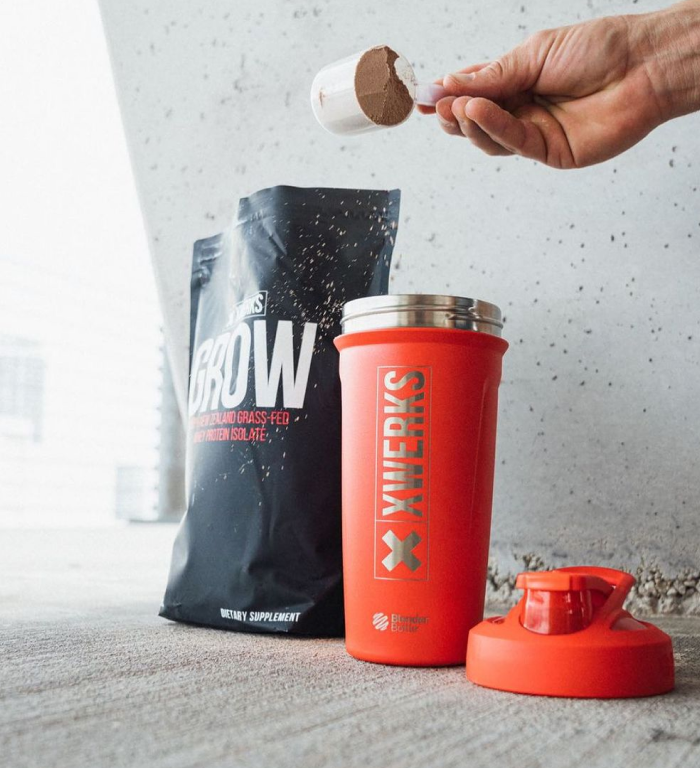
XWERKS Grow provides 25g NZ grass-fed whey isolate per scoop, fast-digesting for post-training use. One scoop covers most golfers' post-training protein needs. See our best carbs after workout guide for the carb side of recovery, and carbs vs protein for muscle building for the both/and framework.
Tournament play recovery
25-40g post-round + aggressive intake across the weekMulti-day tournament play (county tournaments, club championships, USGA events, multi-day golf trips) produces cumulative recovery demand that requires deliberate protein-carb-hydration replacement:
• Within 60 minutes of finishing each round: 25-40g protein + 50-80g carbs
• Substantial dinner with 35-40g protein
• Optional pre-bed slow-digesting protein (cottage cheese, casein, or whey isolate) supports overnight recovery
• Maintain hydration and electrolyte replacement
• Prioritize sleep — the cumulative sleep debt across tournament days kills performance more than any single nutritional element
Aging and sarcopenia prevention
Higher per-meal doses + consistencyFor golfers over 50, protein adequacy combined with resistance training is the most powerful intervention against age-related muscle loss. The mechanism: anabolic resistance reduces MPS response to a given protein dose; higher per-meal doses overcome this resistance. Combined with the training stimulus from resistance work, MPS rates approximate younger adults.
For older golfers specifically:
• Aim for 35-40g protein per meal minimum
• 4-5 protein meals daily
• Combine with resistance training 2-3x weekly
• Don't skip breakfast protein — overnight fasting compounds anabolic resistance
• Whey isolate supplementation makes hitting targets practical
For the broader hormonal context that affects muscle preservation in older men, see how to increase testosterone and the ultimate guide to naturally raising testosterone.
Body composition management
Higher protein during fat loss phasesGolfers pursuing body composition improvements (fat loss while preserving muscle) benefit from higher protein intake during caloric deficit phases:
• 2.0-2.4g/kg during deliberate fat loss phases
• Higher protein preserves muscle mass during deficit
• Higher protein has higher thermic effect (more calories spent in digestion)
• Higher protein produces better satiety per calorie
For golfers cutting weight before a tournament or season: 2.0g/kg during the deficit phase, return to maintenance levels (1.6-2.0g/kg) after. See how many carbs to lose belly fat for the broader fat loss framework.
Practical food and supplement sources
Whole food protein sources
Foundation of daily intakeBuild daily protein intake primarily from whole foods:
• Eggs: 6g protein per large egg. Versatile, affordable, complete amino acid profile. See our how much protein in an egg guide.
• Chicken breast: 31g protein per 4oz. Standard athlete staple.
• Fish: 22-25g per 3oz salmon or tuna. Bonus omega-3 fats.
• Lean ground beef: 22g per 3oz. Quality red meat fits well in active diets.
• Greek yogurt: 17g per cup nonfat. Easy breakfast/snack base.
• Cottage cheese: 25g per cup low-fat. Slow-digesting casein protein — good for pre-bed.
• Lean cuts of pork: 26g per 3oz tenderloin.
• Turkey: 25g per 3oz turkey breast.
Whole food protein provides complete amino acid profiles plus other nutrients (B vitamins, iron, zinc, selenium). Should constitute most daily protein intake.
Whey protein isolate (gap-filling)
Convenient supplementationWhey isolate efficiently fills the gap between whole-food intake and daily protein targets. Particularly useful for:
• Post-workout when fast digestion benefits recovery
• Post-round during tournaments when full meals aren't immediately practical
• Mid-morning or mid-afternoon when adding a meal isn't feasible
• Travel and on-course days when meal preparation is limited
• Older golfers who struggle to hit daily targets through whole food alone
XWERKS Grow provides 25g NZ grass-fed whey protein isolate per scoop. New Zealand grass-fed whey is generally cleaner than typical commercial whey (no antibiotics, no rBST, grass-fed grazing). One scoop covers most per-meal protein gaps efficiently.
Plant-based options
For vegan/vegetarian golfersPlant-based golfers can hit protein targets through:
• Legumes (lentils, beans, chickpeas)
• Tofu and tempeh
• Plant protein supplements (pea protein, soy protein, blends)
• Diverse grain combinations
Caveats: plant proteins typically need 30-40% larger servings to reach equivalent leucine threshold for MPS. Total intake targets are typically 10-20% higher (1.8-2.2g/kg vs 1.4-2.0g/kg for omnivores). Diverse sources provide complete amino acid profiles.
Pre-bed protein during tournament weeks
For tournament play and back-to-back rounds, pre-bed slow-digesting protein supports overnight muscle protein synthesis:
The mechanism: Casein protein digests over 6-8 hours, providing sustained amino acid availability through the overnight fast. Compared to no pre-bed protein, this supports modestly better overnight MPS and morning recovery.
Practical sources:
• Cottage cheese (1 cup, 25g protein) — natural casein source
• Greek yogurt (1 cup, 17g protein, mixed casein/whey)
• Casein protein supplement
• Whey isolate works but digests faster than casein
When it matters: Tournament play, back-to-back rounds, golf trips with multiple rounds daily, intensive training periods. For typical recreational play, daytime protein adequacy handles most muscle preservation needs without specific pre-bed supplementation.
When it doesn't matter much: Single-round days for casual golfers, off-season periods, golfers already hitting daily targets through dinner protein.
What to skip in golf-specific protein marketing
• "Golf-specific" protein products at premium prices: Standard whey isolate produces same outcomes. Golf branding rarely reflects formulation differences — just marketing premium.
• Mass-gainer products with junk calories: Excess calories from added sugar and refined carbs. Don't address golfer needs (sustained energy, modest carbs around training, clean protein).
• Pre-workout-protein hybrid products: Combining caffeine and stimulants with protein in one product reduces flexibility. Better to use separate quality products.
• "Anabolic window" panic missing total daily intake: The anabolic window is wider than originally believed (2-4 hours per Schoenfeld and Aragon's review). Total daily protein intake matters more than precise post-workout timing.
• "Joint health protein" with collagen at premium price: Collagen has modest joint support evidence — take separately rather than as expensive protein-collagen combinations.
• Excessive protein doses (50g+ per meal) believing more is better: Above 40g per meal, MPS response plateaus. The extra protein gets used for energy or other purposes, not additional muscle building.
• Protein-coffee hybrids and "breakfast replacement" products: Often marketing premium with modest formulations. Standard coffee + standard whey shake produces same outcomes.
• "Rotational power" protein blends: Marketing exploiting golf-specific concerns. Standard quality whey produces same outcomes.
• Plant protein products marketed as golf-specific: Standard quality plant protein (pea, blends) works for plant-based golfers. "Golf" branding rarely reflects formulation differences.
Common questions about protein for golfers
"Do I need protein after a round?"
For single recreational rounds: not specifically. Eating a normal meal within 1-2 hours covers needs. For tournament play, golf trips, or back-to-back rounds: yes — 25-40g protein within 60 minutes supports cumulative recovery.
"How much protein should I eat as an older golfer?"
1.8-2.0g/kg body weight daily for golfers over 50. Distributed across 4-5 meals at 35-40g per serving. Higher per-meal doses overcome anabolic resistance per the PROT-AGE recommendations. Combined with resistance training 2-3x weekly, this preserves muscle mass that drives swing performance.
"Is whey isolate better than whey concentrate for golfers?"
Whey isolate has higher protein content per scoop, lower lactose, and faster digestion. For most golfers, isolate is the cleaner choice particularly for post-workout/post-round timing. Concentrate works fine but provides less protein per dollar after accounting for the lower protein percentage.
"What about plant-based protein for golf?"
Works well — just requires slightly higher total intake (1.8-2.2g/kg) and diverse sources for complete amino acid profile. Pea protein, soy protein, and blends supplement diverse plant whole foods (legumes, grains, nuts/seeds).
"Do I need protein during a round?"
Not specifically. Carbs and electrolytes matter more during play. A modest protein source at the turn (peanut butter, jerky, protein bar) is fine but not required. Save substantial protein intake for pre-round, post-round, and other meals.
"Will protein help my swing speed?"
Indirectly — through supporting muscle preservation and the gym work that builds rotational power and grip strength. Protein doesn't directly increase swing speed; muscle mass drives swing speed, and protein supports muscle mass preservation and growth.
"Should I take collagen for joint health?"
Optional. Collagen has modest research support for joint and connective tissue health. 10-20g daily for 8-12 weeks for trial. If you experience joint discomfort improvement, continue; if not, discontinue. Don't substitute collagen for total protein intake — it's incomplete protein and doesn't trigger MPS effectively.
"Will too much protein cause kidney problems?"
Not in healthy adults. Research on high-protein diets in healthy adults consistently shows no negative kidney effects at intakes up to 2.0-2.4g/kg. The "high protein damages kidneys" framing applies to people with pre-existing kidney disease. If you have kidney disease, consult your physician before increasing protein intake substantially.
The Bottom Line
Protein matters more for golfers than the on-course demand profile suggests — not because golf burns substantial protein, but because muscle preservation drives swing performance, recovery between rounds, and longevity in the game.
Daily targets: 1.4-1.6g/kg for general health and casual play, 1.6-2.0g/kg for active golfers training off-course, 1.8-2.0g/kg for golfers over 50 (anabolic resistance compensation). Distribute across 4-5 meals at 25-40g per serving.
Where protein matters most for golf: off-course strength training (gym session recovery), tournament play and back-to-back rounds (cumulative recovery), aging and sarcopenia (muscle preservation), body composition management.
Practical sources: whole food protein as foundation (eggs, chicken, fish, lean meats, dairy), whey isolate for gap-filling and post-training, cottage cheese or casein for pre-bed during tournament weeks, plant proteins for vegan/vegetarian golfers.
Tournament play emphasis: 25-40g protein within 60 minutes of finishing each round, substantial dinner protein, optional pre-bed slow-digesting protein. Cumulative recovery across tournament days requires deliberate intake.
Aging emphasis: higher per-meal doses (35-40g) overcome anabolic resistance; combined with resistance training, supports muscle preservation that maintains swing capacity across decades.
Skip: "golf-specific protein" branded products at premium prices, mass-gainer products with junk calories, pre-workout-protein hybrid products, "anabolic window" panic that misses total daily intake, excessive per-meal doses (50g+) believing more is better.
Practical framework: 4-5 protein meals daily, each providing 25-40g protein from quality whole-food sources supplemented with whey isolate for gap-filling. Consistency across weeks and months matters more than precise daily execution. The fundamentals work; the precision is incremental.
Dig deeper: supplements for golfers · creatine for golf · pre-workout for golf · best carbs after workout · carbs vs protein for muscle building · how much protein in an egg · naturally raise testosterone · how many carbs to lose belly fat
Quality Protein for Golf Recovery
For golfers prioritizing muscle preservation, off-course training recovery, and tournament-week recovery: XWERKS Grow provides 25g NZ grass-fed whey protein isolate per scoop. Fast-digesting, clean ingredient profile, no artificial colors or proprietary blends. The convenient post-training and post-round protein source for golfers serious about playing their best across decades.
Shop Grow