

TL;DR
- The single biggest controllable factor for testosterone is sleep — research shows sleep under 6 hours nightly causes 10-15% testosterone reduction. Foundation factors matter more than any supplement.
- The complete framework: sleep (7-9 hours), resistance training (heavy compound lifts), healthy body composition (excess fat reduces T via aromatase), adequate dietary fat (25-35% calories), stress management, vitamin D (2,000-4,000 IU). These produce dramatically more T optimization than supplements alone.
- Research-backed supplements: Tongkat Ali (strongest evidence), ashwagandha (cortisol management), boron (free testosterone), zinc and magnesium (if deficient), shilajit (modest support).
- Limit endocrine disruptors: microplastics, BPA/BPS (plastic packaging, receipts), pesticide residues, excessive alcohol, environmental pollutants. Compound effects matter.
- Skip: "T booster" supplements with weak research, miracle muscle-building stacks, treating supplements as substitutes for foundation factors, ignoring symptoms that warrant medical evaluation. For diagnosed hypogonadism, supplements aren't adequate treatment — see a physician.
"How to increase testosterone" is one of the most-searched men's health questions — and one of the most poorly served by ranking content. The supplement industry pushes expensive "T booster" stacks with weak research. Pharmaceutical TRT marketing positions hormone replacement as the answer regardless of cause. Wellness influencers promote questionable interventions as breakthroughs. The honest picture: natural testosterone is largely determined by lifestyle factors that most articles undersell while pushing the supplements that produce smaller effects. Sleep alone — adequate sleep specifically — has documented effects substantially larger than most supplements. Resistance training, body composition, stress management, vitamin D, and dietary fat all matter substantially. Get these foundation factors right, and supplements provide modest incremental support. Skip the foundation factors, and no supplement stack will compensate. This guide covers the actual research on testosterone optimization — the foundation factors that matter most, the supplements with genuine research support (and the ones with marketing that exceeds research), the endocrine disruptors worth limiting, and the symptoms that warrant medical evaluation rather than self-treatment with supplements.
The foundation factors (matter most)
The factors that genuinely optimize natural testosterone — in approximate order of impact:
1. Sleep (7-9 hours, quality matters): The single biggest controllable factor. Research consistently shows sleep deprivation suppresses testosterone. One week of 5-hour sleep reduced testosterone by 10-15% in healthy young men. Chronic sleep restriction compounds the effect. Sleep is the closest thing to a "free testosterone boost" available — and most men compromise it.
2. Resistance training (heavy compound lifts): Squats, deadlifts, presses, rows. Both acute (post-workout T spike) and chronic (long-term elevated baseline) effects. The heavier the lift and the larger the muscle groups involved, the bigger the testosterone response. 3-5x weekly resistance training meaningfully supports testosterone.
3. Healthy body composition: Excess body fat — particularly visceral fat — reduces testosterone via aromatase activity (which converts testosterone to estrogen). Body fat percentage above ~25% in men typically associated with lower testosterone. Body composition matters more than weight per se.
4. Adequate dietary fat (25-35% of calories): Cholesterol is the precursor to testosterone. Very low-fat diets (under 20% calories from fat) can suppress testosterone production. Saturated fats from quality sources (eggs, grass-fed meat, dairy) and monounsaturated fats (olive oil, avocados, nuts) particularly support hormone production.
5. Stress management (cortisol regulation): Chronic cortisol elevation suppresses testosterone. Sleep, exercise, social connection, meditation, hobbies that genuinely reduce stress all matter. Stress isn't just "feeling overwhelmed" — it's chronic physiological cortisol elevation that compounds over years.
6. Vitamin D status (2,000-4,000 IU daily, optimize blood levels): ~40% of adults are vitamin D deficient. Strong correlation between vitamin D status and testosterone. Test 25(OH)D blood level; supplement to maintain 40-60 ng/mL.
7. Limit alcohol: Chronic moderate-to-heavy alcohol consumption suppresses testosterone. Acute heavy drinking produces marked but temporary suppression. Modest alcohol (1-2 drinks daily or less) doesn't dramatically affect testosterone for most men. Daily heavy drinking does.
8. Adequate protein (1.4-2.2g/kg daily): Severe protein restriction can suppress testosterone. Most men get adequate; deficiency relevant for under-eaters or those with restrictive diets.
9. Manage life stress, work demands, relationships: Chronic life stress shows up in cortisol patterns and ultimately testosterone. The "successful stressed executive" archetype often has suppressed testosterone despite outward markers of success.
The combined effect of optimizing these factors typically produces 20-40% testosterone increases for men with previously suboptimal lifestyle patterns. No supplement stack matches this.
The supplements with genuine research support
Tongkat Ali (Eurycoma longifolia)
200-400mg standardized extract dailyThe strongest research-backed natural testosterone support. Tambi 2010 documented testosterone increases in men with low-normal testosterone. Henkel 2014 showed cortisol reduction alongside testosterone support — addressing both ends of the testosterone-cortisol relationship.
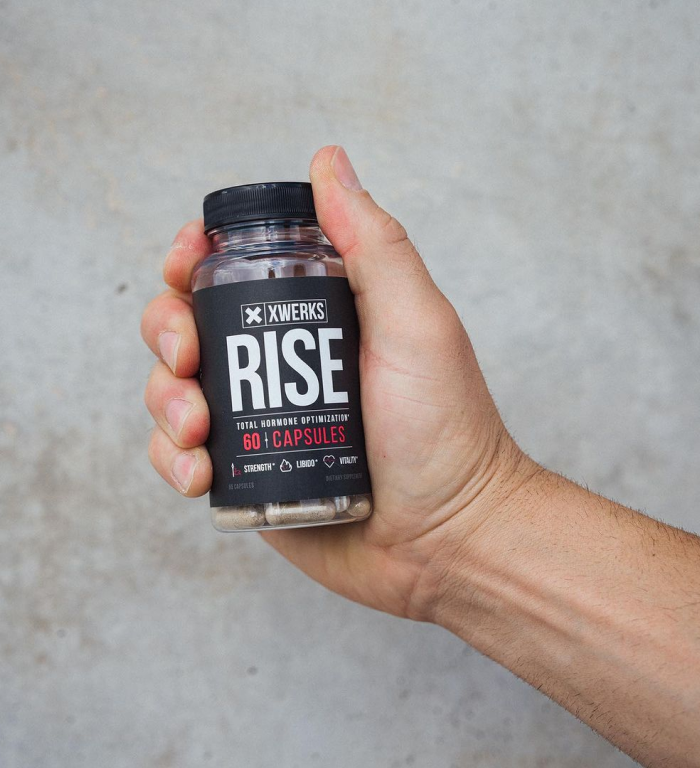
Look for standardization (1-2% eurycomanone or specific glycoprotein content). Effects build over 4-8 weeks. XWERKS Rise for 400mg standardized Tongkat Ali plus complementary ingredients. See our tongkat ali benefits guide for the deep dive.
Ashwagandha (Withania somnifera)
300-600mg standardized extract dailyAdaptogenic herb with documented cortisol-reducing effects. Chandrasekhar 2012 documented 27.9% cortisol reduction at 300mg twice daily. Cortisol reduction supports testosterone indirectly (lower cortisol = less testosterone suppression).
Particularly valuable for men with high stress patterns. Standardized extracts (KSM-66, Sensoril, or similar 5%+ withanolide concentration) have the research support. XWERKS Ashwa for standardized 1,500mg Withania somnifera.
Boron
3-10mg dailyUnderappreciated trace mineral with surprisingly strong free testosterone research. Naghii 2011 documented 28% free testosterone increase and 9% SHBG reduction with 10mg daily boron for one week. Effects develop quickly.
Free testosterone is the bioavailable fraction; SHBG reduction means more testosterone available for cellular use. See our boron and free testosterone guide.
Zinc
15-30mg daily, particularly if deficientRequired for testosterone production. Prasad 1996 showed zinc deficiency suppresses testosterone; zinc supplementation in deficient men restored levels. Effects in non-deficient men are minimal — supplementation only helps deficient individuals.
Zinc deficiency more common in vegan/vegetarian men, men with high alcohol intake, men with malabsorption issues. Test if uncertain. Zinc + magnesium combinations don't produce additional testosterone benefit beyond addressing each individual deficiency.
Magnesium
200-400mg daily, particularly eveningRequired for testosterone production and free testosterone availability. ~50% of Americans don't meet recommended magnesium intake. Magnesium glycinate is the preferred form (well-absorbed, supports sleep). See our magnesium guide.
Shilajit (modest support)
250-500mg purified extract dailyModest testosterone support in research. Pandit 2016 documented ~20% total testosterone increases in healthy men 45-55 supplementing purified shilajit for 90 days. Effects modest, not dramatic. Quality matters dramatically — heavy metal contamination is a real risk in unpurified shilajit. See our shilajit science vs hype guide.
Supplements with marketing that exceeds research
• Tribulus terrestris: Despite extensive marketing, research consistently fails to show meaningful testosterone effects in healthy men. The animal research often cited doesn't translate to humans.
• D-aspartic acid: Some early research suggested benefits; subsequent better-controlled research has largely failed to replicate. Effects modest at best, often absent in trained athletes.
• "DHEA boosters" and DHEA itself: DHEA is a hormone precursor sold as supplement in some markets (banned in others). Effects on testosterone are minimal in most healthy men. Research support stronger for specific contexts (older adults with documented low DHEA-S), not as general T booster.
• "Testosterone-boosting" multi-ingredient blends: Most contain proprietary blends with sub-clinical doses of multiple ingredients. The marketing claims compound while individual ingredient evidence remains weak. Pay for individual research-backed ingredients with disclosed doses; skip blend marketing.
• Fenugreek: Some research suggests modest libido effects but consistent testosterone-raising effects haven't been demonstrated. Marketing often overstates the testosterone case.
• Maca root: Some research on libido and energy; testosterone effects largely absent in research. The "natural testosterone booster" framing exceeds evidence.
• "Anti-estrogen" supplements: Diindolylmethane (DIM), calcium-d-glucarate, and similar compounds marketed for estrogen management. Some research on metabolism but limited evidence for actual testosterone optimization in healthy men. Worth considering for specific contexts; not transformative.
• "Pine pollen" testosterone claims: Marketed in alternative health spaces with claims of phytoandrogens. Research support is minimal.
• "SARMs" sold as supplements: Selective androgen receptor modulators are not legal as dietary supplements. Black-market products with unknown safety profiles. Avoid.
• "Pro-hormones": Various products marketed as testosterone precursors or related compounds. Banned by most athletic governing bodies. Side effect profiles often mirror anabolic steroids without the same magnitude of effect.
Endocrine disruptors worth limiting
Multiple environmental compounds affect testosterone and broader endocrine function. Individual exposures may be small; cumulative exposure across years matters more.
BPA and BPS (plastic compounds): Found in plastic packaging, food can linings, water bottles, thermal receipt paper. Documented endocrine-disrupting effects. Limit by: choosing glass/metal containers when possible, avoiding heating food in plastic, declining receipts when not needed (or not handling them with food in hand). See our do receipts lower testosterone guide.
Microplastics: Increasingly documented in food, water, air, and human tissue. Effects on testosterone and broader hormone function are areas of active research. Limit through: drinking filtered water (good filters reduce microplastic content), reducing plastic food packaging, avoiding heating plastic, choosing natural fabrics over synthetic. See our microplastics and testosterone guide.
Pesticide residues: Some pesticides have documented endocrine-disrupting effects. Wash produce thoroughly; consider organic for the "Dirty Dozen" highest-residue produce items.
Phthalates: Found in some plastics, fragrances, personal care products. Documented endocrine effects. Limit through: choosing fragrance-free personal care products when possible, limiting plastic exposure, choosing natural fiber clothing.
Excessive alcohol: Daily heavy drinking suppresses testosterone substantially. Modest intake (1-2 drinks daily or less) doesn't dramatically affect testosterone for most men.
Tobacco and nicotine: Effects on testosterone are complex (not all "T-suppressing"). Cardiovascular and addiction risks substantially outweigh any potential T effects regardless. See our nicotine and testosterone guide.
Air pollution: Some research suggests urban air pollution affects testosterone. Limited individual control; supports general arguments for green spaces and reducing pollution exposure where possible.
The combined approach — reasonable limits on the controllable factors — produces small individual effects that add up over years.
When to see a physician
Self-treating diagnosed hypogonadism with supplements isn't appropriate. Some symptoms warrant medical evaluation:
• Persistent fatigue despite adequate sleep: Tiredness that doesn't resolve with sleep optimization.
• Loss of libido: Particularly if accompanied by erectile dysfunction or absence of morning erections.
• Difficulty maintaining or building muscle despite training: Not normal for active men.
• Mood changes: Persistent depression, anxiety, irritability, motivation loss.
• Cognitive issues: Brain fog, memory problems, difficulty concentrating.
• Significant body composition changes: Unexplained weight gain, particularly increased belly fat, despite consistent lifestyle.
• Reduced morning erections or fertility issues: Direct hormonal indicators warranting workup.
• Symptoms compounding with age (40+): Aging is associated with gradual testosterone decline; persistent symptoms aren't "just aging."
Medical workup typically includes:
• Total testosterone (preferably morning blood draw)
• Free testosterone
• SHBG (sex hormone binding globulin)
• LH and FSH (to determine primary vs. secondary hypogonadism)
• Comprehensive metabolic panel
• Vitamin D
• Thyroid panel (thyroid issues cause testosterone-like symptoms)
• PSA (for older men or those with concerns)
• Estradiol (some men benefit from this)
Optimal vs. normal range: "Normal" testosterone reference ranges vary by lab (typically 264-916 ng/dL for total). Many men with low-normal levels (300-450) experience symptomatic improvements when levels increase to the higher-normal range (600-800). Discuss with physician what "optimal" looks like for your situation.
For diagnosed hypogonadism: medical TRT (testosterone replacement therapy) is appropriate treatment. Supplements aren't substitutes for medical care of diagnosed conditions.
The realistic timeline
Lifestyle changes (foundation factors)
2-12 weeks for noticeable effectsSleep improvements: effects within 1-2 weeks. Training and body composition changes: 4-12 weeks. Stress management improvements: 4-8 weeks for measurable cortisol changes. Combined lifestyle optimization: 8-16 weeks for substantial baseline improvement.
Supplementation
4-12 weeks for evaluationMost testosterone-supporting supplements (Tongkat Ali, ashwagandha, etc.) require 4-12 weeks of consistent use to assess effects. Boron's free testosterone effects develop more quickly (within 1-2 weeks per research). Don't expect overnight changes; build the foundation while supplementing for incremental improvements.
Combined approach
8-16 weeks for substantial changeMost men implementing comprehensive testosterone optimization (foundation factors + research-backed supplements + endocrine disruptor management) see substantial improvements within 8-16 weeks. Subjective improvements (energy, mood, libido) often appear earlier than measurable T changes. Track both subjective experience and periodic blood work.
Common questions about testosterone optimization
"Can I really raise testosterone naturally?"
For most men with suboptimal lifestyle patterns: yes, meaningfully. Sleep optimization, training, body composition, stress management, vitamin D, and strategic supplementation typically produce 20-40% improvements over 8-16 weeks. For men with diagnosed hypogonadism, medical TRT may be needed; lifestyle won't fully compensate.
"What's the single most impactful change?"
Sleep, almost always. Most men sleep less than they should and experience the cumulative testosterone suppression. The transition from 5-6 hours nightly to 7-8 hours nightly produces the largest single-factor effect for most men.
"Should I get my testosterone tested?"
Yes, particularly if symptomatic or over 40. Periodic blood work (every 6-12 months for active men optimizing health) provides objective data alongside subjective assessment. Test in the morning (T peaks then) and ideally on a fasting basis.
"Is TRT worth considering?"
For diagnosed hypogonadism with persistent symptoms despite lifestyle optimization: yes, discuss with physician. For men with low-normal levels and good lifestyle patterns: typically address lifestyle first; reserve TRT for cases where lifestyle optimization doesn't resolve symptoms. TRT is real medical intervention with real benefits and real considerations (testicular suppression, fertility effects, lifelong commitment).
"What about the 'testosterone optimization' clinics offering TRT?"
The men's health clinic industry has exploded. Some provide quality care; others over-prescribe TRT for men who don't need it. Verify clinic legitimacy: physician oversight, comprehensive workup (not just one test), willingness to address lifestyle factors, transparent pricing. Avoid clinics pushing TRT regardless of presentation.
"Will more sleep alone fix it?"
For some men, yes, dramatically. For others, sleep is necessary but not sufficient — body composition, training, and stress management still matter. Start with sleep; assess where you are after 4-6 weeks; build additional changes if symptoms persist.
"Should I take testosterone supplements as a young man (20s)?"
Most young men in their 20s don't need testosterone-optimizing supplements unless symptomatic or with documented low levels. The foundation factors (sleep, training, body composition, stress) typically maintain optimal testosterone in young men. Over-supplementation in young men can suppress natural production. If symptomatic, medical evaluation is more appropriate than self-treatment.
"What about aging? Is decline inevitable?"
Some decline is biological aging; much of what's attributed to "aging" is actually accumulated lifestyle suboptimization. Men maintaining good sleep, training, body composition, and stress management often maintain testosterone levels through their 50s and 60s that are higher than sedentary younger men. The decline isn't entirely inevitable; lifestyle matters substantially.
Turn the recommendations into a practical sequence
Start by identifying the part of your routine that needs attention: sleep, food intake, training consistency, alcohol, or persistent stress. Choose a manageable change and track it before adding several supplements at once. This makes it easier to judge what changed.
If symptoms persist, do not rely on a supplement experiment to determine whether testosterone is low. Discuss appropriate assessment with a clinician. A change in how you feel and a confirmed hormone deficiency are different things.
For focused follow-up, read low-testosterone symptoms, testosterone levels, and the evidence on ashwagandha and testosterone.
The Bottom Line
Foundation factors matter dramatically more than any supplement. Sleep (7-9 hours), resistance training, healthy body composition, adequate dietary fat (25-35% calories), stress management, vitamin D — these produce the largest testosterone improvements for most men.
Sleep is the single biggest controllable factor. Sleep under 6 hours nightly causes 10-15% testosterone reduction. Most men compromise sleep; most men see substantial T improvements when they don't.
Research-backed supplements (in approximate strength of evidence): Tongkat Ali (strongest), ashwagandha (cortisol management), boron (free testosterone), zinc and magnesium (if deficient), shilajit (modest support).
Skip: "T booster" stacks with weak research (Tribulus, D-aspartic acid, multi-ingredient blends), "miracle" muscle-building protocols, treating supplements as substitutes for foundation factors, ignoring symptoms warranting medical evaluation, SARMs and pro-hormones (illegal as supplements).
Limit endocrine disruptors: microplastics, BPA/BPS (plastic packaging, receipts), phthalates, pesticide residues, excessive alcohol. Compound effects matter over years.
See a physician for: persistent fatigue despite adequate sleep, loss of libido, difficulty maintaining muscle, mood changes, cognitive issues, significant body composition changes. Testosterone deficiency (hypogonadism) requires medical evaluation and possible TRT — not just supplements.
Realistic timeline: 2-12 weeks for foundation factor changes, 4-12 weeks for supplement effects, 8-16 weeks for substantial overall improvement when combining both. Don't expect overnight changes; build the framework consistently.
Dig deeper: tongkat ali benefits · boron and free testosterone · shilajit science vs hype · signs of high testosterone in a man · best supplements for men
Research-Backed Testosterone Support Stack
Once foundation factors are in place, supplements provide incremental support. XWERKS Rise — 400mg standardized Tongkat Ali (strongest research-backed testosterone support) + 15mg zinc + 6mg boron + 250mg purified shilajit + 10mg BioPerine. The complete framework rather than single-ingredient supplementation. Transparent dosing, no proprietary blends, ingredients at research-backed doses.
Shop Rise