TL;DR
- The honest answer requires reframing the question: there's no specific carb number that targets belly fat. Caloric deficit drives overall fat loss; the body decides where fat comes off based on genetics, hormones, age, and sex — not based on which macronutrient you cut.
- Spot reduction is a myth: you can't preferentially burn belly fat through specific dietary or exercise strategies. As you lose body fat overall, belly fat reduces alongside fat from other regions in patterns determined by individual physiology.
- Practical framework for fat loss including belly fat: moderate caloric deficit (15-25% below maintenance), adequate protein (1.6-2.2g/kg), carbs at activity-appropriate levels (2-4g/kg for moderate activity in deficit), strength training, adequate sleep, stress management.
- Belly fat truth: belly fat is often the last to leave because it's typically subcutaneous (under skin) plus visceral (around organs); both respond to overall fat loss but visceral fat often reduces first while subcutaneous belly fat persists longest.
- Skip: "specific carb count" promises for belly fat targeting, extreme low-carb claims for spot reduction, "belly fat-burning supplements," waist-trainer wraps, "10 carbs to lose belly fat" listicles, expecting linear or symmetric fat loss.
"How many carbs to lose belly fat" is one of the most-searched weight loss questions — but it's based on a misframing of how fat loss actually works. The honest answer requires reframing the question: there's no specific carb number that targets belly fat because spot reduction through dietary manipulation isn't biologically possible. Caloric deficit drives overall fat loss; the body determines where fat comes off based on genetics, hormones, age, and sex — not based on which macronutrient you reduced. Cutting carbs to a specific number doesn't selectively burn belly fat any more than cutting fat to a specific number does. Both approaches at matched caloric deficit produce similar patterns of overall fat loss with similar regional distribution determined by individual physiology. The "magic carb number for belly fat" framing is heavily exploited by diet marketing because it's emotionally appealing and pseudoscientifically plausible — but it doesn't match how fat loss actually works. The legitimate framework: moderate caloric deficit, adequate protein for muscle preservation, carbs at activity-appropriate levels, training (especially resistance training), and lifestyle factors that support overall health all contribute to fat loss including belly fat. The amount of carbs matters for sustainability, training quality, and overall health — not for selectively targeting belly fat. This guide covers why the "specific carbs for belly fat" framing is misleading, what actually drives belly fat loss, the spot reduction myth, the difference between subcutaneous and visceral belly fat, the practical fat loss framework, and what to skip in belly fat marketing.
Why the "specific carbs for belly fat" framing is misleading
Understanding why no specific carb number targets belly fat requires understanding fat loss physiology:
1. Caloric deficit drives fat loss. Energy balance — calories consumed vs. calories expended — is the fundamental driver of fat loss. Sustained deficit produces fat loss; sustained surplus produces fat gain. This applies regardless of the macronutrient distribution that creates the deficit. The ISSN position stand on diets and body composition documents this consistently across diverse dietary structures.
2. The body decides where fat comes off. Fat loss occurs from fat cells throughout the body, not preferentially from areas being "targeted" by exercise or specific dietary changes. Distribution is determined by:
• Genetics (the most important factor)
• Hormones (cortisol, sex hormones, insulin patterns)
• Age (fat distribution shifts with aging, particularly post-menopause for women)
• Sex (men typically lose visceral and abdominal fat earlier; women often lose hip and thigh fat later than abdominal)
• Where fat was deposited (often "last on, first off" pattern)
3. Spot reduction doesn't work through diet. Cutting carbs to a specific number doesn't selectively burn belly fat. Cutting fat to a specific number doesn't either. Cutting calories below maintenance produces fat loss; the regional distribution follows individual physiology.
4. Spot reduction doesn't work through exercise either. 1,000 crunches don't preferentially burn belly fat. Vispute et al.'s controlled trial of abdominal exercise training documented that 6 weeks of abdominal exercise produced no significant reduction in abdominal fat compared to control. The crunches strengthen abdominal muscles; visible abs come from low body fat percentage that exposes the muscles, which requires overall fat loss.
5. Belly fat is often the last to leave. Many adults find belly fat persists later in fat loss than other regions. This isn't because diet failed; it's how individual physiology distributes fat loss. Persistence of belly fat doesn't mean the strategy isn't working — it often means continued fat loss is needed.
6. The "specific carb number" framing exploits emotional pain points. People wanting to lose belly fat are often emotionally invested in finding the "right" approach. Marketing exploits this by promising specific magic numbers, hidden tricks, and targeted interventions that don't actually exist.
Subcutaneous vs visceral belly fat — different concerns
Belly fat actually consists of two different tissues with different health implications. Tchernof and Despres's review of adipose tissue documents the distinct metabolic profiles:
Subcutaneous fat:
• Located under the skin, between skin and muscle
• What you can pinch and feel as "soft" belly fat
• Less metabolically active
• Less directly linked to cardiovascular and metabolic disease risk
• Typically last to leave during fat loss; the "stubborn fat" most people are concerned about visually
• Responds to overall caloric deficit; doesn't respond to spot-targeted interventions
Visceral fat:
• Located deep within abdominal cavity, surrounding internal organs
• Cannot be pinched (it's behind the muscle wall)
• Highly metabolically active; produces inflammatory compounds and hormones
• Strongly linked to cardiovascular disease, type 2 diabetes, metabolic syndrome, and other health risks per Despres's research on abdominal obesity and cardiovascular disease
• Often loses first during fat loss interventions
• Responds particularly well to overall fat loss, exercise (especially aerobic), and resistance training
The implication for "losing belly fat":
The visible "belly fat" most people want to lose for aesthetic reasons is largely subcutaneous. The "belly fat" with the most health risk is visceral. Both respond to overall fat loss, but visceral fat often reduces first.
Many adults reduce visceral fat (improving health markers, losing inches around waist) while subcutaneous belly fat remains visible. This is biological — not a sign that the approach isn't working.
How to assess:
• Waist circumference: Reflects both subcutaneous and visceral fat. Reduction reflects total belly fat reduction. Waist circumference targets: under 94cm (37 inches) for men, under 80cm (31.5 inches) for women suggests low health risk.
• Waist-to-hip ratio: Ratio of waist circumference to hip circumference. Above 0.95 for men, above 0.80 for women suggests elevated visceral fat and health risk.
• DEXA scan: Direct measurement of body composition including visceral fat. Most accurate but expensive.
• Bioelectrical impedance: Less accurate but accessible body composition estimates.
What actually drives belly fat loss
Sustained moderate caloric deficit
15-25% below maintenanceThe fundamental driver of fat loss including belly fat. 15-25% caloric deficit produces sustainable fat loss without excessive metabolic adaptation or muscle loss. Aggressive deficits (30%+) often produce faster initial weight loss but worse long-term outcomes due to muscle loss and unsustainability per Trexler et al.'s review of metabolic adaptation to weight loss.
For 80kg adult with maintenance ~2,500 calories: 15-25% deficit = ~1,875-2,125 daily calories during fat loss phase.
Adequate protein intake
1.6-2.4g/kg body weightHigher protein intake during fat loss preserves muscle mass (so the weight you lose is more fat-tissue), increases satiety (helps maintain caloric deficit), and has higher thermic effect (more calories spent in digestion). The single most important macronutrient for fat loss outcomes. Helms et al.'s research on protein for natural bodybuilders during caloric restriction documents the higher protein needs (often 2.0-2.4g/kg) for muscle preservation in deficit.
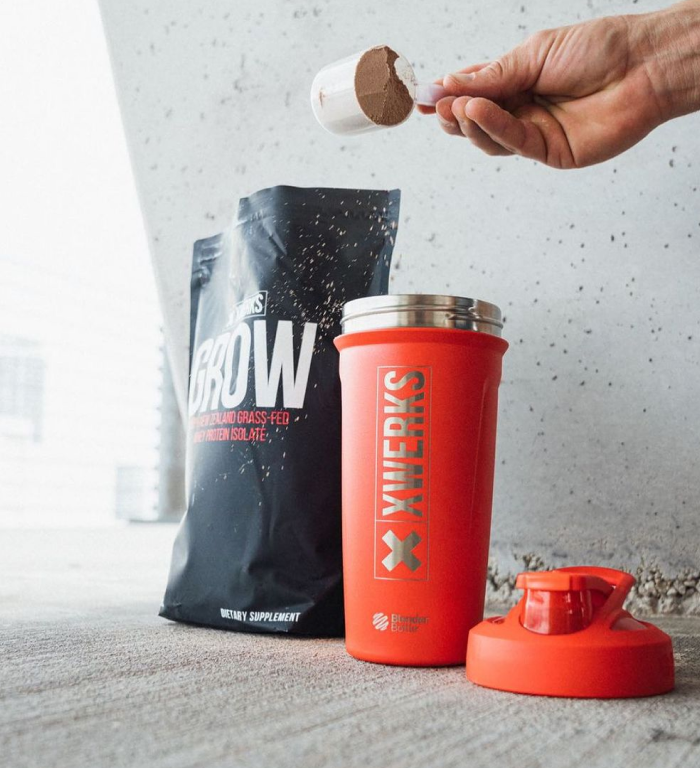
For 80kg adult: 130-190g protein daily. Distribute across 4-6 meals. Whey isolate (XWERKS Grow) helps fill protein gaps.
Activity-appropriate carb intake
2-4g/kg for moderate activity in deficitCarbs aren't the enemy — they support training quality (which preserves muscle and supports total caloric expenditure) and recovery between sessions. Adequate carbs support the training that contributes to fat loss. The ACSM/AND/DC joint position on nutrition and athletic performance documents the carbohydrate framework for active populations.
For moderate activity in caloric deficit: 2-4g/kg daily. For high activity: 3-5g/kg. For very low activity: 1-3g/kg. Adjust based on training demands. See how many carbs per day for daily intake context.
Strength training
2-4 sessions weeklyResistance training during fat loss preserves muscle mass, maintains metabolic rate, and improves body composition outcomes. Compound lifts (squats, deadlifts, presses, rows) provide best stimulus. Even modest training (2-3 sessions weekly) substantially improves fat loss outcomes vs. deficit alone.
For belly fat specifically: training that engages core musculature (squats, deadlifts, overhead presses, rows) develops abdominal muscles. The visible "abs" require both muscle development and low body fat — neither alone produces the visual outcome. See carbs vs protein for muscle building for the muscle-preservation framework.
Cardiovascular training
2-4 sessions weeklyCardio contributes to caloric expenditure and supports cardiovascular health. Moderate-intensity cardio (zone 2 work) and high-intensity intervals both have applications. Some research suggests visceral fat responds particularly well to cardio. Combine with strength training for best body composition outcomes.
Adequate sleep
7-9 hours nightlySleep affects appetite hormones (ghrelin, leptin), insulin sensitivity, cortisol patterns, and dietary adherence. Sleep deprivation increases hunger, reduces willpower, and modestly impairs fat loss outcomes. The "sleep is foundational" framework applies to fat loss as much as to other health outcomes. See our sleep hacking guide for the comprehensive framework.
Stress management
Cortisol regulationChronic cortisol elevation contributes to abdominal fat accumulation specifically. The "stress causes belly fat" framing has biological basis — cortisol patterns favor visceral fat distribution. Stress management (sleep, exercise, social connection, meditation, hobbies) supports cortisol regulation, which supports overall fat loss including abdominal.
The practical fat loss framework
Step-by-step framework for fat loss including belly fat:
Step 1: Determine maintenance calories. Use TDEE calculator or track current intake at stable weight. For 80kg moderately active adult, typical maintenance is 2,400-2,800 calories.
Step 2: Set caloric deficit. 15-25% below maintenance. Aggressive deficits produce faster initial loss but worse sustainability. Moderate deficits (20%) often produce best long-term outcomes.
Step 3: Set protein target. 1.6-2.4g/kg body weight. Higher end for aggressive deficit or older adults. Distribute across 4-6 meals.
Step 4: Set carb target based on activity.
• Sedentary in deficit: 1-2g/kg
• Moderately active in deficit: 2-4g/kg
• Highly active in deficit: 3-5g/kg
For 80kg moderately active adult: 160-320g daily carbs.
Step 5: Fat fills remaining calories. Whatever calories remain after protein and carbs become fat target. Typically 20-30% of total calories.
Step 6: Train consistently. 2-4 strength sessions weekly + 2-4 cardio sessions weekly. Total training: 4-6 sessions per week for optimal body composition outcomes.
Step 7: Optimize sleep and stress. 7-9 hours quality sleep. Stress management practices that work for your situation. These foundational factors support all dietary and training efforts.
Step 8: Track progress. Weekly weight, monthly body measurements (waist, hips, etc.), photos at consistent lighting and time. Don't focus on daily fluctuations — they reflect water and food volume, not fat changes.
Step 9: Adjust based on response. If fat loss stalls for 2-3 weeks at consistent intake and training, reduce calories ~5-10% or increase activity. Don't make dramatic changes; small adjustments compound.
Step 10: Accept that belly fat may be slow. Belly fat often reduces last for many adults. Continued fat loss eventually reduces it; impatience leads to dropping the framework before it works.
Realistic timelines:
• 1-2 lbs weight loss per week (4-8 lbs per month) is sustainable rate
• Visible body composition changes typically appear 4-8 weeks into consistent program
• Substantial belly fat reduction often requires 12-24 weeks of consistent fat loss
• Visible abdominal definition typically requires 12-15% body fat for men, 18-22% for women
What to skip in belly fat marketing
• "Specific carb count to target belly fat": Spot reduction through diet doesn't work. Specific numbers (e.g., "100g carbs daily melts belly fat") are marketing without research support.
• "Belly fat-burning supplements": No supplement specifically targets belly fat. Some supplements support general fat loss (modest effects); none preferentially burns abdominal fat.
• Waist trainers and abdominal wraps: Compress abdomen temporarily; don't reduce abdominal fat. The "after" photos in marketing often combine waist trainer with overall fat loss credit attributed to the trainer.
• Endless crunches and ab exercises as belly fat reduction: Strengthen abdominal muscles but don't preferentially burn belly fat. Visible abs require low body fat percentage from overall fat loss.
• "10 carbs that burn belly fat" listicles: No specific foods preferentially target abdominal fat. Foods that support overall fat loss (high-protein, high-fiber, lower-calorie) work for belly fat as part of overall fat loss.
• "Hidden hormone causing belly fat" supplements: Various marketing claims that "discovered hormones" cause belly fat resistant to standard approaches. Usually pseudoscience pushing supplements.
• "Detox cleanse belly fat" approaches: Cleanses don't target belly fat. Initial weight loss is water and digestive content, not fat loss. Aggressive cleanses can be harmful.
• Specific food/timing combinations claimed to "burn fat while you sleep": Marketing exploiting both backloading and metabolic-boost claims. Doesn't match physiology. See our carb backloading guide for the honest review of evening-carb claims.
• "Cortisol-blocking" supplements for belly fat: Some supplements claim to reduce cortisol-driven belly fat. Most have weak research support. Stress management through lifestyle (sleep, exercise) produces better cortisol regulation than supplements.
• Extreme low-carb claims for spot reduction: Aggressive carb restriction produces fat loss through caloric deficit, not through preferential belly fat burning. The "low-carb burns belly fat" framing exploits the spot reduction myth. See low carb vs keto difference for the broader low-carb context.
• "Specific exercise for visceral fat": All exercise contributes to overall fat loss. No specific exercise preferentially burns visceral fat beyond what general activity produces.
Special considerations for belly fat
Women and abdominal fat
Hormonal patterns affect distributionWomen's fat distribution patterns differ from men's. Pre-menopausal women typically distribute fat more in hips, thighs, and arms; post-menopausal hormonal shifts often produce more abdominal fat distribution. The same fat loss strategies work but distribution patterns differ.
Women considering hormonal optimization (perimenopause, post-menopause) should work with healthcare providers; hormone replacement therapy can affect fat distribution patterns.
Men and visceral fat
Higher visceral fat riskMen typically accumulate more visceral fat than women, particularly in middle age. The "beer belly" pattern is characteristic male visceral fat accumulation. Visceral fat responds well to overall fat loss interventions and exercise.
Men with substantial visceral fat may consider testosterone evaluation — low testosterone is associated with abdominal fat accumulation and hormone-fat patterns can become bidirectional. See our how to increase testosterone and ultimate guide to naturally raising testosterone guides.
Aging and abdominal fat
Distribution shifts with agingBoth men and women experience fat distribution shifts with aging — generally more abdominal accumulation. Combined with age-related muscle loss (sarcopenia), older adults often see body composition changes that emphasize abdominal fat. Resistance training becomes especially important for older adults to preserve muscle and counter abdominal fat accumulation.
Stress and belly fat
Cortisol-driven distributionChronic stress and elevated cortisol patterns specifically favor abdominal fat accumulation. The "stress eats away at your gut" framework has biological basis. Stress management (sleep, exercise, social connection, meditation, hobbies) supports overall fat loss including belly fat.
Alcohol and abdominal fat
Specific pattern of fat accumulationRegular alcohol consumption is associated with abdominal fat accumulation specifically. The "beer belly" pattern reflects both caloric contribution from alcohol and metabolic effects on fat distribution. Reducing alcohol intake supports belly fat loss beyond caloric reduction alone.
Common questions about carbs and belly fat
"What's the best carb amount to lose belly fat fastest?"
No specific number targets belly fat. Sustainable fat loss requires moderate caloric deficit (15-25% below maintenance) with adequate protein (1.6-2.4g/kg) and activity-appropriate carbs (2-4g/kg for moderate activity). Faster fat loss isn't always better — aggressive approaches often produce muscle loss and metabolic adaptation that compromises long-term outcomes.
"Will going low-carb help me lose belly fat?"
Low-carb diets work for fat loss when they create sustainable caloric deficit. They don't preferentially target belly fat compared to other approaches at matched calories. Some people find low-carb sustainable; others don't. Choose dietary structure based on what you can maintain consistently.
"Are there any carbs that burn belly fat?"
No specific foods burn belly fat. Quality carb sources (vegetables, fruits, legumes, whole grains) support overall fat loss through high satiety, lower caloric density, and nutritional adequacy. They support belly fat loss as part of overall fat loss, not through specific belly-targeting effects. See healthy carbs for quality source guidance.
"Why is my belly fat not going away even though I'm losing weight?"
Belly fat often reduces last for many adults — particularly subcutaneous belly fat. Fat loss occurs in patterns determined by individual physiology, not by what you'd prefer. Continued caloric deficit eventually reduces belly fat; patience and consistency matter more than dietary tweaks.
"Should I do crunches to lose belly fat?"
Crunches develop abdominal muscles but don't preferentially burn belly fat (spot reduction myth). Strong abdominal muscles become visible only at low body fat percentage achieved through overall fat loss. Compound exercises (squats, deadlifts, presses) develop core musculature more functionally and contribute to caloric expenditure that supports fat loss.
"How long does it take to lose belly fat?"
Depends on starting body fat percentage, deficit aggression, sleep, stress, training consistency, and individual physiology. Moderate fat loss (1-2 lbs weekly) over 12-24 weeks typically produces substantial belly fat reduction for most adults. Visible abdominal definition typically requires substantial fat loss to ~12-15% body fat for men, ~18-22% for women.
"What should I eat to specifically lose belly fat?"
Quality whole foods that support overall fat loss: vegetables, fruits, lean proteins, modest whole grains, legumes, healthy fats. The dietary pattern that supports overall fat loss supports belly fat loss as part of that total. There's no specific "belly fat foods" that work differently. See glycemic index vs glycemic load for the broader food quality framework.
"Does drinking water help lose belly fat?"
Adequate hydration supports overall health and may modestly support satiety. Doesn't specifically target belly fat. Drinking water before meals may modestly reduce caloric intake by some research; effect is small. Hydration as part of overall fat loss strategy: yes; as belly fat solution: no.
"Does carb cycling help with belly fat?"
Carb cycling produces similar fat loss outcomes to consistent moderate intake at matched calories. Some people find cycling structure helps adherence; others find it adds complexity without proportional benefit. See carb cycling for fat loss for the honest review.
The Bottom Line
The honest answer requires reframing the question: there's no specific carb number that targets belly fat. Caloric deficit drives overall fat loss; the body decides where fat comes off based on genetics, hormones, age, and sex — not based on which macronutrient you cut.
Spot reduction is a myth: you can't preferentially burn belly fat through specific dietary or exercise strategies. As you lose body fat overall, belly fat reduces alongside fat from other regions in patterns determined by individual physiology.
Practical framework for fat loss including belly fat: moderate caloric deficit (15-25% below maintenance), adequate protein (1.6-2.4g/kg), carbs at activity-appropriate levels (2-4g/kg for moderate activity in deficit), strength training, cardiovascular training, adequate sleep, stress management.
Belly fat reality: often the last to leave because subcutaneous belly fat tends to be "stubborn fat" persisting later in fat loss process. Visceral fat (deep, around organs) often reduces first; subcutaneous fat (under skin) persists longer. Both respond to overall fat loss; patience matters.
Skip: "specific carb count" promises for belly fat targeting, extreme low-carb claims for spot reduction, "belly fat-burning supplements," waist trainers and wraps, "10 carbs to lose belly fat" listicles, expecting linear or symmetric fat loss, "detox cleanse" approaches.
Special considerations: women's hormonal patterns affect distribution (especially perimenopause/menopause); men typically have more visceral fat; aging shifts fat distribution toward abdomen; chronic stress drives abdominal fat accumulation; alcohol consumption associates with belly fat patterns specifically.
Realistic expectations: 1-2 lbs weight loss per week is sustainable; substantial belly fat reduction often requires 12-24 weeks of consistent fat loss; visible abdominal definition typically requires 12-15% body fat for men, 18-22% for women.
The honest framework: belly fat responds to overall fat loss patiently pursued. Sustainable caloric deficit + adequate protein + appropriate carbs + consistent training + good sleep + stress management produces results. The "specific carbs for belly fat" framing exploits emotional pain points without producing better results than the honest framework.
Dig deeper: how many carbs per day · healthy carbs · carb cycling for fat loss · carbs vs protein for muscle building · best carbs after workout · best carbs before workout · low carb vs keto difference · carb backloading · glycemic index vs glycemic load · hack your sleep · naturally raise testosterone