TL;DR
- The honest framing: pre-workout supplements are designed for 60-90 minute training sessions, not 4-5 hour golf rounds. Heavy stimulant pre-workouts crash mid-round, beta-alanine flushing distracts from precise swing mechanics, and the cognitive jitters can hurt putting touch.
- For the round itself: coffee or modest caffeine (100-200mg) typically beats heavy pre-workouts. Lower stimulant load, no flushing side effects, sustained focus without the back-nine crash.
- For off-course gym sessions: standard pre-workouts work well. The 60-90 minute training duration matches caffeine and citrulline effect curves perfectly. Use pre-workout for the gym; use coffee for the course.
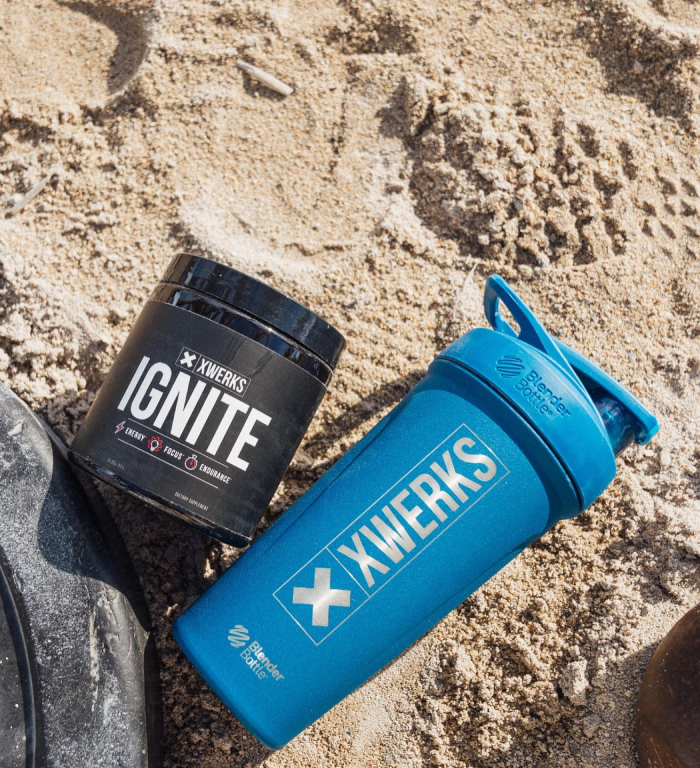
- Cognitive support ingredients with research backing: L-tyrosine, rhodiola rosea, modest caffeine, B-vitamins. XWERKS Ignite includes 2g L-tyrosine and 500mg rhodiola alongside 150mg caffeine — a more cognition-focused formulation than typical pre-workouts.
- Skip: heavy-stim pre-workouts (300mg+ caffeine) before rounds, pre-workouts with niacin/beta-alanine on golf days, energy drinks as round fuel, pre-workout megadosing for older golfers with cardiovascular concerns.
"Pre-workout for golf" is a search where the honest answer requires reframing the question. The straightforward reality: pre-workout supplements are designed for 60-90 minute training sessions, not 4-5 hour golf rounds. Their effect curves don't match the demand profile of golf. Heavy stimulant pre-workouts (containing 300mg+ caffeine, beta-alanine, niacin, and other ergogenic compounds) produce performance benefits over the first 60-90 minutes — then crash. Used pre-round, you'll likely fade on the back nine when the same compounds that helped the front nine become liabilities. The flushing from beta-alanine and niacin is fine during gym training; it's distracting and uncomfortable during a precise athletic movement like the golf swing. The acute jitters from heavy caffeine doses can compromise putting touch and short-game feel — the precision components of golf where stim-induced motor variability hurts performance. The honest framework: use pre-workouts for actual gym sessions where the duration and demand profile match; use coffee or modest caffeine (100-200mg) for the round itself. Different demands, different optimal protocols. This guide covers why pre-workouts don't fit golf rounds, what does work for on-course cognitive and energy support, the genuine cognitive ingredients with research backing, off-course training pre-workout use, older golfer considerations, and what to skip in pre-workout marketing aimed at golf.
Why pre-workouts don't fit golf rounds
Pre-workout supplements are formulated for 60-90 minute training sessions. Their ingredients are designed to peak during that window:
Caffeine half-life: 4-6 hours typically, but peak effect is 30-60 minutes after ingestion with declining effect over 2-4 hours. The ISSN position stand on caffeine and exercise performance documents performance benefits at 3-6mg/kg body weight. Heavy doses (250-400mg) provide intense focus and energy for 60-90 minutes, then transition into a crash phase as adenosine accumulates and caffeine effects wane.
Beta-alanine effects: Tingling/flushing peaks 15-45 minutes after ingestion and persists 60-90 minutes. The ISSN position stand on beta-alanine documents buffering benefits applying to repeated high-intensity efforts (1-4 minute duration sustained anaerobic work) — useful for HIIT, sets-and-reps training. Doesn't apply to golf's intermittent low-intensity profile.
Citrulline effects: Vasodilation and pump effects peak 60-90 minutes after ingestion. Citrulline malate research shows useful benefits for resistance training. Doesn't substantially benefit golf performance.
Niacin (vitamin B3) flushing: Some pre-workouts contain niacin causing skin flushing, redness, and tingling for 30-60 minutes. Distracting during the round, particularly during the warm-up and first few holes.
The mismatch:
For a 60-minute gym session: pre-workout effect curve aligns perfectly. You start training when effects peak; you finish before the crash.
For a 4-5 hour golf round: peak effects come during the warm-up and first few holes; you crash on the back nine when matches and concentration matter most. The exact opposite of what you want.
The precision problem
Heavy stims compromise touch shotsBeyond the duration mismatch, heavy pre-workouts can compromise the precision components of golf:
• Putting touch: Acute caffeine jitters at 300mg+ doses can introduce subtle motor variability that compromises 5-10 foot putts where touch matters most.
• Short game feel: Chip shots, pitch shots, sand play — all require touch and feel that can be compromised by acute stimulant effects.
• Tempo and rhythm: The golf swing requires consistent tempo. Stimulant-induced agitation can compromise this rhythm.
• Heart rate elevation: Pre-workouts elevate resting heart rate. The settled, low-arousal state ideal for putting and approach shots is compromised.
For driver swings and explosive shots: heavy stimulant effects might modestly help. For everything else (the majority of golf shots): they likely hurt more than help.
What actually works for the round
Coffee or modest caffeine
100-200mg pre-round, optional 50-100mg at the turnFor most golfers, coffee is the better on-course choice than pre-workout supplements:
• 100-200mg caffeine pre-round provides focus and energy without overstim
• Sustained but moderate effect curve aligns better with round duration
• No flushing side effects
• Modest jitter risk at standard coffee doses
• Optional small additional dose at the turn (after 9 holes) for back-nine focus
• Test response in practice rounds before tournament use
Practical implementation:
• 1-2 cups of coffee 30-60 minutes before tee time
• Standardized caffeine source (caffeine pills, energy drinks with known content) for consistency
• Avoid additional caffeine after the 13th hole — might disrupt sleep that night
Hydration plus carbs (the actual fuel)
More important than caffeine for back-nine performanceCumulative dehydration and glycogen depletion produce more back-nine performance loss than caffeine deficit. The real "pre-workout" for golf is hydration plus carbs:
• 16-20oz electrolyte drink per hour during the round
• 25-50g carbs per hour from quick-digesting sources (banana, dates, fruit, sports drinks)
• Pre-round meal supporting glycogen stores
• At the turn snack supporting back-nine performance
This is what actually drives sustained on-course performance. Caffeine supports focus; carbs and water provide the energy and physiological foundation. Don't optimize the caffeine while neglecting the actual fuel. See our best carbs before workout guide and how many carbs per day for the broader carbohydrate framework.
XWERKS Motion combines 25g Cluster Dextrin (low-osmolality sustained-release carbs) with sodium, potassium, and magnesium electrolytes — mixing into your bottle as the on-course fuel and hydration solution.
Cognitive ingredients with research backing
L-tyrosine, rhodiola, B-vitaminsSome pre-workout ingredients have research support for cognitive function, particularly under stress or fatigue — conditions relevant to long rounds and tournament play:
• L-tyrosine (1-3g): Amino acid precursor to dopamine and norepinephrine. Jongkees et al.'s review of tyrosine and cognitive performance documents particularly meaningful effects under demanding circumstances (stress, cold, sleep deprivation, multi-tasking) — conditions relevant to tournament play and long rounds.
• Rhodiola rosea (200-600mg): Adaptogen with research support for cognitive function under stress and fatigue. Olsson et al.'s clinical trial on rhodiola for fatigue documents meaningful improvements in mental performance under fatigued conditions. May reduce mental fatigue accumulation across long efforts.
• B-vitamins (especially B6, B12): Support energy metabolism and cognitive function. Many adults are mildly deficient. Modest cognitive support.
• Caffeine (100-200mg): Established cognitive enhancement. Stick with moderate doses for golf.
XWERKS Ignite is formulated more around cognitive support than typical pre-workouts — 150mg caffeine (moderate, not heavy), 2g L-tyrosine, 500mg rhodiola rosea, plus 3g citrulline malate, 1.5g beta-alanine, and 200mg DMAE. The cognitive ingredients distinguish it from standard "more stim is better" pre-workouts.
Caveat: Even with cognitive-focused formulations, the round vs. gym distinction matters. Beta-alanine flushing still occurs; if it bothers you on the course, save Ignite for gym sessions and use coffee for rounds.
Off-course training pre-workout use
For off-course gym sessions, pre-workouts work as designed. The 60-90 minute training duration matches their effect curves. The high-intensity demands match the ingredients' mechanisms.
Optimal use of pre-workout for golfers:
• Resistance training sessions targeting strength, rotational power, and conditioning
• 30-60 minutes before training
• Standard recommended dose (not megadose)
• Combined with adequate pre-training carbs and hydration
• Not on training days when you'll also play golf same day
What pre-workouts contribute to off-course training:
• Improved training intensity and focus
• More reps at given weights (citrulline, beta-alanine effects)
• Better between-set recovery
• More total work per session
• Cumulative across weeks: more training stimulus, better gains, more golf-relevant strength and power
The off-course training built with pre-workout support produces the gym-derived adaptations (rotational power, grip strength, core stability) that improve on-course performance. The benefits are indirect but real. See our best carbs after workout guide for the recovery side of this training framework.
Older golfer considerations
Cardiovascular concerns
Modest doses, careful selectionPre-workout supplements often contain substantial stimulant doses (300mg+ caffeine, plus other compounds). For older adults with cardiovascular concerns (hypertension, history of cardiac issues, atrial fibrillation, etc.), these doses can be inappropriate.
Practical guidance for older golfers:
• Discuss stimulant intake with healthcare provider
• Use moderate doses (100-200mg caffeine) rather than heavy doses
• Avoid pre-workouts with multiple stimulants (caffeine + DMAA + synephrine combos)
• Coffee is typically a safer baseline than concentrated pre-workout supplements
• Cognitive ingredients (L-tyrosine, rhodiola) without heavy stims may suit older adults better
For older golfers wanting pre-workout cognitive support: a moderate-stim cognitive-focused formulation works better than heavy-stim bodybuilding pre-workouts. Reading labels matters. For broader hormonal context affecting older men's training capacity, see how to increase testosterone and the ultimate guide to naturally raising testosterone.
Sleep impact
Caffeine timing matters more after 50Caffeine half-life lengthens with age. Drake et al. document that caffeine consumed even 6 hours before bedtime measurably disrupts sleep — the effect compounds for older adults whose caffeine clearance is slower. The same caffeine dose that doesn't disrupt sleep at 30 may meaningfully impact sleep at 60.
• Avoid caffeine after 1pm if playing late afternoon rounds
• Don't add additional caffeine doses after the 9th hole on late rounds
• Heavy pre-workouts pre-round can compromise that night's sleep
• Sleep quality matters more for older golfers — don't trade short-term focus for that night's recovery
For broader sleep optimization framework, see our sleep hacking guide.
Drug testing considerations
Recreational golfers don't face drug testing concerns. Competitive amateurs and pros do:
Bodies that test:
• PGA Tour, LPGA, European Tour (anti-doping programs)
• USGA championships and qualifying events
• Olympic competition
• NCAA collegiate golf
• Some state and regional amateur events
Risk factors in pre-workout supplements:
• Proprietary blends that don't disclose all ingredients
• "Natural" stimulants like DMAA, synephrine, higenamine that have appeared on banned lists
• Cross-contamination from manufacturing facilities producing other supplements
• Some "natural T-boosters" with banned ingredients
Practical guidance:
• Choose third-party tested products (NSF Certified for Sport, Informed Sport)
• Read labels; avoid proprietary blends where full ingredient lists aren't disclosed
• Verify each ingredient against the WADA prohibited list and USGA-specific rules
• When in doubt, stick with caffeine alone (universally permitted)
What to skip in pre-workout marketing
• Heavy-stim pre-workouts (300mg+ caffeine) before rounds: Crash on the back nine. Use moderate caffeine for rounds; save heavy-stim formulas for gym sessions.
• Pre-workouts with niacin (B3) flushing: The flushing effect during the warm-up and first few holes is distracting. Even if research supports niacin in some contexts, the on-course experience is poor.
• Beta-alanine on golf days: The tingling/flushing distracts from precise swing mechanics. Save for gym sessions where the buffering effect actually applies.
• "Golf focus" supplement products: Often premium-priced standard cognitive ingredient blends with golf branding. Read the label; verify what you're actually getting.
• Energy drinks as primary round fuel: The combination of high caffeine + sugar + various B-vitamins typically produces back-nine crashes. Coffee + carbs separately works better than energy drinks.
• Pre-workout before a round + during the round = stim stacking: Combining pre-workout pre-round with on-course energy drinks or caffeine produces stim doses that compromise putting and short game.
• "Nootropic" stacks with weak research support: Many commercial nootropics combine caffeine with various "smart compounds" that have weak research backing. Don't assume "more compounds = more cognition."
• DMAA, synephrine, and similar stimulant compounds: Cardiovascular concerns plus drug-testing risks for competitive golfers. Avoid.
• "Pre-round shots" or "golf energy shots": Often standard energy shots with golf branding at premium prices. Same cautions about caffeine timing and crash apply.
• Heavy pre-workouts for older golfers without cardiovascular evaluation: Risk-benefit for older adults often unfavorable. Discuss with healthcare provider.
Common questions about pre-workout for golf
"Should I take pre-workout before a round?"
Probably not. Pre-workouts are designed for 60-90 minute training sessions; they crash before you finish 18 holes. Coffee or modest caffeine (100-200mg) typically works better. Save heavy pre-workouts for actual gym sessions.
"What about a half-scoop of pre-workout?"
Better than a full scoop, but coffee or modest caffeine alone is usually still preferable. Half-scoop reduces stimulant dose but doesn't change the duration mismatch — you'll still likely fade earlier than ideal across a 4-5 hour round.
"What pre-workout is best for golf?"
If using a pre-workout pre-round: choose moderate-stim formulations with cognitive ingredients (L-tyrosine, rhodiola). Avoid heavy-stim, niacin-containing, and beta-alanine-flushing formulas. Honestly though, coffee + electrolytes + carbs often beats most pre-workouts for the round.
"Can I use pre-workout on tournament days?"
For warmup and practice rounds: yes if you've tested it. For competitive rounds: probably not — you don't want unfamiliar acute effects on shot decisions. Stick with what you've tested in practice rounds.
"What about energy drinks during a round?"
Generally not great. The high caffeine + high sugar + B-vitamins combination typically produces blood sugar spike-and-crash and stim crash patterns. Coffee + electrolyte drink + modest carbs separately produces better outcomes.
"Will pre-workout help me hit longer drives?"
Possibly modestly, for the first few holes. The acute stimulant and citrulline effects could marginally support driver swing intensity. Across 18 holes, the benefit on later drives disappears as effects wane. The trade-off (modestly longer early drives, compromised back-nine performance and putting touch) typically isn't worth it.
"What if I have a 36-hole tournament day?"
Even less reason to use heavy pre-workout pre-round. The cumulative duration (8-10 hours of golf) makes any acute pre-event stimulant approach problematic. Steady caffeine (modest doses, multiple times across the day), aggressive hydration and carbs, and real meals between rounds work better.
"Are pre-workouts safe for older golfers?"
Depends on cardiovascular health and specific product. Heavy-stim pre-workouts are often inappropriate for older adults with hypertension or cardiac concerns. Discuss with healthcare provider. Coffee at moderate doses is typically a safer baseline than concentrated pre-workouts for older adults.
The Bottom Line
Pre-workout supplements are designed for 60-90 minute training sessions, not 4-5 hour golf rounds. The ingredients and effect curves don't match golf's demand profile. Heavy stimulant pre-workouts crash mid-round; beta-alanine flushing distracts from precise swing mechanics; cognitive jitters compromise putting touch.
For the round itself: coffee or modest caffeine (100-200mg) typically beats heavy pre-workouts. Lower stimulant load, no flushing side effects, sustained focus without back-nine crash.
For off-course gym sessions: pre-workouts work as designed. The 60-90 minute training duration matches the ingredient effect curves. Use pre-workout for the gym; use coffee for the course. Different demands, different optimal protocols.
The actual on-course "pre-workout": hydration + carbs + modest caffeine. Cumulative dehydration and glycogen depletion produce more back-nine performance loss than caffeine deficit. Don't optimize caffeine while neglecting actual fuel.
Cognitive ingredients with research support: L-tyrosine (1-3g), rhodiola rosea (200-600mg), modest caffeine, B-vitamins. XWERKS Ignite is formulated more around cognitive support than typical pre-workouts.
Older golfer considerations: cardiovascular concerns warrant caution with heavy stims; sleep impact from afternoon caffeine matters more after 50; coffee at moderate doses is typically a safer baseline than concentrated pre-workouts.
Drug testing considerations: for competitive amateur and pro golfers, choose third-party tested products (NSF Certified for Sport, Informed Sport), avoid proprietary blends, verify ingredients against banned substance lists.
Skip: heavy-stim pre-workouts (300mg+ caffeine) before rounds, pre-workouts with niacin (flushing), beta-alanine on golf days, energy drinks as round fuel, stim stacking (pre-workout pre-round + on-course caffeine), "golf focus" supplement products at premium prices, DMAA/synephrine/similar compounds.
The honest framework: pre-workouts are excellent supplements for what they're designed for (gym training). They're not designed for golf rounds and shouldn't be forced into that context. Use the right tool for the right job: pre-workout for the gym, coffee + electrolytes + carbs for the course.
Dig deeper: supplements for golfers · protein for golfers · creatine for golf · best carbs before workout · best carbs after workout · how many carbs per day · naturally raise testosterone · hack your sleep
Pre-Workout for Off-Course Training
For golfers who train off-course (resistance training, rotational power work, conditioning): XWERKS Ignite combines 150mg caffeine (moderate, not heavy), 2g L-tyrosine, 500mg rhodiola rosea, plus 3g citrulline malate and 1.5g beta-alanine. More cognition-focused than typical bodybuilding pre-workouts. Use for actual gym sessions; stick with coffee for the round itself.
Shop Ignite