TL;DR
- The honest framing: muscle building requires both carbs and protein — they serve different essential roles rather than competing. The "carbs vs protein" framing oversimplifies what's actually a "both/and" situation.
- Protein's role: provides amino acids for muscle protein synthesis (the building blocks). Target 1.6-2.2g/kg body weight daily across 4-6 servings of 25-40g each.
- Carbs' role: fuel training intensity (which drives the stimulus for growth), replenish glycogen for next session, support insulin signaling that aids protein utilization, allow caloric surplus that muscle gain typically requires.
- The honest priority: protein is the most "muscle-specific" nutrient (you can't build muscle without it); carbs support the training that drives muscle growth and the metabolic environment that allows it.
- Skip: extreme low-carb muscle building protocols (typically compromise training quality), protein-only obsession that ignores caloric needs, mass-gainer products with junk calories, "carbs make you fat" framing applied to muscle building contexts.
"Carbs vs protein for muscle building" is a comparison framing that confuses many lifters into thinking they need to choose. The honest picture: muscle building requires both carbohydrates and protein — they serve different essential roles rather than competing for primacy. Protein provides the amino acids that muscle is literally made from; without adequate protein, muscle growth is impossible regardless of training quality or other dietary factors. Carbs fuel training intensity (which drives the stimulus for growth), support recovery between sessions (which determines whether the stimulus produces adaptation), aid protein utilization through insulin signaling, and provide calories needed for the surplus that muscle gain typically requires. The "carbs vs protein" framing oversimplifies what's actually a "both/and" situation. The legitimate question isn't which to prioritize at the expense of the other, but how to structure intake to optimize both. Most successful muscle-building approaches include adequate protein (1.6-2.2g/kg body weight daily, distributed across 4-6 servings) plus carbs at activity-appropriate levels (3-7g/kg for serious lifters depending on training volume). The "low-carb muscle building" approaches that have gained social media traction typically compromise training quality and produce inferior results compared to moderate-carb approaches in research. This guide covers the actual roles of protein and carbs in muscle growth, why both matter, how to balance them practically, what to skip in muscle-building nutrition marketing, and the honest comparison framework that resolves the false dichotomy.
What protein actually does for muscle building
Protein's role in muscle building is the most direct and least substitutable of any macronutrient. The ISSN position stand on protein and exercise documents the foundational role:
Provides amino acids for muscle protein synthesis (MPS): Muscle proteins are built from amino acids. Adequate protein intake provides the raw materials for the muscle protein synthesis process. Phillips and Van Loon's review of dietary protein for athletes documents 1.4-2.0g/kg as the supported range for active populations.
Triggers MPS through leucine signaling: Leucine specifically (an essential amino acid abundant in animal proteins and whey) signals the mTOR pathway that drives MPS. Moore et al. document that approximately 0.4g/kg per meal optimizes MPS response for most adults — 25-40g per meal containing ~2.5-3g leucine maximizes the MPS effect.
Supports muscle preservation during caloric deficit: Adequate protein intake during weight loss prevents excessive muscle loss. Helms et al.'s research on protein for natural bodybuilders during caloric restriction documents the higher protein needs (often 2.0-2.4g/kg) for muscle preservation in deficit.
Reduces muscle protein breakdown: Beyond providing building blocks, adequate protein helps reduce the muscle protein breakdown that occurs during training and caloric deficits.
Provides high satiety per calorie: Protein has the highest satiety effect per calorie of any macronutrient. This supports adherence to whatever caloric strategy you're pursuing (deficit for cutting or surplus for gaining).
Higher thermic effect of food (TEF): Protein's TEF (~25-30%) is substantially higher than carbs (~10%) or fat (~3%). This means more of protein's calories are spent in digestion vs. stored as body energy.
Daily targets for muscle building:
• Maintenance/general: 1.4-1.6g/kg body weight
• Active lifters building muscle: 1.6-2.2g/kg body weight
• Aggressive cutting (preserve muscle in deficit): 2.0-2.4g/kg body weight
• Older adults (counter sarcopenia): 1.8-2.2g/kg body weight per the PROT-AGE Study Group recommendations
For an 80kg lifter targeting 1.8g/kg = 144g daily protein. Distributed across 4-6 meals = 24-36g per meal. See how much protein in an egg for whole-food protein content reference.
What carbs actually do for muscle building
Carbohydrates' role in muscle building is more substantial than the basic "fuel" framing suggests. The ACSM/AND/DC joint position on nutrition and athletic performance documents the carbohydrate framework for active populations:
Fuel training intensity: Resistance training relies primarily on glycogen for fuel. Adequate muscle glycogen supports heavier loads, more reps, more total volume — the stimulus that drives muscle growth. Glycogen-depleted lifters underperform compared to fed lifters.
Provide caloric surplus support: Muscle growth typically requires caloric surplus or at minimum maintenance calories. Carbs efficiently provide calories without requiring excessive food volume. Building substantial caloric intake from protein and fat alone is challenging for many lifters.
Support recovery between sessions: Glycogen replenishment after training determines training quality for next session. Inadequate post-workout carbs compromise next-session performance, which compromises the cumulative training stimulus. See best carbs after workout for the detailed framework.
Insulin signaling supports protein utilization: Carb intake produces insulin response, which supports cellular protein utilization. The protein-carb combination produces better protein synthesis than protein alone in some contexts.
Spare protein for muscle building: When caloric intake is inadequate or carbs are too low, the body may use protein for energy rather than muscle building. Adequate carbs allow protein to serve its muscle-building role rather than being burned for fuel.
Reduce cortisol and support training environment: Adequate carbs support a hormonal environment favorable for muscle building (lower cortisol, better insulin sensitivity, supported testosterone). Very low-carb training tends to produce elevated cortisol patterns that work against muscle building.
Daily targets for muscle building:
• Lower-volume training (3-4x weekly, 45-60 min sessions): 3-5g/kg body weight
• Moderate-volume training (4-5x weekly, 60-75 min sessions): 4-6g/kg body weight
• High-volume training (5-6x weekly, 75-90 min sessions): 5-7g/kg body weight
• Very high-volume athletic training: 6-10g/kg body weight
For an 80kg lifter doing moderate-volume training at 5g/kg = 400g daily carbs. Distributed across meals with emphasis around training. See how many carbs per day for context.
The honest comparison — what each does best
Protein's irreplaceable role
The most "muscle-specific" nutrientProtein is the most "muscle-specific" macronutrient. Without adequate protein, muscle building is impossible regardless of training quality or other dietary factors. Carbs and fat can substitute for each other to some degree as energy sources; protein cannot be substituted for muscle building purposes.
This is why "if you have to prioritize one, prioritize protein" advice is reasonable. Most lifters who struggle to build muscle haven't optimized protein intake despite obsessing over other variables. Protein is the prerequisite.
Carbs' supporting role
Enables training that drives growthCarbs don't directly build muscle; they enable the training environment and metabolic conditions that drive growth. Adequate carbs support training intensity (more growth stimulus), recovery (better adaptation), caloric surplus (often required for gain), and protein utilization (better MPS).
Lifters can technically build muscle on lower-carb diets, but they typically build less muscle slower than they would with adequate carbs. The "you can build muscle on keto" claim is technically true but practically misleading — adequate-carb approaches typically produce better results. See low carb vs keto difference for the broader keto context.
Why "both/and" outperforms "either/or"
The combined intake produces best resultsResearch consistently shows that combining adequate protein with adequate carbs produces better muscle building outcomes than focusing on either at the expense of the other:
• Protein + adequate carbs: Maximum muscle building potential. Protein provides materials; carbs provide training environment and protein utilization support.
• Protein + low carbs: Functional but suboptimal. Protein adequate but training quality and recovery compromised. Some muscle building possible but slower than combined approach.
• Low protein + high carbs: Substantially worse. Adequate training environment but insufficient building blocks. Most muscle-building potential unrealized.
• Low protein + low carbs: Worst muscle building scenario. Both training quality and building materials inadequate.
The optimal approach combines both at adequate levels for your situation.
Practical balancing — protein and carb targets together
Practical framework for combining protein and carbs:
Step 1: Set protein target. 1.6-2.2g/kg body weight daily. Don't compromise protein for any other reason — it's the prerequisite for muscle building.
Step 2: Set caloric target. Maintenance + 200-500 calorie surplus for muscle gain. Maintenance for body recomposition (training while at maintenance can produce gradual recomposition for novice/intermediate lifters).
Step 3: Calculate carb target. Based on training volume:
• Lower-volume training: 3-5g/kg
• Moderate-volume training: 4-6g/kg
• High-volume training: 5-7g/kg
Step 4: Fat fills remaining calories. Whatever calories remain after protein and carbs become fat target. Typically 20-30% of total calories for muscle building.
Example: 80kg (175 lb) lifter doing moderate-volume training, building muscle:
• Maintenance calories: ~2,800 (estimated)
• Surplus target: 3,200 calories (+400)
• Protein: 80kg × 1.8 = 144g (576 calories)
• Carbs: 80kg × 5 = 400g (1,600 calories)
• Fat: (3,200 - 576 - 1,600) ÷ 9 = ~115g
This produces 144g protein + 400g carbs + 115g fat = 3,200 calories. Sufficient for substantial muscle building support.
Meal-by-meal protein and carb distribution
Breakfast (post-overnight fast)
25-40g protein + 50-80g carbs3 large eggs + oatmeal + banana + peanut butter; or Greek yogurt parfait with granola, berries, honey; or whey shake with oats and fruit. Substantial breakfast supports day's protein distribution and provides energy for daily activity.
Mid-morning snack (optional)
20-30g protein + 30-50g carbsGreek yogurt with fruit, cottage cheese with berries, or modest meal. Useful for high-protein-target individuals distributing intake across more meals.
Lunch
30-40g protein + 60-100g carbsChicken or lean beef + rice or sweet potato + vegetables. Substantial protein and carb intake supporting afternoon energy and ongoing protein synthesis.
Pre-workout (1-2 hours before training)
20-30g protein + 30-60g carbsLighter snack or modest meal supporting training intensity. Banana with peanut butter and whey shake; rice cakes with honey and Greek yogurt; oatmeal with whey shake. See best carbs before workout for detailed pre-workout framework.
Post-workout (within 30-60 min)
25-40g protein + 50-80g carbsWhey isolate shake + banana + rice cakes; or full meal with chicken + rice + vegetables. The updated research on the post-workout window supports the broader 2-4 hour timing for meaningful effects, but immediate post-workout still optimizes recovery for back-to-back training.
Dinner
30-40g protein + 40-80g carbsLean protein + starch + vegetables. Substantial dinner contributes to total daily protein and provides evening fuel for recovery sleep.
Pre-sleep (optional)
20-30g protein + 0-15g carbsCottage cheese, casein protein, or whey isolate with modest carbs. Slow-digesting protein source supports overnight muscle protein synthesis. Combined with quality sleep — see our sleep hacking guide — supports overnight recovery substantially.
What to skip in muscle-building nutrition
• Extreme low-carb muscle building protocols: Some social media claims about "building muscle on keto" or "ultra-low-carb hypertrophy." Technically possible but typically produces inferior results to moderate-carb approaches. Training quality suffers, recovery compromises adaptation.
• Protein-only obsession ignoring caloric needs: Some lifters obsess over protein while ignoring total caloric intake. Building muscle requires energy beyond just amino acids; underfeeding compromises gains regardless of protein adequacy.
• Mass-gainer products with junk calories: Many mass-gainer products provide calories through highly-processed sugars and refined ingredients. Total daily caloric balance matters; quality nutrition supports better recovery than mass-gainer sugar bombs.
• "Carbs make you fat" framing applied to muscle building: The framing applies to caloric surplus generally, not to carbs specifically. Lifters in caloric surplus for muscle building can include substantial carbs without specific fat gain effects beyond what surplus calories produce.
• Skipping post-workout carbs to "burn fat": Compromises recovery and next-session quality. The training quality cost typically exceeds the modest immediate fat oxidation benefit.
• Excessive protein doses (50g+ per meal) at expense of carbs: Above ~30-40g per meal, protein doesn't produce proportionally better muscle protein synthesis. Adding more protein at expense of carbs often produces worse results than balanced approach.
• "Anabolic window" panic that misses big picture: Total daily intake matters more than precise post-workout timing. Don't sacrifice meal quality for impossible immediate post-workout windows.
• Prioritizing "clean eating" over total intake: Some lifters obsess over food quality while underfeeding calorically. Quality matters but not at the expense of adequate caloric intake for muscle growth.
• Bro-science precision (15g protein at 4:30pm) without understanding context: The "perfect" macro distribution recommendations on social media often miss that approximately reasonable patterns produce 95%+ of the benefit of "perfectly optimized" patterns.
Common questions about carbs vs protein for muscle building
"If I had to prioritize one, which is more important?"
Protein, narrowly. Protein is the most "muscle-specific" nutrient — you literally cannot build muscle without adequate amino acid intake. Carbs support the training and metabolic environment that drives growth. Both matter substantially; if forced to choose, protein adequacy comes first.
"Can I build muscle on a low-carb diet?"
Yes, technically — but typically less effectively than moderate-carb approaches. Training quality suffers without adequate glycogen; recovery between sessions compromises cumulative adaptation. Most lifters build muscle better with adequate carbs even if low-carb works for body composition outside of training.
"What's the optimal carb-to-protein ratio?"
Approximately 2-4:1 carbs-to-protein for most muscle-building contexts. For 144g protein, that's 290-580g carbs. Lower ratios for cutting phases; higher ratios for high-volume training. Don't obsess over precise ratios — adequate intake of both matters more.
"Do I need carbs immediately around workouts?"
Yes, for substantial training. Pre-workout carbs (1-2 hours before) support intensity. Post-workout carbs support recovery. The carb timing around training matters more than carb timing during the rest of the day. See carb backloading for the broader evening-carb framework.
"How much protein per meal?"
25-40g per meal. Below 25g, MPS response is suboptimal. Above 40g, MPS response plateaus (doesn't increase proportionally with additional protein). Distribute total daily protein across 4-6 meals at this dose for optimal MPS.
"Should beginners and advanced lifters eat differently?"
Same fundamental principles, different precision required. Beginners gain muscle with reasonable approximation of adequate protein and calories. Advanced lifters approaching genetic potential need more precise execution. Both populations benefit from the same general framework.
"What about plant-based muscle building?"
Possible but requires more attention. Plant proteins typically need 30-40% larger servings than animal proteins to reach equivalent leucine threshold. Total intake targets are typically higher (2.0-2.4g/kg vs 1.6-2.2g/kg for omnivores). Diverse plant protein sources combined with plant protein supplements can build muscle effectively.
"Are carbs anti-anabolic in any context?"
Not at typical dietary intakes. The "carbs raise insulin which prevents fat loss" framing misrepresents the metabolic environment. During muscle building (caloric surplus or maintenance), carbs support the anabolic environment rather than working against it. Excessive carbs in caloric surplus contribute to fat gain alongside muscle gain — but this is about calories, not carbs specifically. See how many carbs to lose belly fat for the broader fat loss framework, and carb cycling for fat loss for cycling structures.
"What about hormone optimization for muscle building?"
Adequate protein, calories, sleep, and resistance training are the foundation. Hormone support (testosterone optimization for older male lifters especially) becomes relevant alongside the dietary fundamentals. See our ultimate guide to naturally raising testosterone and how to increase testosterone guides.
The Bottom Line
Muscle building requires both carbs and protein — they serve different essential roles rather than competing. The "carbs vs protein" framing oversimplifies what's actually a "both/and" situation.
Protein's role: provides amino acids for muscle protein synthesis (the building blocks). Target 1.6-2.2g/kg body weight daily across 4-6 servings of 25-40g each. Most "muscle-specific" nutrient — irreplaceable for muscle building.
Carbs' role: fuel training intensity (which drives the stimulus for growth), replenish glycogen for next session, support insulin signaling that aids protein utilization, allow caloric surplus that muscle gain typically requires. Targets: 3-7g/kg body weight depending on training volume.
The honest priority: protein is the prerequisite (you can't build muscle without it); carbs support the training and metabolic environment that drives muscle growth. Optimal results combine both at adequate levels — not maximizing one at the expense of the other.
Practical balancing: set protein target first (1.6-2.2g/kg), set caloric target (maintenance or surplus), calculate carb target (3-7g/kg by training volume), let fat fill remaining calories.
Skip: extreme low-carb muscle building protocols (compromise training quality), protein-only obsession that ignores caloric needs, mass-gainer products with junk calories, "carbs make you fat" framing applied to muscle building, skipping post-workout carbs to "burn fat," excessive protein doses at expense of carbs.
Total daily intake matters most. Approximately reasonable patterns produce 95%+ of the benefit of "perfectly optimized" patterns. Hit your daily protein target, hit adequate carbs for your training volume, allow time for adaptation. The fundamentals work; the precision is incremental.
Dig deeper: best carbs before workout · best carbs after workout · protein for marathon runners · how many carbs per day · how much protein in an egg · carb cycling for fat loss · low carb vs keto difference · protein for golfers · naturally raise testosterone · hack your sleep
Protein and Carbs for Muscle Building
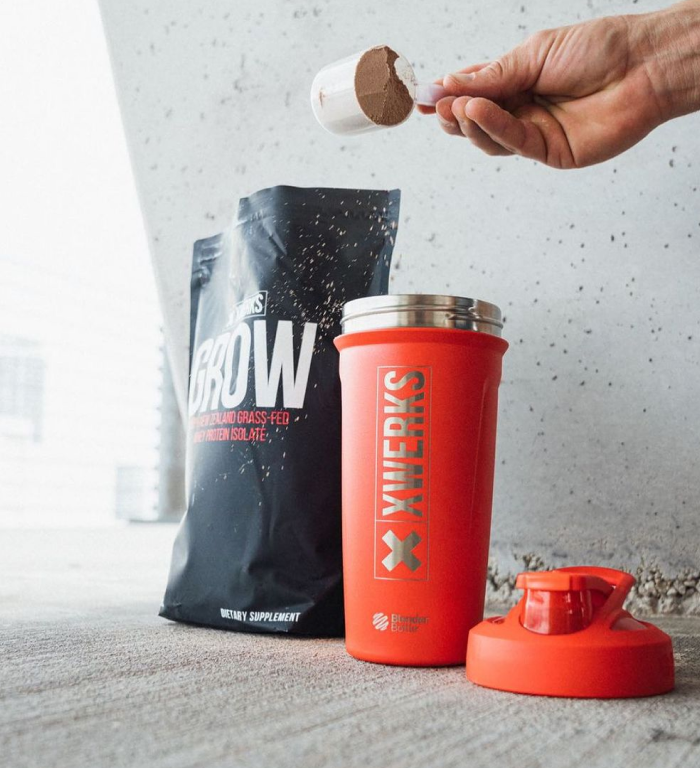
For optimal muscle building support: XWERKS Grow (25g NZ grass-fed whey protein isolate, fast-digesting for post-workout MPS) + XWERKS Motion (25g Cluster Dextrin for around-training carb fueling). The both/and approach: protein for muscle building materials, carbs for training intensity and recovery. Transparent dosing, no proprietary blends.
Shop Grow