

Whey Protein vs. Beef Protein Powder
Beef protein powder has become a popular alternative to whey — especially in paleo, carnivore, and dairy-free circles. Both are animal-sourced, both deliver protein, and both can support muscle growth. But they're not interchangeable. The amino acid profiles, sourcing, bioavailability, taste, and cost are all meaningfully different. Here's the honest comparison.
The Basics
Whey protein isolate is derived from milk. During cheese production, liquid whey is separated from casein and then filtered to remove lactose, fat, and carbohydrates. The result is a powder that's 90-95% protein by weight, with a complete essential amino acid profile, the highest bioavailability of any protein source, and particularly high concentrations of branched-chain amino acids (BCAAs) — especially leucine, the amino acid most directly responsible for triggering muscle protein synthesis.
Beef protein powder is derived from beef. The sourcing ranges from hydrolyzed collagen and gelatin (the most common and cheapest form) to actual beef muscle isolate (rarer and significantly more expensive). Beef protein is dairy-free, generally well-tolerated by people with dairy sensitivities, and contains amino acids that support connective tissue — but its essential amino acid profile and muscle-building potential depend heavily on what part of the animal it actually comes from.
Amino Acid Profile: Where It Matters Most
This is the most important comparison. Muscle protein synthesis — the process that repairs and builds muscle after training — is driven primarily by essential amino acids (EAAs), particularly leucine. The leucine content of a protein determines how effectively it triggers the mTOR signaling pathway that initiates muscle building.
Per 100g of protein content, whey protein contains approximately 34.96g of essential amino acids and BCAAs, while beef protein isolate contains roughly 19.4g — about 44% less. The leucine difference is especially pronounced: whey delivers nearly three times the leucine concentration of most beef protein powders.
| Amino Acid | Whey Isolate (per 25g) | Beef Protein (per 25g) |
|---|---|---|
| Leucine * | 2.7g | 0.7–1.5g |
| Isoleucine * | 1.5g | 0.3–0.8g |
| Valine * | 1.4g | 0.5–1.0g |
| Lysine * | 2.3g | 0.9–1.8g |
| Threonine * | 1.7g | 0.4–1.0g |
| Methionine * | 0.5g | 0.2–0.4g |
| Tryptophan * | 0.4g | 0–0.2g |
| Glycine | 0.4g | 3.0–5.7g |
| Proline | 1.5g | 2.0–3.2g |
| Hydroxyproline | 0g | 1.5–2.8g |
| Total BCAAs | 5.6g | 1.5–3.3g |
| Total EAAs (per 100g) | ~35g | ~19g |
* Essential amino acid | Beef protein values shown as ranges because they vary significantly by sourcing (muscle-derived vs. collagen-derived) | Glycine, proline, and hydroxyproline are elevated in beef protein due to collagen content — these support connective tissue but do not drive muscle protein synthesis
The beef protein values are shown as ranges because the amino acid profile varies enormously depending on sourcing. Products made primarily from collagen/gelatin will cluster at the low end. Products made from actual beef muscle isolate will sit closer to the high end — but still below whey on every essential amino acid.
Bioavailability
Bioavailability measures how much of the protein you consume is actually absorbed and utilized by your body. Whey protein has the highest bioavailability of any protein source — scoring 100-159 on the Biological Value (BV) scale and a perfect 1.0 on the Protein Digestibility Corrected Amino Acid Score (PDCAAS).
Whole beef (steak, ground meat) has a solid BV of approximately 80 and a PDCAAS of 0.92. But beef protein powder is not the same as eating a steak — the processing and sourcing change the amino acid balance, and collagen-heavy products score significantly lower on PDCAAS due to deficient or absent essential amino acids.
| Protein Source | Biological Value (BV) | PDCAAS |
|---|---|---|
| Whey Protein Isolate | 100-159 | 1.00 |
| Whey Concentrate | 104 | 1.00 |
| Whole Egg | 100 | 1.00 |
| Cow's Milk | 91 | 1.00 |
| Egg White | 88 | 1.00 |
| Fish | 83 | 0.81 |
| Beef (whole meat) | 80 | 0.92 |
| Chicken | 79 | 0.92 |
| Casein | 77 | 1.00 |
| Rice | 74 | 0.47 |
| Soy | 59 | 0.91 |
| Wheat | 54 | 0.42 |
| Beans | 49 | 0.68 |
| Peanuts | 43 | 0.52 |
BV = Biological Value (proportion of absorbed protein retained for use) | PDCAAS = Protein Digestibility Corrected Amino Acid Score (0-1.0 scale) | "Beef (whole meat)" reflects steak, not beef protein powder — powder scores vary by sourcing | Sources: Hoffman & Falvo 2004, Schaafsma 2000
The Research: Can Beef Protein Build Muscle?
Yes — but with qualifications. A 2015 study by Sharp et al. published in the Journal of the International Society of Sports Nutrition compared beef protein isolate to whey protein in resistance-trained men over 8 weeks. Both groups gained lean mass and lost fat. The beef protein group saw slightly higher lean mass gains (5.7% vs. 4.7%), though the difference was not statistically significant.
This study is frequently cited to argue that beef protein is "as good as whey." That's a reasonable interpretation of this single study. But context matters: the beef protein used in this study was a higher-quality isolate (not a typical collagen-heavy product), the participants were resistance training consistently (which is the primary driver of muscle growth regardless of protein source), and the calorie and total protein intakes were matched between groups.
The broader body of evidence favors whey for acute muscle protein synthesis stimulation, primarily because of the leucine advantage. A 2018 meta-analysis by Morton et al. confirmed that protein supplementation enhances resistance training outcomes, with whey protein showing the most consistent effects — likely because its leucine density exceeds the MPS threshold more reliably than other sources.
What's Actually in Most Beef Protein Powders
This is where the comparison gets complicated. When the label says "beef protein isolate," the source can range from actual beef muscle tissue to hydrolyzed collagen derived from hides, bones, and connective tissue. The amino acid profile — and therefore the muscle-building value — depends entirely on which one you're getting.
The majority of beef protein powders on the market are collagen/gelatin-based. The giveaway: check the amino acid profile. If glycine is by far the dominant amino acid (20-30% of total), the product is primarily collagen. True muscle-derived beef protein will have an amino acid profile much closer to whole beef, with more balanced essential amino acids and lower glycine dominance.
Where Beef Protein Has an Advantage
Fair is fair. Beef protein has legitimate strengths that whey doesn't share:
Dairy-free. For people with true dairy allergies (not just lactose intolerance — whey isolate has virtually no lactose), beef protein is a viable animal-sourced alternative. This matters for paleo and carnivore dieters who exclude all dairy.
Connective tissue support. The glycine, proline, and hydroxyproline content — the same amino acids that make beef protein weaker for MPS — are actually beneficial for joint health, skin elasticity, gut lining integrity, and tendon/ligament repair. Athletes dealing with joint stress or recovering from connective tissue injuries may benefit from these amino acids.
Creatine and micronutrients. Some beef protein powders retain natural creatine, iron, zinc, and B-vitamins from the beef source. These are meaningful nutrients for performance and recovery that whey doesn't provide (though you can get creatine from a dedicated supplement far more effectively).
Gut tolerance. Some people who react to dairy proteins (not just lactose) report better digestive comfort with beef protein. If you've tried a quality whey isolate like Grow and still have GI issues, a well-sourced beef protein may be worth trying.
Where Whey Protein Wins
Leucine and BCAAs. Whey contains nearly 3x the leucine of most beef protein powders. For maximizing muscle protein synthesis — the primary reason most people buy protein powder — this is the most important metric.
Bioavailability. PDCAAS of 1.0 (maximum) vs. a variable score for beef protein that depends on sourcing. Whey is absorbed and utilized more efficiently than any other protein source studied.
Bioactive fractions. Cold-processed whey isolate retains immunoglobulins, lactoferrin, glycomacropeptides, and lactoperoxidase — bioactive proteins with documented roles in immune function, gut health, and antimicrobial defense. Beef protein doesn't contain these.
Taste and mixability. Whey mixes smoothly, comes in a variety of natural flavors, and tastes like what most people expect from a protein shake. Beef protein often has a distinct savory undertone, requires heavier flavoring to mask, and can have mixability issues.
Cost per gram of usable protein. Whey isolate typically costs less per serving while delivering more muscle-building amino acids per gram. The value equation favors whey for most applications.
Research depth. Whey protein has been the subject of thousands of studies. Beef protein has a handful. The evidence base for whey's effects on muscle protein synthesis, body composition, and recovery is vastly deeper.
The Bottom Line
If your primary goal is building and maintaining muscle, whey protein isolate is the better choice. It has a superior essential amino acid profile, nearly 3x the leucine content, the highest bioavailability of any protein, bioactive fractions that support immunity and gut health, and a vastly deeper research base. For most people, it's the right protein powder.
Beef protein has a legitimate role for people who cannot tolerate dairy in any form, athletes who want connective tissue support alongside their protein, and those following strict paleo or carnivore diets. If you're in one of these groups, choose a beef protein that discloses its full amino acid profile and verify that it's sourced from muscle tissue — not just repackaged collagen.
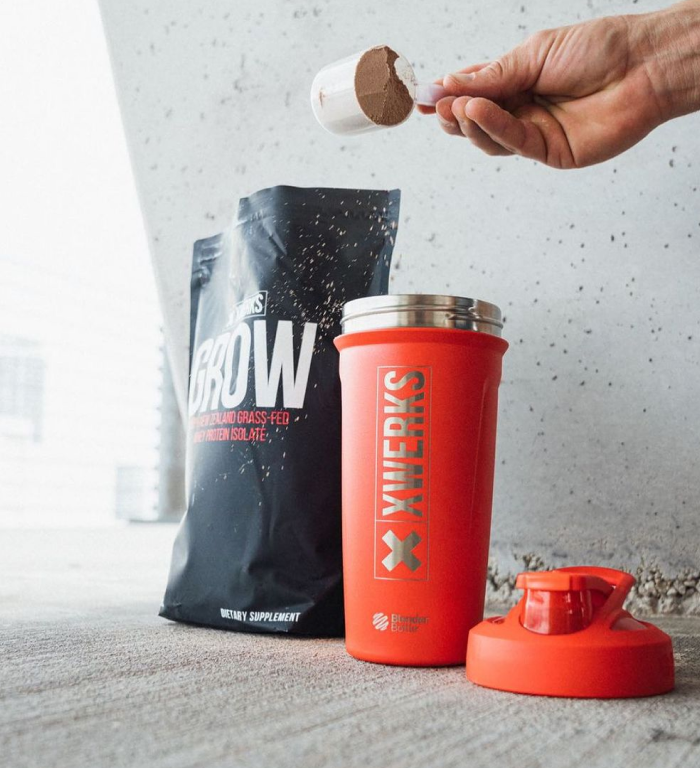
For everyone else, a cold-processed grass-fed whey isolate like Grow — 25g protein, over 6g BCAAs, naturally sweetened, from New Zealand — is the gold standard for a reason.
25g Protein. 6g+ BCAAs. PDCAAS 1.0.
XWERKS Grow — 100% grass-fed whey protein isolate from New Zealand. Cold micro-filtered. Naturally sweetened. The gold standard in protein.
SHOP GROW →Further Reading
Whey Protein Isolate Benefits — Why isolate is the preferred form of whey protein.
Whey Isolate vs. Hydrolyzed Whey — Is "pre-digested" protein worth the premium?
Whey Protein for Sensitive Stomachs — How to find a protein powder that won't wreck your gut.
Protein Powder Myths Debunked — 8 persistent myths corrected with research.
The Ultimate Whey Protein Guide — Everything about whey protein in one place.
References
1. Sharp MH, et al. The effects of beef protein isolate and whey protein isolate supplementation on lean mass and strength in resistance trained individuals — a double blind, placebo controlled study. JISSN. 2015;12(Suppl 1):P11. PMC4595383.
2. Morton RW, et al. A systematic review, meta-analysis and meta-regression of the effect of protein supplementation on resistance training-induced gains. Br J Sports Med. 2018;52:376-384.
3. Hoffman JR, Falvo MJ. Protein — which is best? J Sports Sci Med. 2004;3(3):118-130.
4. Schaafsma G. The Protein Digestibility-Corrected Amino Acid Score. J Nutr. 2000;130(7):1865S-1867S.
5. Jäger R, et al. International Society of Sports Nutrition position stand: protein and exercise. JISSN. 2017;14:20.
6. Eastoe JE. The amino acid composition of mammalian collagen and gelatin. Biochem J. 1955;61(4):589-600.