

How to Run a Faster 5K: The Complete Training Program
TL;DR
- The 5K is ~95% aerobic but raced just above lactate threshold — the limiter is how fast you can run before lactate accumulates faster than you can clear it.
- The sessions that drop 5K time: threshold/tempo runs, VO2max intervals (800m–1600m repeats), goal-pace work, and easy aerobic volume. Threshold work is the single biggest lever.
- An 8-week build with one threshold day, one VO2max interval day, and the rest easy will move most runners toward a sub-25, sub-22, or sub-20 5K depending on starting point.
- Supplement levers: intra-workout carbs for long quality sessions and race fueling, a moderate pre-workout for session quality, creatine for interval power, and protein for recovery.
The 5K rewards a different kind of fitness than the mile. It's almost entirely aerobic, but it's raced right at the edge of your lactate threshold — the pace where lactate starts accumulating faster than your body clears it. Run even slightly too fast early and you pay for it in the back half. The runners who get faster at 5K are the ones who systematically raise that threshold and build the aerobic base underneath it. This guide gives you the physiology, a concrete 8-week program, and the supplement strategy that supports threshold and interval work.

The physiology of the 5K
At around 95% aerobic contribution, the 5K is an aerobic event — but it's run at an intensity right around or just above lactate threshold, the pace at which blood lactate begins to rise sharply. Your 5K pace is essentially capped by two things: how high your lactate threshold sits relative to your VO2max, and how efficiently you run (running economy).
That's why the 5K responds so well to threshold training. Raise the pace you can hold before lactate accumulates, and your sustainable 5K pace rises with it. VO2max intervals lift the ceiling; threshold work lifts the floor toward that ceiling.
The four sessions that build a faster 5K
1. Threshold / tempo runs — the biggest lever
Continuous or cruise-interval running at roughly your one-hour race pace (comfortably hard). 20–30 minutes continuous, or 4–6×5 min with 60–90s float recoveries. This directly raises the lactate threshold that caps your 5K pace. Prioritize this session.
2. VO2max intervals — the ceiling raiser
Repeats at roughly 3K–5K race pace with work bouts of 800m to 1600m. Classic sessions: 5×1000m at 5K pace with 2 min jog, or 6×800m slightly faster. Builds the maximal aerobic power that sets the upper limit on your threshold.
3. Goal-pace work — the specificity builder
Intervals at your target 5K race pace to rehearse the effort and rhythm: 3–4×1200m at goal pace. Teaches your body and brain exactly what race pace feels like so you don't go out too fast.
4. Easy aerobic volume — the foundation
Easy, conversational running that builds the aerobic base every other session draws from. For the 5K, total weekly volume matters — more easy miles (within recovery capacity) means a bigger engine. Keep these genuinely easy.
The 8-week faster-5K program
Assumes you can comfortably run 25–30 minutes continuously. "5K pace" = current 5K race pace; "tempo" = comfortably hard, ~1-hour effort; "goal pace" = your target 5K pace.
| Week | Quality 1 (Threshold) | Quality 2 (Intervals) | Long Easy | Easy |
|---|---|---|---|---|
| 1–2 | 20 min tempo | 5×800m @ 5K pace, 2 min jog | 45–60 min easy | 2 easy runs + strides |
| 3–4 | 25 min tempo | 5×1000m @ 5K pace, 2 min jog | 50–65 min easy | 2 easy runs + strides |
| 5–6 | 4×5 min @ tempo, 60s float | 4×1200m @ goal pace, 2.5 min jog | 60–70 min easy | 2 easy runs + strides |
| 7 | 30 min tempo | 6×800m @ goal pace, 2 min jog | 50 min easy | 2 easy runs |
| 8 | 15 min tempo | 3×1000m @ goal pace | 30 min easy | Race / time trial |
Run the two quality sessions on non-consecutive days. Add 6–8×100m strides to the end of two easy runs per week through Week 6. Week 8 tapers so you arrive fresh.
The supplement strategy for a faster 5K
Intra-workout carbs — quality-session and race fuel
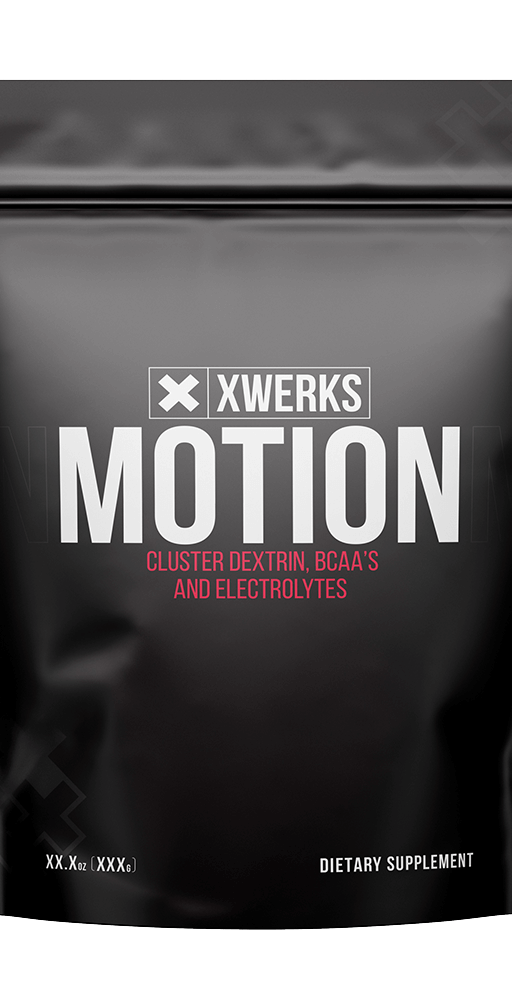
Long threshold sessions, interval days, and the race itself draw heavily on glycogen. Cluster Dextrin maintains blood glucose with rapid gastric emptying and minimal GI distress — ideal for runners who can't tolerate sugary drinks mid-session. XWERKS Motion provides 25g Cluster Dextrin + electrolytes, useful on your longest quality days and in heat.
Pre-workout — session quality
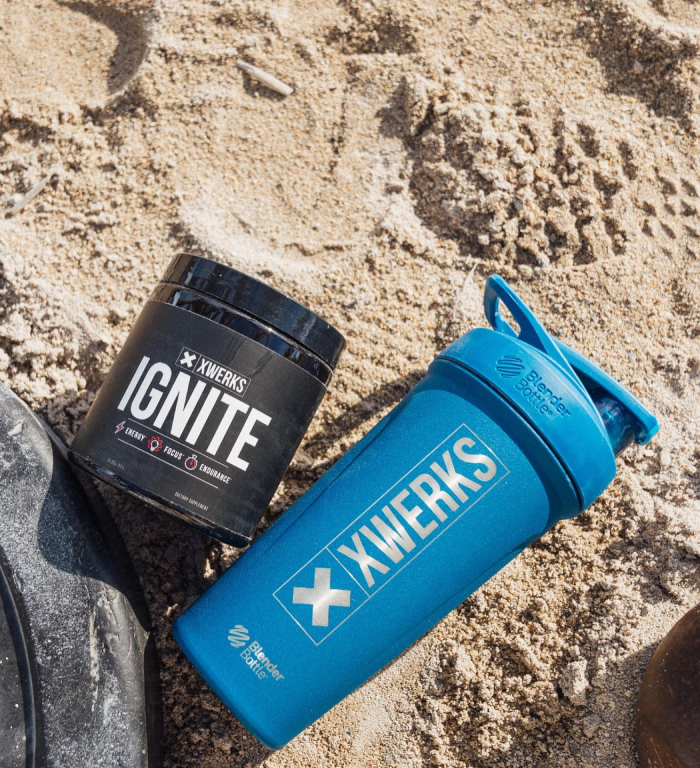
The adaptations come from hitting your paces on quality days. A moderate pre-workout supports focus, perceived-effort reduction, and the ability to hold goal pace deep into an interval session. XWERKS Ignite — 150mg caffeine, 3g citrulline malate, 2g L-tyrosine — is dosed for endurance athletes who don't want a 300mg+ stim load. Caffeine is one of the most evidence-backed endurance aids. Take 30–45 minutes before quality sessions.
Creatine monohydrate — interval power
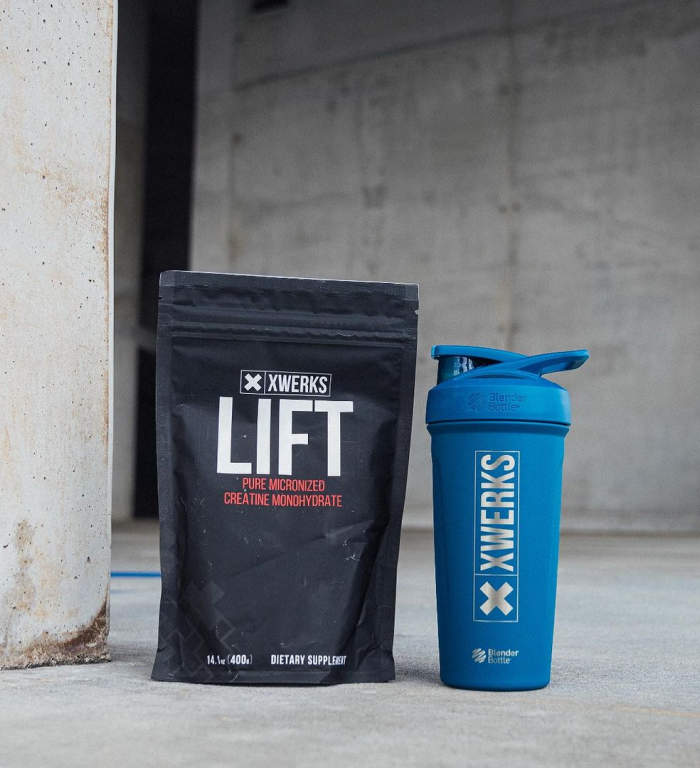
Your VO2max interval sessions have a meaningful anaerobic component. Creatine (5g daily) supports repeat high-intensity efforts and better session quality over a block. XWERKS Lift provides 5g micronized monohydrate. The minor water weight is negligible for 5K performance.
Protein — recovery between quality days
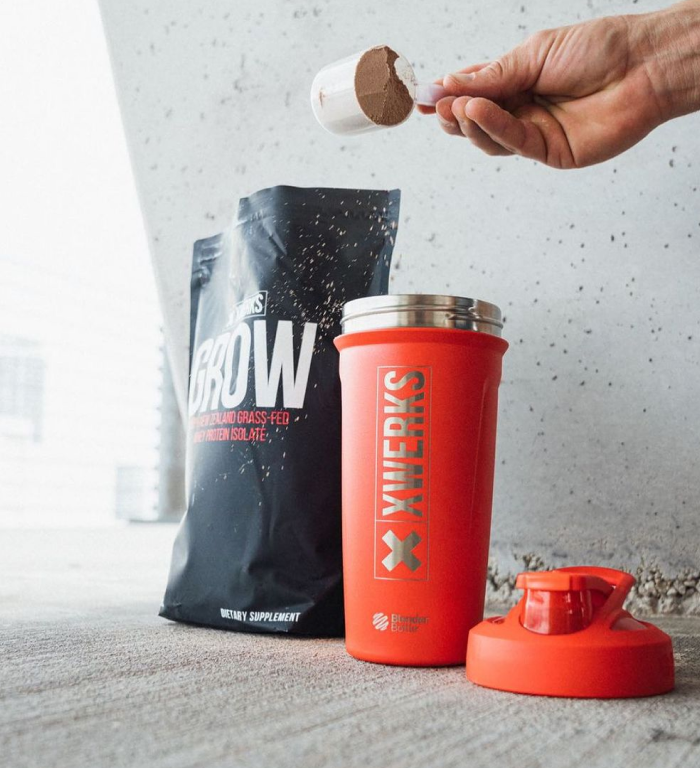
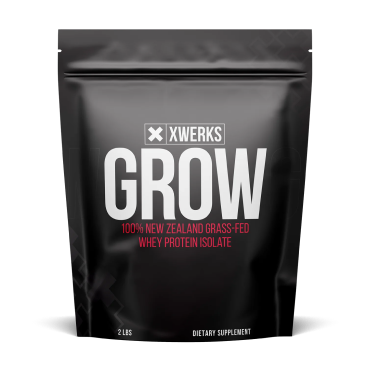
Recovery between your two weekly quality sessions determines how well you adapt. Target 1.6–2.0g protein per kg bodyweight daily. XWERKS Grow — 25g grass-fed whey isolate — makes the post-run target simple.
The mistakes that keep runners slow at 5K
Going out too fast. The single biggest 5K racing error. Even-pace or slight negative-split racing almost always beats going out hard and fading. Practice goal pace so you know what it feels like.
Running easy days too hard. If easy runs creep toward tempo effort, you arrive at quality days under-recovered and never build a real aerobic base.
Neglecting threshold work. Many runners only do intervals or only do easy miles. Threshold is the lever that most directly raises sustainable 5K pace.
Too little easy volume. The 5K is aerobic. More easy miles (within recovery capacity) builds a bigger engine. Don't be afraid of easy volume.
Skipping strength and sleep. 2x/week strength improves economy and durability; 7–9 hours of sleep drives the adaptation. Neither is optional for real progress.
The Bottom Line
A faster 5K is built on lactate threshold. Threshold/tempo work raises the pace you can hold before lactate accumulates; VO2max intervals raise the ceiling; easy aerobic volume builds the base underneath both.
Follow the 8-week structure: one threshold day, one interval day, a weekly long easy run, strides, and the rest easy — tapering into your race. Race even-paced; don't go out too fast.
Supplements support the work: intra-workout Cluster Dextrin for long quality sessions and race fueling, a moderate pre-workout for session quality, creatine for interval power, and protein for recovery. They amplify good training — they don't replace it.
Further Reading
References
1. Billat VL. Interval training for performance: a scientific and empirical practice. Sports Med. 2001;31(1):13-31.
2. Jones AM, Carter H. The effect of endurance training on parameters of aerobic fitness. Sports Med. 2000;29(6):373-386.
3. Goldstein ER, et al. ISSN position stand: caffeine and performance. J Int Soc Sports Nutr. 2010;7(1):5.
4. Thomas DT, et al. ACSM Joint Position Statement: Nutrition and Athletic Performance. Med Sci Sports Exerc. 2016;48(3):543-568.