How to Run a Faster Mile: The Training Program That Works
TL;DR
- The mile is ~80% aerobic, ~20% anaerobic — which means you improve it with a mix of VO2max intervals, threshold work, and pure speed, not just hard running.
- The four sessions that move mile time: VO2max intervals (400m–800m repeats), threshold/tempo runs, short speed/strides, and an easy aerobic base. Most runners are stuck because they run everything at the same medium-hard pace.
- An 8-week structure with one quality interval day, one tempo day, strides twice a week, and the rest easy will drop most runners' mile time noticeably.
- Supplement levers that actually help: creatine for repeat-interval power, a moderate pre-workout for session quality, intra-workout carbs for long quality sessions, and protein for recovery.
The mile is a deceptively hard event to train for. It's long enough that aerobic fitness dominates, but short enough that pure speed and anaerobic power decide the last 400 meters. Most runners trying to improve their mile make the same mistake — they run everything at one medium-hard effort, which is too slow to build speed and too fast to build an aerobic base. This guide breaks down the physiology, gives you a concrete 8-week program, and covers the supplement strategy that supports the high-intensity work a faster mile demands.

The physiology of the mile
A mile run at race effort draws on both energy systems at once. Research on middle-distance running places the mile at roughly 80% aerobic and 20% anaerobic contribution for most runners — the longer your finishing time, the more aerobic it becomes. That split is why training only one quality matters: you need the aerobic engine to hold pace and the anaerobic power to surge and finish.
The three trainable variables that determine your mile time are VO2max (the ceiling on how much oxygen you can use), running economy (how efficiently you use that oxygen), and anaerobic capacity (the kick). A complete program touches all three.
The four sessions that build a faster mile
1. VO2max intervals — the engine builder
Repeats at roughly your current mile-race pace to slightly faster, with work intervals of 400m to 800m. Classic sessions: 6×400m at mile pace with 90s recovery, or 4×800m slightly slower than mile pace. This is the single most important session for raising your aerobic ceiling.
2. Threshold / tempo runs — the sustainable-pace builder
Comfortably-hard continuous running (or long cruise intervals) at roughly your one-hour race pace. 20–30 minutes at tempo, or 3×10 minutes with short recoveries. Raises the pace you can hold before lactate accumulates — which lets you start your mile faster without blowing up.
3. Speed and strides — the economy and kick builder
Short, fast efforts at faster-than-mile pace: 8–10×100m strides, or 200m repeats with full recovery. Trains neuromuscular coordination, stride power, and running economy. Low fatigue cost, high return. Do these year-round.
4. Easy aerobic running — the foundation
Genuinely easy, conversational-pace running that builds mitochondrial density, capillarization, and aerobic base. The mistake most runners make is running these too hard. Easy days must be easy so quality days can be quality.
The 8-week faster-mile program
This structure assumes you can already run 3–4 times per week. Adjust paces to your current fitness. "Mile pace" = your current mile race pace; "tempo" = comfortably hard, ~1-hour effort.
| Week | Quality 1 (Intervals) | Quality 2 (Tempo) | Speed | Easy |
|---|---|---|---|---|
| 1–2 | 6×400m @ mile pace, 90s rest | 20 min tempo | 8×100m strides | 2–3 easy runs |
| 3–4 | 5×600m @ mile pace, 2 min rest | 25 min tempo | 10×100m strides | 2–3 easy runs |
| 5–6 | 4×800m @ goal-mile pace, 2.5 min rest | 3×10 min tempo | 6×200m fast, full rest | 2–3 easy runs |
| 7 | 8×400m @ goal-mile pace, 90s rest | 20 min tempo | 8×100m strides | 2 easy runs |
| 8 | Sharpen: 4×300m fast, full rest | Easy only | 4×100m strides | Time trial / race |
Run the two quality sessions on non-consecutive days (e.g. Tuesday intervals, Friday tempo). Add strides to the end of an easy run twice a week. Everything else is easy. Week 8 tapers volume so you arrive at your time trial fresh.
The supplement strategy for a faster mile
Creatine monohydrate — repeat-interval power
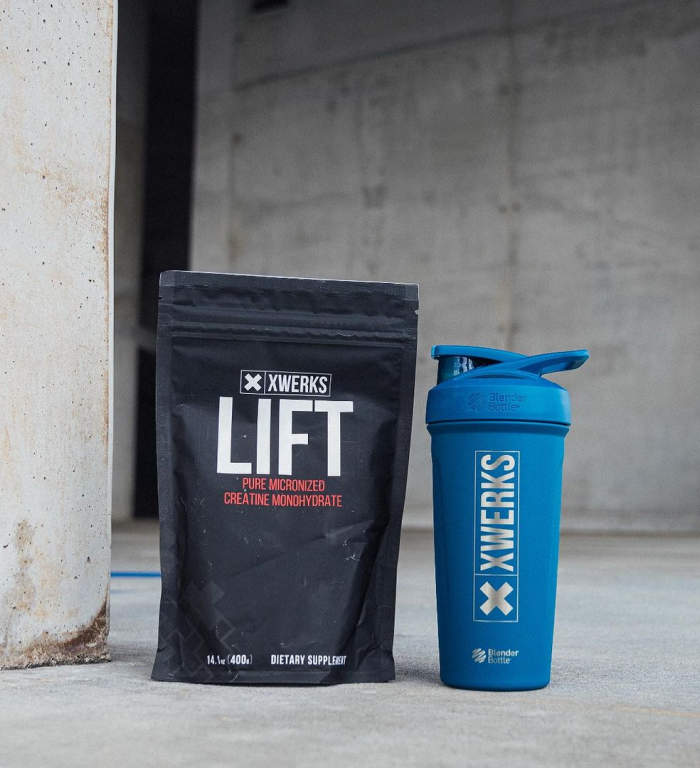
The mile's anaerobic component and your interval sessions both rely on the ATP-PCr system. Creatine monohydrate (5g daily) supports repeat high-intensity efforts — meaning higher-quality interval reps and better adaptation over a training block. XWERKS Lift provides 5g micronized monohydrate per scoop. The ~1–2 lb water weight is negligible for a mile.
Pre-workout — interval-day session quality
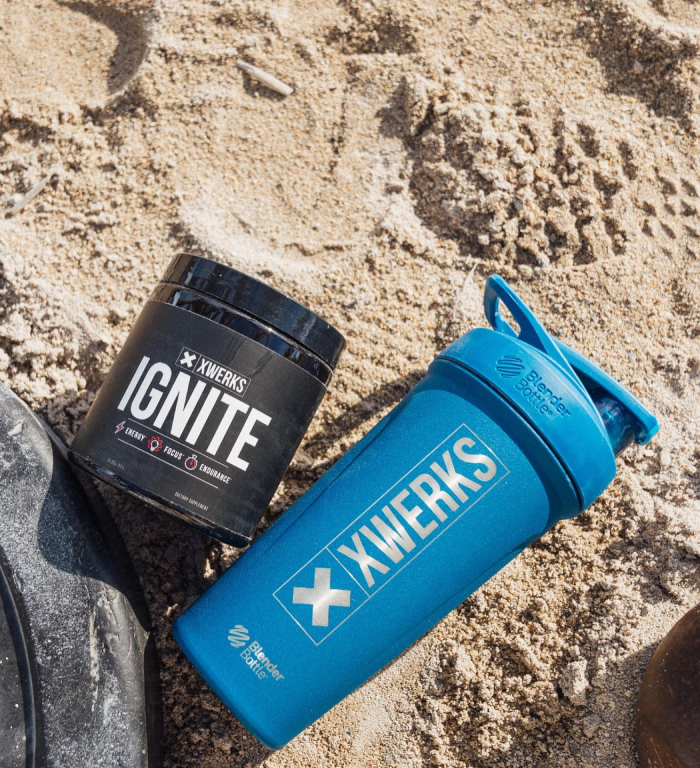
The benefit of a faster mile comes from the quality of your hard sessions. A moderate pre-workout supports focus, perceived-effort reduction, and power output on interval and tempo days. XWERKS Ignite — 150mg caffeine, 3g citrulline malate, 2g L-tyrosine, 1.5g beta-alanine — hits this without the over-stim of a 300mg+ product. Take 30–45 minutes before quality sessions, not easy runs.
Intra-workout carbs — for longer quality sessions
Longer interval or tempo sessions (and doubles) deplete glycogen. Sipping Cluster Dextrin during the session maintains blood glucose and session quality without GI distress. XWERKS Motion provides 25g Cluster Dextrin + electrolytes — useful on your hardest days and in heat.
Protein — recovery between quality days
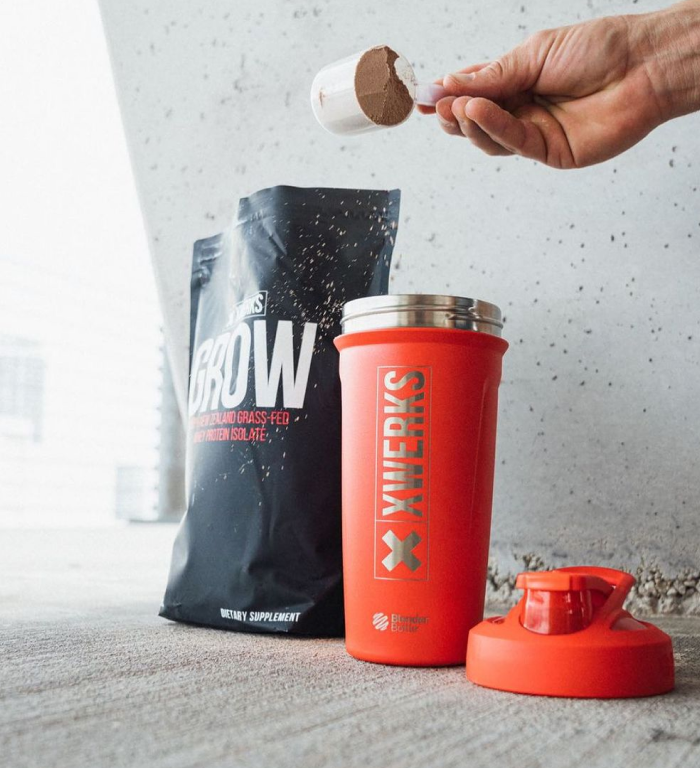
Speed work creates muscle damage that needs repair before the next quality session. Hitting 1.6–2.0g protein per kg bodyweight daily supports recovery and adaptation. XWERKS Grow — 25g grass-fed whey isolate — makes the post-run target easy to reach.
The mistakes that keep runners slow
Running easy days too hard. The #1 error. If every run is medium-hard, you never build a true aerobic base and never fully recover for quality days. Easy means easy.
Skipping strides and speed. Runners obsess over mileage and neglect the neuromuscular speed work that directly improves economy and the kick.
No structure to intervals. Random hard running isn't interval training. Specific paces and recoveries drive specific adaptations.
Ignoring strength work. 2x/week of squats, lunges, calf work, and core improves power and injury resistance. Stronger legs = faster mile.
Neglecting sleep and recovery. Adaptation happens during recovery, not during the workout. 7–9 hours of sleep does more than any supplement.
The Bottom Line
A faster mile comes from training all three systems — VO2max (intervals), threshold (tempo), and speed (strides) — on a foundation of genuinely easy aerobic running. Most runners are stuck because they run everything at one medium-hard pace.
Follow the 8-week structure: one interval day, one tempo day, strides twice a week, everything else easy, and a taper into your time trial. Add 2x/week strength work.
Supplements support the work: creatine for repeat-interval power, a moderate pre-workout for quality-session output, intra-workout carbs for the longest sessions, and protein for recovery between hard days. They amplify good training — they don't replace it.
Further Reading
References
1. Duffield R, et al. Energy system contribution to 1500- and 3000-metre track running. J Sports Sci. 2005;23(10):993-1002.
2. Bassett DR, Howley ET. Limiting factors for maximum oxygen uptake and determinants of endurance performance. Med Sci Sports Exerc. 2000;32(1):70-84.
3. Kreider RB, et al. ISSN position stand: safety and efficacy of creatine supplementation. J Int Soc Sports Nutr. 2017;14:18.
4. Goldstein ER, et al. ISSN position stand: caffeine and performance. J Int Soc Sports Nutr. 2010;7(1):5.