How to Run a Faster Marathon: Training, Fueling, and Recovery
TL;DR
- The marathon is ~99% aerobic, but the wall isn't fitness — it's glycogen. Most marathons fall apart in the last 10K because of fueling and pacing, not lack of training.
- The sessions that build a faster marathon: the long run (with marathon-pace segments), threshold/tempo work, marathon-pace runs, and high easy aerobic volume. Long-run quality matters more than long-run distance alone.
- Fueling is a trainable skill: practice taking 60–90g of carbohydrate per hour in long runs so race-day fueling doesn't wreck your gut. This is where most sub-4, sub-3:30, and BQ attempts are won or lost.
- Supplement levers: intra-run Cluster Dextrin carbs (the single biggest performance variable), electrolytes for hot races, protein for recovery across a high-volume block, and creatine for muscle preservation and quality sessions.
The marathon is almost purely aerobic, which means base fitness gets you to the start line — but it rarely decides your time. What decides your time is the back half: whether you fueled correctly, paced conservatively early, and trained your gut and your glycogen stores to last 26.2 miles. The runners who PR are the ones who treat fueling as a trainable skill, not an afterthought. This guide covers the physiology, a training structure that builds marathon-specific endurance, and the fueling and supplement strategy that keeps you from hitting the wall.

The physiology of the marathon
At roughly 99% aerobic, the marathon is an endurance event in the purest sense. But the limiter usually isn't your aerobic ceiling — it's glycogen depletion. Your body stores only enough muscle and liver glycogen for roughly 90–120 minutes of hard running. Run out, and you hit "the wall": pace collapses, form falls apart, and the final miles become survival.
Faster marathons come from three things working together: a big aerobic base that lets you burn more fat at marathon pace (sparing glycogen), a high lactate threshold relative to marathon pace (so the effort feels sustainable), and a fueling strategy that replaces carbohydrate fast enough to delay depletion. Training builds the first two; practiced fueling delivers the third.
The four sessions that build a faster marathon
1. The long run — with quality
The cornerstone. But distance alone isn't enough — the most effective long runs include marathon-pace segments (e.g. last 8–10 miles at goal pace). This trains fat oxidation, glycogen efficiency, and the mental skill of holding pace on tired legs. Build to 18–22 miles for most marathoners.
2. Threshold / tempo runs — sustainable pace
Comfortably-hard running at ~1-hour race effort, or longer tempo blocks (5–8 miles). Raises the lactate threshold so marathon pace sits further below it, making the race feel more controlled. A higher threshold is what lets you hold goal pace without drifting into the red.
3. Marathon-pace runs — specificity
Sustained running at exact goal marathon pace, often embedded in a medium-long run. Rehearses pace, rhythm, fueling, and gear. The more time you spend at goal pace in training, the more automatic it becomes on race day.
4. Easy aerobic volume — the engine
The bulk of marathon training is easy running that builds mitochondrial density, capillarization, and fat-burning capacity. Weekly volume is the strongest predictor of marathon performance — but it only works if easy days stay genuinely easy.
The marathon training structure (sample peak week)
A full marathon build runs 12–18 weeks. Here's what a representative peak-phase week looks like for an intermediate runner targeting a goal time. Scale volume to your experience.
| Day | Session | Purpose |
|---|---|---|
| Mon | Rest or easy 30–40 min | Recovery |
| Tue | Threshold: 6 miles @ tempo | Raise lactate threshold |
| Wed | Easy 50–60 min + strides | Aerobic base |
| Thu | Marathon-pace: 8 miles @ goal pace | Pace specificity + fueling practice |
| Fri | Easy 40–50 min or rest | Recovery |
| Sat | Easy 30–40 min + strides | Pre-long-run primer |
| Sun | Long run 18–20 mi, last 8 @ goal pace | Endurance + glycogen efficiency + fueling rehearsal |
Cycle 3 weeks of building with 1 lighter recovery week. Then taper for 2–3 weeks before race day — cut volume 40–60% while keeping a little intensity so you arrive fresh but sharp.
Fueling: where the marathon is won or lost
This is the section most runners underestimate. Your training can be perfect, but if you run out of carbohydrate at mile 20, you'll slow dramatically regardless of fitness.
The carbohydrate target
Current sports-nutrition guidance supports 60–90g of carbohydrate per hour during prolonged endurance events. Most runners under-fuel badly — a single gel every 45 minutes isn't close. Hitting the higher end requires a gut trained to absorb it, which is exactly why you practice fueling in long runs.
Why Cluster Dextrin is ideal for the marathon
Highly branched cyclic dextrin (HBCD) has a high molecular weight and near-zero osmolality, which means it empties from the stomach rapidly and delivers steady glucose without the osmotic GI distress of high-sugar gels and drinks. For a 3–5 hour effort where gut comfort is everything, that matters. XWERKS Motion provides 25g Cluster Dextrin + electrolytes per serving — a clean carbohydrate source you can carry in a flask or pick up at aid stations.
Train your gut
The ability to absorb 60–90g carbs/hour is trainable. Practice your exact race-day fueling — same products, same timing, same volume — in your long runs and marathon-pace sessions. Never try anything new on race day. The gut adapts the same way muscles do.
Electrolytes and hydration
Over 3–5 hours, sodium losses add up — especially in heat. Aim to replace fluid based on your sweat rate (weigh before/after long runs to calibrate) and include sodium, not just water. Motion's electrolyte content covers part of this; salty sweaters and hot-weather races may need additional sodium.
The supplement strategy for a faster marathon
Intra-run carbohydrate — the biggest lever
Covered above — this is the single most impactful supplement decision for the marathon. XWERKS Motion (Cluster Dextrin + electrolytes) for both long-run fueling practice and race day. Get this right and you've solved the most common cause of marathon blow-ups.
Protein — recovery across a high-volume block
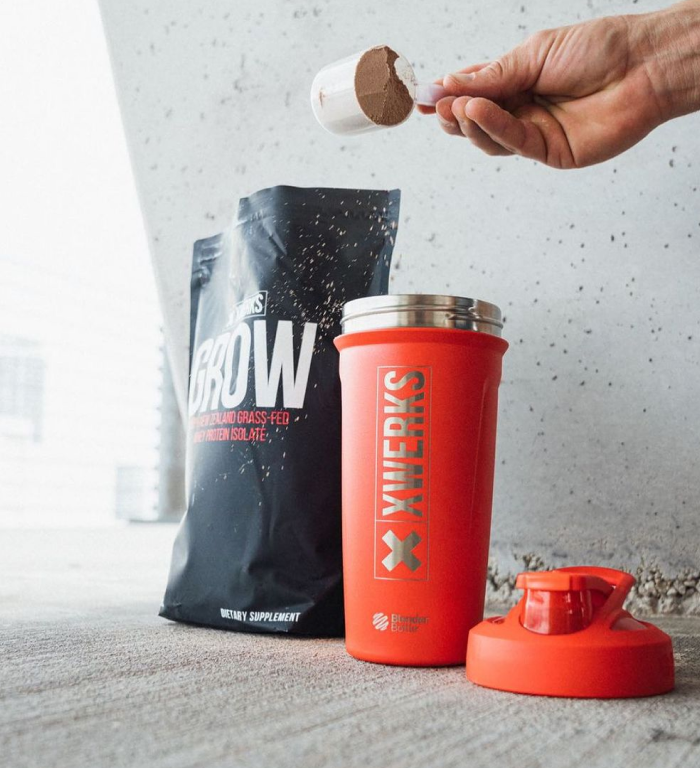
Marathon training is high-volume and catabolic. Adequate protein (1.6–2.0g per kg bodyweight daily) preserves muscle and supports recovery between hard sessions. A post-long-run shake is one of the highest-value habits in a marathon block. XWERKS Grow — 25g grass-fed whey isolate — makes it easy when appetite is blunted after long efforts.
Creatine monohydrate — muscle preservation and quality days
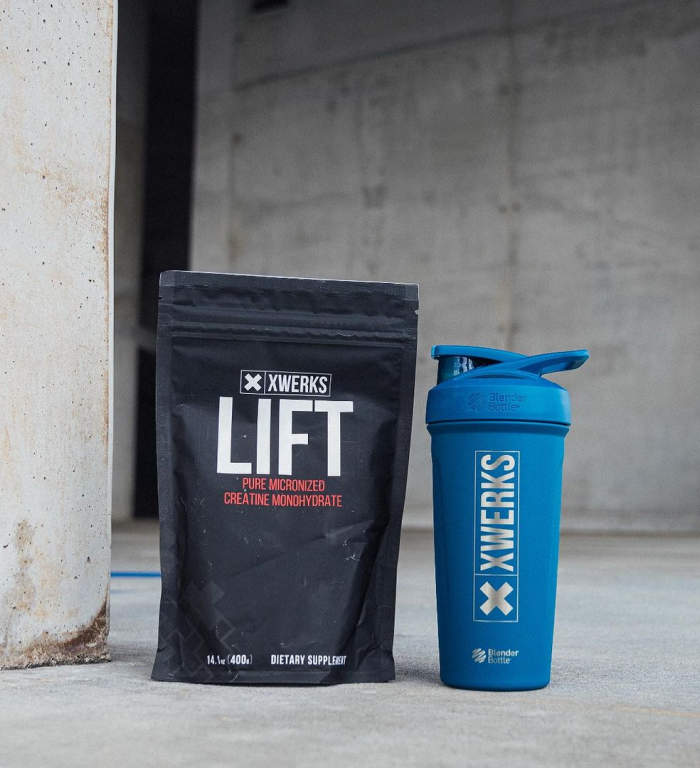
Often overlooked for distance runners, creatine (5g daily) supports muscle preservation during high-volume training and improves the quality of threshold and marathon-pace sessions. The minor water weight is irrelevant over 26.2 miles and is outweighed by better training quality and recovery. XWERKS Lift provides 5g micronized monohydrate.
Pre-long-run / pre-race — focus and perceived effort
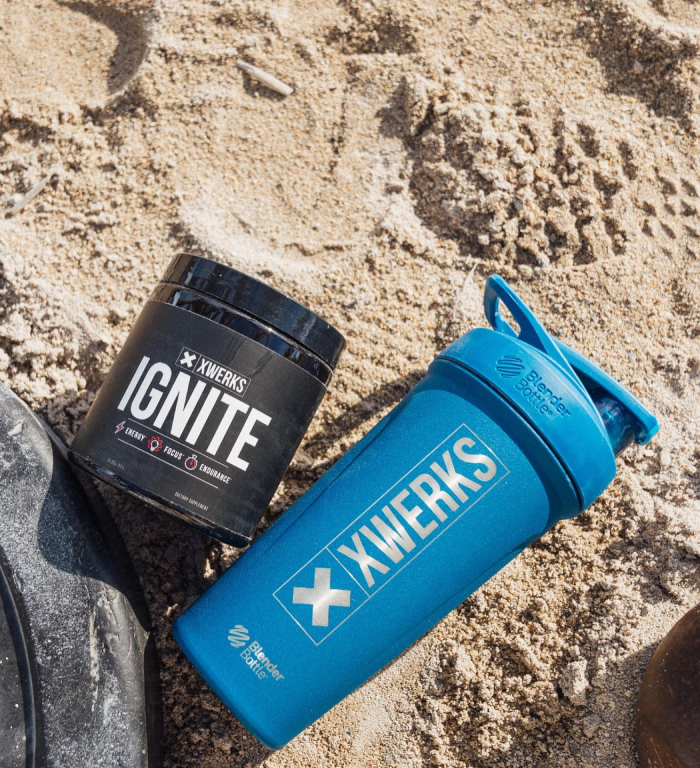
Caffeine is one of the most evidence-backed endurance aids, improving time-to-exhaustion and perceived effort. A moderate pre-workout before long runs and on race morning supports focus and pacing discipline. XWERKS Ignite — 150mg caffeine — is a sensible dose for endurance. Test it in training first; never debut it on race day.
The mistakes that ruin marathon times
Going out too fast. The cardinal sin. Banking time early almost always backfires — you pay double in the last 10K. Even or slightly negative splits produce the fastest marathons.
Under-fueling. The most common cause of the wall. If you're not taking 60–90g carbs/hour, you're leaving big time on the course — and risking a full collapse.
Trying new things on race day. New shoes, new gels, new breakfast = avoidable disaster. Everything on race day should be rehearsed in training.
Junk-pace long runs. Running long runs too hard leaves you under-recovered; running them with no quality misses the marathon-pace adaptation. Most should be easy, but key ones should include goal-pace work.
Skipping the taper. Cramming mileage in the final two weeks doesn't add fitness — it just leaves you tired on race day. Trust the taper.
The Bottom Line
The marathon is decided in the back half — and the back half is decided by fueling and pacing, not just fitness. Base training gets you to the start; glycogen management and conservative early pacing get you to a PR.
Train the right sessions: long runs with marathon-pace segments, threshold work, marathon-pace runs, and high easy aerobic volume — then taper. Practice your exact race fueling in long runs.
Fueling is the biggest lever: target 60–90g carbs/hour with a gut-friendly source like Cluster Dextrin, replace electrolytes, recover with protein across the block, and use creatine to preserve muscle and sharpen quality days. Get fueling right and you solve the most common reason marathons fall apart.
Further Reading
References
1. Joyner MJ, Coyle EF. Endurance exercise performance: the physiology of champions. J Physiol. 2008;586(1):35-44.
2. Jeukendrup AE. Training the gut for athletes. Sports Med. 2017;47(Suppl 1):101-110.
3. Thomas DT, et al. ACSM Joint Position Statement: Nutrition and Athletic Performance. Med Sci Sports Exerc. 2016;48(3):543-568.
4. Goldstein ER, et al. ISSN position stand: caffeine and performance. J Int Soc Sports Nutr. 2010;7(1):5.
5. Takii H, et al. Fluids containing a highly branched cyclic dextrin influence the gastric emptying rate. Int J Sports Med. 2005;26(4):314-319.