

Protein Shake Before Bed: Worth It or a Waste?
TL;DR
- A protein shake before bed is a legitimate, research-supported way to support overnight muscle recovery — especially if you'd otherwise fall short of your daily protein target.
- The benefit isn't magic timing — it's that pre-sleep protein gives your body amino acids to work with during the overnight fast, supporting muscle protein synthesis while you sleep.
- It won't make you gain fat. Calories are calories — a protein shake before bed within your daily total doesn't cause fat gain, and protein is the most satiating, least fat-promoting macronutrient.
- The most important factor is total daily protein (~1.6–2.0g/kg bodyweight). A bedtime shake is most valuable when it helps you hit that number you'd otherwise miss.
- Whey works fine; the old "must be slow casein" rule is overstated. Any quality protein that helps you hit your target is a win.
"Should I drink a protein shake before bed?" is one of the most common questions in fitness — and it's surrounded by myths in both directions. Some people swear it's essential for gains; others warn it'll make you fat or that it's pointless. The truth sits in the middle and is refreshingly practical: a pre-sleep protein shake is a useful tool for supporting overnight recovery and hitting your daily protein target, but it's not a magic bullet, and the details matter less than people think. Here's what the research actually shows.

What happens to muscle protein while you sleep
Sleep is when a huge amount of recovery happens — but it's also a 7–9 hour fast. During that window, with no incoming amino acids, your body's rate of muscle protein synthesis can dip. The idea behind a pre-sleep protein shake is simple: give your body a supply of amino acids to draw on overnight, supporting recovery and muscle protein synthesis through the fast rather than running on empty.
Research from Dutch sports-nutrition labs (Trommelen, van Loon, and colleagues) has shown that protein consumed before sleep is effectively digested and absorbed overnight, raises overnight muscle protein synthesis rates, and can improve training adaptations over time when combined with resistance exercise. The effect is real — it's just not the make-or-break factor some marketing implies.
The real benefit: hitting your daily protein target
Will a protein shake before bed make you fat?
No — not unless it pushes you into a calorie surplus. Fat gain is driven by consuming more total calories than you burn, not by eating at a particular time of day. The "don't eat before bed" idea is a myth when it comes to protein specifically: protein is the most satiating macronutrient, has the highest thermic effect (your body burns more calories digesting it), and is the least likely to be stored as fat. A 25–30g protein shake (roughly 110–150 calories) before bed, within your daily calorie budget, won't cause fat gain.
Whey vs casein before bed — does it matter?
You'll often hear that you must use slow-digesting casein before bed because it releases amino acids gradually. The reasoning has some logic, but in practice the difference is overstated.
The casein argument
Casein digests slowly, providing a steadier amino acid trickle over several hours — which sounds ideal for an overnight fast. This is why casein became the "bedtime protein" by reputation.
The practical reality
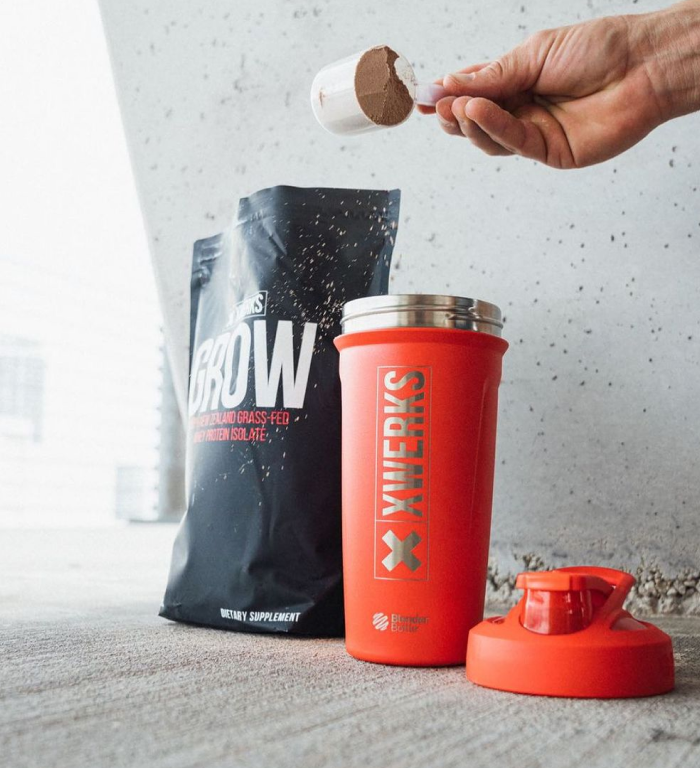
Whey works perfectly well before bed too. Research showing overnight muscle protein synthesis benefits has used various protein types, and the overall daily protein total still dominates the outcome. If you have casein and like it, great. If you have whey — like XWERKS Grow — it's a completely valid pre-bed choice. The best protein before bed is the quality one you'll actually drink consistently.
Who benefits most from a pre-bed protein shake
People who struggle to hit their protein target
If your daily total tends to fall short, a bedtime shake is an easy 25–30g that closes the gap. This is the clearest use case.
People who train in the evening
If you lift at night, a pre-bed shake doubles as your post-workout protein — supporting recovery from the session and feeding muscle overnight in one go.
People building muscle on a high-protein plan
If you're in a muscle-building phase and spreading protein across the day, a final pre-sleep dose adds another feeding to your daily distribution — a small but legitimate edge.
Older adults
Age-related muscle loss (sarcopenia) makes hitting adequate protein especially important. A pre-bed protein dose is a practical way for older adults to support muscle preservation overnight.
How to do it well
Aim for 25–40g of protein. This range reliably maximizes the muscle protein synthesis response for most people. XWERKS Grow delivers 25g of grass-fed whey isolate per scoop — bump to a heaping scoop or add a little milk if you want the higher end.
Keep it simple. A scoop in water or milk is all you need. No need to engineer an elaborate slow-release concoction.
Don't add a ton of extra calories. Loading your bedtime shake with peanut butter, banana, and honey turns a lean protein dose into a meal. If you're watching body composition, keep the pre-bed shake protein-focused.
Stay consistent with your daily total. The shake is one piece of the picture. Hit your overall daily protein target first; the bedtime timing is the refinement on top.
What the pre-sleep studies do—and do not—show
In Res and colleagues' 2012 study, 40 grams of casein consumed before sleep after evening exercise was digested and supported overnight protein synthesis. That is evidence for an overnight physiological response, not proof that everyone needs an extra shake after already meeting their daily needs.
A later trial in older men also examined casein before sleep. These experiments help explain why the research often focuses on casein; they do not mean whey or a normal protein-containing meal is useless. Consider the extra serving in the context of total daily intake and digestive comfort.
How should I choose an amount?
Start with the gap in your day rather than copying a study dose automatically. If your normal meals already meet your needs, an additional bedtime serving may simply be unnecessary.
The Bottom Line
A protein shake before bed is worth it — especially if it helps you hit your daily protein target. Research shows pre-sleep protein is digested overnight and supports muscle protein synthesis and training adaptations during the overnight fast.
It won't make you fat. Within your daily calorie budget, a lean 25–30g protein shake is the most satiating, least fat-promoting thing you could consume before bed.
Don't overthink the details. Whey works fine — the casein-only rule is overstated. Total daily protein (1.6–2.0g/kg) matters far more than the exact protein type or timing. A clean whey isolate like XWERKS Grow is a perfect pre-bed option.
Further Reading
Protein Before or After Workout
References
1. Res PT, et al. Protein ingestion before sleep improves postexercise overnight recovery. Med Sci Sports Exerc. 2012;44(8):1560-1569.
2. Trommelen J, van Loon LJC. Pre-sleep protein ingestion to improve the skeletal muscle adaptive response to exercise training. Nutrients. 2016;8(12):763.
3. Snijders T, et al. Protein ingestion before sleep increases muscle mass and strength gains during prolonged resistance-type exercise training. J Nutr. 2015;145(6):1178-1184.
4. Morton RW, et al. A systematic review, meta-analysis and meta-regression of the effect of protein supplementation on resistance training-induced gains. Br J Sports Med. 2018;52:376-384.