The honest answer: creatine doesn't burn fat directly. But the research shows it does something more valuable — it shifts the composition of your weight loss from "losing muscle and fat" to "losing mostly fat." And that distinction matters more than the number on the scale.
This is one of the most searched questions in sports nutrition, and it deserves a straight answer. Creatine monohydrate is not a fat burner. It doesn't increase thermogenesis. It doesn't suppress appetite. It won't produce weight loss on its own.
What creatine does — and what three separate meta-analyses published between 2022 and 2025 have now confirmed — is significantly improve body composition when combined with resistance training. More lean mass gained, more body fat percentage lost, better overall results than training alone. If your goal isn't just to lose weight but to look better, move better, and maintain your metabolism while you do it, creatine is one of the most evidence-backed tools available.
What the Meta-Analyses Show
The body composition data on creatine has matured considerably in the last two years. Here's what the three most recent meta-analyses found:
The pattern across all three analyses is consistent: creatine doesn't directly melt fat, but when paired with resistance training, it shifts body composition in your favor — more muscle gained, less fat retained, and a lower body fat percentage compared to the exact same training without creatine.
How Creatine Actually Supports Fat Loss
If creatine doesn't directly burn fat, why does it improve body composition? There are three mechanisms, and they're all indirect but meaningful.
1. More Muscle = Higher Resting Metabolic Rate
Muscle tissue is metabolically active — it burns calories even when you're sitting on the couch. Every additional kilogram of lean mass increases your resting metabolic rate by approximately 13 calories per day. That sounds small for a single kilogram, but the 2024 meta-analysis showed creatine users gained 1.14 kg more lean mass than placebo groups over 4-11 weeks of training. Over months and years of consistent training, this compounds into a meaningfully higher baseline calorie burn.
This is the fundamental difference between creatine and a "fat burner." Fat burners temporarily increase calorie expenditure through stimulants. Creatine permanently increases calorie expenditure by building the metabolic engine that burns calories at rest. One is a match; the other is a furnace.
2. Better Training = More Calories Burned Per Session
The ISSN's position stand confirms that creatine produces 5-15% improvements in strength and power output during resistance training. More weight lifted, more reps completed, and more total work performed per session means more calories burned during each workout. Creatine doesn't make you "less tired" — it makes you more capable of doing the high-intensity work that drives calorie expenditure and muscle adaptation.
This effect extends to high-intensity interval training (HIIT) and other anaerobic protocols. If your fat-loss training plan includes sprints, circuits, CrossFit, or any form of high-intensity conditioning, creatine increases your capacity to sustain output during those efforts — which means more total energy expended per session.
3. Muscle Preservation During a Caloric Deficit
This is arguably the most important mechanism for anyone actively trying to lose weight. When you eat fewer calories than you burn, your body draws on both fat stores and muscle tissue for energy. The more muscle you lose during a diet, the more your metabolic rate drops, the harder further fat loss becomes, and the more likely you are to regain weight when you return to normal eating.
Creatine, combined with resistance training and adequate protein intake, helps preserve lean mass during caloric restriction. The intracellular hydration (cell volumization) that creatine provides supports muscle protein synthesis even under energy-restricted conditions. This means a larger percentage of the weight you lose comes from fat rather than muscle — which is the entire point of intelligent fat loss.
But the Scale Might Go Up — And That's Fine
Here's where most people get confused and quit creatine prematurely: when you start supplementing, you may gain 1-3 pounds in the first one to two weeks. This is intracellular water — creatine pulls water into your muscle cells, not under your skin. This water weight is not fat, doesn't make you look puffy, and actually supports muscle fullness and protein synthesis.
If you're using the scale as your only metric, creatine will look like it's "making you gain weight." But if you're tracking body composition — waist measurements, how clothes fit, progress photos, or a body composition scan — you'll see the real story: more muscle definition, less body fat, and a leaner overall appearance despite what the scale says.
This is why weight-only tracking is a poor metric for anyone doing resistance training, with or without creatine. Body weight is the sum of muscle, fat, water, bone, organs, and food in your gut. It tells you almost nothing about whether you're getting leaner.
The Weight Loss Protocol
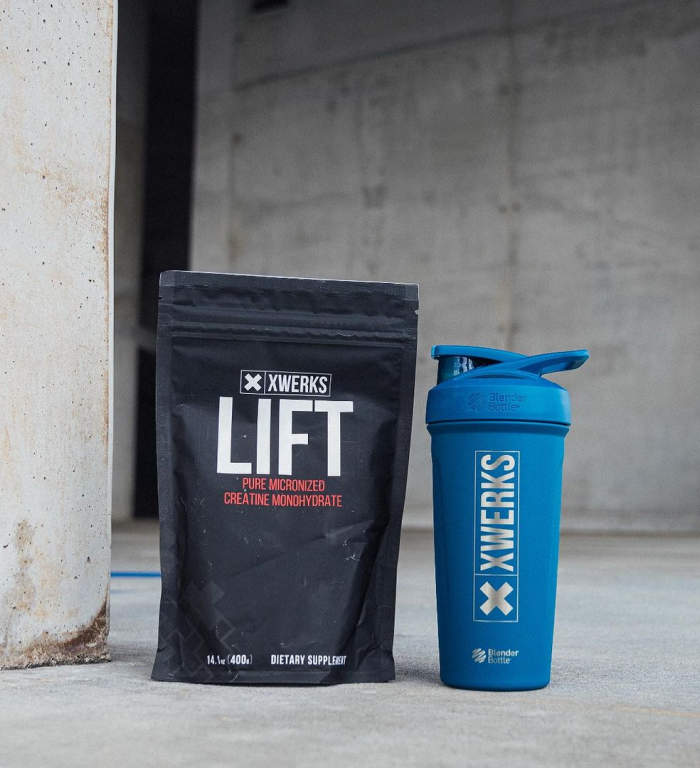
Creatine dose: 5g per day, every day, including rest days. XWERKS Lift provides exactly this in a single unflavored scoop. No loading phase needed — skip it to avoid the initial water weight spike that can be psychologically discouraging during a cut.
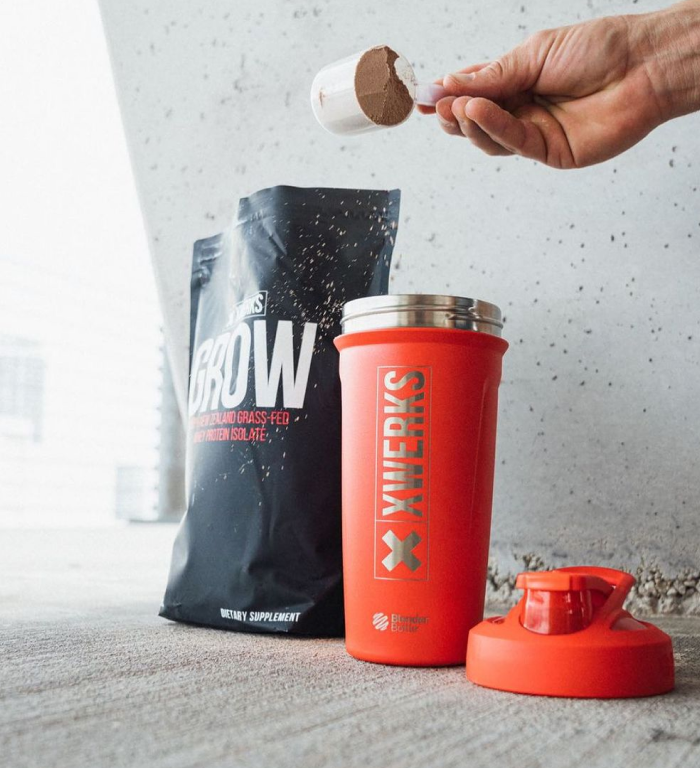
Protein intake: 1.2-1.6 g/kg/day during a caloric deficit (higher end if the deficit is aggressive). A scoop of Grow (25g grass-fed whey isolate, ~110 calories) is one of the most calorie-efficient ways to hit this target without blowing your daily calories.
Resistance training: 3-4 sessions per week with progressive overload. This is the non-negotiable. Creatine without resistance training does not produce the body composition improvements seen in the meta-analyses. The supplement enhances the training stimulus — it doesn't replace it.
Timing: Doesn't matter. Consistency matters. Take it whenever you'll remember to take it every single day.
Who Benefits Most
Creatine's body composition benefits are most pronounced for people who are actively resistance training while eating in a moderate caloric deficit, anyone on a GLP-1 medication (where muscle preservation is critical), older adults fighting age-related muscle and metabolic decline, women (who have lower baseline creatine stores and may see greater relative benefit), and vegetarians/vegans who get little to no dietary creatine from food.
If you're not resistance training, creatine's body composition effects are minimal. The 2022 Delpino meta-analysis confirmed that creatine without exercise produced no significant change in lean body mass (+0.03 kg, not statistically significant). The supplement works with training, not instead of it.
The Bottom Line
Creatine is not a fat burner. It will not cause weight loss by itself. But it is one of the most effective supplements for improving body composition — gaining muscle while losing fat — when combined with resistance training and adequate protein intake.
The meta-analyses are clear: creatine users gain approximately 1-1.4 kg more lean mass, lose 0.7 kg more fat mass, and reduce body fat percentage by roughly 0.9% more than people doing the exact same training without creatine. These effects are consistent across young adults, older adults, men, women, and both novice and experienced lifters.
If your goal is to look better — not just weigh less — creatine belongs in your stack. At $0.12 per gram, it's the most cost-effective body composition supplement available. 5g per day, every day, and let the training do the rest.
Change How You Lose, Not Just How Much.
XWERKS Lift — 5g of pure micronized creatine monohydrate per scoop. Unflavored. No filler. 80 servings. Stack it with Grow and Ignite for the complete fat-loss protocol.
SHOP LIFT →Further Reading
Whey Protein for Weight Loss — The three mechanisms that make whey effective for fat loss and appetite control.
Why Creatine Matters If You're on a GLP-1 — Preserving muscle during pharmacotherapy-induced weight loss.
Creatine for Older Adults — The full evidence on creatine for healthy aging and body composition.
What Is Micronized Creatine? — Why monohydrate outperforms every alternative form.
References
1. Desai I, et al. The effect of creatine supplementation on resistance training-based changes to body composition: a systematic review and meta-analysis. J Strength Cond Res. 2024;38(10):1813-1821.
2. JISSN (2025). Creatine supplementation and resistance training: a comparison between novice and experienced lifters — a systematic review and dose-response meta-analysis. 61 trials.
3. PMC (2024). Impact of creatine supplementation and exercise training in older adults: a systematic review and meta-analysis. 20 RCTs, 1,093 participants.
4. Delpino FM, et al. Influence of age, sex, and type of exercise on the efficacy of creatine supplementation on lean body mass. Nutrition. 2022;103-104.
5. Forbes SC, et al. Resistance exercise and creatine supplementation on fat mass in adults <50 years of age. J Int Soc Sports Nutr. 2023.
6. Pashayee-Khamene F, et al. Creatine supplementation protocols with or without training interventions on body composition: a GRADE-assessed systematic review and dose-response meta-analysis. JISSN. 2024;21:2380058.
7. Kreider RB, et al. International Society of Sports Nutrition position stand: safety and efficacy of creatine supplementation. JISSN. 2017;14:18.