What Does Creatine Do for Women? More Than You Think.
Creatine is the most researched supplement in sports nutrition. It's also one of the most underused by the people who may benefit from it most. A 2025 review in the Journal of the International Society of Sports Nutrition found that women have 20% lower creatine synthesis rates and 30-40% lower dietary creatine intake than men — which means supplementation may matter even more for women than it does for men.
If you've avoided creatine because you thought it was a "bulking" supplement for guys in muscle tanks, you're not alone — and you're working with outdated information. The research on creatine for women has expanded dramatically in the last five years, and the findings go far beyond the gym. From muscle strength and body composition to bone health, cognitive function, mood, and menopause symptom management, creatine has applications across the entire female lifespan.
Why Women Actually Need Creatine More
Here's the biological reality that most creatine marketing ignores: women start with a disadvantage when it comes to creatine stores.
A 2021 review published in PMC found that females exhibit 70-80% lower endogenous creatine stores compared to males. A 2025 JISSN review confirmed that women have approximately 20% lower creatine synthesis rates and consume 30-40% less dietary creatine on average — largely because the primary food sources of creatine are red meat and fish, which women tend to eat less of.
This isn't a minor difference. It means that women are more likely to be operating with suboptimal muscle creatine stores at baseline, which limits their capacity for ATP regeneration during high-intensity exercise. Supplementation doesn't just help — it corrects a physiological gap that most women don't know they have.
Debunking the Myths
"Creatine will make me bulky"
No, it won't. Women have approximately 15-20 times less testosterone than men, which is the primary hormonal driver of significant muscle hypertrophy. Creatine doesn't change your hormonal profile — it increases intramuscular phosphocreatine stores, which helps your muscles regenerate ATP faster during intense exercise. The result is better strength and performance, not a sudden transformation into a bodybuilder. Research in pre-menopausal women consistently shows increases in lean muscle mass without proportional increases in body weight or body size.
"Creatine causes bloating in women"
Creatine draws water into muscle cells (intracellular hydration), not under the skin. This cell volumization actually supports a leaner appearance by increasing muscle fullness without subcutaneous water retention. Some initial water weight (1-3 lbs) can occur in the first week, particularly during a loading phase, but this is temporary and intramuscular — not the puffy bloating people imagine. Skipping the loading phase and starting at 3-5g/day eliminates this concern almost entirely.
"Creatine is only for athletes"
The 2025 JISSN review specifically highlighted creatine's applications beyond performance: bone health, cognitive function, mood regulation, fatigue reduction, and metabolic wellness. These benefits are relevant to every woman, regardless of whether she's training for a competition or just trying to stay strong and healthy as she ages.
What the Research Shows: Benefits by Life Stage
Pre-Menopausal Women (Active & Athletic)
Creatine supplementation in pre-menopausal women has been shown to improve strength and exercise performance, particularly when combined with resistance training. The ISSN's position stand confirms that creatine produces 5-15% improvements in strength and power output, and these effects are consistent across both sexes. For women engaged in CrossFit, strength training, HIIT, running, cycling, or competitive sports, creatine provides a meaningful performance edge — more reps, more power, faster recovery between sets.
Body composition research is particularly relevant: multiple studies show that creatine combined with resistance training increases lean mass while simultaneously reducing body fat percentage. This is the body recomposition effect that most women are actually training for — building muscle and losing fat at the same time.
Perimenopause and Menopause
This is where the creatine-for-women research gets most compelling. The hormonal changes of perimenopause and menopause create a cascade of challenges: accelerated muscle loss (sarcopenia), bone density decline (up to 20% of bone loss can occur during menopause), cognitive changes, mood disturbances, sleep disruption, and metabolic shifts. Creatine has emerging evidence for addressing multiple elements of this cascade simultaneously.
A 2025 randomized controlled trial of 36 peri- and postmenopausal women found that eight weeks of creatine supplementation improved reaction time and reduced mood swing severity. A separate study of 15 peri/postmenopausal women found that creatine with supervised strength training led to significant increases in lower-body strength over 14 weeks.
On bone health: a 12-month trial of postmenopausal women found that creatine supplementation (~8g/day) combined with resistance training (3 times/week) attenuated femoral neck bone loss compared to placebo — 1.2% loss in the creatine group versus 3.9% in the placebo group. A larger 2-year RCT (237 postmenopausal women) found that while creatine didn't significantly affect BMD compared to exercise alone, it did improve geometric properties at the proximal femur — an indicator of bone bending strength.
Cognitive Function and Mood
The brain consumes roughly 20% of the body's total ATP production. Creatine supplementation increases the brain's phosphocreatine reserves, supporting energy production during periods of high cognitive demand.
A 2024 analysis of 16 clinical trials found that creatine may improve cognitive function — specifically memory, attention, and information processing speed. A 2022 review noted that creatine may boost cognitive performance following sleep deprivation, which is particularly relevant given that up to 47% of perimenopausal women experience sleep disturbances. And an early pilot trial has explored creatine as an add-on to cognitive behavioral therapy for depression, suggesting potential mood-stabilizing effects.
For women experiencing the "brain fog" of perimenopause, or anyone dealing with the cognitive effects of chronic sleep loss, stress, or high mental workload, creatine's cognitive benefits may be as valuable as its physical ones.
Plant-Based Women
Women following vegetarian or vegan diets have even lower baseline creatine stores than omnivorous women, since dietary creatine comes almost exclusively from meat and fish. The gap between endogenous synthesis and optimal muscle creatine levels is larger in this population, which means supplementation may produce even greater relative benefits for plant-based women.
How to Take Creatine
Form: Micronized creatine monohydrate is the most researched and effective form. No alternative form (HCL, buffered, ethyl ester) has demonstrated superior results in controlled studies.
Dose: 3-5g per day, every day. The ISSN recommends approximately 0.03 g/kg/day for maintenance. For most women, 5g/day (one scoop of Lift) is the simplest and most commonly studied dose.
Loading phase: Optional and unnecessary for most women. Skipping it avoids the temporary water weight that puts some women off creatine in the first week. Taking 5g/day consistently reaches full muscle saturation in 3-4 weeks.
Timing: Consistency matters more than timing. Take it whenever it's easiest to remember — with breakfast, in a post-workout shake, or mixed into your morning coffee. XWERKS Lift is unflavored and dissolves cleanly, so it goes into anything without changing the taste.
Safety
The ISSN has stated clearly: "There is no scientific evidence that the short- or long-term use of creatine monohydrate has any detrimental effects on otherwise healthy individuals." This safety profile applies equally to women. Creatine does not affect hormonal balance, does not cause kidney damage in healthy individuals, and does not cause the kind of bloating or weight gain that popular misconceptions suggest.
One practical note: creatine supplementation temporarily raises blood creatinine levels (a breakdown product). If you're getting blood work done, tell your doctor you take creatine so they can interpret kidney markers correctly. This is not a sign of kidney damage — it's a predictable and harmless lab artifact.
Choosing creatine without the “for women” markup
The ingredient form and the amount per serving are more useful comparisons than gendered packaging. Compare a powder and gummies by the labeled serving, ingredient list, and cost of the amount you intend to use. The word “women” on a label does not establish a different molecule or a superior result.
What should you track?
Track the training goal that led you to use creatine, along with tolerance and consistency. Do not interpret every short-term scale change as a change in body fat. For a separate decision about product format, see our creatine gummies versus powder guide.
The Bottom Line
Creatine isn't a "men's supplement." It's a human performance and health supplement — and the research increasingly suggests that women may benefit even more than men due to lower baseline creatine stores, lower dietary intake, and the unique physiological challenges of menstruation, perimenopause, and menopause.
It improves strength and power (5-15%), supports lean body composition, may protect bone density, enhances cognitive function and mood, and is one of the safest and most affordable supplements available. The ISSN, the American Dietetic Association, and the American College of Sports Medicine all recognize creatine monohydrate as safe and effective. Creatine sales grew 120% from 2021-2022, driven primarily by women entering the market for the first time.
5 grams a day. Every day. That's the whole protocol.
One Ingredient. Nothing Else.
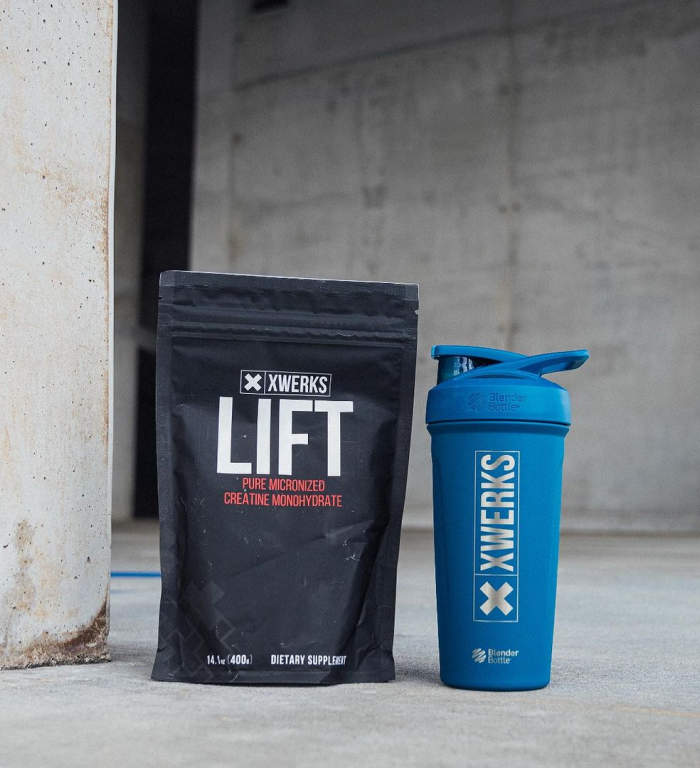
XWERKS Lift — pure micronized creatine monohydrate. Unflavored, easy to mix into anything, 80 servings per bag. No fillers, no flavoring, no proprietary blends.
SHOP LIFT →Further Reading
Creatine for Older Adults — The full evidence on creatine for healthy aging, sarcopenia, and cognitive function.
What Is Micronized Creatine? — Why micronized monohydrate outperforms every alternative form.
Understanding Creatine: Common Questions and Answers — The basics for anyone new to creatine.
The Brain-Boosting Benefits of Creatine — How creatine supports cognitive performance beyond the gym.
Should Vegans Consume Creatine? — Why plant-based diets make supplementation even more important.
Best Pre-Workout for Women — XWERKS Ignite: 150mg caffeine, nootropics, and transparent dosing.
References
1. Smith-Ryan AE, et al. Creatine in women's health: bridging the gap from menstruation through pregnancy to menopause. JISSN. 2025. PMC12086928.
2. Smith-Ryan AE, et al. Creatine supplementation in women's health: a lifespan perspective. Nutrients. 2021;13(3):877. PMC7998865.
3. Hall L, et al. Impact of creatine supplementation on menopausal women's body composition, cognition, estrogen, strength, and sleep. PMC. 2025. PMC12291186.
4. Chilibeck PD, et al. Effects of creatine and resistance training on bone health in postmenopausal women. Med Sci Sports Exerc. 2015;47(8):1587-1595.
5. Chilibeck PD, et al. A 2-yr randomized controlled trial on creatine supplementation during exercise for postmenopausal bone health. Med Sci Sports Exerc. 2023. PMC10487398.
6. Xu C, et al. The effects of creatine supplementation on cognitive function in adults: a systematic review and meta-analysis. Exp Gerontol. 2024.
7. Kreider RB, et al. International Society of Sports Nutrition position stand: safety and efficacy of creatine supplementation. JISSN. 2017;14:18.
8. Candow DG, et al. Does one dose of creatine supplementation fit all? Adv Exerc Health Sci. 2024;1(2).