

One study from 2009. Sixteen rugby players. Three weeks. No hair loss was measured. That's the entire foundation of the "creatine causes baldness" myth. In 2025, the first study to actually measure hair follicle health in creatine users was published. The result: no effect on hair whatsoever.
If you've Googled "creatine hair loss" before buying a tub, you're not alone. This is one of the most persistent myths in sports nutrition — and one of the most damaging, because it scares people away from the single most effective and well-researched performance supplement available. Let's trace where the myth came from, why it spread, and what the actual evidence says.
Where the Myth Came From: The 2009 Study
The entire creatine-hair-loss concern traces back to a single study published in 2009 by van der Merwe et al. in the Clinical Journal of Sport Medicine. Here's what that study actually found:
Twenty college-aged male rugby players in South Africa supplemented with creatine monohydrate (25g/day loading for 7 days, then 5g/day for 14 days) or a placebo. Blood samples were measured for testosterone and dihydrotestosterone (DHT). The creatine group showed a 56% increase in serum DHT after the loading phase, which remained 40% above baseline after the maintenance phase.
Because DHT is an androgen hormone associated with androgenetic alopecia (male pattern baldness), this single finding ignited the theory that creatine causes hair loss. The study was picked up by fitness forums, Reddit threads, and social media, and the myth calcified.
But here's what the viral interpretation left out:
The study didn't measure hair loss. Not a single hair was examined. No follicle density, no thickness measurements, no trichogram, no photos. The researchers measured a blood hormone and speculated about a possible downstream effect. That's not evidence of hair loss — it's a hypothesis.
Only 16 participants completed the study. This is an extremely small sample size from which to draw any conclusion, let alone one that would apply to the millions of people who take creatine daily.
The DHT increase stayed within normal clinical limits. A 56% increase sounds alarming until you learn that the creatine group started with DHT levels 23% lower than the placebo group at baseline. The post-supplementation values were still within the normal physiological range.
Testosterone didn't change. If creatine were meaningfully altering androgen metabolism, you'd expect to see changes in total testosterone as well. It didn't move.
No other study has replicated the DHT finding. In the 16 years since, twelve additional studies have examined the effects of creatine on testosterone and DHT. Ten found no change in testosterone. Five measured free testosterone (which the body uses to produce DHT) and found no increase. Not a single study has reported hair loss or baldness in creatine users.
The 2025 Study: The First to Actually Measure Hair
In April 2025, Lak et al. published the first randomized controlled trial to directly assess hair follicle health in creatine users. Published in the Journal of the International Society of Sports Nutrition, the study is exactly what the field needed — a proper test of the claim rather than inference from blood hormone levels.
Forty-five resistance-trained men (ages 18-40) were randomly assigned to either creatine monohydrate (5g/day) or placebo (5g maltodextrin/day) for 12 weeks. Participants maintained their existing diets and training routines. At baseline and after 12 weeks, researchers measured total testosterone, free testosterone, DHT, hair density, follicular unit count, and cumulative hair thickness using the Trichogram test and FotoFinder imaging system.
The results were unambiguous: there were no significant differences between the creatine and placebo groups in any hormone or any hair-related outcome. No change in DHT. No change in the DHT-to-testosterone ratio. No change in hair density, follicular unit count, or hair thickness. The study's conclusion: "This study was the first to directly assess hair follicle health following creatine supplementation, providing strong evidence against the claim that creatine contributes to hair loss."
Understanding the DHT-Hair Loss Connection
To understand why the 2009 study was misinterpreted, it helps to understand how hair loss actually works.
Androgenetic alopecia (male and female pattern hair loss) is driven by a combination of genetics and hormone sensitivity — not hormone levels alone. DHT binds to androgen receptors in hair follicles, causing them to miniaturize (shrink) over time. But the critical factor is follicle sensitivity to DHT, which is genetically determined, not the absolute level of DHT in your blood.
People with robust hair can have high DHT levels and never lose a strand. People with genetically sensitive follicles can lose hair at relatively normal DHT levels. A temporary, within-normal-range fluctuation in serum DHT — which is what the 2009 study observed, and which the 2025 study failed to replicate — doesn't translate to hair loss unless your follicles are already genetically predisposed to respond to DHT.
This is the same reason that resistance training itself (which naturally fluctuates androgen hormones during and after exercise) doesn't cause hair loss — even though it temporarily affects the same hormonal pathways that the 2009 study measured.
What Actually Causes Hair Loss
If you're noticing hair thinning while taking creatine, the creatine is almost certainly not the cause. The actual culprits are far more common: genetics (androgenetic alopecia affects approximately 50% of men by age 50 and up to 40% of women over their lifetime), stress (telogen effluvium, where physical or emotional stress pushes hair follicles into a resting phase, is one of the most common forms of temporary hair loss), nutritional deficiencies (iron, zinc, vitamin D, biotin, and protein deficiencies are all associated with hair thinning), caloric restriction (aggressive dieting or rapid weight loss can trigger temporary hair shedding — this is common in people who start a supplement stack at the same time they start a diet), hormonal changes (thyroid dysfunction, menopause, postpartum changes, and PCOS all affect hair), and medications (some blood pressure medications, antidepressants, and other drugs can cause hair thinning as a side effect).
The correlation that many people experience — "I started creatine and noticed hair loss" — is almost always explained by one of these factors coinciding with the start of supplementation, not caused by it. Starting creatine often coincides with starting a new training program, changing your diet, increasing stress, or entering a caloric deficit — all of which can independently affect hair.
What About Women?
The DHT-hair-loss myth is discussed almost exclusively in male fitness communities. Women have significantly lower androgen levels than men, and the 2009 study that started the myth was conducted exclusively on male rugby players. There is no evidence — not even speculative — linking creatine supplementation to hair loss in women. The 2025 JISSN review on creatine in women's health makes no mention of hair loss as a concern.
The Opportunity Cost of Avoiding Creatine
Here's the part that doesn't get discussed enough: every month you avoid creatine because of this myth, you're leaving real, measurable benefits on the table. The ISSN confirms that creatine monohydrate produces 5-15% improvements in strength and power, increases lean mass by 1-1.4 kg more than training alone, and is the most effective ergogenic supplement currently available. It also has emerging benefits for cognitive function, bone health, and healthy aging.
An unfounded myth based on a single, unreplicated, 16-person study that didn't even measure hair is not a good reason to miss out on those benefits. The 2025 RCT that actually looked at hair found nothing. The ISSN's position is clear. The evidence is settled.
The Bottom Line
Creatine does not cause hair loss. The myth traces to one small 2009 study that found a temporary DHT increase in 16 rugby players — but never measured hair, has never been replicated, and the DHT values remained within normal limits.
The 2025 RCT by Lak et al. — the first study to directly measure hair follicle health in creatine users — found no effect on DHT, testosterone, hair density, follicular count, or hair thickness over 12 weeks. Twelve additional studies on creatine and androgens have found no consistent effect on testosterone or DHT.
The ISSN's position: "The current body of evidence does not indicate that creatine supplementation increases total testosterone, free testosterone, DHT or causes hair loss/baldness." Take your 5g/day. Keep your hair.
The Most Researched Supplement. Zero Evidence of Hair Loss.
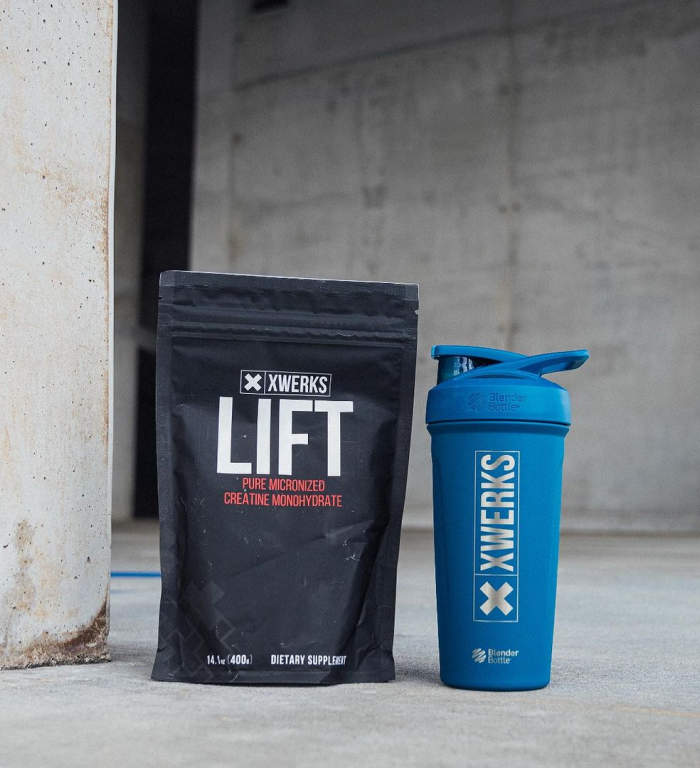
XWERKS Lift — pure micronized creatine monohydrate. 5g per scoop, 80 servings, nothing else in the bag.
SHOP LIFT →Further Reading
What Is Micronized Creatine? — How micronization improves solubility and why monohydrate is the only form that matters.
What Does Creatine Do for Women? — The full evidence on creatine across the female lifespan.
Creatine for Older Adults — Muscle, bone, brain: what the meta-analyses show for the 55+ population.
Understanding Creatine: Common Questions and Answers — The basics for anyone new to creatine.
References
1. Lak M, et al. Does creatine cause hair loss? A 12-week randomized controlled trial. JISSN. 2025;22(sup1):2495229.
2. van der Merwe J, Brooks NE, Myburgh KH. Three weeks of creatine monohydrate supplementation affects dihydrotestosterone to testosterone ratio in college-aged rugby players. Clin J Sport Med. 2009;19(5):399-404.
3. Antonio J, et al. Common questions and misconceptions about creatine supplementation: what does the scientific evidence really show? JISSN. 2021;18(1):1-16.
4. Antonio J, Brown AF, Candow DG, et al. Part II. Common questions and misconceptions about creatine supplementation. JISSN. 2025;22(1):2441760.
5. Kreider RB, et al. International Society of Sports Nutrition position stand: safety and efficacy of creatine supplementation. JISSN. 2017;14:18.