Creatine for Older Adults: What the Research Actually Shows
Creatine isn't just for young athletes anymore. A growing body of research — including multiple meta-analyses published in 2024 and 2025 — shows that creatine monohydrate may be one of the most effective, affordable, and safe supplements available for healthy aging. Here's what the science says.
If you're over 50, there's a reasonable chance nobody has ever suggested creatine to you. It's marketed almost exclusively to gym-going twenty-somethings, wrapped in packaging covered in lightning bolts and bicep imagery. That's a shame, because the research tells a very different story: the people who may benefit most from creatine supplementation are older adults.
The reason is straightforward. As we age, three things decline simultaneously: muscle mass, muscle strength, and the body's ability to regenerate ATP (the energy molecule that powers every muscular contraction). Creatine monohydrate directly addresses the third — and in doing so, helps fight back against the first two.
The Problem: Sarcopenia
Sarcopenia is the age-related loss of muscle mass, strength, and physical function. It's not a disease in the traditional sense — it's a nearly universal consequence of aging that begins as early as your 30s and accelerates after 60. By age 80, most people have lost 30-40% of their skeletal muscle mass compared to their peak.
The consequences are cascading: reduced strength leads to reduced physical activity, which accelerates further muscle loss, which increases fall risk, which leads to fractures, hospitalization, loss of independence, and reduced quality of life. Sarcopenia is also associated with cognitive decline, metabolic dysfunction, and increased all-cause mortality. It's not an exaggeration to say that maintaining muscle mass is one of the most important things you can do for longevity.
The most effective non-pharmacological intervention for sarcopenia is resistance training. And here's where creatine enters the picture: a large and growing body of evidence shows that adding creatine supplementation to a resistance training program produces significantly better results than resistance training alone in older adults.
What the Meta-Analyses Show
This isn't a case of one or two promising studies. Multiple systematic reviews and meta-analyses — the highest level of scientific evidence — have now examined the effects of creatine supplementation combined with exercise training in older adults.
Muscle Strength
A 2024 meta-analysis published in PMC pooled data from 20 randomized controlled trials including 1,093 participants aged 55 and older. The results: creatine combined with exercise training significantly increased one-repetition maximum (1RM) strength compared to exercise training with placebo (mean difference = 2.12 kg, p = 0.001). This was consistent across both upper- and lower-body measures.
A separate 2025 meta-analysis searching eight databases confirmed these findings, concluding that creatine plus resistance training significantly increases both muscular strength and lean tissue mass in older adults, with particularly strong effects in interventions lasting up to 32 weeks.
Lean Body Mass
Multiple prior meta-analyses have consistently found that creatine supplementation during resistance training augments lean tissue mass by 0.9-1.3 kg compared to resistance training with placebo in older adults. That may sound modest, but in the context of aging — where the baseline trajectory is continuous loss — gaining or even maintaining lean mass is a meaningful clinical outcome.
A 2025 narrative review in the Journal of the International Society of Sports Nutrition (JISSN) concluded that there is "accumulating evidence that creatine monohydrate (3+ grams/day) combined with resistance training is a viable intervention for improving strength, whole-body lean mass, regional muscle size and density, and select measures of functional ability in older adults."
Body Composition
The 2024 meta-analysis also found a significant reduction in body fat percentage in older adults taking creatine during exercise training (mean difference = -0.55%, p = 0.026). This suggests creatine supports favorable body recomposition — gaining muscle while losing fat — even in populations where body composition changes are traditionally difficult.
Creatine and the Aging Brain
Perhaps the most exciting area of emerging research is creatine's potential effects on cognitive function in older adults. The brain is one of the most metabolically active organs in the body, consuming approximately 20% of total ATP production. Like muscle, the brain relies on the phosphocreatine system to buffer energy demands during periods of high activity.
A 2025 systematic review published in Nutrition Reviews examined all available evidence on creatine and cognition in adults aged 55 and older. The findings: five of six studies (83.3%) reported a positive relationship between creatine and cognitive function, particularly in the domains of memory and attention.
The review included both intervention studies (where participants took creatine monohydrate supplements) and observational studies (where higher dietary creatine intake was associated with better cognitive outcomes). While the authors noted that high-quality clinical trials are still needed, the direction of evidence is encouraging — and it aligns with the known mechanism: more available phosphocreatine means more available ATP, which means better cellular energy for both muscle and brain function.
What About Bone Health?
The evidence on creatine and bone mineral density (BMD) is more nuanced and deserves honest treatment.
Some individual studies have shown promising results. One 12-month trial found that creatine supplementation (~8g/day) combined with resistance training (3 times/week) attenuated the rate of femoral neck bone loss in postmenopausal women — the creatine group lost 1.2% BMD compared to 3.9% in the placebo group. The creatine group also showed improvements in femoral shaft geometry, an indicator of bone bending strength.
However, meta-analyses looking across all available trials have not found a statistically significant effect of creatine on whole body, hip, femoral neck, or lumbar spine BMD compared to resistance training alone. A 2025 commentary in Osteoporosis International concluded that the evidence is currently insufficient to recommend creatine specifically as a treatment for osteoporosis.
The practical takeaway: creatine's primary benefits for older adults are in muscle strength, lean mass, and functional capacity. These benefits indirectly support bone health (stronger muscles put more load on bone, and better balance reduces fall risk), but creatine should not be relied upon as a standalone bone intervention. If bone density is a primary concern, work with your physician on established therapies, and view creatine as a complementary strategy for the muscle and strength side of the equation.
Safety in Older Adults
This is where many older adults (or their doctors) hesitate. There's a persistent myth that creatine is hard on the kidneys, unsafe for people with health conditions, or somehow only appropriate for young athletes. The evidence says otherwise.
The ISSN's position stand is clear: "There is no scientific evidence that the short- or long-term use of creatine monohydrate has any detrimental effects on otherwise healthy individuals." The 2025 JISSN narrative review specifically addressed older adults and clinical populations, finding that creatine does not appear to negatively affect markers of liver or kidney function in aging adults.
Creatine supplementation temporarily increases blood creatinine levels — creatinine is a breakdown product of creatine. This can cause a lab value to appear elevated, which may be alarming if your doctor doesn't know you're supplementing. The solution is simple: tell your healthcare provider you take creatine before any blood work, so they can interpret kidney markers in the proper context.
How to Take Creatine as an Older Adult
Dosing
The research consistently uses 3-5 grams per day of creatine monohydrate. The ISSN's recommended maintenance dose is approximately 0.03 g/kg/day, which works out to about 2-3g for lighter individuals and 4-5g for larger individuals. XWERKS Lift provides 5g per scoop — the most commonly studied and simplest dose.
A loading phase (20g/day for 5-7 days) can saturate muscle stores faster, but it's entirely optional. Taking 5g/day consistently reaches the same saturation level within 3-4 weeks. Given that older adults may be more sensitive to GI discomfort, skipping the loading phase and starting at 5g/day is the more practical approach.
Timing
Timing is less important than consistency. Take creatine at whatever time makes it easiest to remember — with breakfast, in a post-workout shake, or mixed into a glass of water with lunch. The key is daily intake so that muscle (and brain) creatine stores remain saturated.
What to Combine It With
Creatine works best when paired with resistance training — this is the combination that produces the strongest evidence in older adult populations. It also stacks well with protein supplementation. If you're not hitting adequate daily protein (1.2-1.6 g/kg/day for active older adults), adding a quality whey protein isolate alongside creatine gives you the two most evidence-backed nutritional interventions for preserving muscle with age.
Who Should Consider Creatine
Based on the current evidence, creatine supplementation is worth considering for any adult over 50 who is engaged in (or planning to begin) regular exercise, particularly resistance training. The people most likely to benefit include those actively resistance training who want to maximize strength and muscle gains, those beginning an exercise program after a sedentary period (creatine can enhance early adaptations), vegetarians and vegans (who have lower baseline muscle creatine stores since dietary creatine comes primarily from meat and fish), anyone concerned about age-related muscle loss or functional decline, and those interested in the emerging cognitive benefits.
You don't need to be an athlete. You don't need to be lifting heavy weights. The research includes community-dwelling older adults doing supervised exercise programs with moderate resistance — the kind of training that any reasonably healthy 55+ year-old can do.
The Bottom Line
Creatine monohydrate is one of the most researched supplements in existence, and the evidence for its benefits in older adults is substantial and growing. Multiple meta-analyses confirm that creatine combined with resistance training significantly increases muscle strength and lean mass compared to training alone. Emerging research suggests additional benefits for cognitive function, particularly memory and attention.
It's safe, affordable (about $0.12 per gram for quality monohydrate), requires no complicated protocol (5g/day, every day), and has no meaningful side effects in healthy individuals. The ISSN, the American Dietetic Association, and the American College of Sports Medicine have all recognized creatine monohydrate as an effective and safe ergogenic supplement.
If you're over 50 and you're not taking creatine, the research says you probably should be.
Start Simple: 5g Per Day, Every Day
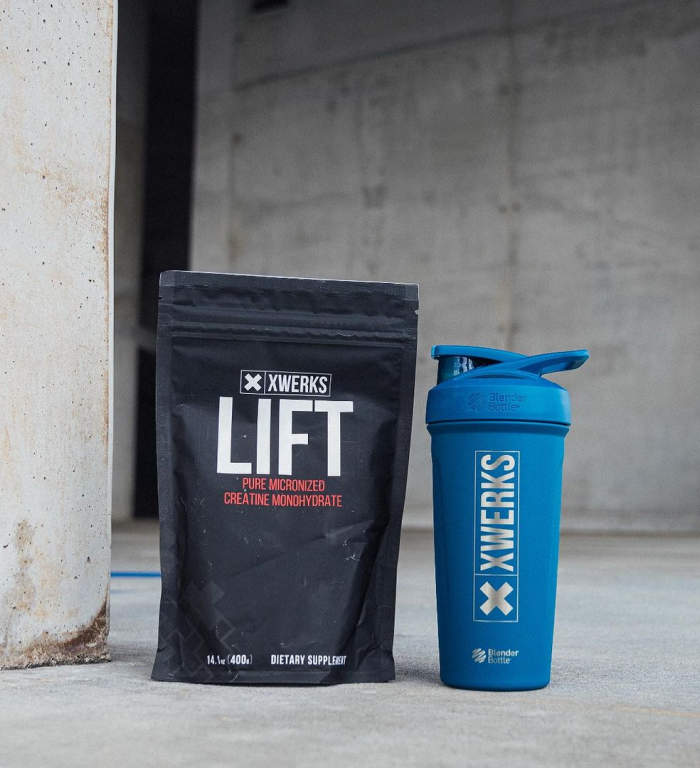
XWERKS Lift — pure micronized creatine monohydrate. Unflavored, easy to mix, and nothing else in the bag. 80 servings per pouch.
SHOP LIFT →Further Reading
What Is Micronized Creatine? — How micronization improves solubility and why monohydrate outperforms every alternative form.
Understanding Creatine: Common Questions and Answers — The basics for anyone new to creatine supplementation.
Creatine Monohydrate vs. Creatine HCL — Why monohydrate remains the gold standard despite marketing claims for alternatives.
Whey Protein for Seniors — Why older adults need more protein and how whey isolate helps meet those needs.
Whey Protein for Weight Loss — The three mechanisms that make whey effective for body composition goals.
References
1. PMC (2024). Impact of creatine supplementation and exercise training in older adults: a systematic review and meta-analysis. 20 RCTs, 1,093 participants. PMC12506341.
2. European Review of Aging and Physical Activity (2025). The impact of creatine supplementation associated with resistance training on muscular strength and lean tissue mass in the aged: a systematic review and meta-analysis. PMC12752335.
3. Marshall S, et al. Creatine and cognition in aging: a systematic review of evidence in older adults. Nutrition Reviews. 2025;nuaf135.
4. Candow DG, et al. Creatine monohydrate supplementation for older adults and clinical populations. JISSN. 2025. PMC12272710.
5. Bonilla DA, et al. The power of creatine plus resistance training for healthy aging. Front Physiol. 2024;15:1496544.
6. Forbes SC, et al. Creatine supplementation during resistance training does not lead to greater bone mineral density in older humans: a brief meta-analysis. Front Nutr. 2018;5:27.
7. Candow DG, et al. Creatine supplementation for older adults: focus on sarcopenia, osteoporosis, frailty and cachexia. Bone. 2022;162:116467.
8. Kreider RB, et al. International Society of Sports Nutrition position stand: safety and efficacy of creatine supplementation. JISSN. 2017;14:18.
9. Avgerinos KI, et al. Effects of creatine supplementation on cognitive function of healthy individuals: a systematic review. Exp Gerontol. 2018;108:166-173.
10. Davies TB, et al. Creatine supplementation for optimization of physical function in the patient at risk of functional disability. JPEN. 2024.