

Why Creatine Matters If You're on a GLP-1 Medication
GLP-1 drugs like Ozempic, Wegovy, Mounjaro, and Zepbound are remarkably effective at reducing body weight. But up to 40% of the weight you lose may come from lean mass — including muscle. Creatine is one of the most researched, affordable ways to fight back.
If you're taking a GLP-1 receptor agonist (semaglutide) or a dual GLP-1/GIP receptor agonist (tirzepatide) for weight management, the results are probably impressive. These medications produce 15-21% average body weight reduction in clinical trials — numbers that were unthinkable from pharmacotherapy even five years ago.
But there's a problem hiding inside those results that doesn't get enough attention: not all the weight you're losing is fat.
The Muscle Loss Problem
Data from the landmark STEP 1 trial (semaglutide 2.4mg) and the SURMOUNT-1 trial (tirzepatide) revealed that lean soft tissue loss comprised 26-40% of total weight lost. A 2023 study published in Obesity found that up to 39% of the weight lost on semaglutide came from lean body mass. A 2025 study presented at ENDO (the Endocrine Society's annual meeting) confirmed that approximately 40% of weight lost from semaglutide comes from lean mass, with women and older adults at higher risk.
To put that in practical terms: if you lose 40 pounds on a GLP-1 medication, somewhere between 10 and 16 of those pounds may be muscle and other lean tissue — not fat. That's a meaningful amount of muscle to lose, especially for people over 40 who are already fighting age-related muscle decline.
Why This Matters More Than You Think
Losing fat is the goal. Losing muscle is not. And the distinction matters for three critical reasons:
Metabolic rate: Muscle is metabolically active tissue — it burns calories at rest. Every pound of muscle you lose reduces your resting metabolic rate, making it harder to maintain weight loss long-term and increasing the likelihood of regain when you eventually stop or reduce your medication.
Functional capacity: Muscle is what lets you climb stairs, carry groceries, get up from a chair, and maintain balance. Losing a significant percentage of lean mass — especially for people over 50 — accelerates the functional decline associated with aging and increases fall risk.
Blood sugar control: Muscle is your body's primary glucose sink. It absorbs and stores glucose from the bloodstream, which is critical for insulin sensitivity. The 2025 ENDO research noted that losing too much muscle may actually reduce the metabolic benefits that GLP-1 medications are supposed to provide.
How Creatine Helps
Creatine monohydrate is the most extensively studied sports nutrition supplement in history. While it's traditionally associated with gym performance, its mechanisms make it particularly relevant for anyone losing weight on a GLP-1 medication.
1. It Supports Muscle Preservation During Caloric Deficit
GLP-1 medications work primarily by reducing appetite and slowing gastric emptying, which creates a sustained caloric deficit. Any prolonged caloric deficit puts muscle at risk. Creatine supplementation helps maintain intramuscular energy stores (phosphocreatine), which supports continued muscle protein synthesis even when overall energy intake is reduced.
Multiple meta-analyses have shown that creatine supplementation during resistance training augments lean tissue mass by 0.9-1.3 kg compared to placebo — and this effect is seen even more prominently in older adults and in people engaged in calorie-restricted protocols. A 2025 narrative review in PMC specifically listed creatine monohydrate as a recommended supplement for individuals on GLP-1 receptor agonist therapy, noting its role in supporting strength and lean mass during pharmacotherapy-induced weight loss.
2. It Increases Strength and Training Capacity
The ISSN's position is unequivocal: creatine monohydrate is "the most effective ergogenic nutritional supplement currently available to athletes in terms of increasing high-intensity exercise capacity and lean body mass during training." Controlled studies consistently show 5-15% improvements in strength and power output.
This matters for GLP-1 users because resistance training is the single most important intervention for preserving muscle during weight loss — and creatine makes your resistance training more effective. More effective training means better muscle preservation, which means more of the weight you lose comes from fat instead of muscle.
3. It Supports Cellular Hydration and Muscle Volume
Creatine draws water into muscle cells (cell volumization), which supports muscle protein synthesis and may help counteract the muscle volume loss that occurs during rapid weight reduction. This is the same mechanism that causes the initial "water weight" when starting creatine — but in the context of GLP-1 therapy, maintaining intracellular hydration is a feature, not a bug.
The Appetite Problem — And How to Work Around It
One of the most practical challenges for GLP-1 users is that these medications dramatically reduce appetite. That's the whole point — but it creates a downstream problem: when you're not hungry, eating enough protein to support muscle preservation becomes difficult. Many people on semaglutide or tirzepatide struggle to hit even 60-80 grams of protein per day, well below the 1.2-2.0 g/kg/day that research recommends during weight loss.
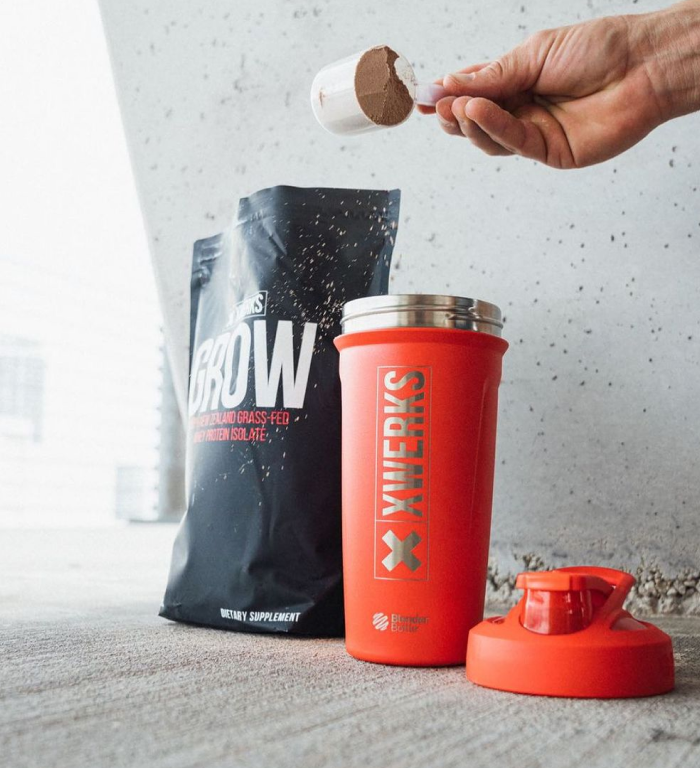
This is where a high-quality whey protein isolate becomes genuinely important — not as a nice-to-have, but as a practical necessity. A single scoop of Grow delivers 25 grams of protein in roughly 110 calories, in a format that's easier to consume than a full meal when appetite is suppressed. It's calorie-efficient, leucine-rich (the amino acid most responsible for triggering muscle protein synthesis), and won't cause the heaviness or nausea that solid food can trigger on GLP-1 medications.
Creatine compounds this benefit. By improving your muscles' ability to utilize the protein you do consume (through enhanced cellular energy and training capacity), creatine helps you get more muscle-preserving value from every gram of protein — even when total intake is lower than ideal.
What the Research Recommends
A 2025 narrative review published in PMC titled "Dietary supplement considerations during glucagon-like peptide-1 receptor agonist treatment" provided specific, evidence-based recommendations for supplement use during GLP-1 therapy. Their findings directly support what the broader sports nutrition literature has established for years:
Protein supplementation is recommended to help individuals meet daily intake goals of 1.2-2.0 g/kg/day. Whey protein specifically was highlighted for its ability to preserve lean body mass during weight loss when combined with resistance training.
Creatine monohydrate was listed as a recommended supplement for additional strength benefits during GLP-1 therapy, with the standard dose of 3-5g/day.
Resistance training was emphasized as the most critical intervention — more important than any supplement — for preserving lean mass during pharmacotherapy-induced weight loss.
The review also noted that multivitamins, fiber, and probiotics may help address micronutrient gaps and GI side effects common with GLP-1 medications. But from a muscle preservation standpoint, the hierarchy is clear: train with resistance, eat enough protein, and supplement with creatine.
Can You Actually Gain Muscle on a GLP-1?
Yes — with the right approach. A 2025 case series published in PMC documented three patients on semaglutide or tirzepatide who prioritized muscle preservation through resistance training (3-5 days/week) and protein intake (1.6-2.3 g/kg/day relative to fat-free mass). The results were striking: one patient lost only 8.7% of total weight as lean tissue, while the other two actually increased lean soft tissue while losing 26-33% of total body weight.
These aren't typical results — these patients were deliberate about training and nutrition. But they demonstrate that the muscle loss seen in clinical trials is not inevitable. It's a consequence of caloric restriction without adequate muscle-protective strategies. When training, protein, and creatine are prioritized, the composition of weight loss shifts dramatically in favor of fat loss.
The Practical Protocol
Daily Supplements
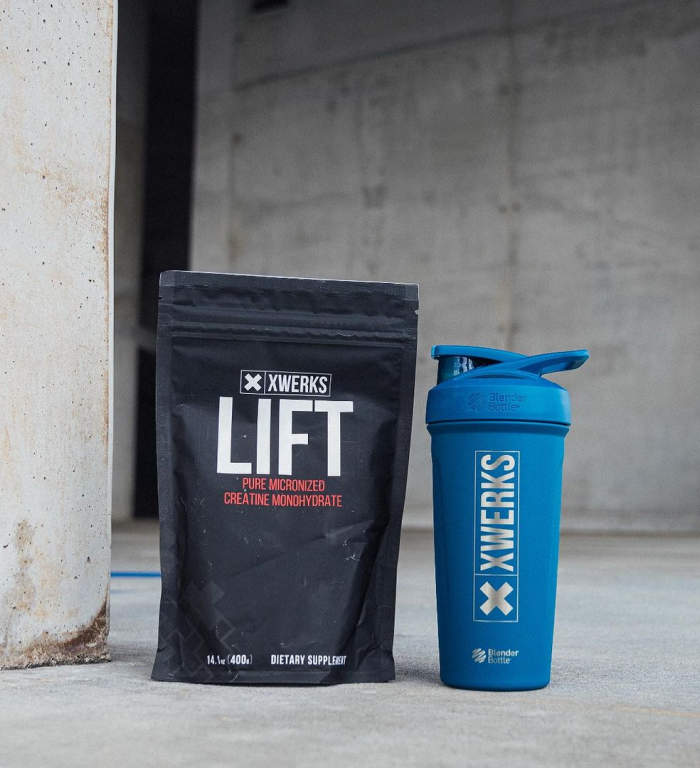
Creatine (Lift): 5g per day, every day, mixed into water, a protein shake, or any beverage. Timing doesn't matter — consistency does. Skip the loading phase; 5g/day reaches muscle saturation within 3-4 weeks.
Whey protein (Grow): 1-2 scoops per day to help hit your protein target. Particularly useful when appetite is suppressed and solid food feels like too much. Mix with water for the lightest, most easily tolerated option.
Training
Resistance training 2-4 times per week, focusing on compound movements (squats, deadlifts, presses, rows). You don't need to train like a bodybuilder — moderate loads with progressive overload is enough. The research in older adults (who face similar muscle-loss dynamics) shows that even supervised programs with moderate resistance produce significant results when combined with creatine.
Protein Target
Aim for 1.2-1.6 g of protein per kg of body weight per day at minimum. If you weigh 180 lbs (82 kg), that's roughly 100-130g of protein daily. This is harder than it sounds on a GLP-1 medication, which is exactly why a concentrated protein source like whey isolate matters — 25g of protein in a drink is far easier to get down than a chicken breast when your appetite is at zero.
The Bottom Line
GLP-1 medications are genuinely effective tools for fat loss. But without deliberate muscle preservation strategies, you risk losing a significant portion of the lean mass that keeps your metabolism running, your blood sugar regulated, and your body functional.
The evidence-based protocol is straightforward: resistance train regularly, eat enough protein (1.2-2.0 g/kg/day), and supplement with creatine monohydrate (5g/day). A 2025 review specifically recommended this combination for GLP-1 users. Creatine is safe, costs about $0.12 per gram, and requires no complicated timing or cycling.
The goal of GLP-1 therapy should be to lose fat and keep muscle — not just to lose weight. Creatine helps make sure you're losing the right kind of weight.
Preserve What Matters: Muscle.
XWERKS Lift + Grow — the two most research-backed supplements for preserving lean mass during caloric restriction. 5g of micronized creatine monohydrate + 25g of grass-fed whey isolate, together in one daily shake.
Shop Lift Shop GrowFurther Reading
What Is Micronized Creatine? — How micronization improves solubility and why monohydrate is the only form that matters.
Whey Protein for Weight Loss — The three mechanisms that make whey effective for fat loss and body recomposition.
Creatine for Older Adults — The research on creatine for healthy aging, sarcopenia, and cognitive function.
The Problem with Proprietary Blends — Why transparent labels matter when choosing any supplement.
References
1. Wilding JPH, et al. Once-weekly semaglutide in adults with overweight or obesity (STEP 1). N Engl J Med. 2021;384(11):989-1002.
2. Jastreboff AM, et al. Tirzepatide once weekly for the treatment of obesity (SURMOUNT-1). N Engl J Med. 2022;387(3):205-216.
3. Heymsfield SB, et al. Composition of weight loss with semaglutide. Obesity. 2023;31(1):35-42.
4. Haines M, et al. Consuming more protein may protect patients taking anti-obesity drug from muscle loss. Presented at ENDO 2025, Endocrine Society.
5. PMC (2025). Dietary supplement considerations during glucagon-like peptide-1 receptor agonist treatment: a narrative review. PMC12685510.
6. PMC (2025). Preservation of lean soft tissue during weight loss induced by GLP-1 and GLP-1/GIP receptor agonists: a case series. PMC12536186.
7. PMC (2025). Saving muscle while losing weight: a vital strategy for sustainable results while on GLP-1 related drugs. PMC12444289.
8. Kreider RB, et al. International Society of Sports Nutrition position stand: safety and efficacy of creatine supplementation. JISSN. 2017;14:18.
9. American Diabetes Association (2025). New GLP-1 therapies enhance quality of weight loss by improving muscle preservation. 85th Scientific Sessions.