The Best Supplements for Pickleball: An Evidence-Based Guide
TL;DR
- Pickleball is a repeated-sprint sport — 10-30 second rallies of explosive movement separated by brief recoveries, often played 1-3 hours per session. The supplement priorities reflect that exact energy pattern.
- Top four, in priority order: creatine monohydrate (5g daily), whey protein isolate (1.6-2.0g/kg/day), electrolytes + carbs for sessions over 90 min, and a moderate pre-workout for competitive matches.
- For the 50+ demographic that dominates competitive pickleball, creatine's benefits extend beyond performance — evidence supports muscle preservation, cognitive function, and bone health in older athletes.
- Joint support (omega-3s, collagen + vitamin C) becomes essential for players training 4+ sessions per week. Lateral movement and repetitive overhead motion accumulate faster than most players expect.
Pickleball is more physiologically demanding than most players realize. A typical competitive match is 300-500 short explosive efforts over 45-90 minutes — sprinting to the kitchen, exploding laterally for wide shots, recovering between points, driving the ball with full-body rotation. This is a textbook repeated-sprint sport, which maps almost perfectly onto the ATP-PCr energy system that creatine monohydrate (5g daily) supports best. Add whey protein isolate to hit 1.6-2.0g per kg body weight for recovery, intra-match electrolytes and carbohydrates for sessions over 90 minutes, and a moderate pre-workout for competitive play, and you have the evidence-based foundation. For the 50+ demographic that dominates competitive pickleball, these supplements deliver particular benefits through muscle preservation, cognitive function, and joint support — though foundation factors (sleep, overall nutrition, training) still matter more than any supplement.
Understanding what pickleball actually demands
Before the stack, it helps to understand what's happening physiologically during a competitive match:
Repeated-sprint energy pattern
Rallies last 10-30 seconds of high-intensity effort followed by 15-25 second recoveries. This is roughly 70-80% ATP-PCr-dependent (the phosphocreatine system) with aerobic recovery between points. Over a 90-minute match, the repeated-sprint load accumulates into a substantial overall stress that taxes both energy systems.
Explosive lateral movement
Constant side-to-side motion stresses hip abductors, adductors, and knee stabilizers. First-step speed and rapid direction change are dominant performance qualities — both ATP-PCr driven.
Rotational and overhead load
Full-body rotation on drives, volleys, and overheads places repetitive stress on the core, shoulders, and elbows. Thousands of strokes per week compound quickly into elbow and shoulder issues if recovery isn't prioritized.
Deceleration and impact
Quick stops and changes of direction pound the knees, ankles, and hips. Joint preservation becomes a major long-term variable, especially for older players.
Sustained mental focus
Tracking a fast ball on a small court, reading opponent tendencies, and making split-second decisions for 60-90 minutes is cognitively demanding. Mental fatigue is a real performance limiter late in matches and tournament days.
Creatine: the single highest-impact supplement for pickleball
If you take only one supplement for pickleball, make it creatine monohydrate. It's the most research-backed performance supplement in sports nutrition, and pickleball's energy demands align almost perfectly with where creatine helps most.
Explosive first steps
In pickleball, the player who reaches the ball first usually wins the point. That initial explosive movement — rushing the kitchen, retreating for a lob, lunging laterally for a wide shot — relies on phosphocreatine (PCr) stores. Creatine supplementation increases PCr saturation, allowing more rapid and repeated power output.
Recovery between points
Creatine's more underrated benefit: it accelerates PCr resynthesis during the 15-25 seconds between points. This means you're closer to fully recovered when the next rally starts, which matters a lot across 45-90 minutes of cumulative play.
Cognitive support
The brain uses creatine too. Multiple studies have shown creatine supplementation supports cognitive function during extended mental and physical exertion — exactly the demand of a competitive match or tournament day. Avgerinos et al. 2018 meta-analysis specifically found cognitive benefits in older adults, directly relevant to the 50+ pickleball demographic.
Muscle preservation (especially for 50+)
Beyond performance, creatine combined with resistance training preserves muscle mass in older adults (Chilibeck 2017 meta-analysis). For masters pickleball players working to stay competitive into their 60s and 70s, this benefit alone justifies daily supplementation.
How to take it
Dose: 5g daily of creatine monohydrate. No loading needed for most players — just start at 5g/day and be patient (saturation takes 3-4 weeks).
Form: Creatine monohydrate. Don't waste money on advanced forms (HCL, ethyl ester, buffered) — they cost 3-5x more without better results.
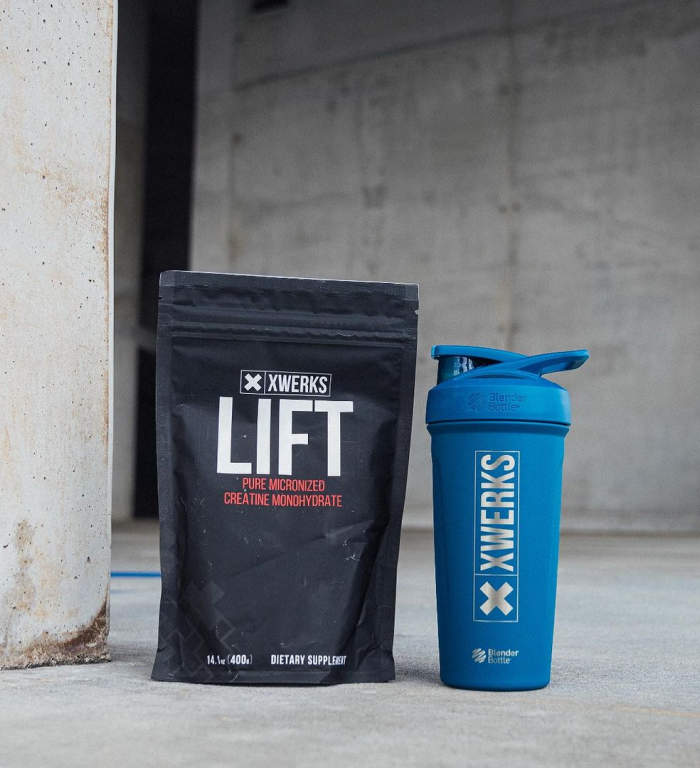
Timing: Doesn't matter much. Consistency matters more than timing. XWERKS Lift provides 5g of micronized monohydrate per scoop.
Whey protein: recovery for repetitive strain
Pickleball doesn't look as demanding as CrossFit or powerlifting, but the cumulative muscle damage from thousands of strokes, constant footwork, and explosive movement is real and requires recovery support.
Why protein matters specifically for pickleball
Muscle repair: Legs (quads, glutes, calves), core, and shoulders absorb the repetitive load. Adequate protein provides amino acids for repair and adaptation.
Connective tissue: Protein (particularly combined with collagen + vitamin C) supports tendon and ligament maintenance — critical given pickleball's repetitive overhead and lateral load.
Tournament recovery: Back-to-back matches in a tournament require much faster recovery than single training sessions. Protein distribution throughout the day becomes more important than on a typical day.
Muscle preservation with age: Older athletes need more protein than younger ones due to anabolic resistance. PROT-AGE recommendations (Bauer 2013) suggest 1.0-1.2g/kg minimum for older adults, with 1.6-2.0g/kg being preferable for active older adults.
Daily targets and timing
Daily target: 1.6-2.0g protein per kg body weight per day. For a 180-lb player, that's 130-165g daily. Distribute across 3-4 meals (25-45g per meal).
Post-match: 25-30g of high-quality protein within 60-90 minutes of play. A whey shake is often easier than whole food when appetite is suppressed from heat or exertion.
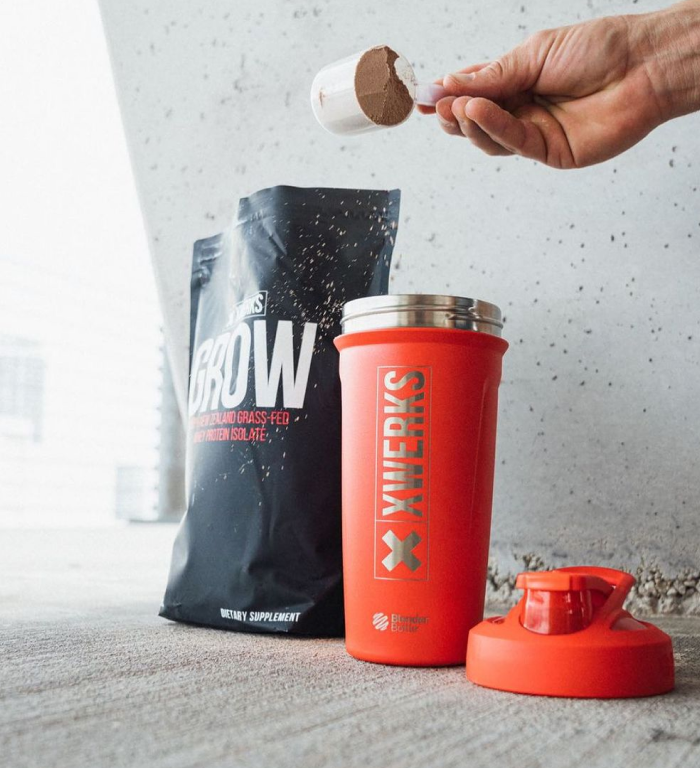
Recommended: XWERKS Grow — 25g of NZ grass-fed whey protein isolate per scoop. Clean-tasting and rapidly absorbed for post-match timing.
Electrolytes and intra-match carbohydrates
If you've ever cramped up in the third game or felt completely flat in the second hour of a tournament, you've experienced what inadequate electrolyte replacement and glycogen depletion feel like.
When intra-match supplementation matters
Under 60 minutes: Water is usually sufficient unless conditions are hot
60-90 minutes: Electrolytes become useful, particularly sodium
Over 90 minutes or tournament play: Electrolytes + carbohydrates deliver meaningful performance benefits
Hot/humid outdoor conditions: Electrolytes become essential even at shorter durations due to sweat-driven sodium losses
The water-only mistake
Drinking plain water during long hot sessions can worsen problems by diluting remaining electrolyte concentration. This is why many players drink plenty of water but still cramp, feel sluggish, or perform poorly in the second hour. Sodium replacement is typically the missing variable.
Target for warm conditions: 300-700mg sodium per hour, combined with 20-40g of carbohydrate per hour for sustained energy.
What to use
XWERKS Motion combines 25g Cluster Dextrin (highly branched cyclic dextrin — rapid gastric emptying, sustained blood sugar, minimal GI distress) with 3g BCAAs and electrolytes. Sip between games or during longer changeovers. Particularly valuable for tournament days where you're playing multiple matches across several hours.
Pre-workout: energy without the crash
A moderate pre-workout can meaningfully improve match performance, particularly for early-morning matches or after-work sessions when energy is naturally lower.
Benefits for pickleball
• Enhanced focus and reaction time
• Sustained energy across a 90-minute match
• Better muscular endurance during extended rallies
• Improved work capacity for multi-match sessions
What to look for — and avoid
Include: Moderate caffeine (150-200mg), citrulline malate (3-6g for blood flow), L-tyrosine (1-2g for focus under stress), beta-alanine (1.5-3g for anaerobic buffering).
Avoid: Extreme-stim pre-workouts (300mg+ caffeine), DMAA, exotic stimulant blends. These may improve heavy lifting but cause jitters that hurt the fine motor control critical for net play, dinks, and finesse shots. They also increase cardiovascular stress disproportionately in older athletes.
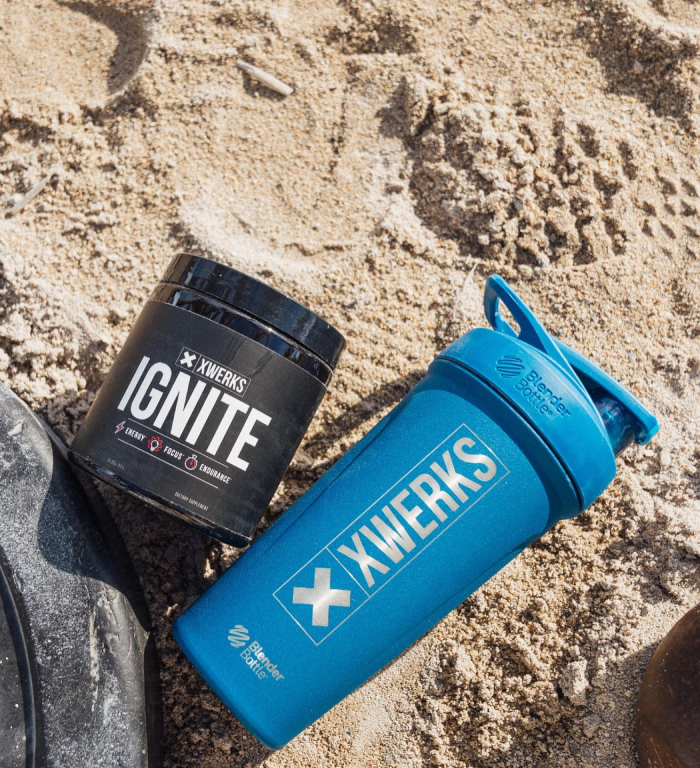
Recommended: XWERKS Ignite — 150mg caffeine, 3g citrulline malate, 2g L-tyrosine, 1.5g beta-alanine plus rhodiola and BioPerine. Appropriate stimulation without over-juicing.
Timing
Take 30-45 minutes before stepping on the court. Avoid late-evening doses if caffeine disrupts your sleep — poor sleep costs more performance than pre-workout delivers.
Joint support: the long-game investment
For serious pickleball players — especially those 50+ — joint maintenance often determines how many years of competitive play remain possible. The three evidence-backed options:
Collagen + Vitamin C
What it does: Provides amino acid building blocks (glycine, proline, hydroxyproline) for connective tissue synthesis. Shaw et al. 2017 found vitamin C-enriched gelatin supplementation before exercise enhanced collagen synthesis.
Dose: 10-20g hydrolyzed collagen daily + 50-100mg vitamin C. Best timing is 30-60 minutes before pickleball sessions (to direct amino acids toward connective tissue during exercise stress).
Important: Collagen doesn't replace whey for muscle protein synthesis — use alongside, not instead.
Omega-3 Fish Oil (EPA/DHA)
What it does: Reduces chronic inflammation, supports joint tissue, enhances muscle protein synthesis response in older adults (Smith 2011).
Dose: 2-3g combined EPA+DHA daily. Take with a meal containing fat for absorption.
Magnesium Glycinate
What it does: Supports muscle relaxation, sleep quality, and recovery. Many pickleball players who cramp or feel tight benefit meaningfully from magnesium.
Dose: 200-400mg evening, glycinate form for absorption.
What about BCAAs?
BCAAs (branched-chain amino acids) are heavily marketed but largely redundant if you're hitting your protein target. Whey protein contains 6+ grams of BCAAs per serving naturally, along with all essential amino acids.
BCAAs may make sense if:
• You play first thing in the morning on an empty stomach (pre-session BCAA can reduce catabolism)
• You're in a caloric deficit trying to lose weight while maintaining performance
• You're playing multiple tournament matches across a day and want intra-match amino acid support
Otherwise, the money is better spent on whey protein, which delivers BCAAs plus the full amino acid profile needed for complete muscle protein synthesis. XWERKS Motion does include 3g BCAAs in its intra-workout formulation, which covers the tournament-day use case without requiring a separate BCAA supplement.
Building your pickleball supplement stack by commitment level
Recreational player (1-2 sessions per week)
Focus on whole-food nutrition and sleep. Add only if interested:
• Creatine monohydrate — 5g daily
• Electrolytes during hot-weather sessions
Serious competitor (3-4 sessions per week)
• Daily creatine — 5g (XWERKS Lift)
• Post-match protein — 25g (XWERKS Grow), with 1.6-1.8g/kg daily target
• Intra-match hydration for long sessions (XWERKS Motion)
• Pre-match pre-workout for competitive play (XWERKS Ignite)
Tournament player or daily athlete
Everything above, plus:
• Collagen peptides — 10-20g daily with vitamin C
• Omega-3 fish oil — 2-3g combined EPA/DHA daily
• Magnesium glycinate — 200-400mg evening
• Vitamin D3 — 2,000-4,000 IU daily (higher if deficient)
What won't help your pickleball game
Fat burners. Unless you're deliberately losing weight, they don't improve performance and may interfere with energy and focus.
Testosterone boosters marketed as performance supplements. Most have minimal effect on recreational athletes. Natural testosterone optimization happens through better sleep, stress management, resistance training, and adequate protein — not bottled products marketed with misleading claims.
Excessive BCAAs. Waste of money if you're hitting protein targets.
Extreme-stim pre-workouts. 400mg+ caffeine or DMAA-type stimulants may work for powerlifters but cause jitters that hurt pickleball's fine motor demands and increase cardiovascular stress.
"Detox" or "cleanse" products. No evidence base; your liver and kidneys handle detoxification without supplementation.
Foundation matters more than supplements
Here's the unglamorous truth: supplements exist to supplement a solid foundation. No creatine stack compensates for:
Poor sleep. 7-9 hours per night. Every performance metric degrades with sleep deprivation. Fixing sleep improves pickleball more than any supplement.
Inadequate overall nutrition. Three solid meals of whole foods with adequate protein and carbohydrates is the foundation. Supplements fill the remaining gaps.
Insufficient recovery. Playing 6 days a week with no deload weeks accumulates into chronic fatigue. Plan recovery into your training.
Missing warm-up and cool-down. 10 minutes of dynamic warm-up before play reduces injury risk substantially. Cool-down + mobility afterward supports recovery.
Get these right first. Then strategic supplementation provides the extra 5-10% edge that decides close matches.
The Bottom Line
Pickleball is a repeated-sprint sport with 300-500 explosive efforts per match. The supplement priorities reflect exactly that energy pattern.
Top four in priority order: (1) creatine monohydrate (5g daily) for explosive power, recovery between points, and cognitive support; (2) whey protein isolate to hit 1.6-2.0g/kg daily for recovery; (3) electrolytes + carbohydrates for sessions over 90 minutes; (4) moderate pre-workout (150-200mg caffeine, not extreme-stim) for competitive matches.
For 50+ players: The stack becomes more important, not less. Creatine's muscle preservation, cognitive, and potentially neuroprotective effects make it particularly valuable. Add collagen + omega-3s for joint longevity.
Foundation matters most: Sleep 7-9 hours, hit your protein target, warm up properly, plan recovery weeks. Supplements amplify a solid foundation; they don't rescue a broken one.
The Pickleball Performance Stack
XWERKS Grow (25g NZ grass-fed whey isolate) + Lift (5g micronized creatine) + Motion (intra-match fueling) + Ignite (pre-workout). The evidence-based foundation for competitive pickleball, built for both the sport's demands and the 50+ demographic that dominates it.
SHOP LIFT → SHOP GROW →Further Reading
Creatine for Pickleball Players (Deep Dive)
Creatine for Cognitive Function and Aging
Best Supplements for Healthy Aging Men
Supplements for Muscle Preservation After 50
References
1. Kreider RB, et al. International Society of Sports Nutrition position stand: safety and efficacy of creatine supplementation in exercise, sport, and medicine. J Int Soc Sports Nutr. 2017;14:18.
2. Chilibeck PD, et al. Effect of creatine supplementation during resistance training on lean tissue mass and muscular strength in older adults: a meta-analysis. Open Access J Sports Med. 2017;8:213-226.
3. Avgerinos KI, et al. Effects of creatine supplementation on cognitive function of healthy individuals: A systematic review of randomized controlled trials. Exp Gerontol. 2018;108:166-173.
4. Bauer J, et al. Evidence-based recommendations for optimal dietary protein intake in older people: position paper from the PROT-AGE Study Group. J Am Med Dir Assoc. 2013;14(8):542-559.
5. Shaw G, et al. Vitamin C-enriched gelatin supplementation before intermittent activity augments collagen synthesis. Am J Clin Nutr. 2017;105(1):136-143.
6. Smith GI, et al. Dietary omega-3 fatty acid supplementation increases the rate of muscle protein synthesis in older adults. Am J Clin Nutr. 2011;93(2):402-412.
7. Morton RW, et al. Protein supplementation on resistance training-induced gains in muscle mass and strength. Br J Sports Med. 2018;52(6):376-384.