Supplement Guide for Hyrox Athletes: The Evidence-Based Stack
TL;DR
- Hyrox is a hybrid endurance-strength race — 8 × 1km runs alternating with 8 functional stations over 60-120 minutes. The supplement stack must support both energy systems simultaneously.
- Core daily stack: creatine monohydrate (5g), whey protein isolate (1.6-2.2g/kg), and beta-alanine (3-6g). All three require weeks of consistent loading — race-week supplementation doesn't work.
- Race-day priorities: 30-60g carbs per hour (Cluster Dextrin), 400-800mg sodium per hour, and 3-6mg caffeine per kg body weight taken 45-60 minutes pre-race.
- Muscle glycogen can drop 60-80% during hybrid endurance-strength events at 60-90 minutes. Intra-race carbohydrate intake is the difference between finishing strong and bonking at station 6.
Hyrox sits in a metabolic no-man's land — not a marathon (pure aerobic endurance), not a powerlifting meet (pure anaerobic strength), but a brutal 60-120 minute hybrid event featuring 8 × 1km runs alternating with 8 functional stations (SkiErg, sled push, sled pull, burpee broad jumps, rowing, farmers carry, sandbag lunges, wall balls). The constant switching between energy systems drains phosphocreatine and glycogen simultaneously, accumulates lactate faster than the body can clear it, and punishes unprepared athletes by station 6. The evidence-based supplement stack reflects that exact physiology: creatine monohydrate (5g daily) for power on strength stations, whey protein isolate (1.6-2.2g/kg daily) for recovery from high-volume training, beta-alanine (3-6g daily for 4-6 weeks) for lactate buffering during stations, intra-race carbohydrate from Cluster Dextrin (30-60g/hour), 400-800mg sodium per hour, and strategic pre-race caffeine (3-6mg/kg). Foundation factors — training specificity, pacing, sleep, race practice — still matter most, but proper supplementation meaningfully improves race outcomes.
Understanding Hyrox's brutal energy demands
Before the stack, a quick physiological walkthrough of what Hyrox actually does to your body:
The hybrid challenge
Every 1km run is moderate-to-high intensity aerobic work that depletes glycogen. Every station is an anaerobic burst requiring power, muscular endurance, and repeated high-intensity effort. The transitions between runs and stations are short — not nearly enough time to fully recover. Your body yo-yos between fuel sources for 60-120 minutes straight.
Glycogen depletion
Research on hybrid endurance-strength events shows that muscle glycogen can drop by 60-80% during races lasting 60-90 minutes. Without intra-race carbohydrate intake, pace slows, strength drops, and mental focus collapses. This is why so many first-time Hyrox athletes hit a wall around station 6-7.
Lactate accumulation
The sled push, burpee broad jumps, SkiErg, and rowing stations spike blood lactate to levels that take minutes to clear — but Hyrox doesn't give you minutes. Your capacity to buffer and clear lactate directly determines how fast you can recover between stations and how well you hold pace on the runs.
Dual energy system taxation
Unlike a pure marathon (mostly aerobic) or a pure strength event (mostly ATP-PCr + glycolytic), Hyrox simultaneously taxes all three systems. That's why supplement selection matters more here than in single-modality sports — each supplement targets a specific energy system, and missing any one becomes a performance ceiling.
Creatine: the foundation of the Hyrox stack
For Hyrox athletes, creatine isn't optional. It directly supports the ATP-PCr system that powers every strength station.
Power output on strength stations
Every sled push, wall ball, farmers carry step, and burpee broad jump relies on phosphocreatine (PCr) stores for immediate power. Creatine supplementation saturates PCr stores, which translates directly to:
• Pushing and pulling sleds with more force
• Maintaining power output longer on SkiErg and rowing
• Completing burpee broad jumps more explosively
• Carrying heavier loads at faster cadence
Recovery between stations
Creatine's underrated benefit: it accelerates ATP regeneration during the brief transitions between stations and during the runs themselves. You arrive at the next station closer to fully recovered, which compounds over 8 stations.
Training adaptation
Beyond race day, creatine supplementation during Hyrox training blocks enhances total training volume capacity, accelerates between-session recovery, and builds the muscular endurance needed for long strength intervals. More quality work in training = better race-day performance.
How to take it
Dose: 5g daily of creatine monohydrate. Every day — including non-training days. No loading needed for most athletes; saturation takes 3-4 weeks at 5g/day.
Form: Creatine monohydrate. Don't pay more for advanced forms (HCL, ethyl ester, buffered) — no evidence of superior effectiveness.
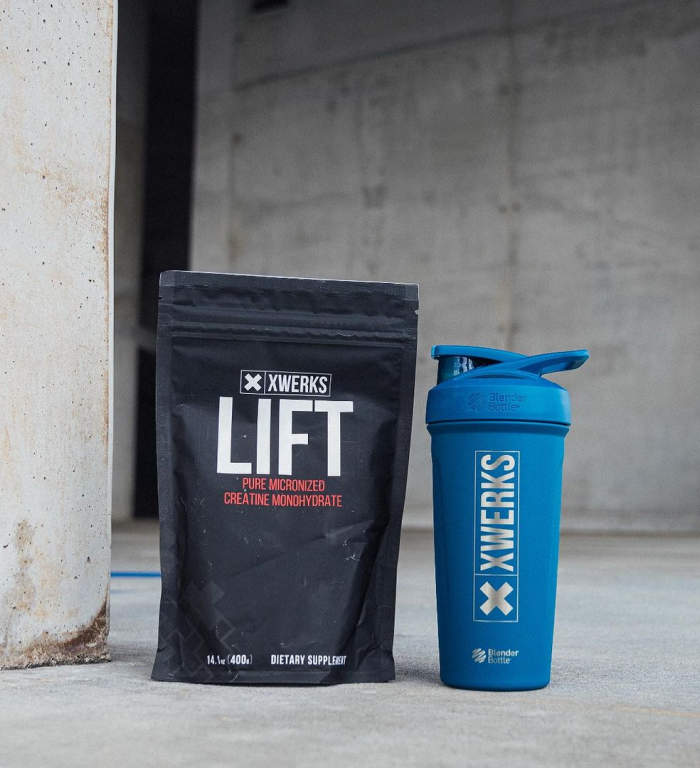
Timing: Consistent daily dosing matters more than timing. XWERKS Lift provides 5g per scoop of micronized monohydrate.
Carbohydrate strategy: fueling the hybrid engine
If creatine is the foundation, carbohydrate periodization is your race-day performance variable. Get this wrong and you'll bonk hard around station 6.
Pre-race carb loading (24-48 hours)
In the day before your Hyrox event, prioritize carbohydrate intake to maximize muscle glycogen. Target 7-10g carbs per kg body weight in the 24-48 hours before your race.
This isn't about stuffing pasta at dinner — it's about strategically increasing carb-dense foods across all meals while slightly reducing fat and fiber to avoid GI distress on race morning. Practice this in training during your longest sessions, not for the first time on race week.
Race-morning fueling
2-3 hours before your heat: 50-100g of familiar carbohydrates (oatmeal, toast + banana + honey, bagel). Low fat, low fiber. No experimentation.
30-45 minutes before: optional small carb source (banana, date, 15-20g sports drink) alongside pre-workout.
Intra-race fueling (the make-or-break variable)
The single biggest mistake Hyrox athletes make: treating the race like a CrossFit workout and skipping intra-race nutrition. For any Hyrox effort over 60 minutes, 30-60g of carbs per hour meaningfully improves performance by sparing glycogen and stabilizing blood glucose.
The challenge is finding fuel that won't upset your stomach while you're running and lifting. Fast-digesting carbs from Cluster Dextrin (highly branched cyclic dextrin) are ideal — rapid gastric emptying, low osmolality, sustained blood sugar, and minimal GI distress compared to concentrated sugars or standard maltodextrin.
XWERKS Motion combines 25g Cluster Dextrin with 3g BCAAs and electrolytes — a single formulation covering the carbs + sodium + amino acid support needs during the race.
Post-race recovery window
Within 30-60 minutes of crossing the line: 0.8-1.2g carbs per kg body weight plus 20-40g protein. Glycogen stores are depleted, muscle damage is extensive, and protein synthesis is elevated. This is one of the few times when rapid-digestion nutrition genuinely matters.
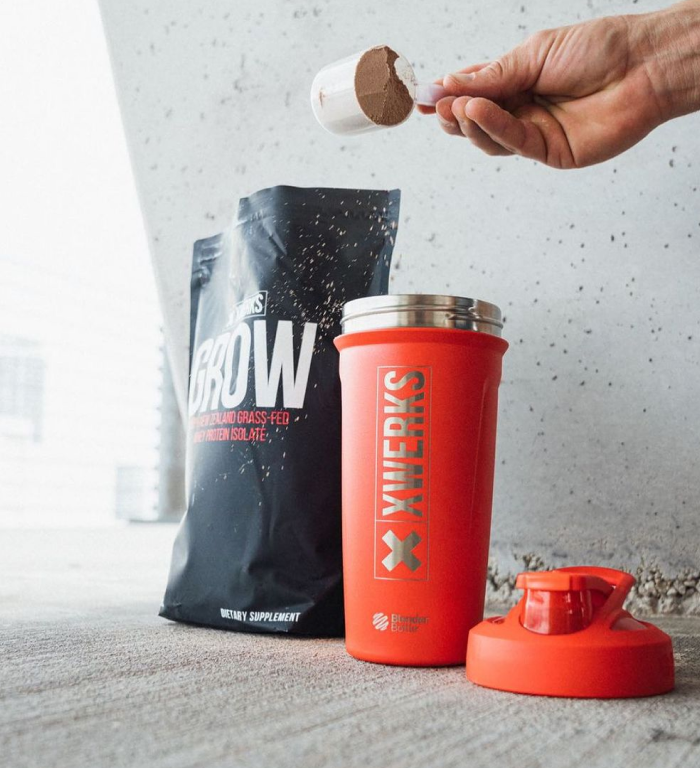
XWERKS Grow mixed with a banana and juice = a nearly ideal recovery shake: 25g whey isolate + ~60g carbs + electrolytes from fruit.
Beta-alanine: the lactate buffer
That burning sensation in your quads during wall balls and your arms during sled push? That's hydrogen ion accumulation from anaerobic metabolism. Beta-alanine directly addresses it.
How it works
Beta-alanine increases muscle carnosine levels. Carnosine acts as a buffer against the hydrogen ions that cause the burn and force pace reduction. Research shows beta-alanine is particularly effective for high-intensity efforts lasting 1-4 minutes — which describes most Hyrox stations exactly.
The tingles (paresthesia)
Beta-alanine often causes harmless tingling sensations 15-30 minutes after doses over 1.5g. It's not an allergic reaction — it's a neurological effect of beta-alanine binding to certain nerve receptors. It fades with regular use. If bothersome, split doses into 3 × 1-1.5g throughout the day.
Dosing and loading timeline
Dose: 3-6g daily, split if needed. Timing doesn't matter — it's about muscle carnosine saturation, not acute effect.
Loading timeline: Beta-alanine takes 4-6 weeks of consistent daily supplementation to saturate muscle carnosine. Starting two weeks before your race is too late. Start at least 6-8 weeks out for full benefit.
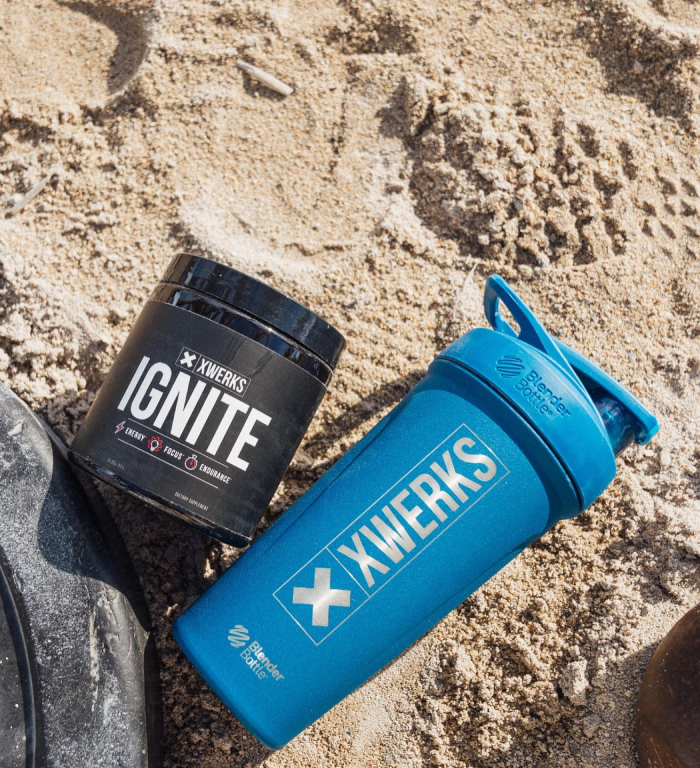
XWERKS Ignite contains 1.5g beta-alanine per serving as part of its full pre-workout formula. For full loading, athletes typically add standalone beta-alanine to hit 3-6g daily.
Caffeine: mental focus under fatigue
Hyrox is as much mental as physical. By station 6, decision fatigue sets in, technique deteriorates, and your brain negotiates reasons to slow down. Strategic caffeine directly counters this.
Benefits for Hyrox specifically
• Enhanced focus and concentration when exhausted
• Reduced perception of effort (runs feel less brutal)
• Improved muscular endurance during stations
• Delayed fatigue onset across the full race
Dose and timing
Dose: 3-6mg caffeine per kg body weight. For a 75kg athlete, that's 225-450mg. Start at the lower end if you're caffeine-sensitive or relatively new to pre-race caffeine.
Timing: 45-60 minutes before your heat. Caffeine peaks in blood ~45-90 minutes after ingestion — you want that peak hitting right as fatigue compounds during mid-race.
XWERKS Ignite provides 150mg caffeine + 3g citrulline malate + 2g L-tyrosine + 1.5g beta-alanine + rhodiola. For athletes needing higher caffeine doses (300mg+), add a caffeine tablet or additional pre-workout portion.
Electrolytes: the hydration equation
Depending on pace and conditions, Hyrox runs 60-120 minutes — plenty of time to accumulate significant electrolyte losses, especially in hot or poorly-ventilated venues.
The water-only mistake
Drinking plain water during intense 60+ minute exercise dilutes your remaining electrolytes. This worsens:
• Muscle cramps (especially farmers carry and sandbag lunges)
• Reduced power output late in race
• Mental fog and poor decision-making
• Nausea and potential hyponatremia risk
Strategic hydration
Start your race well-hydrated but not over-hydrated. During the race: sip an electrolyte-containing drink at stations where possible. XWERKS Motion delivers both carbs and electrolytes in one solution.
Sodium target: 400-800mg per hour depending on sweat rate, heat, and individual variation. Salty sweaters may need 800-1,200mg/hour. If you cramp frequently in training or races, under-sodium is the most common culprit.
Protein: the recovery foundation
Hyrox training creates massive cumulative muscle damage — eccentric loading from running plus repeated strength efforts across weekly volumes. Protein is non-negotiable for recovery and adaptation.
Daily protein needs
Training for Hyrox requires 1.6-2.2g protein per kg body weight daily. For a 75kg athlete: 120-165g daily. This supports muscle repair, immune function, and training capacity through high-volume weeks.
Distribute across 3-4 meals (25-45g per meal). Research consistently shows this distribution maximizes cumulative muscle protein synthesis compared to heavy-dinner patterns.
Post-race protocol
Within 60 minutes of finishing: 20-40g of high-quality protein. XWERKS Grow provides 25g of rapidly-digested whey isolate with 2.5-3g leucine — the amino acid that maximally triggers muscle protein synthesis. Combine with carbs and electrolytes for complete post-race recovery.
Citrulline: blood flow and endurance
L-citrulline is converted to L-arginine in the body, which increases nitric oxide production and improves blood flow to working muscles.
Benefits for Hyrox
• Better oxygen delivery during 1km runs
• Improved nutrient delivery to fatigued muscles
• Potentially reduced muscle soreness after high-volume training
• Enhanced muscular endurance during stations
Dose and timing
Dose: 6-8g of L-citrulline OR 8-10g of citrulline malate, taken 30-60 minutes pre-race. Most quality pre-workouts (including XWERKS Ignite) contain effective citrulline doses.
What about BCAAs?
BCAAs (branched-chain amino acids) are heavily marketed but largely redundant if you're hitting your protein target. Whey contains 6+ grams of BCAAs per serving naturally, plus all essential amino acids.
BCAAs may make sense for Hyrox athletes who:
• Train fasted in the morning
• Compete in a calorie deficit during cutting phases
• Want intra-race amino acid support during long sessions
Otherwise, whey protein covers the BCAA need plus the full amino acid profile needed for complete muscle protein synthesis. XWERKS Motion includes 3g BCAAs in its intra-workout formulation, covering the race-day use case without requiring a separate BCAA supplement.
The complete Hyrox stack by phase
Daily training supplementation
• Creatine monohydrate — 5g daily (XWERKS Lift)
• Whey protein isolate — to hit 1.6-2.2g/kg daily (XWERKS Grow)
• Beta-alanine — 3-6g daily, started 6-8 weeks before race
• Omega-3 fish oil — 2-3g combined EPA/DHA for inflammation management
• Vitamin D3 — 2,000-4,000 IU daily
Race week
• Continue daily stack as normal
• 24-48 hours pre-race: 7-10g carbs/kg body weight
• Practice the race-day nutrition protocol in Sunday/training-day simulations — never race something new
Race morning
• 2-3 hours before heat: 50-100g familiar carbs + light protein (oatmeal + banana + toast, etc.)
• 45-60 min before: XWERKS Ignite pre-workout + caffeine boost if needed (3-6mg/kg total)
• 15-20 min before: small carb top-up if appetite allows
During race
• 30-60g carbs per hour from Cluster Dextrin drink (XWERKS Motion)
• 400-800mg sodium per hour
• Sip strategically — stations with brief pauses work better than while running
Post-race
• Within 60 min: 20-40g protein (XWERKS Grow) + 0.8-1.2g carbs/kg + electrolytes
• Within 2-3 hours: complete meal with carbs, protein, and colorful vegetables
• Sleep prioritization for 48-72 hours post-race (recovery depends more on sleep than any supplement)
Periodization: adjusting the stack by training phase
Base building phase
Focus on adequate protein, creatine, and overall nutrition consistency. Don't stress intra-workout nutrition for sessions under 90 minutes. This is the phase to build training habits, not race-specific nutrition.
High-volume phase
Increase total carbohydrate intake to match training load (can push 5-7g/kg on heaviest training days). Start intra-workout carbs for sessions over 75-90 minutes. Begin beta-alanine loading if not already. Prioritize sleep and recovery metrics.
Race prep phase (final 4-6 weeks)
Practice race-day nutrition in race-pace training sessions. Dial in caffeine tolerance and timing. Test your exact hydration strategy. Confirm beta-alanine loading is complete. Reduce training volume while maintaining intensity.
Race week and taper
Maintain supplementation. Practice mental rehearsal of the nutrition protocol. Carb-load 24-48 hours out. Get aggressive about sleep (8-9+ hours). Avoid anything new — new foods, new supplements, new caffeine doses all risk GI issues or unexpected side effects on race day.
What won't help your Hyrox performance
Fat burners. Stimulant-heavy fat burners increase heart rate without improving race performance. They often worsen perceived exertion and create GI issues.
"Testosterone boosters." Most have no meaningful effect in healthy athletes. Natural T optimization happens through training, sleep, nutrition, and stress management — not bottled formulations.
Megadose pre-workouts. 600mg+ caffeine creates jitters, elevated heart rate, and urgent bathroom needs — all catastrophic in a Hyrox race.
Exotic stimulants. DMAA, DMHA, and similar compounds lack safety data and often cause adverse cardiovascular events under race stress.
"Detox" or "cleanse" products. No legitimate evidence base. Liver and kidneys handle detoxification without supplementation.
Glutamine. Heavily marketed for endurance, minimal real-world benefit for healthy athletes who eat adequate protein.
The foundation still matters most
No supplement compensates for fundamentals. The biggest Hyrox performance variables are:
Race-specific training. Practicing the station sequence, running-to-station transitions, and pacing. Generic cardio + lifting isn't enough — Hyrox demands Hyrox-specific conditioning.
Pacing strategy. Going out too hot on the first run destroys the second half. Most experienced Hyrox athletes recommend running the first 1-2 kilometers noticeably slower than feels natural.
Sleep. 7-9 hours per night. Every performance metric degrades under sleep deprivation. More impactful than any supplement.
Race nutrition practice. Test your exact protocol in training 5-10 times before race day. Never try anything new on race morning.
Mental preparation. Visualize the race. Practice the mindset transitions between stations. The athletes who perform well at station 6-7 are those who prepared mentally for that exact moment.
Supplements amplify solid training. They don't rescue broken fundamentals.
The Bottom Line
Hyrox's hybrid endurance-strength demands require a specific supplement stack that addresses both energy systems simultaneously — muscle glycogen can drop 60-80% during 60-90 minute hybrid events, making intra-race fueling non-negotiable.
Core daily stack: creatine monohydrate (5g), whey protein isolate (1.6-2.2g/kg), beta-alanine (3-6g, loaded 6-8 weeks out). All three require weeks of consistent loading — race-week supplementation doesn't work.
Race-day priorities: 30-60g carbs per hour from Cluster Dextrin, 400-800mg sodium per hour, 3-6mg caffeine per kg taken 45-60 min pre-race. Practice the protocol extensively in training simulations.
Foundation matters most: Race-specific training, disciplined pacing, 7-9 hours sleep, and extensively-practiced race nutrition. Supplements amplify a solid foundation; they don't rescue a broken one.
The Hyrox Performance Stack
XWERKS Grow + Lift + Motion + Ignite — the complete system for Hyrox athletes. Training recovery, phosphocreatine support, intra-race fueling with Cluster Dextrin, and pre-race focus with moderate-stim pre-workout. Built for exactly the demands Hyrox creates.
SHOP MOTION → SHOP GROW →Further Reading
Pre-Workout for Hyrox Athletes
Best Supplements for Spartan Race Training
Protein Powder for Obstacle Course Racing
Cluster Dextrin Benefits for Endurance
Intra-Workout for Trail Running
References
1. Kreider RB, et al. International Society of Sports Nutrition position stand: safety and efficacy of creatine supplementation in exercise, sport, and medicine. J Int Soc Sports Nutr. 2017;14:18.
2. Thomas DT, et al. American College of Sports Medicine Joint Position Statement: Nutrition and Athletic Performance. Med Sci Sports Exerc. 2016;48(3):543-568.
3. Hobson RM, et al. Effects of β-alanine supplementation on exercise performance: a meta-analysis. Amino Acids. 2012;43(1):25-37.
4. Goldstein ER, et al. International Society of Sports Nutrition position stand: caffeine and performance. J Int Soc Sports Nutr. 2010;7(1):5.
5. Furusawa M, et al. Effect of highly-branched cyclic dextrin on exercise-induced performance and physiological parameters. Nutrients. 2014.
6. Jeukendrup A. A step towards personalized sports nutrition: carbohydrate intake during exercise. Sports Med. 2014;44 Suppl 1:S25-S33.
7. Morton RW, et al. Protein supplementation on resistance training-induced gains in muscle mass and strength. Br J Sports Med. 2018;52(6):376-384.