

Beyond the Gym: Why Creatine Is One of the Most Important Supplements for Healthy Aging
If you think creatine is just for bodybuilders and twenty-something gym rats, you're not alone—but you're missing out on one of the most well-researched, safe, and effective supplements for maintaining strength, independence, and cognitive function as you age.
Here's the reality: creatine isn't about vanity muscles or Instagram-worthy physiques. It's about having the strength to get up from a chair without using your hands, the energy to play with your grandchildren, the cognitive sharpness to stay mentally engaged, and the bone density to recover if you do fall. It's about maintaining the physical and mental capacity that allows you to live life on your terms well into your 70s, 80s, and beyond.
The science supporting creatine for older adults is substantial and growing. This isn't hype—it's one of the most extensively studied supplements in existence, with decades of research demonstrating both safety and efficacy across all age groups.
What Creatine Actually Does (And Why It Matters More As You Age)
Creatine is a naturally occurring compound found in your muscles and brain that plays a crucial role in cellular energy production. Your body makes about 1 gram per day, and you get small amounts from eating meat and fish. But here's the problem: creatine levels naturally decline with age, right when you need them most.
Think of creatine as your cellular battery charger. When your muscles contract—whether you're lifting groceries, climbing stairs, or standing up—they use ATP (adenosine triphosphate) for energy. Once ATP is used, it needs to be recharged quickly to keep working. Creatine phosphate acts as a rapid reserve fuel tank that helps regenerate ATP almost instantly.
This energy system becomes less efficient with age. Lower natural creatine stores mean your muscles fatigue faster, recover more slowly, and gradually lose their ability to generate force. This isn't just inconvenient—it's a major contributor to the cascade of decline that leads to frailty, falls, and loss of independence.
The Muscle and Strength Benefits: Slowing the Decline
Sarcopenia—the progressive loss of muscle mass and strength with age—affects roughly 30% of people over 60 and more than 50% of those over 80. The consequences extend far beyond aesthetics: reduced muscle mass is directly linked to higher mortality rates, increased fall risk, and diminished quality of life.
Creatine Plus Resistance Training: A Powerful Combination
Research consistently shows that creatine supplementation combined with resistance training produces greater improvements in muscle mass and strength than exercise alone in older adults. In fact, the combination of creatine and resistance training can:
- Increase lean body mass significantly beyond training alone
- Enhance fatigue resistance during daily activities
- Improve performance on functional tests like chair stands and timed walks
- Boost both upper and lower body strength more effectively than exercise by itself
A meta-analysis examining older adults who supplemented with creatine during exercise training found significant improvements in leg strength, grip strength, and lean tissue mass. These aren't trivial gains—leg strength and grip strength are powerful predictors of reduced fall risk and maintained independence.
Real-World Impact on Daily Function
The benefits translate directly to activities of daily living. Studies show that creatine supplementation combined with training improves performance on:
- Sit-to-stand tests (a predictor of fall risk)
- Walking speed and endurance
- Stair climbing ability
- Overall functional capacity
One particularly compelling study found that older adults taking creatine during resistance training improved their functional test performance including timed up-and-go tests and chair sit-to-stands—practical measures of real-world mobility and independence.
Bone Health: A Promising but Nuanced Picture
Osteoporosis and bone loss are major concerns as we age, particularly for postmenopausal women. While the bone density benefits of creatine are more complex than the muscle effects, there's reason for optimism.
Some research shows that creatine supplementation (~8g/day) over 12 months combined with resistance training in postmenopausal women attenuated bone mineral density loss at the femoral neck compared to placebo—a loss of only 1.2% versus 3.9% in the placebo group. The same study found increases in femoral shaft width, an indicator of bone bending strength.
Another study in older men found that creatine plus training increased upper limb bone mineral content compared to training alone.
However, it's important to note that not all studies have found bone density benefits, and a recent meta-analysis showed no overall effect on bone mineral density across multiple studies. The current understanding is that creatine's bone benefits, when they occur, are likely indirect—by increasing muscle mass through training, creatine may enhance the mechanical loading forces on bone that stimulate bone formation.
The takeaway: creatine works best for bone health when combined with consistent resistance training, and benefits may take a year or more to manifest. It's not a magic bullet for osteoporosis, but it appears to be a valuable tool in the broader strategy of maintaining skeletal health.
The Cognitive Benefits: Protecting Your Brain
This is where creatine gets really interesting. Your brain uses an enormous amount of energy—about 20% of your body's total—despite making up only 2% of your body weight. Like muscles, the brain relies on the creatine-phosphocreatine system for rapid energy replenishment.
Memory and Attention in Older Adults
Recent systematic reviews examining creatine and cognition in older adults found that five out of six studies reported positive relationships between creatine and cognitive function, particularly in the domains of memory and attention.
The mechanism makes sense: higher brain creatine levels are associated with improved neuropsychological performance, and creatine supplementation has been shown to increase brain creatine and phosphocreatine concentrations.
Cognitive Performance Under Stress
Perhaps more importantly, research demonstrates that cognitive processing that is either experimentally impaired (following sleep deprivation) or naturally impaired (due to aging) can be improved with creatine supplementation.
This suggests creatine may be particularly beneficial for maintaining mental sharpness during times of increased cognitive demand—illness, stress, sleep disruption, or the cumulative effects of aging itself.
The Caveat
While the cognitive research is promising, it's important to note that the evidence base is still developing. Most studies are relatively small, and we need more large-scale, long-term trials. However, given creatine's excellent safety profile and other well-established benefits, the potential cognitive upside is an encouraging bonus.
Safety: What Decades of Research Tell Us
One of the most common concerns about creatine is kidney health. After decades of research and extensive safety monitoring, the evidence is clear: creatine supplementation at recommended doses does not negatively affect kidney function in healthy older adults.
Multiple studies examining kidney and liver function markers in older adults taking creatine have found no adverse effects. The myth that creatine damages kidneys largely stems from a single case study and persistent internet misinformation.
What About Side Effects?
The most common side effect is temporary water retention—typically 1-2 pounds in the first week or two—as creatine draws water into muscle cells. This is actually a sign it's working and usually stabilizes quickly. The weight gain is water in muscle tissue, not fat.
Some people experience mild gastrointestinal discomfort when starting creatine, which can be minimized by:
- Starting with a lower dose rather than "loading"
- Taking creatine with food
- Staying well-hydrated
- Using high-quality creatine monohydrate that dissolves well
How to Use Creatine Effectively
Dosing Strategies
Research supports two main approaches:
- Loading phase: 20g per day (split into 4 doses) for 5-7 days, then 3-5g per day maintenance
- Maintenance only: 3-5 grams per day from day one, which achieves the same muscle saturation over about 3-4 weeks
For older adults, many experts recommend skipping the loading phase and going straight to the maintenance dose of 3-5g daily. This minimizes any digestive discomfort and is just as effective over time.
Studies in older populations have used doses ranging from 5-7g per day (or 0.1g/kg body weight) with excellent results on muscle strength and lean mass.
Creatine Monohydrate: The Gold Standard
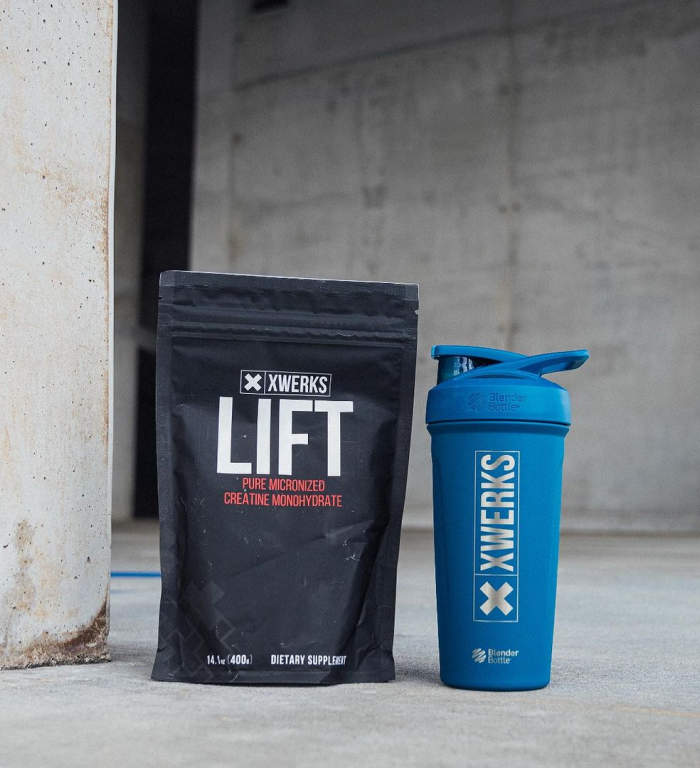
Despite countless variations and fancy formulations, creatine monohydrate remains the most extensively researched and effective form. It's also the most affordable. Don't waste money on expensive alternatives—micronized creatine monohydrate like Xwerks Lift is what the research supports and what actually works.
Timing and Consistency
The timing of creatine intake is less important than consistency. Whether you take it morning, evening, or around workouts doesn't matter much—what matters is taking it every day. Creatine works by gradually saturating your muscle stores over time, not through acute effects.
That said, many people find it convenient to mix creatine into their morning protein shake or post-workout nutrition.
The Exercise Component
Here's the crucial point: while creatine may provide some benefits on its own (particularly for cognition), the muscle and strength benefits are maximized when combined with resistance training.
You don't need to become a powerlifter. Even modest resistance training—bodyweight exercises, resistance bands, light dumbbells—done 2-3 times per week is sufficient to see meaningful benefits when combined with creatine supplementation.
Who Should Consider Creatine?
Based on the research, creatine supplementation makes sense for:
- Adults over 60 looking to maintain muscle mass and strength: Especially if you're doing any form of resistance exercise
- Anyone concerned about fall risk: The functional strength improvements translate directly to better stability
- Older adults wanting to preserve cognitive function: Preliminary but promising evidence for memory and mental sharpness
- Individuals with reduced meat intake: Vegetarians and vegans have naturally lower creatine stores and may see even greater benefits from supplementation
- Those recovering from illness or injury: Creatine may help rebuild strength and muscle mass lost during recovery
Combining Creatine With Other Strategies
Creatine works best as part of a comprehensive approach to healthy aging:
Protein Intake
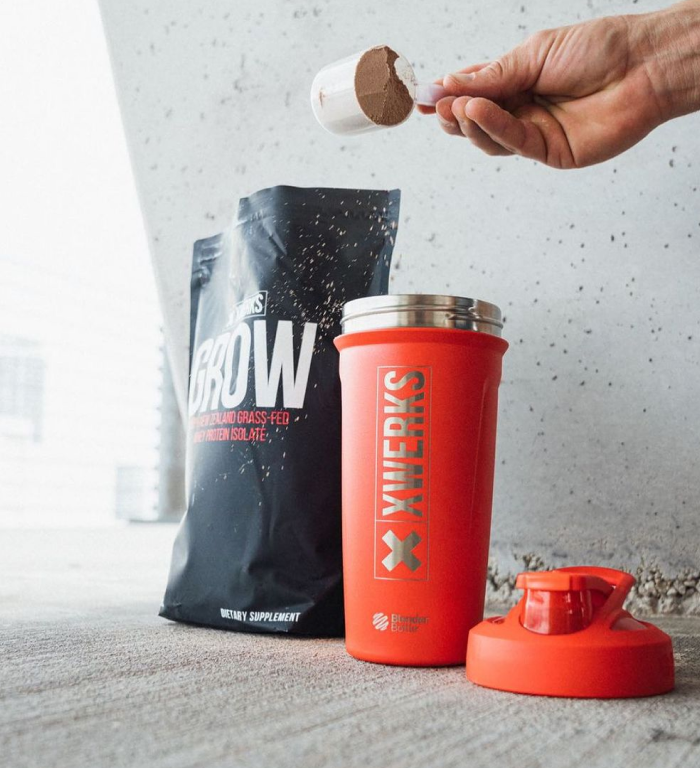
Adequate protein is foundational for maintaining muscle mass. Older adults need 1.0-1.2g per kg body weight daily, significantly more than younger adults. High-quality whey protein like Xwerks Grow provides 25g of easily digestible protein to support muscle protein synthesis.
Resistance Training
This is non-negotiable. Creatine amplifies the effects of training, but training is the primary stimulus. Even two 30-minute sessions per week can make a significant difference.
Pre-Workout Support
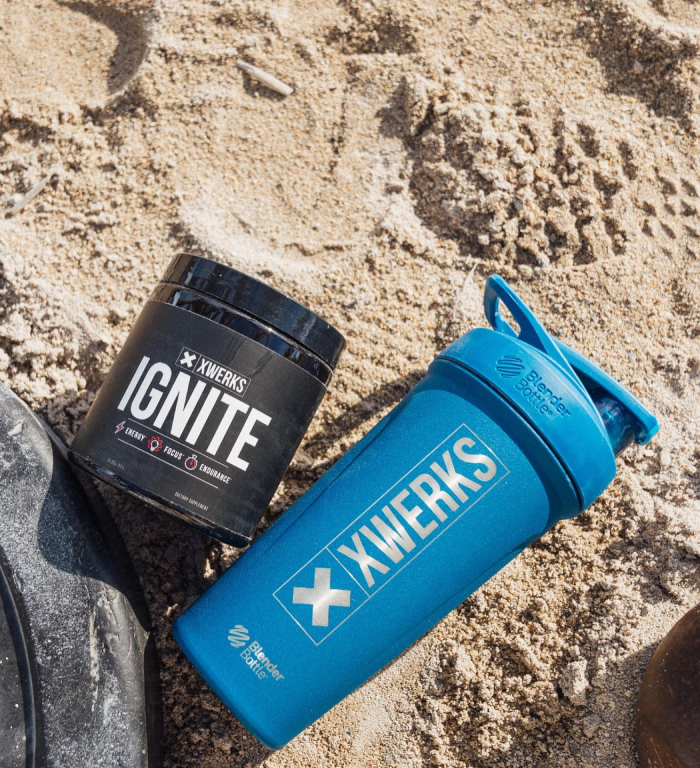
For those doing more intensive training, a well-formulated pre-workout like Xwerks Ignite can enhance workout quality and intensity, allowing you to get more benefit from each training session.
Overall Nutrition
A balanced diet with adequate calories, vitamins, and minerals provides the foundation. Creatine is a powerful addition, not a replacement for good nutrition.
The Bottom Line
Creatine supplementation for older adults isn't about chasing youth or trying to look like you're 25 again. It's about maintaining the strength, function, and cognitive capacity that allows you to continue doing what you love—playing with grandchildren, traveling, gardening, hiking, or simply living independently without assistance.
The research is compelling: creatine supplementation, particularly when combined with resistance training, is a safe and effective strategy for improving muscle mass, strength, functional performance, and potentially cognitive function in older adults.
At 3-5 grams per day, a month's supply of quality creatine monohydrate like Xwerks Lift costs less than a couple of dinners out. For that modest investment, you're giving your body and brain the energy substrate they need to function optimally.
Your 80-year-old self—the one who's still active, independent, and mentally sharp—will thank you for the investment you make today. Visit Xwerks to explore science-backed supplements that support every aspect of healthy aging.