Creatine for Tennis Players: The Evidence-Based Guide
TL;DR
- Tennis is a repeated-sprint sport — 300-500 short explosive efforts per match with 15-20 second recoveries. This is exactly the energy system creatine supports best.
- Creatine monohydrate (5g daily) improves serve velocity, sprint speed, direction-change power, and late-match fatigue resistance — all directly match-relevant qualities.
- Research specifically in tennis: Pluim et al. 2006 found creatine supplementation improved lower-body explosive performance. Subsequent studies have shown serve velocity improvements and reduced late-match performance decay.
- Creatine doesn't slow you down. The ~1-2 lbs of water retention is intracellular hydration, not bloat, and has no measurable negative effect on court movement for competitive tennis players.
Tennis is one of the most creatine-responsive sports in competitive athletics. A typical singles match involves 300-500 short explosive efforts — serves, sprints to the ball, recovery steps, direction changes — separated by 15-20 second recoveries. This energy pattern maps almost perfectly onto the ATP-PCr system that creatine supports. Research specifically in tennis players (Pluim et al. 2006 and subsequent studies) has shown that creatine monohydrate supplementation (5g daily) improves serve velocity, sprint speed, explosive movement, and resistance to late-match fatigue. Despite persistent myths, creatine doesn't cause bloat or slow tennis players down — the small water retention is intracellular hydration that actually supports performance. For competitive tennis players looking for a single high-impact supplement, creatine is a top-tier choice with one of the strongest evidence bases in sports nutrition.
Why tennis is perfectly suited to creatine
Not every sport responds equally to creatine. Pure endurance events (marathon running, cycling) show minimal benefit. Pure strength sports (powerlifting) show benefit but have diminishing returns for elite lifters. The sports that respond best to creatine are "repeated-sprint" sports — those involving repeated short, high-intensity efforts separated by brief recoveries. Tennis is a textbook example.
Tennis energy system demands
Analyze a competitive tennis match and you see:
• Points typically last 4-10 seconds (elite level)
• Recovery between points is 20-25 seconds
• Changeovers at odd games (90-second recovery)
• Total match duration can exceed 2-3 hours
• During points: explosive serves, sprints to wide balls, rapid direction changes, jumping overheads
This pattern is roughly 80% ATP-PCr-dependent energy production during points, with aerobic recovery between points.
Why the ATP-PCr system matters
Your body has three primary energy systems: ATP-PCr (immediate, 5-10 seconds), anaerobic glycolysis (10 seconds to 2 minutes), and aerobic (2+ minutes). For the short explosive efforts in tennis, the ATP-PCr system dominates — and this is where creatine has the largest impact.
Creatine increases phosphocreatine stores in muscle, which directly supports ATP regeneration during short high-intensity efforts. More phosphocreatine = more immediate energy available = stronger serves, faster sprints, more explosive movement, and better resistance to fatigue across the duration of a match.
The late-match decay problem
Tennis matches often come down to late-match fatigue. The player whose performance decays less — whose serve stays sharp, whose movement stays quick, whose decision-making stays clean — typically wins close matches. Creatine specifically reduces performance decay in repeated-sprint efforts.
In practical terms: your 20th sprint in the third set feels more like your 5th sprint with adequate creatine stores, vs noticeably slower without them.
The research specifically in tennis
Pluim et al. 2006
One of the earliest trials specifically in tennis players. Creatine supplementation (5g daily) improved lower-body explosive performance and sprint ability. Set the foundation for subsequent research.
Eijnde et al. 2001
Found creatine supplementation improved tennis-specific skills performance, with particular benefits in sprint-type efforts characteristic of match play.
Repeated-sprint research broadly
Dozens of studies in sports with similar energy demands to tennis (soccer, basketball, hockey) consistently show creatine supplementation improves sprint performance, reduces performance decay in repeated efforts, and supports faster recovery between high-intensity bouts. This research generalizes directly to tennis.
Strength and power transfer
Creatine's effects on resistance training — increased strength gains, greater muscle mass accrual, and improved power output — all transfer to tennis when combined with appropriate off-court training. Stronger, more powerful athletes serve faster, sprint quicker, and move more explosively.
Specific match-day benefits
Serve velocity
The serve is the most explosive single action in tennis — a full-body kinetic chain producing ball speeds up to 150+ mph at elite levels. Serve power depends on the ATP-PCr system. Creatine supplementation has been shown to increase upper-body power output, which translates directly to serve velocity.
Sprint speed to the ball
Reaching wide shots depends on quick first steps and short acceleration. Creatine consistently improves 5-20 meter sprint times in research — exactly the distance range relevant to tennis movement.
Direction changes and decelerations
Much of tennis is about decelerating, changing direction, and re-accelerating. These movements are all ATP-PCr dependent and show improvement with creatine.
Late-set performance
Creatine's most underrated effect: reduced performance decay during repeated efforts. Your 3rd-set serve stays closer to your 1st-set serve. Your 90-minute sprint quality more closely resembles your early-match sprint quality.
How to take creatine as a tennis player
Dose
5g daily of creatine monohydrate. Every day, including non-training days. Creatine works through saturation of muscle stores, which takes 3-4 weeks at 5g/day (or 5-7 days with a 20g/day loading phase). Most tennis players don't need to load — just start at 5g/day and be patient.
Form
Creatine monohydrate — the most studied form with the strongest evidence base. Don't waste money on "advanced" forms like creatine HCL, ethyl ester, or buffered creatine. Research consistently shows they're no more effective than monohydrate at 3-5x the price.
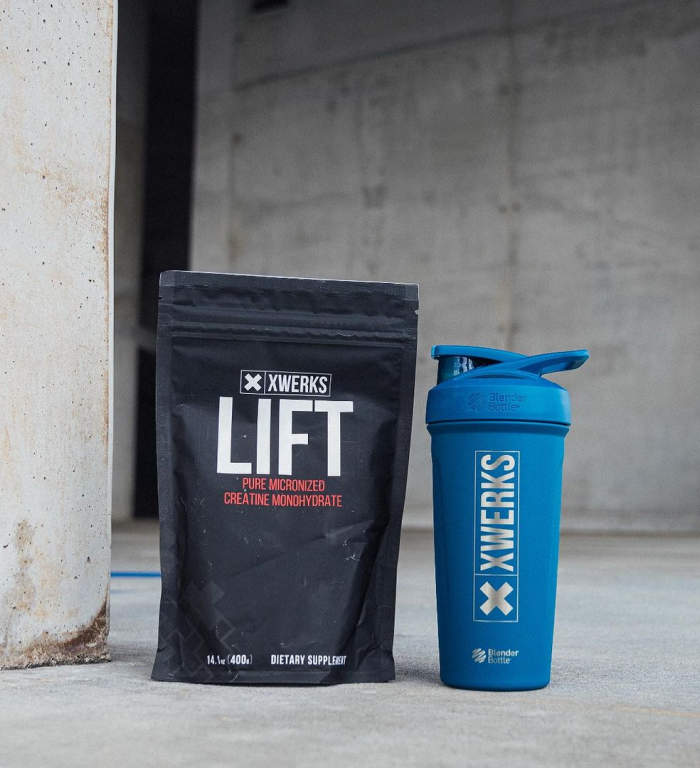
XWERKS Lift uses micronized monohydrate for better solubility (relevant if you're mixing into shakes or water).
Timing
Doesn't matter much. Take it whenever is convenient — with a shake, with breakfast, with dinner, before bed. Consistency matters more than timing.
Some minor evidence suggests post-workout timing with carbs or protein may slightly enhance uptake, but the effect is small enough that it shouldn't determine your strategy.
Hydration
Creatine draws water into muscle cells. This means two things: (1) you may notice ~1-2 lbs scale weight gain in the first 2-3 weeks, which is intracellular water, not fat or bloat; (2) you should be reasonably hydrated — not extreme, just normal hydration practices for an athlete.
Addressing the tennis-specific concerns
"Will creatine slow me down on court?"
No. This concern comes from the ~1-2 lbs water retention, which some athletes fear will impair movement. In practice, the water retention is inside muscle cells (not fluid weight around your midsection), and the performance benefits dramatically outweigh any theoretical effect of a 2-lb body mass increase. Research in repeated-sprint sports consistently shows performance improvements with creatine, not decrements.
"Will creatine cause cramping on hot days?"
The opposite — creatine may slightly reduce cramping risk in some contexts (by supporting cellular hydration). The belief that creatine causes cramps comes from older anecdotal reports, not controlled research. A systematic review found no evidence creatine causes muscle cramping or gastrointestinal distress at standard doses.
Tennis-specific caveat: if you play in extreme heat, prioritize hydration and electrolytes regardless of creatine use. Cramping in hot-weather tennis is almost always due to sodium loss and dehydration, not creatine.
"What about endurance for long matches?"
Creatine supports ATP-PCr system performance, which is most relevant during points rather than between them. Long-match endurance depends more on aerobic fitness, glycogen management, hydration, and electrolytes. Creatine helps within-point performance; traditional endurance training supports overall match endurance.
For long matches specifically, consider pairing creatine with intra-match carbohydrate intake (small sips during changeovers — products like XWERKS Motion provide Cluster Dextrin carbs that minimize gastric distress).
The complete tennis performance stack
Core stack
Creatine monohydrate: 5g daily (XWERKS Lift) — for explosive power and repeat-sprint performance
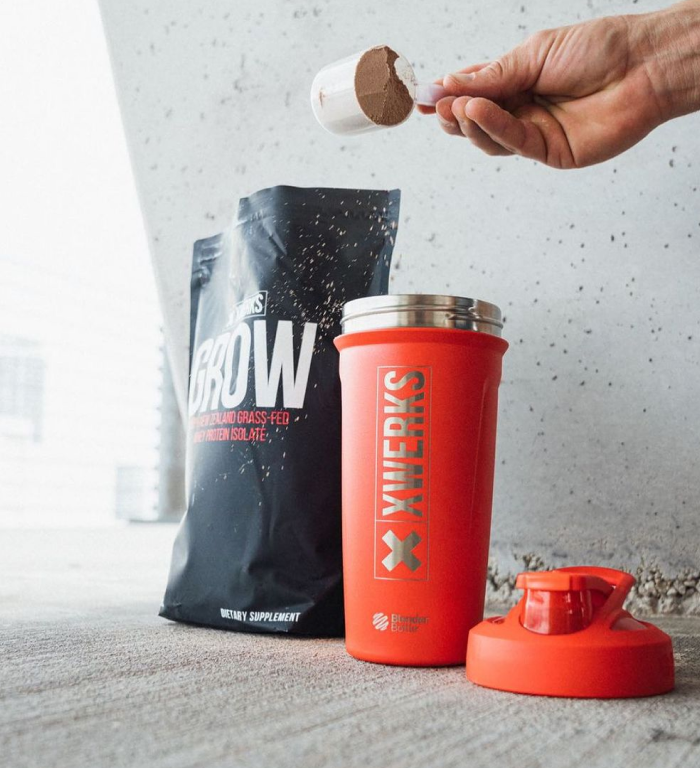
Whey protein: 1.6-1.8g/kg daily (XWERKS Grow) — for recovery from training and matches
Intra-match carbohydrate: Cluster Dextrin + electrolytes for matches over 90 minutes (XWERKS Motion)
Pre-match preparation
Carbohydrate 2-3 hours before match: 50-75g of familiar carbs (oatmeal, toast, banana) to top off glycogen stores
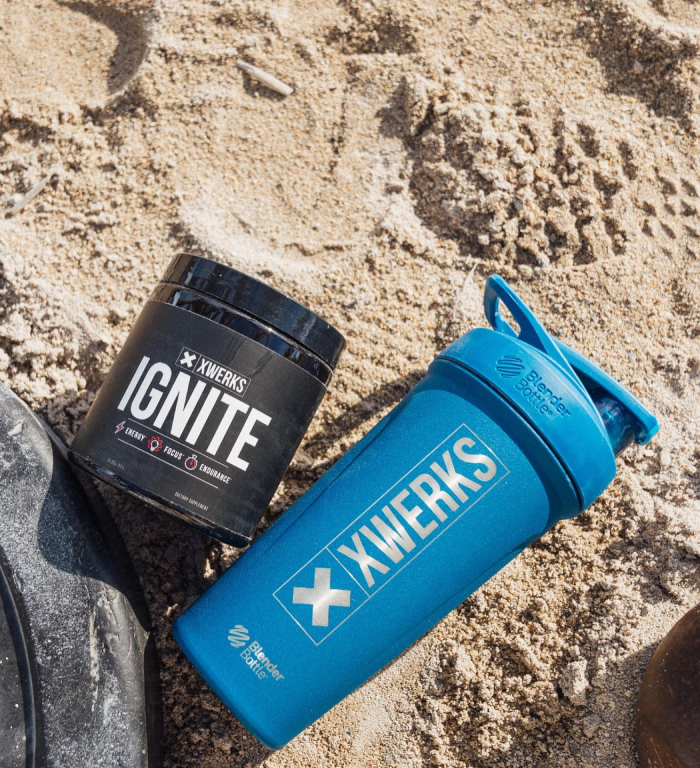
Pre-match caffeine: 100-200mg 30-45 minutes before match — improves reaction time, focus, and perceived effort. A pre-workout like XWERKS Ignite (150mg caffeine + citrulline + tyrosine) works well without over-stimulating
Recovery supplements
Post-match protein + carbs: 25-40g whey protein plus carbohydrate within 60 minutes of match end
Vitamin D3 and omega-3s: For inflammation management and joint support across a competitive season
The Bottom Line
Tennis is one of the most creatine-responsive sports. The repeated-sprint energy pattern (300-500 explosive efforts per match with 15-20 second recoveries) maps almost perfectly onto the ATP-PCr system that creatine supports.
Research specifically in tennis players (Pluim 2006, Eijnde 2001) has shown creatine improves lower-body explosive performance, sprint ability, and tennis-specific skill performance.
Match-day benefits: Improved serve velocity, faster sprints to the ball, better direction changes, and reduced late-match performance decay.
Dose: 5g daily of creatine monohydrate. Take consistently. Water retention is ~1-2 lbs intracellular (not bloat) and has no meaningful negative effect on court movement. For competitive tennis players looking for a single high-impact supplement, creatine is a top-tier choice.
The Explosive-Power Supplement for Tennis
XWERKS Lift — 5g of micronized creatine monohydrate per scoop, the most-studied form at the dose used in all the research. The single highest-value supplement for competitive tennis players.
SHOP LIFT →Further Reading
Creatine for Pickleball Players
Creatine for Cognitive Function and Aging
Creatine Neuroprotective Effects
Best Supplements for Healthy Aging Men
Supplements for Masters Swimmers
References
1. Pluim BM, et al. The effects of creatine supplementation on selected factors of tennis specific training. Br J Sports Med. 2006;40(6):507-511.
2. Eijnde BO, et al. Creatine supplementation and sprint performance in soccer players. Med Sci Sports Exerc. 2001;33(8):1402-1408.
3. Kreider RB, et al. International Society of Sports Nutrition position stand: safety and efficacy of creatine supplementation in exercise, sport, and medicine. J Int Soc Sports Nutr. 2017;14:18.
4. Lanhers C, et al. Creatine supplementation and lower limb strength performance: a systematic review and meta-analyses. Sports Med. 2015;45(9):1285-1294.
5. Mielgo-Ayuso J, et al. Effects of Creatine Supplementation on Athletic Performance in Soccer Players: A Systematic Review and Meta-Analysis. Nutrients. 2019;11(4):757.
6. Chrusch MJ, et al. Creatine supplementation combined with resistance training in older men. Med Sci Sports Exerc. 2001;33(12):2111-2117.