Supplements for Motocross: The Evidence-Based Guide
TL;DR
- Motocross is one of the most physically demanding sports in athletics — sustained heart rates of 170-190 bpm for 20-35 minute motos, under 20+ lbs of gear, in extreme heat, with continuous grip and arm work.
- The priority problem for most riders: arm pump (forearm compartment fatigue that destroys bike control). The supplement levers that actually help: beta-alanine for buffering, electrolytes for circulation, citrulline for blood flow, and baseline grip conditioning.
- Core stack: whey protein isolate (1.8-2.2g/kg), creatine monohydrate (5g daily), intra-ride electrolytes + carbohydrates, beta-alanine (3-6g daily, loaded 4-6 weeks), and a moderate pre-moto pre-workout.
- Hydration is brutal: riders can lose 2-4 liters of sweat per hour in hot conditions under gear. Sodium needs are genuinely higher than any other sport on this blog — 700-1,500mg per hour minimum.
Motocross is one of the most physically demanding sports in athletics — a fact sports scientists have repeatedly confirmed but most outside the sport don't appreciate. Studies on professional riders have found sustained heart rates of 170-190 bpm throughout 20-35 minute motos, comparable to elite soccer players or mid-distance runners, but layered on top of continuous isometric grip and arm work, whole-body stabilization on a 220+ lb machine, extreme heat stress under 20+ lbs of gear, and the cognitive demands of reading terrain at speed. The supplement stack that works for typical sports doesn't quite fit motocross — the priorities shift toward arm pump prevention, extreme hydration, sodium replacement (700-1,500mg/hour minimum), and cognitive resilience. The evidence-based core stack: whey protein isolate (1.8-2.2g/kg daily), creatine monohydrate (5g daily), beta-alanine (3-6g daily, requires 4-6 weeks of loading), intra-ride Cluster Dextrin with aggressive electrolyte dosing, and a moderate pre-moto pre-workout. Foundation factors — fitness, grip conditioning, hydration habits — still matter most, but supplementation meaningfully improves moto performance and recovery.

Why motocross is physiologically unique
Motocross combines physiological demands that rarely overlap in other sports. Understanding these shapes the supplement priorities:
Sustained near-maximal heart rate
Peer-reviewed studies on professional motocross riders (Gobbi et al. and others) have documented heart rates of 170-190 bpm sustained throughout 20-35 minute motos. That's comparable to the cardiovascular load of elite soccer match play or mid-distance track running — except it's layered on top of whole-body muscular work, not replacing it.
Continuous isometric arm and grip work
Every jump, braking zone, rough section, and rut requires active arm engagement and near-maximal grip on the handlebars. Unlike most sports where muscular work is rhythmic, motocross is largely isometric — sustained muscle contraction with minimal relaxation phases. This is exactly the condition that causes arm pump.
Extreme heat stress under gear
Full motocross gear (helmet, chest protector, pants, jersey, boots, gloves) adds roughly 15-25 lbs of mass and dramatically reduces heat dissipation. Core body temperature can rise rapidly. On hot race days, sweat losses of 2-4 liters per hour are not uncommon — among the highest of any athletic pursuit.
Whole-body stabilization
Riders aren't passively sitting — they're actively controlling a 220+ lb machine through constant weight shifts, leg squeeze, core bracing, and position changes. Legs, hips, and core are all engaged throughout a moto, not just arms.
Cognitive and reaction demands
Reading terrain at 50-70 mph, choosing lines, tracking competitors, and making split-second decisions creates substantial cognitive load. Late-moto mental fatigue directly causes mistakes — and in motocross, mistakes often mean crashes. Cognitive support (caffeine, tyrosine, creatine) has real value here.
Impact and vibration load
Landings, rough terrain, and bike vibration create substantial accumulated impact to wrists, shoulders, lower back, and knees. Over a career, this becomes a significant joint preservation concern.
The arm pump problem
Ask any motocross rider what their biggest physical limiter is, and "arm pump" will be the answer more often than not. It's worth a dedicated section because it's both the most moto-specific performance problem and one where supplementation can meaningfully help.
What arm pump actually is
Arm pump — also called exertional compartment syndrome of the forearm — is when the forearm muscles swell inside their fascial compartments during sustained work, compressing blood vessels and nerves. The result: grip strength collapses, hands go numb, fine motor control disappears, and bike control becomes nearly impossible.
At elite levels, severe cases sometimes require surgical fasciotomy (cutting the fascia to allow muscle swelling). For most amateur and pro riders, the problem is managed through conditioning, technique, and nutrition/supplement strategy.
What actually helps arm pump
1. Forearm and grip conditioning (non-negotiable). No supplement compensates for inadequate grip training. Wrist curls, reverse wrist curls, farmer's carries, dead hangs, and deliberate grip work 3-4x per week. Supplements amplify conditioning; they don't replace it.
2. Proper bike setup. Handlebar position, grip size, suspension setup, and body position all affect forearm load. Poor setup drives arm pump regardless of conditioning or nutrition.
3. Beta-alanine. The best-evidenced supplement for arm pump specifically. Buffers hydrogen ion accumulation in working forearm muscles, reducing the acidosis that contributes to pump.
4. Citrulline malate. Supports blood flow and nitric oxide production, which may help with the vascular component of arm pump.
5. Adequate hydration and electrolytes. Dehydration worsens arm pump significantly. Under-hydrated riders pump up earlier and worse.
6. Controlled breathing and grip relaxation. Technical factors matter alongside nutrition — riders who death-grip the bars pump up faster than those who maintain loose grip with active arms.
The core supplement stack for motocross
1. Whey protein isolate — Recovery foundation
Why it matters for motocross: Motocross creates muscular damage across nearly every muscle group — forearms and grip (obvious), but also lats, traps, deltoids (bike control), core (bracing through jumps and turns), quads and hamstrings (leg squeeze, standing position, whips), and glutes (weight shifts). Total recovery demand is much higher than it looks from the outside.
Dose: 1.8-2.2g protein per kg body weight daily. For a 170-lb rider, that's 140-170g daily, distributed across 3-4 meals. Post-moto protein timing (25-30g within 60-90 minutes) is particularly valuable on practice and race days.
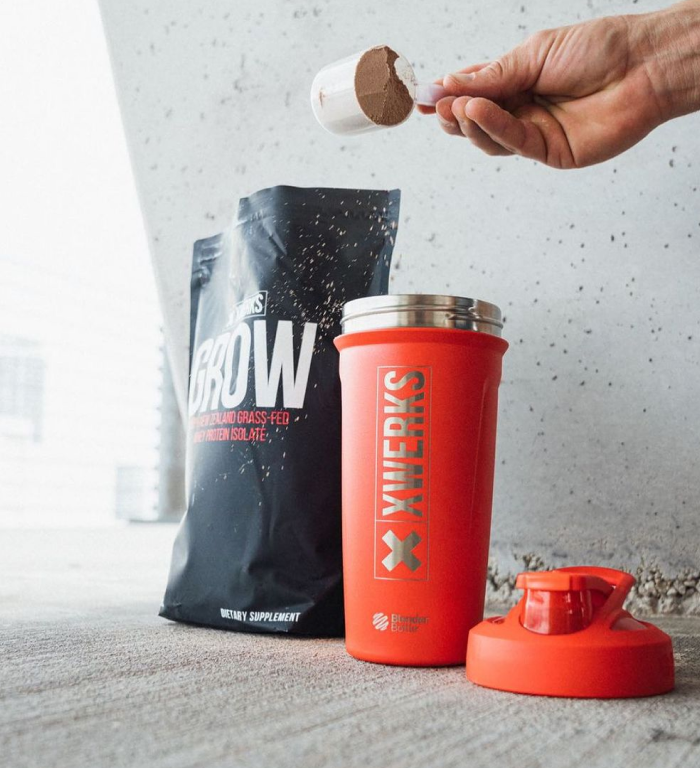
Recommended: XWERKS Grow — 25g NZ grass-fed whey isolate per scoop. Clean-tasting, rapidly absorbed, easy to consume when post-moto appetite is blunted by heat and exertion.
2. Creatine monohydrate — Multiple moto-specific benefits
Why it matters: Motocross has short explosive efforts throughout each moto — starts, block passes, jump takeoffs, sprint sections. These are ATP-PCr dependent, exactly where creatine helps most. Beyond explosive power, creatine supports muscle mass preservation, cognitive function during extended motos, and potentially neuroprotection from impact.
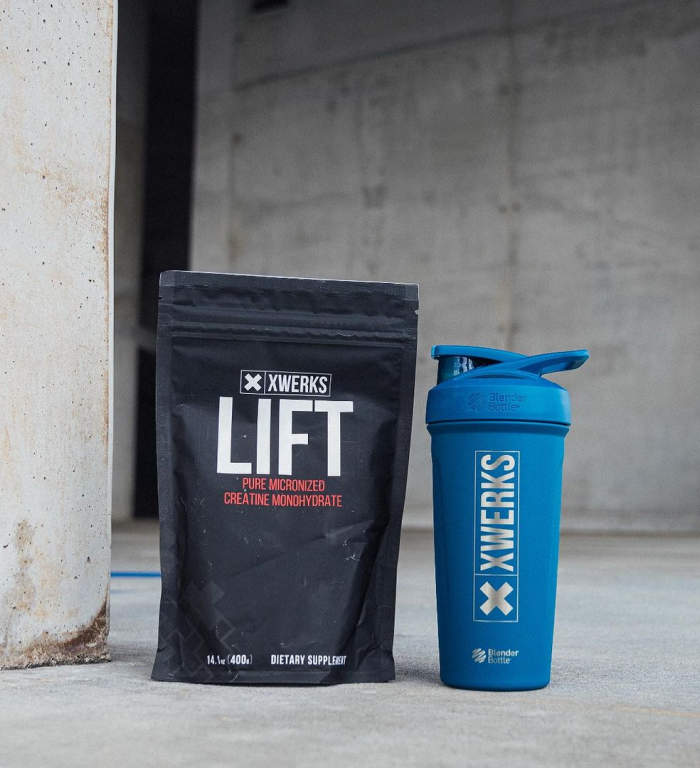
Dose: 5g daily of creatine monohydrate. No loading needed for most riders. XWERKS Lift provides 5g per scoop of micronized monohydrate.
Why it's underused in motocross: Some riders avoid creatine thinking the ~1-2 lbs water retention will hurt them. For motocross, where bike mass dwarfs rider mass, this concern is essentially negligible. The performance benefits vastly outweigh any theoretical downside.
3. Beta-alanine — The arm pump lever
Why it matters: Beta-alanine increases muscle carnosine levels, which buffer hydrogen ion accumulation during anaerobic work. Hobson et al. 2012 meta-analysis showed clear benefits for high-intensity efforts lasting 1-4 minutes. For motocross, the primary target is forearm acidosis during arm pump — beta-alanine directly addresses this.
Dose: 3-6g daily, split into smaller doses if tingling (paresthesia) is bothersome.
Loading timeline — critical: Beta-alanine takes 4-6 weeks of consistent daily supplementation to saturate muscle carnosine. Starting two weeks before a race is too late. Start at least 6-8 weeks before any key event.
4. Intra-ride carbohydrate + electrolytes
Why it matters: Motocross motos at intensity deplete glycogen rapidly. Longer practice sessions and race-day multi-moto formats make glycogen management a real performance variable. Combined with the massive sweat losses under gear, intra-ride fueling is where most amateur riders leave performance on the table.
Target: 30-45g carbs per hour during long practice sessions or between motos at races, alongside aggressive electrolyte replacement.
Why Cluster Dextrin works: Rapid gastric emptying (important when you've got limited time between motos), low osmolality (minimal GI distress in heat), sustained blood sugar. XWERKS Motion provides 25g Cluster Dextrin + 3g BCAAs + electrolytes per serving — one formulation covering the multiple needs.
5. Pre-workout for practice and race days
Why it matters: Pre-moto pre-workout supports focus (critical for line reading), reaction time, muscular endurance, and perceived-effort reduction. Particularly valuable for race days when you need to be sharp for multiple motos across a long day.
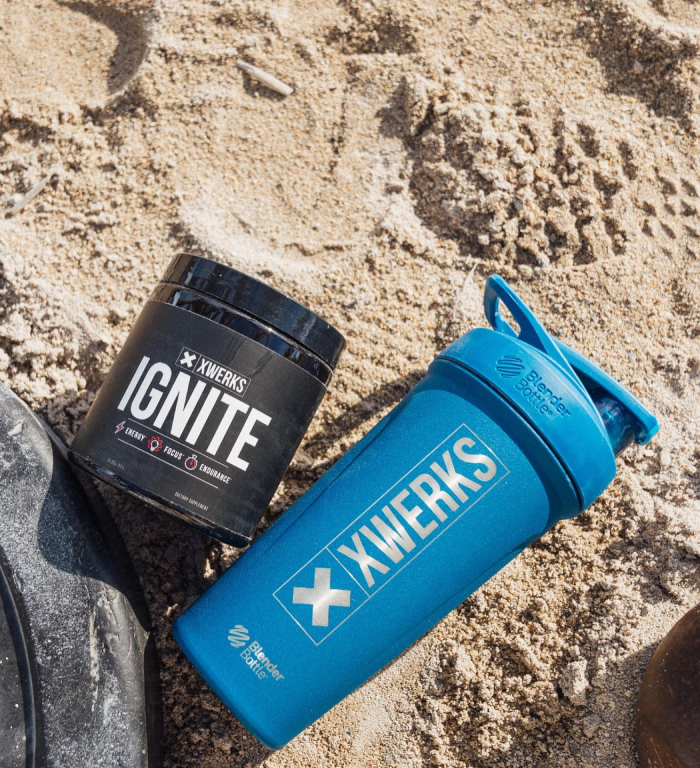
What to look for: Moderate caffeine (150-200mg), citrulline malate (3-6g, with arm pump angle), L-tyrosine (1-2g for focus), beta-alanine (works alongside daily loading dose). XWERKS Ignite hits this profile.
Timing: 30-45 minutes before your practice session or first moto. On race days with multiple motos, one dose typically covers the whole day — don't re-dose between motos unless you've tested this in training.
• Mega-stim pre-workouts (300mg+ caffeine): Elevated heart rate on top of the already-massive cardiovascular load of riding. GI urgency is also a real risk — not something you want mid-moto.
• Niacin-heavy "flush" products: The intense skin flushing under hot gear is at best distracting, at worst genuinely dangerous if it affects focus on a technical section.
• DMAA / DMHA / exotic stimulants: Cardiovascular risk is real when layered on top of motocross's existing demands. Not worth it.
• Diuretic ingredients (yohimbine, high caffeine combined with dehydration): Riders are already sweating aggressively. Adding diuretic load is counterproductive.
Hydration and electrolytes: the biggest variable in motocross
Motocross hydration challenges are more severe than almost any other sport. The combination of high heart rate, whole-body work, heavy gear, and often hot outdoor conditions produces sweat losses that many riders don't fully appreciate.
Sweat rate reality check
Studies of motocross riders in race conditions have found sweat rates of 1.5-4 liters per hour, with sodium losses of 500-2,000+ mg per hour depending on the rider and conditions. Riders can lose 4-6% of body weight during a race day without noticing — and by then, performance has already collapsed.
Fluid targets
Race morning: Begin the day well-hydrated but not over-hydrated. Urine color should be pale yellow, not clear (over-hydrated) or dark yellow (dehydrated).
Between motos: Replace 700-1,200ml of fluid per hour between motos, not just water — electrolyte-containing drinks.
During motos: In-moto hydration is limited to the brief sections where it's safe. Most hydration happens between motos.
Post-race day: Continue aggressive rehydration into the evening. Most riders are still dehydrated hours after their last moto.
Sodium targets — higher than most sports
Motocross sodium needs are genuinely higher than most other athletic contexts due to the combined high intensity + heavy gear + heat. Target 700-1,500mg sodium per hour of total activity (practice or race day), via a combination of:
• Electrolyte-containing sports drinks (XWERKS Motion provides sodium plus Cluster Dextrin carbs)
• Salt capsules (200-400mg each) for focused sodium dosing without fluid volume
• Real food with salt (pretzels, salted crackers, pickles — popular in moto nutrition)
Salty sweaters (athletes who leave white salt streaks on gear) likely need the higher end of this range or beyond.
The day-of-race nutrition protocol
Night before
Normal dinner with carbs (rice, potatoes, pasta), moderate protein, low fat/fiber. Avoid anything new or unusual. Hydrate heavily through the evening. Continue daily supplement stack (creatine, beta-alanine).
Race morning (2-3 hours before first moto)
Breakfast: 75-125g carbs + 25-35g protein. Example: oatmeal with banana and honey, 3 eggs, toast. Low fat, low fiber. Begin sipping electrolyte drink.
Take daily creatine and beta-alanine doses at breakfast if you haven't already.
30-45 minutes before first moto
Pre-workout (XWERKS Ignite or equivalent). Light carb top-up if tolerated (banana, rice cake, date). Don't over-eat — GI distress on the gate is worse than mild hunger.
Between motos
Immediately after each moto: Large swigs of electrolyte drink + 20-30g rapidly-digesting carbs (drink mix, banana, rice cake). Cool yourself aggressively.
30-60 min before next moto: Small carb source (25-40g), continue hydration, small protein hit if time allows (XWERKS Grow scoop in water works well — fast-digesting).
Between-moto total targets: 30-45g carbs, 20-30g protein (if time allows), 500-1,000ml fluid with 500-800mg sodium per between-moto interval.
After final moto
Within 60 minutes: 20-40g protein + 0.8-1.2g carbs/kg body weight + aggressive electrolyte replacement. XWERKS Grow mixed with a banana and juice hits this well.
Continue rehydrating through the evening. Most riders remain dehydrated hours after the last moto — this compounds recovery time into the next training day.
Joint support and long-term health
Motocross careers are often cut short by cumulative joint damage. The supplements that support long-term joint and connective tissue health:
Collagen + Vitamin C
Why: Shaw et al. 2017 demonstrated that vitamin C-enriched collagen supplementation before intermittent activity enhanced collagen synthesis. For motocross riders dealing with wrist, shoulder, knee, and lower-back stress, this provides building blocks for connective tissue repair.
Dose: 10-20g hydrolyzed collagen daily + 50-100mg vitamin C. Best timing: 30-60 minutes before riding or dedicated grip/upper-body training.
Omega-3 Fish Oil
Why: Anti-inflammatory effects support joint recovery, cardiovascular health, and muscle protein synthesis response. Particularly valuable for riders managing chronic nagging injuries that haven't become full injuries yet.
Dose: 2-3g combined EPA+DHA daily with a fat-containing meal.
Magnesium Glycinate
Why: Supports muscle relaxation, sleep quality, and recovery. Many riders dealing with muscle tightness or sleep disruption after hard days benefit from magnesium supplementation.
Dose: 200-400mg evening, glycinate form for absorption and GI tolerance.
Vitamin D3
Why: Supports muscle function, bone density (critical for impact sports), testosterone, and immune function. Many riders are deficient despite outdoor activity (sunscreen, helmet, full gear).
Dose: 2,000-4,000 IU daily. Test 25(OH)D levels periodically; target 40-60 ng/mL.
The complete motocross supplement stack by rider type
Weekend rider (1-2 moto days per month)
Keep it simple:
• Creatine monohydrate — 5g daily
• Whey protein — to hit 1.6-1.8g/kg daily
• Electrolytes on riding days (important!)
• Optional pre-workout for riding days
Serious amateur (weekly riding, occasional races)
• Daily creatine — 5g (XWERKS Lift)
• Post-ride protein — 25g (XWERKS Grow), 1.8-2.0g/kg daily target
• Intra-ride fueling (XWERKS Motion) for practice days and races
• Pre-moto pre-workout on race days (XWERKS Ignite)
• Beta-alanine — 3-6g daily, started 6-8 weeks before key races
• Omega-3s (2-3g EPA/DHA daily)
• Vitamin D3 (2,000-4,000 IU)
Pro/semi-pro rider
Everything above, plus:
• Collagen peptides — 10-20g daily with vitamin C
• Magnesium glycinate — 200-400mg evening
• Aggressive hydration tracking — weigh before/after sessions, calibrate fluid and sodium replacement
• Heat acclimation protocols leading into summer race schedules
• Periodic blood work (testosterone, vitamin D, iron, electrolytes, inflammation markers)
What won't help your motocross performance
"Arm pump pills" with proprietary blends. Most lack evidence and rely on niacin (which causes uncomfortable flushing) or low-dose citrulline. The individual ingredients are fine; the packaging just extracts a premium.
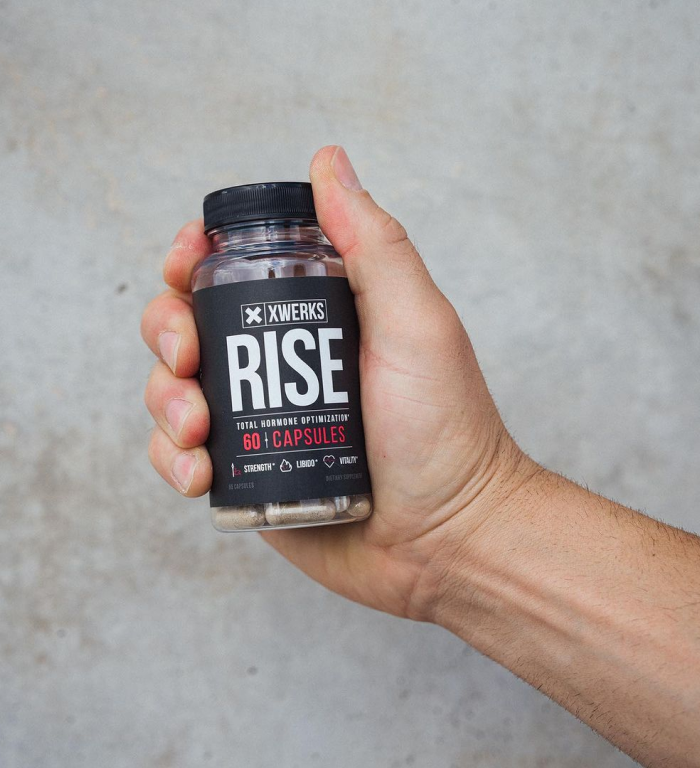
Testosterone boosters marketed at riders. Most have minimal effect. Natural T optimization happens through sleep, adequate calories (many riders under-eat), strength training, and stress management.
Fat burners on race days. Elevated heart rate layered on motocross's cardiovascular demands plus diuretic effects plus existing dehydration = bad combination. Skip.
BCAAs beyond what's in whey/Motion. Redundant if protein intake is adequate.
Megadose vitamin C or antioxidants around training. May actually blunt training adaptations in some contexts. Normal dietary amounts are fine.
Foundation factors that matter more than supplements
Cardiovascular fitness. Motocross is an aerobic sport disguised as a skill sport. Base aerobic fitness (30-60 min steady cardio sessions 3-4x/week) directly improves moto endurance. No supplement replaces this.
Strength training. 2-3 sessions per week emphasizing legs, back, shoulders, and grip work. Essential for injury prevention and bike control. Also dramatically reduces arm pump susceptibility.
Dedicated grip conditioning. Wrist curls, reverse wrist curls, dead hangs, farmer's carries, thick-grip work. 3-4x per week. The single most impactful thing you can do for arm pump prevention.
Sleep. 7-9 hours per night. Recovery depends on sleep more than any supplement.
Heat acclimation. Training in hot conditions for 10-14 days before a hot race dramatically improves heat tolerance and performance. Supplements don't substitute for physiological heat adaptation.
Riding technique. Tension on the bars, body position, braking approach all affect forearm load. Skill work with a coach often matters more than supplement optimization for amateur riders.
Bike setup. Handlebar height/bend, grip size, lever position, and suspension setup all affect rider fatigue. Dial these in — a $50 bar change can outperform $500 of supplements.
The Bottom Line
Motocross is one of the most demanding sports in athletics — sustained 170-190 bpm heart rates, continuous isometric arm work, extreme heat under gear, and 2-4 L/hour sweat losses. The supplement stack needs to address all four dimensions.
Core stack: whey protein isolate (1.8-2.2g/kg daily), creatine monohydrate (5g daily), beta-alanine (3-6g daily, loaded 4-6 weeks out), intra-ride Cluster Dextrin + aggressive electrolytes, and moderate pre-workout on practice/race days.
Hydration is the biggest variable — target 700-1,500mg sodium per hour on riding days. Plain water alone will crush your performance; electrolyte discipline separates riders who finish strong from riders who fade in the second moto.
Foundation still matters most: aerobic base, strength training, dedicated grip conditioning, heat acclimation, sleep, technique, and bike setup. Supplements amplify a solid foundation; they don't rescue missing fitness or poor bike setup.
Further Reading
Pre-Workout for Mountain Biking
Supplement Guide for Hyrox Athletes
Best Supplements for Spartan Race Training
Cluster Dextrin Benefits for Endurance
References
1. Gobbi AW, et al. Physiological characteristics of top-level off-road motorcyclists. Br J Sports Med. 2005;39(3):166-170.
2. Kreider RB, et al. International Society of Sports Nutrition position stand: safety and efficacy of creatine supplementation in exercise, sport, and medicine. J Int Soc Sports Nutr. 2017;14:18.
3. Hobson RM, et al. Effects of β-alanine supplementation on exercise performance: a meta-analysis. Amino Acids. 2012;43(1):25-37.
4. Thomas DT, et al. American College of Sports Medicine Joint Position Statement: Nutrition and Athletic Performance. Med Sci Sports Exerc. 2016;48(3):543-568.
5. Furusawa M, et al. Effect of highly-branched cyclic dextrin on exercise-induced performance and physiological parameters. Nutrients. 2014.
6. Shaw G, et al. Vitamin C-enriched gelatin supplementation before intermittent activity augments collagen synthesis. Am J Clin Nutr. 2017;105(1):136-143.
7. Goldstein ER, et al. International Society of Sports Nutrition position stand: caffeine and performance. J Int Soc Sports Nutr. 2010;7(1):5.