Mountain Biking Supplements: The Complete Evidence-Based Guide
TL;DR
- Mountain biking blends endurance, high-intensity intervals, whole-body muscular control, and cognitive processing on technical terrain. The supplement stack needs to support all four.
- Core stack: creatine monohydrate (5g daily), whey protein isolate (1.6-2.0g/kg), intra-ride carbs from Cluster Dextrin for rides over 90 minutes, and a moderate pre-workout for focus on technical descents.
- Hydration math matters: MTB rides often run 1.5-4 hours with significant sweat losses. Target 500-800ml fluid per hour plus 400-800mg sodium per hour in warm conditions.
- What MTB riders should specifically avoid: extreme-stim pre-workouts (jitters impair technical handling), niacin-flush products (intolerable mid-ride), and untested gels on race day (GI distress is catastrophic on technical terrain).
Mountain biking is more physiologically complex than most cyclists realize. A typical ride blends aerobic endurance (climbs and long traverses), anaerobic intervals (short steep climbs, sprint sections), whole-body muscular work (upper body for bike control on technical descents), and sustained cognitive processing (line reading, obstacle avoidance, risk management) — all while your cardiovascular system is already taxed. The supplement stack reflects this multi-dimensional demand: creatine monohydrate (5g daily) for repeated high-intensity efforts, whey protein isolate (1.6-2.0g/kg daily) for recovery from long-duration training, intra-ride carbohydrate (30-60g/hour from Cluster Dextrin) for rides over 90 minutes, and a moderate pre-workout (150-200mg caffeine) for focus without jitters on technical terrain. Hydration is a bigger variable than most riders track — 500-800ml fluid per hour plus 400-800mg sodium is the target range. Foundation factors (sleep, consistent training, bike fit) still matter most, but targeted supplementation meaningfully improves ride performance and recovery.
Understanding what mountain biking actually demands
Before the stack, a walkthrough of the specific physiological demands MTB places on riders:
Variable-intensity endurance
Unlike road cycling's steady-state efforts, MTB rides feature constant intensity changes. A single 90-minute ride might include multiple 30-second to 3-minute high-intensity efforts (steep punchy climbs, sprint sections, technical climb features) interspersed with aerobic cruising. Total cardiovascular load is high despite the variable pacing.
Upper-body muscular control
Unlike road cycling where upper body is largely passive, MTB demands constant arm, shoulder, core, and grip work for bike handling on technical descents. After a long technical ride, arms and forearms are often more fatigued than legs. This creates a protein recovery need that road cyclists don't face.
Sustained cognitive processing
Technical trail riding requires continuous line reading, obstacle identification, risk assessment, and split-second decision-making. Cognitive fatigue over a 2-3 hour technical ride is real — decision quality deteriorates, line choices get sloppier, and crashes become more likely late in rides. Cognitive support (caffeine, creatine, tyrosine) has real MTB-specific value.
Environmental extremes
MTB rides often happen in more extreme conditions than road cycling — sun exposure on exposed trails, cold in shaded forest, humidity in tropical climates, altitude in mountain regions. Each factor affects sweat rate, electrolyte needs, and fueling requirements.
Repeated impact and vibration
Technical riding produces thousands of small impacts to wrists, arms, shoulders, lower back, and legs. Over years of consistent riding, this accumulates into joint and connective tissue stress that benefits from targeted support.
Creatine: a genuine MTB performance multiplier
Creatine is often overlooked by endurance-focused riders, but MTB's variable-intensity profile makes it unexpectedly valuable.
Why MTB responds to creatine
Pure endurance events (road marathons, ultra-cycling) show minimal creatine benefit because the demand is almost entirely aerobic. But MTB's repeated high-intensity intervals — the punchy climbs, the sprint-to-a-feature efforts, the explosive power needed to clear technical obstacles — are ATP-PCr dependent. Creatine directly supports this energy system.
Match performance benefits
• Better power output on short steep climbs
• Faster recovery between punchy efforts
• Maintained explosive power for bunny-hopping, jumping, or powering through technical sections
• Improved repeated-sprint capacity during XC racing or enduro stages
Cognitive support (underrated)
The brain uses creatine too. Research consistently shows creatine supports cognitive function during extended mental exertion — directly relevant to the sustained processing demands of technical trail riding. The late-ride mental clarity difference is subtle but real.
How to take it
Dose: 5g daily of creatine monohydrate. Every day, including rest days. Saturation takes 3-4 weeks at 5g/day.
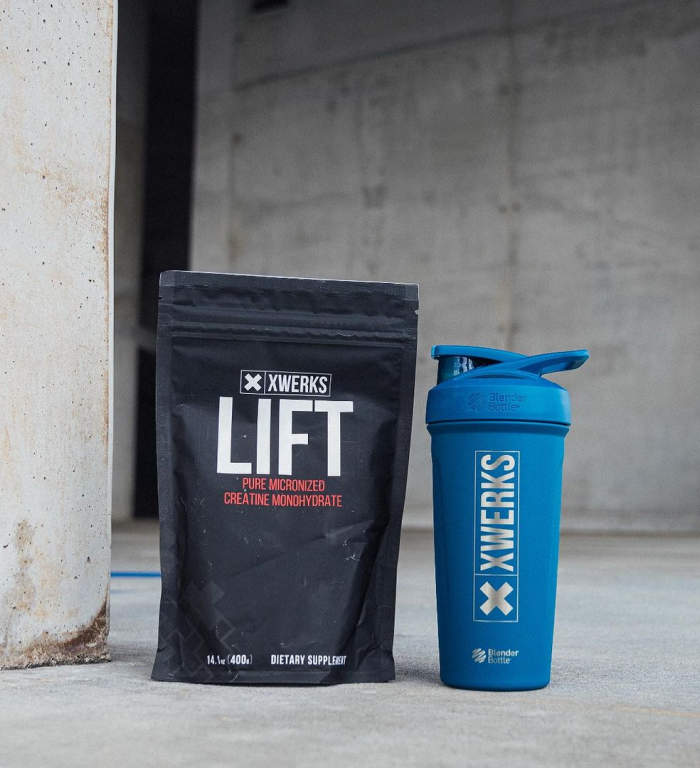
Form: Creatine monohydrate. Don't pay extra for advanced forms without evidence of superiority. XWERKS Lift provides 5g of micronized monohydrate per scoop.
Water retention concern: Creatine causes ~1-2 lbs of intracellular water retention. For weight-conscious riders, this is worth noting but usually negligible relative to the performance benefits. Power-to-weight concerns matter more in mountain road cycling than in most MTB disciplines.
Protein: the recovery foundation
MTB's combined cardiovascular and muscular load creates substantial recovery demands. Protein is the foundation.
Why protein matters for MTB
Leg recovery: Pedaling volume across weekly training produces significant quad, glute, and calf damage requiring amino acids for repair.
Upper body recovery: Arms, shoulders, forearms, and core take meaningful load on technical descents. Road cyclists don't face this demand — MTB riders do.
Grip strength: Forearm and grip endurance accumulates over a ride. Recovery of grip capacity depends on adequate protein.
Connective tissue: Thousands of small impacts accumulate into joint and tendon stress. Protein (particularly combined with collagen + vitamin C) supports ongoing connective tissue maintenance.
Daily target
1.6-2.0g protein per kg body weight daily. For a 170-lb rider: 125-155g daily, distributed across 3-4 meals.
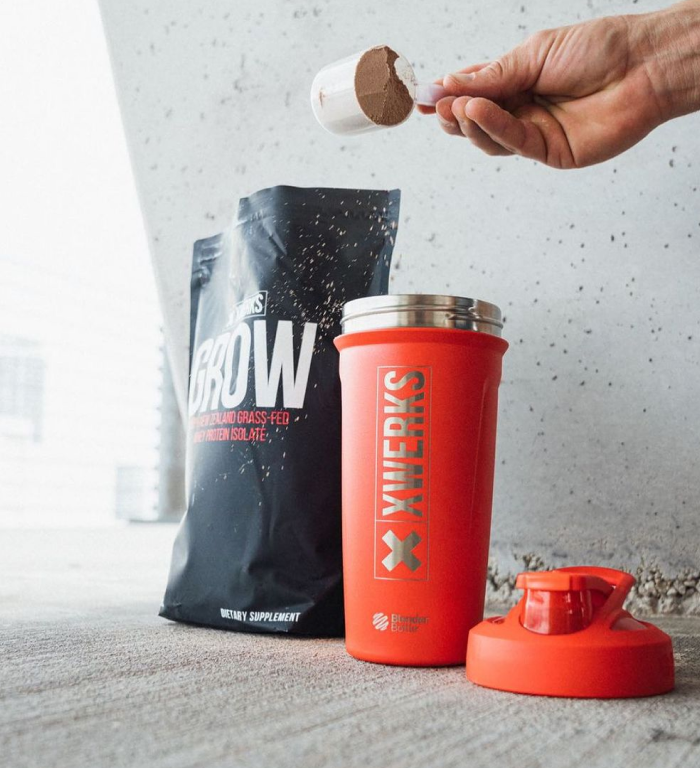
Post-ride timing: 25-30g whey protein within 60-90 minutes of ride completion is high-value, particularly for longer or harder rides. XWERKS Grow provides 25g NZ grass-fed whey isolate per scoop — clean-tasting and rapidly absorbed.
Intra-ride fueling: the make-or-break variable
For MTB rides over 90 minutes, intra-ride carbohydrate is the difference between finishing strong and bonking 3 miles from the trailhead.
How much carbohydrate during MTB rides
| Ride Duration | Carb Target | Primary Need |
|---|---|---|
| Under 60 min | None required | Water + electrolytes |
| 60-90 min | 15-30g/hour (optional) | Primarily performance |
| 90-150 min | 30-60g/hour | Glycogen sparing + focus |
| 2-4 hours | 45-60g/hour | Prevent bonking |
| Over 4 hours (enduro, ultra, epic rides) | 60-90g/hour (mixed sources) | Sustained performance |
Why Cluster Dextrin works for MTB
Highly branched cyclic dextrin (Cluster Dextrin) has three properties that make it ideal for mountain biking specifically:
1. Rapid gastric emptying. Leaves the stomach quickly — minimal "sloshing" on rough terrain. Critical on technical descents where GI distress can compromise bike handling.
2. Low osmolality. Doesn't pull water into the gut like concentrated sugars, reducing GI distress risk on long efforts.
3. Sustained blood sugar. More stable glucose availability than rapid-acting gels, avoiding the sugar-crash pattern many MTB riders experience with sucrose-based fuels.
XWERKS Motion combines 25g Cluster Dextrin + 3g BCAAs + electrolytes per serving — a single formulation covering carbs, sodium, and amino acid support. Mix in a bottle or hydration pack for easy intra-ride fueling.
Real-food options for long rides
On 3+ hour epic rides, flavor fatigue from liquid-only fueling is real. Rotate in real food sources:
• Bananas and dates (easy to digest)
• Rice cakes with honey (traditional cycling fuel)
• Pretzels (for sodium rotation)
• Small PB&J sandwich quarters (1-2 hour mark)
Test everything in training. Never try new food on race day or an important event.
Hydration and electrolytes
Hydration is a bigger variable for MTB riders than most track — riders often underestimate sweat losses on technical terrain.
Fluid intake targets
Cool conditions: 400-600ml per hour
Moderate conditions: 600-800ml per hour
Hot/humid conditions: 800-1,200ml per hour
Individual sweat rates vary widely. Best calibration: weigh yourself before and after a 1-hour ride in conditions similar to your typical training. Weight loss in kg ≈ liters sweated. Aim to replace 70-80% during the ride; rebalance afterward.
Sodium needs
Target: 400-800mg sodium per hour in warm conditions. Salty sweaters may need 800-1,200mg/hour. If you cramp frequently during or after rides, under-sodium is almost always the culprit — not potassium, magnesium, or anything else first.
XWERKS Motion provides sodium alongside carbs. For long rides in extreme heat, supplemental salt capsules (200-400mg per capsule) are useful for boosting sodium without additional fluid volume.
Pre-workout: focus without jitters
Pre-workout supplementation can meaningfully improve MTB rides, but the ideal profile for mountain biking is very different from pre-workouts designed for powerlifting or CrossFit.
What MTB pre-workout should include
Moderate caffeine (150-200mg): Enough for focus and perceived-effort reduction without jitters that compromise technical handling.
Citrulline malate (3-6g): Blood flow and muscular endurance support for long climbs.
L-tyrosine (1-2g): Dopamine precursor that supports focus and reaction time under stress — particularly valuable for technical descents.
Beta-alanine (1.5-3g if tolerated): Lactate buffering for high-intensity efforts, though harmless tingling can be annoying mid-ride for some riders.
Rhodiola: Adaptogenic support for endurance and stress response.
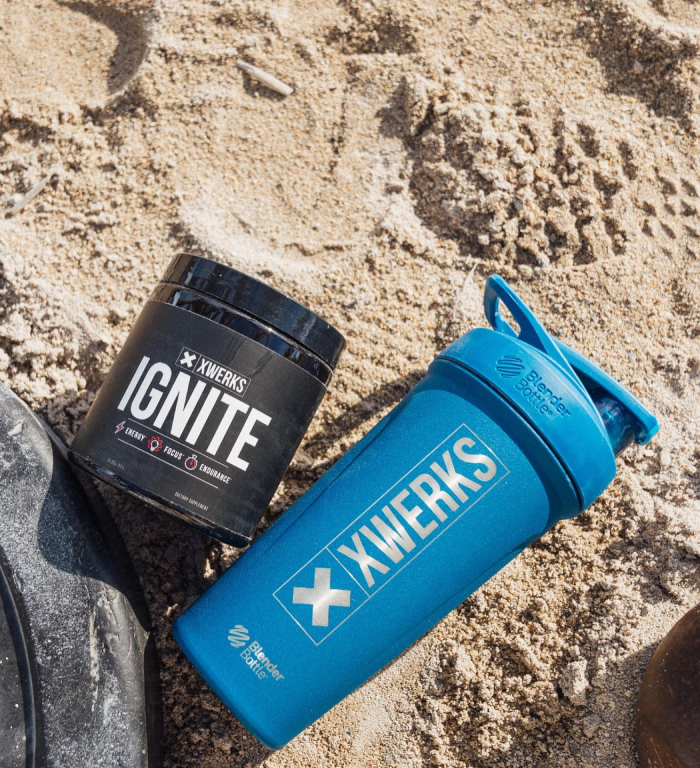
XWERKS Ignite hits this profile: 150mg caffeine + 3g citrulline + 2g L-tyrosine + 1.5g beta-alanine + rhodiola + BioPerine. Built for exactly this use case.
• Mega-stim pre-workouts (300mg+ caffeine): Jitters compromise fine motor control needed for technical handling. Can also cause GI urgency — catastrophic on technical terrain with no bathroom access.
• Niacin-flush products: The intense skin flushing sensation is distracting at rest; mid-ride on a technical descent, it's intolerable.
• DMAA/DMHA/exotic stimulants: Cardiovascular risk under sustained high heart rate, plus potential GI issues.
• Yohimbine: Can cause anxiety and elevated heart rate during prolonged efforts.
Timing
Take 30-45 minutes before heading out. If your ride will exceed 2-3 hours, avoid late-morning doses that could disrupt sleep if caffeine lingers into evening.
Joint and connective tissue support
The accumulated impact load from technical riding creates long-term joint and connective tissue stress. The evidence-backed options:
Collagen + Vitamin C
Why: Shaw et al. 2017 found vitamin C-enriched gelatin/collagen supplementation before exercise enhanced collagen synthesis. For MTB riders dealing with wrist, shoulder, knee, or lower-back stress, this provides building blocks for connective tissue repair.
Dose: 10-20g hydrolyzed collagen daily + 50-100mg vitamin C. Best timing: 30-60 minutes before rides or dedicated upper-body/grip training.
Omega-3 Fish Oil
Why: Anti-inflammatory effects support joint recovery, cardiovascular health, and muscle protein synthesis response.
Dose: 2-3g combined EPA+DHA daily with a fat-containing meal.
Magnesium Glycinate
Why: Supports muscle relaxation, sleep quality, and recovery. Many riders dealing with muscle tightness or cramping benefit from magnesium.
Dose: 200-400mg evening, glycinate form for absorption.
Vitamin D3
Why: Supports muscle function, bone density, testosterone, and immune function. Many riders spending time on indoor trainers or in cloudy climates become deficient.
Dose: 2,000-4,000 IU daily. Test 25(OH)D blood levels; target 40-60 ng/mL.
The complete MTB supplement stack by rider type
Weekend rider (1-3 rides/week, 60-120 min each)
• Creatine monohydrate — 5g daily
• Whey protein — to hit 1.6-1.8g/kg daily
• Electrolytes on hot-weather rides
• Optional pre-workout for favorite ride days
Keep it simple. Consistency on the basics outperforms complex stacks.
Committed rider (3-5 rides/week, varying duration)
• Daily creatine — 5g (XWERKS Lift)
• Post-ride protein — 25g (XWERKS Grow), hitting 1.6-2.0g/kg daily
• Intra-ride fueling for rides over 90 min (XWERKS Motion)
• Pre-ride workout for harder training sessions (XWERKS Ignite)
• Omega-3s (2-3g EPA/DHA daily)
• Vitamin D3 (2,000-4,000 IU)
Racer or epic-ride enthusiast
Everything above, plus:
• Collagen peptides — 10-20g daily with vitamin C
• Magnesium glycinate — 200-400mg evening
• Beta-alanine — 3-6g daily if racing (requires 4-6 weeks loading)
• Race-day protocol: practice in training, never introduce new elements at race time
What won't help your mountain biking
Fat burners. Stimulant-heavy products increase heart rate without improving ride performance, and often worsen perceived exertion on long climbs.
"Testosterone boosters" marketed for cyclists. Most have minimal effect. Natural T optimization happens through sleep, strength training, adequate calories (riders under-eat often), and stress management.
Excessive BCAAs. Redundant if you're hitting protein targets. XWERKS Motion includes 3g BCAAs intra-ride, covering the use case.
"Endurance boosters" with exotic ingredients. Many products marketed to endurance athletes contain stimulants, vasodilators, or nitrate compounds with unclear evidence bases. Stick to the well-researched options.
Megadose caffeine pre-rides. For MTB specifically, 400mg+ caffeine causes issues (jitters, GI urgency, cardiovascular strain) that outweigh focus benefits. 150-200mg is the sweet spot.
Foundation factors that matter more
Sleep. 7-9 hours per night. Single most impactful variable on ride quality and recovery.
Total caloric intake. Many MTB riders under-eat for the amount they're burning, particularly on big riding weeks. Under-eating slowly degrades performance and recovery. Weigh yourself weekly; if losing weight unintentionally, increase intake.
Bike fit. Poor fit creates repetitive stress injuries that no supplement stack can address. Invest in a professional fit, particularly if experiencing knee, back, or wrist pain.
Strength training. 2-3 strength sessions per week (squats, deadlifts, pulls, core work) reduces injury risk, improves sprint power, and extends your riding career. Most MTB riders under-prioritize this.
Skill development. Technical skill improvements reduce energy expenditure per ride more than any supplement. Invest in skills clinics and deliberate practice.
Consistency. Riding 3x per week for 12 weeks beats riding 6x per week for 4 weeks then burning out.
The Bottom Line
Mountain biking's multi-dimensional demands — variable-intensity endurance, upper-body muscular control, sustained cognitive processing, environmental extremes — require a supplement stack that covers all four angles.
Core stack: creatine monohydrate (5g daily), whey protein isolate (1.6-2.0g/kg daily), intra-ride Cluster Dextrin (30-60g carbs/hour for rides over 90 min), moderate pre-workout (150-200mg caffeine + citrulline + tyrosine), plus omega-3s and vitamin D3.
Hydration targets: 500-800ml fluid per hour (more in heat), 400-800mg sodium per hour. Plain water alone on 90+ minute rides is a mistake — always include electrolytes.
What to avoid: extreme-stim pre-workouts (jitters compromise technical handling), niacin-flush products (intolerable mid-ride), untested gels on race day. Foundation factors (sleep, calories, bike fit, strength training, skill work) still matter more than any supplement.
The Mountain Biking Performance Stack
XWERKS Lift (5g creatine) + Grow (25g whey isolate) + Motion (Cluster Dextrin intra-ride) + Ignite (150mg caffeine, no jitters). The four-product system built for MTB's multi-dimensional demands.
SHOP MOTION → SHOP IGNITE →Further Reading
Pre-Workout for Mountain Biking (Deep Dive)
Cluster Dextrin Benefits for Endurance
Intra-Workout for Trail Running
Supplement Guide for Hyrox Athletes
Best Supplements for Spartan Race Training
References
1. Kreider RB, et al. International Society of Sports Nutrition position stand: safety and efficacy of creatine supplementation in exercise, sport, and medicine. J Int Soc Sports Nutr. 2017;14:18.
2. Thomas DT, et al. American College of Sports Medicine Joint Position Statement: Nutrition and Athletic Performance. Med Sci Sports Exerc. 2016;48(3):543-568.
3. Furusawa M, et al. Effect of highly-branched cyclic dextrin on exercise-induced performance and physiological parameters. Nutrients. 2014.
4. Jeukendrup A. A step towards personalized sports nutrition: carbohydrate intake during exercise. Sports Med. 2014;44 Suppl 1:S25-S33.
5. Shaw G, et al. Vitamin C-enriched gelatin supplementation before intermittent activity augments collagen synthesis. Am J Clin Nutr. 2017;105(1):136-143.
6. Goldstein ER, et al. International Society of Sports Nutrition position stand: caffeine and performance. J Int Soc Sports Nutr. 2010;7(1):5.
7. Morton RW, et al. Protein supplementation on resistance training-induced gains in muscle mass and strength. Br J Sports Med. 2018;52(6):376-384.