Pre-Workout for Mountain Biking: Evidence-Based Picks
TL;DR
- Mountain biking uniquely demands sustained aerobic output + explosive bursts for climbs and technical sections + razor-sharp focus for line choice. Pre-workout should support all three.
- What matters: moderate caffeine (150-200mg), citrulline malate for endurance, tyrosine for focus, beta-alanine for sustained efforts, and rhodiola for endurance/stress. Avoid mega-stim pre-workouts — they cause jitters that wreck technical riding.
- What to avoid: high-stim pre-workouts (300mg+ caffeine), niacin flush formulas, or DMAA/novel stimulants. Mountain biking requires precision, not a stimulant rush.
- Timing: 30-45 minutes before ride. For rides over 2 hours, also plan for intra-ride carbs and electrolytes — pre-workout doesn't replace mid-ride fueling.
Mountain biking demands a distinctive mix of physiological and cognitive performance: sustained aerobic capacity for sustained climbs and long rides, explosive power for technical punches and steep pitches, and high-precision focus for line choice on technical descents. The ideal pre-workout supports all three without producing the jitters and tunnel vision that high-stim pre-workouts cause. The evidence-backed ingredients for mountain biking: moderate caffeine (150-200mg), citrulline malate for endurance, L-tyrosine for mental focus under fatigue, beta-alanine for sustained efforts, and rhodiola for stress adaptation and endurance. Avoid high-stim formulas (300mg+ caffeine), niacin flush products, and anything containing novel or untested stimulants — these cause shaky hands, poor decision-making, and compromised technical riding. Take pre-workout 30-45 minutes before your ride. For rides over 2 hours, also plan intra-ride carbs and electrolytes — pre-workout supports the first 90-120 minutes, not a 4-hour epic.
Why mountain biking needs a different pre-workout approach
Most pre-workouts are formulated for lifters: maximum stimulation, aggressive pump ingredients, often high stimulant loads (300-400mg caffeine). That profile works (ish) in the weight room where precision matters less. On a mountain bike, that same profile actively hurts performance:
Technical descents require precise motor control
Shaky hands from excess caffeine or stimulants translate directly into poor bike control on technical terrain. Over-stim makes you faster in straight lines but much worse at picking lines, braking precisely, and handling features.
Long rides require sustained, not peak, energy
Most MTB rides are 60 minutes to 4+ hours. A pre-workout designed to produce maximum stimulation for a 60-minute lift session will leave you crashing halfway through a 3-hour ride. Moderate, sustained stimulation is what you need.
Focus fatigue is a real issue
After 2-3 hours of constantly reading terrain, making split-second line choices, and managing technical features, cognitive fatigue becomes significant. This is where L-tyrosine, rhodiola, and moderate caffeine help — supporting sustained focus rather than just peak alertness.
HR zones span the entire spectrum
A single MTB ride can include zone 2 fireroad cruising, zone 3-4 sustained climbing, zone 5 punchy efforts, and near-max bursts on steep pitches. Your supplementation needs to support this variable demand — not optimize for one zone.
The evidence-backed pre-workout ingredients for MTB
1. Caffeine — 150-200mg (sweet spot for MTB)
What it does: Improves power output, endurance, reaction time, pain tolerance, and reduces perceived effort. Also enhances fat oxidation (useful for long rides).
Why this dose range: 150-200mg provides most of the performance benefit without producing the tremor and tunnel vision that higher doses cause. For most adults, this is roughly equivalent to 1.5-2 cups of strong coffee.
Timing: 30-45 minutes before ride start. Peaks around 45-60 min post-dose.
Avoid: 300mg+ doses common in high-stim pre-workouts. They cause shaky hands, irritability, and poor bike handling.
2. Citrulline Malate — 3-6g for endurance and blood flow
What it does: Increases nitric oxide production (improves blood flow), supports ATP production, reduces fatigue, and may reduce delayed-onset muscle soreness. Multiple studies show improved endurance performance.
Why for MTB: Better blood flow means better oxygen delivery to working muscles during long climbs. Reduced fatigue means more power output late in rides.
Dose: 3-6g. Most quality pre-workouts include 3g; higher-end formulas include 6g+.
3. L-Tyrosine — 1-2g for focus and stress tolerance
What it does: Supports production of neurotransmitters (dopamine, norepinephrine) that are depleted during stress and prolonged effort. Research shows benefit for cognitive performance under physical and mental stress.
Why for MTB: Maintains focus through long technical rides. Particularly useful on long rides where mental fatigue from constantly reading terrain accumulates.
Dose: 1-2g. Often paired with caffeine in quality pre-workouts.
4. Beta-Alanine — 1.5-3g for lactic buffering
What it does: Increases muscle carnosine stores, which buffers lactic acid during high-intensity efforts. Most useful for efforts lasting 60 seconds to 4 minutes — which describes many MTB climbs and punches.
Important caveat: Beta-alanine doesn't work acutely. You need to take it consistently for 4-6 weeks before you see benefits. A single pre-ride dose produces only the tingling sensation (paresthesia) without performance benefit. Use it consistently as part of training, not just on ride days.
Dose: 1.5-3g per serving. Daily intake of 3-6g total is typical.
5. Rhodiola Rosea — 200-500mg for endurance and stress adaptation
What it does: Adaptogen with demonstrated effects on endurance capacity, cognitive function under fatigue, and stress tolerance. Well-suited to long endurance efforts.
Why for MTB: Supports sustained effort and mental resilience during long rides. The adaptogenic effects are particularly useful when riding in hot or adverse conditions.
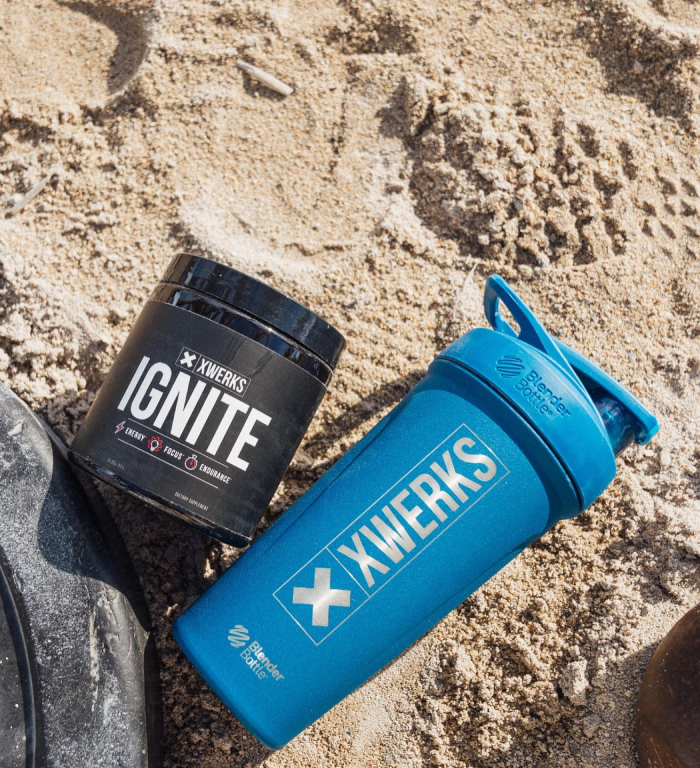
Dose: 200-500mg of standardized extract. XWERKS Ignite includes 500mg rhodiola per serving.
6. Electrolytes (included or added separately)
What: Sodium, potassium, magnesium. Pre-hydration is as important as during-ride hydration, especially in hot conditions.
Strategy: Either choose a pre-workout with electrolytes, or add a separate electrolyte drink before your ride.
What to avoid in an MTB pre-workout
High caffeine doses (300mg+)
Causes tremor and tunnel vision. Don't use crushed-ice-feeling pre-workouts for mountain biking. Your bike handling will suffer.
Niacin (vitamin B3) for "flushing"
Some pre-workouts add niacin to produce a flushing sensation that feels like the product is "working." The flush does nothing performance-wise, just changes how hot you feel. Unnecessary and occasionally uncomfortable during riding.
Novel stimulants (DMAA, DMHA, synephrine at high doses)
Untested, potentially unsafe, and often banned by sports organizations. Avoid pre-workouts with ingredients that sound like chemistry experiments — stick with well-studied ingredients at evidence-backed doses.
Creatine in pre-workout
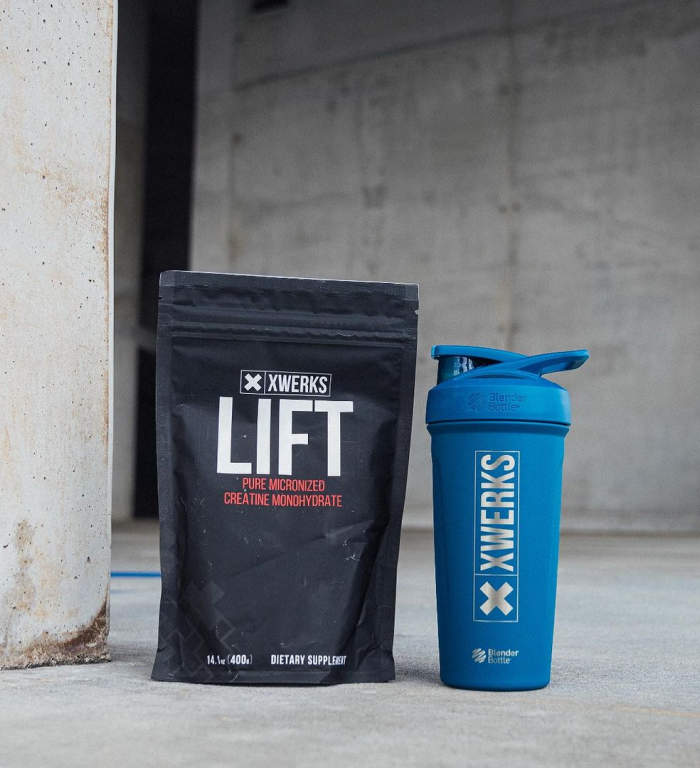
Creatine should be taken daily for consistent muscle saturation — not as part of pre-workout timing. Take creatine separately (5g daily of monohydrate, XWERKS Lift) regardless of when you ride.
Proprietary blends without disclosed doses
If a pre-workout lists ingredients in a "proprietary blend" without specifying doses, you can't evaluate whether the formulation is effective. Reputable pre-workouts disclose all ingredient doses clearly.
Timing and protocol
30-45 minutes before ride start. Caffeine peaks around 45-60 minutes post-ingestion. Take it before you leave the house, not at the trailhead.
With water (8-12 oz). Pre-workouts on an empty stomach can cause nausea. A small amount of food (banana, toast, oatmeal) 30-60 min before taking pre-workout reduces GI issues.
For early morning rides: Some riders take pre-workout the moment they wake up, eat a small breakfast, and roll out 45 min later. Others prefer coffee + small meal + pre-workout closer to ride time.
Don't use on every ride. Save pre-workout for harder rides, race days, or when you need a performance boost. Daily use of caffeine-containing pre-workouts leads to tolerance — you'll need higher doses for the same effect.
Test in training first. Never use a new pre-workout on race day. Some people get jittery or have GI issues with specific formulations. Figure out your tolerance during training rides.
For rides of different durations
1-hour intensity rides (intervals, short races)
Pre-workout 30-45 min before. No intra-ride fueling needed for efforts under 60-75 minutes (just water). Post-ride recovery: whey + carbs within 30-60 min.
2-3 hour trail rides
Pre-workout 30-45 min before. Intra-ride fueling (30-60g carbs per hour + electrolytes) for rides extending past 90-120 minutes. XWERKS Motion is ideal — Cluster Dextrin digests easily during high-intensity effort without GI distress.
4+ hour epic rides
Pre-workout at start. Consistent intra-ride fueling from the start (don't wait for fatigue). 40-60g carbs per hour minimum. Electrolyte supplementation every 30-60 minutes. Small amounts of protein at aid stations or from solid food (bars, sandwiches) for rides over 3 hours.
Multi-day stage races (BC Bike Race, Cape Epic, etc.)
Consistent pre-workout protocol each morning (but consider rotating to avoid tolerance). Aggressive intra-ride fueling from the start. Post-stage recovery protocol: whey + carbs within 30-60 min, full meal within 2 hours, carefully managed overnight recovery with protein before bed.
The complete MTB supplement stack
Daily essentials
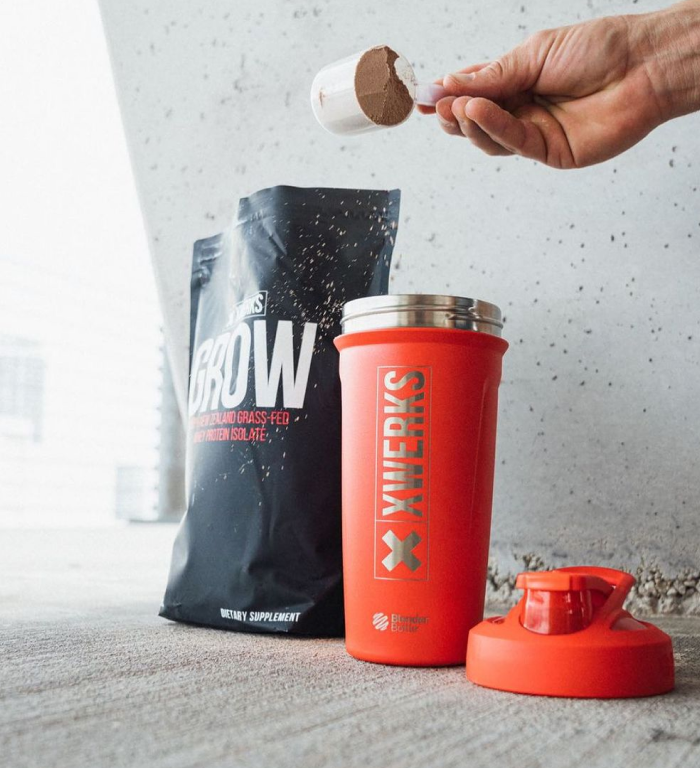
Whey protein (Grow): 1-2 scoops daily to hit 1.6-2.0g/kg target. Critical for recovery from back-to-back rides.
Creatine monohydrate (Lift): 5g daily. Supports explosive power on technical sections and recovery between training sessions.
Vitamin D3: 2,000-4,000 IU daily.
Omega-3 fish oil: 2-3g EPA+DHA daily.
Magnesium glycinate: 200-400mg evening for sleep and recovery.
Ride-day additions
Pre-workout (Ignite): 30-45 min before hard rides and race days. Not every ride.
Intra-ride fuel (Motion): For rides 90+ minutes. Cluster Dextrin + electrolytes + BCAAs.
Post-ride recovery: Whey + carbs within 30-60 minutes.
XWERKS Ignite for mountain biking
XWERKS Ignite was formulated specifically for the hybrid demands MTB requires. Each scoop includes:
150mg caffeine — moderate dose for focus and performance without tremor
3g citrulline malate — endurance and blood flow
2g L-tyrosine — focus under fatigue
1.5g beta-alanine — lactic buffering (take consistently for 4-6 weeks for full effect)
500mg rhodiola rosea — endurance and stress adaptation
200mg DMAE — additional focus support
10mg BioPerine — absorption enhancement
No niacin flush. No proprietary blends. No novel stimulants. Moderate-stim formula designed for sustained output and precision — exactly what mountain biking demands.
The Bottom Line
Mountain biking demands a different pre-workout approach than weight room or pure endurance sports. Moderate stimulation, sustained focus, and precision matter more than peak alertness or maximum power.
Evidence-backed ingredients: 150-200mg caffeine, 3-6g citrulline malate, 1-2g L-tyrosine, 1.5-3g beta-alanine (consistent use for 4-6 weeks), 200-500mg rhodiola rosea.
Avoid: high-stim pre-workouts (300mg+ caffeine), niacin flush formulas, DMAA/novel stimulants, and proprietary blends without disclosed doses. These cause shaky hands, tunnel vision, and compromised technical riding.
Timing and strategy: 30-45 min before ride start. Not every ride. For rides over 90-120 min, plan intra-ride carbs and electrolytes separately — pre-workout doesn't replace mid-ride fueling on epics.
Built for MTB's Hybrid Demands
XWERKS Ignite — 150mg caffeine + citrulline + tyrosine + beta-alanine + rhodiola. A moderate-stim pre-workout formulated for sustained output and razor-sharp focus. No jitters, no flush, no novel stimulants.
SHOP IGNITE →Further Reading
Intra-Workout for Trail Running
Best Pre-Workout for Endurance
Creatine for Endurance Athletes
References
1. Goldstein ER, et al. International Society of Sports Nutrition position stand: caffeine and performance. J Int Soc Sports Nutr. 2010;7(1):5.
2. Pérez-Guisado J, Jakeman PM. Citrulline malate enhances athletic anaerobic performance and relieves muscle soreness. J Strength Cond Res. 2010;24(5):1215-1222.
3. Trexler ET, et al. International Society of Sports Nutrition Position Stand: beta-Alanine. J Int Soc Sports Nutr. 2015;12:30.
4. Hase A, et al. Behavioural and cognitive effects of tyrosine intake in healthy human adults. Pharmacol Biochem Behav. 2015;133:1-6.
5. De Bock K, et al. Acute Rhodiola rosea intake can improve endurance exercise performance. Int J Sport Nutr Exerc Metab. 2004;14(3):298-307.