

TL;DR
- Triathletes need substantially more protein than general endurance recommendations suggest — research now supports 1.6-2.2g/kg body weight daily for high-volume triathletes, particularly during peak training and Ironman preparation.
- Triathlon's three sports (swimming, cycling, running) tax different muscle groups and create cumulative recovery demands. Protein supports muscle preservation across all three disciplines, recovery between sessions, immune function during heavy training, and bone density.
- Distribution matters: 25-40g protein per meal, 4-6 servings per day, post-workout protein within 30-60 minutes after harder sessions for optimal recovery.
- Whey protein isolate is particularly valuable post-workout — fast-digesting, complete amino acid profile, low volume for use when training suppresses appetite.
- Skip: BCAAs as separate supplement (covered by adequate protein), "endurance protein" marketing claims, low-protein "endurance diets" that compromise muscle preservation, mass-gainer style products that overshoot protein needs.
Triathletes face one of the most demanding nutritional challenges in endurance sports — and protein is one of the most chronically undersupplemented components for the demographic. The conventional endurance recommendation of 1.0-1.2g/kg body weight daily is dramatically inadequate for triathletes, particularly during peak training blocks. Modern research supports 1.6-2.2g/kg daily for high-volume endurance athletes — meaningfully higher than older guidance and closer to what bodybuilders consume than what most triathletes assume they need. The "skinny endurance athlete" body composition often reflects undertrained protein and inadequate recovery support, not optimized performance. Triathlon's three-sport structure (swimming, cycling, running) creates compounding muscle damage and recovery demands across upper body (swim), legs and posterior chain (bike, run), and core musculature throughout. Protein supports muscle preservation across all three disciplines, recovery between sessions and disciplines, immune function during high training volume (immunosuppression is real in triathletes), bone density (particularly important for runners), and the cognitive demands of executing race-day strategy across 3-17 hours of competition. This guide covers triathlete protein requirements specifically, distribution strategies, the case for whey protein isolate in the triathlete framework, race-day considerations, and how protein fits into a comprehensive triathlete supplementation approach.
Why triathletes need more protein than general endurance recommendations
The "1.0-1.2g/kg endurance recommendation" persists in athletic nutrition writing despite being inadequate for high-volume endurance athletes. The current research picture:
1. Muscle preservation requires more protein than general activity: Current research supports 1.6-2.2g/kg daily for serious endurance athletes — meaningfully higher than older recommendations.
2. Three sports compound damage: Triathlon's swim/bike/run structure creates muscle damage across multiple movement patterns. Total recovery demand exceeds what any single sport produces. Cycling's eccentric loading on quads, running's full-body eccentric loading, and swimming's sustained upper body work all contribute to elevated protein needs.
3. Caloric intake often inadequate: Many triathletes restrict calories during training believing it improves body composition. Combined with high training volume, this creates relative energy deficiency in sport (RED-S) which suppresses muscle preservation, hormone function, immune health, and bone density. Protein deficiency compounds this.
4. Female triathletes face additional risk: Combined with menstrual considerations and bone density concerns, female triathletes need protein adequacy more than typical recommendations suggest.
5. Multi-day events compound demands: Stage races, training camps, and long-distance racing produce cumulative damage that requires sustained protein adequacy for recovery.
6. Aging triathletes face compounded needs: Sarcopenia (age-related muscle loss) accelerates without adequate protein. Aging triathletes need protein more than younger athletes despite often consuming less.
The practical translation: a 70kg (155lb) triathlete needs 112-154g of protein daily, distributed across meals. Many triathletes consume 50-80g — meaningfully under what optimal recovery requires.
The protein math for triathletes
Daily protein target by training phase
1.4-2.2g/kg body weight• Base/early training (15-25 hours/week): 1.4-1.6g/kg. The lower end of the range works for moderate volume.
• Peak training (25-35 hours/week): 1.6-2.0g/kg. Elevated needs from elevated training stress.
• Ironman peak / multi-day events: 1.8-2.2g/kg. Maximum recovery demand.
• Recovery weeks / off-season: 1.4-1.6g/kg. Maintain baseline; don't drop dramatically.
• Race week tapers: 1.6-1.8g/kg. Maintain or slightly elevate; not the time to under-eat protein.
Protein per body weight examples
Math by athlete size• 55kg (121 lbs) female triathlete, peak training (1.8g/kg): 99g daily — distributed as 4 servings of ~25g
• 70kg (155 lbs) male triathlete, peak training (1.8g/kg): 126g daily — distributed as 4-5 servings of ~25-30g
• 85kg (187 lbs) male triathlete, peak training (1.8g/kg): 153g daily — distributed as 5 servings of ~30g
• 70kg (155 lbs) Ironman athlete, race prep (2.0g/kg): 140g daily — 5 servings of ~28g
The numbers feel high to many triathletes. They're meaningfully different from general "endurance" recommendations but supported by current research for high-volume training.
Protein distribution across the day
Triathletes typically have multiple training sessions per week, often two-a-day during peak training. Protein distribution across the day produces better outcomes than concentrating intake in one or two large servings.
The leucine threshold: Muscle protein synthesis is triggered by leucine intake above approximately 2.5-3g per meal. Whey protein isolate provides ~3g leucine per 25g serving — sufficient to trigger MPS. Plant proteins typically need larger servings to reach the leucine threshold.
Optimal pattern for triathletes:
• 4-6 protein-containing meals/snacks daily
• 25-40g protein per serving
• Spaced 3-4 hours apart
• Post-workout protein within 30-60 minutes after harder sessions
• Pre-sleep protein (slow-digesting like casein or whey isolate, 25-30g) supports overnight recovery
Race-week protein distribution:
Maintain consistent protein intake during taper. Reducing protein during race week (some athletes do this thinking it helps "leanness") can compromise final muscle preservation and immune function. Keep protein steady; reduce only training volume.
Why whey protein isolate is particularly valuable for triathletes
Fast digestion for post-workout recovery
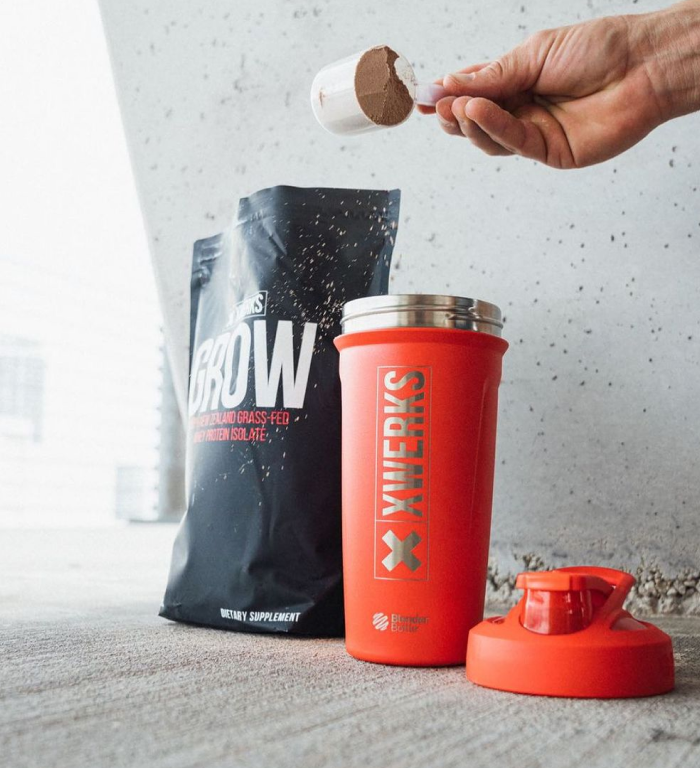
25-35g whey isolate post-workoutWhey isolate is one of the fastest-digesting protein sources — amino acids appear in blood within 30-60 minutes of consumption. Fast post-workout protein supports rapid muscle protein synthesis when training has just damaged muscle and recovery is most active. XWERKS Grow provides 25g NZ grass-fed whey isolate per serving.
Complete amino acid profile
All 9 essential amino acids in optimal ratiosWhey contains all essential amino acids in ratios that support muscle protein synthesis efficiently. Particularly high in branched-chain amino acids (BCAAs) — leucine, isoleucine, valine — that drive muscle protein synthesis. Whey isolate provides these without the fat and lactose of whole milk.
Low volume for appetite-suppressed states
110 calories per 25g protein servingHard training often suppresses appetite. Triathletes finishing an interval session, brick workout, or long run frequently don't feel like eating real food immediately. Whey isolate shake (compact, easy to consume) provides protein when whole-food meals would be unappealing. The convenience supports adequate daily intake when caloric demand is high but appetite is suppressed.
Low lactose for sensitive guts
Under 1g lactose per servingWhey isolate (vs. concentrate) contains under 1g lactose per serving — tolerated by most lactose-intolerant individuals. Triathletes often have sensitive GI systems from training stress; the low-lactose profile reduces GI risk vs. milk or whey concentrate alternatives.
Easy to consume on training-heavy days
Mix in water, milk, or oat milkWhey isolate's mixability and convenience matters when you're managing 25-35 hours of training weekly. Quick post-workout shake, mid-morning snack between training sessions, evening recovery shake — formats that fit a heavy training schedule.
Race-day and race-week protein considerations
Race week tapering
Maintain protein; reduce only trainingDon't reduce protein during race week tapering. Maintain 1.6-1.8g/kg daily. Some athletes mistakenly reduce protein thinking it helps "leanness" or "racing weight" — this compromises final muscle preservation, immune function, and recovery between training and racing. Keep protein steady; let training reduction handle the taper.
Pre-race meal protein
Modest protein, focus on carb loadingPre-race meals (16-24 hours before) emphasize carbohydrate loading; protein should be modest (15-25g). Heavy protein the night before a race can produce GI distress race-morning. Standard balanced meal with chicken/fish + carbs + vegetables works well.
Race-morning protein
10-25g protein 3-4 hours pre-raceSome athletes include modest protein in race-morning meal (10-25g) for sustained satiety; others go pure carb. Both approaches work. Test in training rather than experimenting on race day.
During-race protein
Optional in long races; primarily carbsOlympic and shorter triathlons: skip protein during race; focus on carbs and electrolytes. Half-Ironman and Ironman: some athletes use BCAA-supplemented hydration or amino acid drinks during long efforts. The research on during-race protein is limited; primarily a personal preference and tolerance question. The vast majority of competitive triathletes use carbohydrate-only fueling during races.
Post-race protein
25-40g whey isolate within 30-60 minutesThe post-race protein intake is more important than pre-race or during-race protein. After a hard race, getting 25-40g whey isolate within 30-60 minutes supports recovery from massive muscle damage. Combined with carb refueling (1.0-1.2g/kg carbs), this protocol speeds recovery for next-day training or upcoming events.
Common protein sources for triathletes
Whole food protein sources (foundation)
Build daily protein primarily from whole foods:
• Eggs: 6g per large egg. Versatile, affordable, complete protein.
• Greek yogurt: 15-20g per cup. Convenient, high in protein, supports gut health.
• Cottage cheese: 25g per cup. Slow-digesting; good before bed.
• Chicken breast: 30g per 4oz cooked. Lean baseline protein.
• Turkey: 30g per 4oz. Similar to chicken; rotation prevents boredom.
• Lean beef: 30g per 4oz. Iron-rich; particularly valuable for triathletes (iron loss from foot strikes).
• Fish (salmon, tuna, white fish): 25-30g per 4oz. Omega-3 bonus from fatty fish.
• Tofu and tempeh: 15-20g per 4oz tofu, 30g per 4oz tempeh. Plant-based options.
• Beans and legumes: 15-20g per cup. Combines protein with carbs and fiber.
• Quinoa: 8g per cup cooked. Complete protein from a grain.
Supplement-form protein sources
Fill gaps with appropriate supplemental sources:
• Whey protein isolate: Fast-digesting, complete amino acid profile, low lactose. Optimal for post-workout. XWERKS Grow for NZ grass-fed isolate.
• Casein protein: Slow-digesting; good before bed for overnight muscle protein synthesis.
• Plant protein blends: Pea + rice + hemp combinations approach the amino acid profile of whey. Larger serving sizes needed (35-40g vs 25g for whey) to reach equivalent leucine threshold.
• Egg white protein: Complete protein without lactose; reasonable alternative for dairy-sensitive athletes.
What to skip
• BCAAs as separate supplement: If you're consuming adequate whey protein, BCAAs are already covered. Standalone BCAA supplementation duplicates what whey provides. Skip the cost.
• "Endurance protein" marketing: Some products marketed specifically to endurance athletes with proprietary blends and inflated claims. Standard whey protein isolate at standard pricing produces same results.
• Mass-gainer style protein products: 50g+ protein per serving overshoots single-meal needs (muscle protein synthesis plateaus at 30-40g per serving for most adults). Pay for actual nutrition; don't pay for unnecessary mega-doses.
• Low-protein "endurance" diets: The 1.0-1.2g/kg recommendation is inadequate for high-volume training. Don't intentionally restrict protein based on outdated guidance.
• Skipping protein during taper: Maintains protein during race week. Reducing protein during taper compromises final preparation.
• Protein bars with high sugar/junk ingredients: Many "protein" bars are essentially candy bars with token added protein. Read labels; choose bars with reasonable ingredient lists or skip in favor of whole food + whey shake combinations.
• Single-source protein dependency: Relying entirely on whey shakes for daily protein misses out on whole food benefits (vitamins, minerals, fiber, satiety). Use whey to fill gaps; build whole food protein foundation first.
• Mega-dose protein for "extra" recovery: Above 30-40g per meal, additional protein doesn't increase muscle protein synthesis proportionally. Spreading 4-6 servings of 25-30g each works better than concentrating in fewer larger servings.
How protein fits into the complete triathlete supplement framework
Protein is the foundation of triathlete supplementation. The complete framework:
Foundation (every triathlete):
• Whey protein isolate (1.6-2.2g/kg daily total) — XWERKS Grow
• Vitamin D3 (2,000-4,000 IU daily)
• Omega-3 (2-3g EPA+DHA daily)
• Iron testing (ferritin annually for women; semi-annually if heavy training)
Performance (most triathletes):
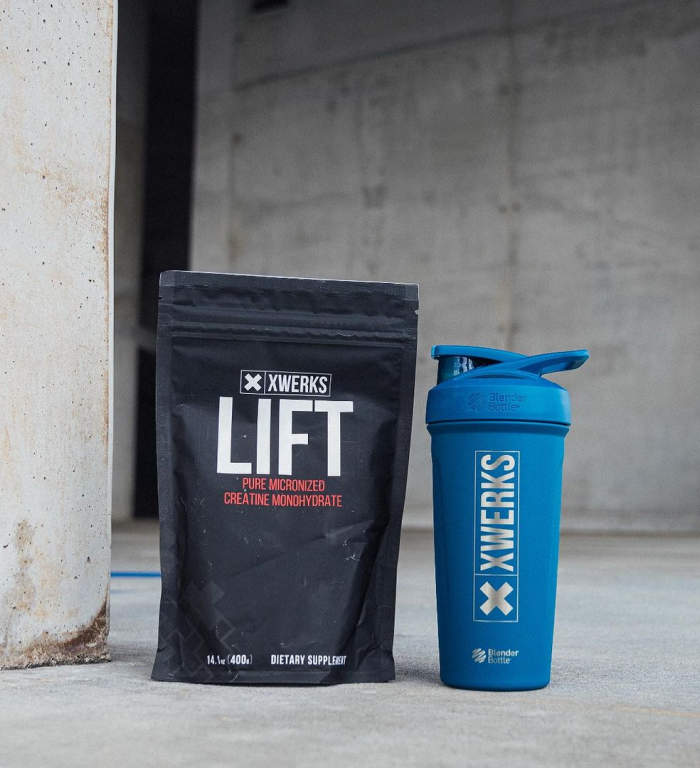
• Creatine monohydrate (3-5g daily) — XWERKS Lift · See our creatine for triathletes guide
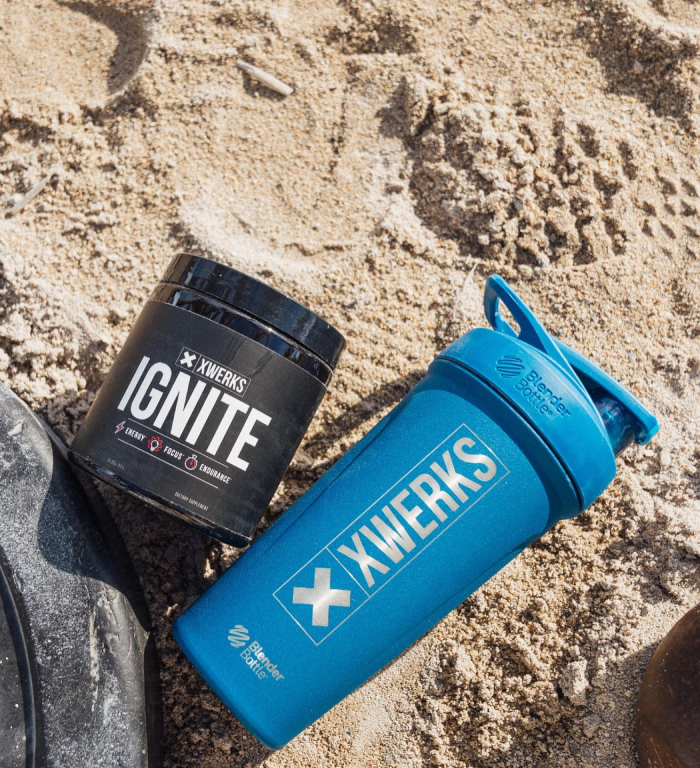
• Pre-workout for hard sessions — XWERKS Ignite
• Intra-workout carbs (sessions over 60-90 min) — XWERKS Motion · See our carbs for triathletes guide
• Magnesium glycinate (200-400mg evening)
Situational:
• Electrolytes during heat training
• Beta-alanine for shorter, higher-intensity efforts
• Ashwagandha during peak training stress
• Joint support for older athletes or high-volume runners
See our supplements for running framework which applies broadly to triathletes (the running portion drives most of the supplementation logic).
Common questions about triathlete protein
"Do I really need 2g/kg of protein?"
Research increasingly supports this for high-volume endurance training. Lower amounts (1.4-1.6g/kg) work for moderate training. Higher amounts (1.8-2.2g/kg) for peak Ironman preparation, multi-day events, and aging athletes. Test your current intake honestly — most triathletes consume meaningfully less than they think.
"Will high protein make me bulky for triathlon?"
No. Building meaningful muscle requires specific resistance training stimulus combined with caloric surplus. High protein during heavy endurance training preserves muscle and supports recovery without producing bulky muscle gain. The "high protein = bulky" concern is outdated.
"Can I get enough protein from plant sources?"
Yes, but requires more attention. Plant proteins typically need 30-40% larger servings than animal protein to reach equivalent leucine threshold. Diverse plant protein sources (legumes, tofu, tempeh, quinoa, nuts) combined with plant protein supplementation can meet 1.6-2.2g/kg targets. Vegan triathletes should specifically consider creatine, B12, and iron supplementation.
"How much protein post-workout?"
25-40g for most triathletes. Smaller athletes (under 60kg) can target 25-30g; larger athletes 30-40g. Above 40g per meal, muscle protein synthesis benefits plateau — additional protein supports total daily target but doesn't enhance the immediate post-workout response.
"Should I use whey protein during long-distance races?"
Generally no for most triathletes. During-race fueling focuses on carbs and electrolytes. Some Ironman athletes use BCAA-supplemented hydration or amino acid drinks during very long efforts; this is personal preference and tolerance-dependent. Test in training before relying on during-race protein for important events.
"Is whey isolate or concentrate better for triathletes?"
Both work; isolate is preferred for most triathletes. Lower lactose (under 1g per serving vs 4-8g in concentrate) reduces GI risk during sensitive periods. Lower carb/fat content keeps caloric load manageable when you're already eating substantial carbs for fueling. Higher protein percentage means less product needed for equivalent protein intake.
The Bottom Line
Triathletes need substantially more protein than general endurance recommendations suggest. Current research supports 1.6-2.2g/kg body weight daily for high-volume triathletes, particularly during peak training and Ironman preparation.
Distribution matters: 25-40g per meal across 4-6 servings daily, post-workout protein within 30-60 minutes after harder sessions, pre-sleep protein for overnight recovery.
Whey protein isolate is particularly valuable — fast-digesting for post-workout recovery, complete amino acid profile, low lactose for sensitive guts, low volume for appetite-suppressed states, easy to consume on training-heavy days.
Race-week: maintain protein intake; don't reduce during taper. Pre-race meal modest protein with carb emphasis. Post-race 25-40g whey isolate within 30-60 minutes for recovery.
Skip: BCAAs as separate supplement (covered by adequate whey), "endurance protein" marketing, mass-gainer products, low-protein endurance diets, mega-dose protein servings.
Build whole food protein foundation first; use whey isolate to fill gaps. Most triathletes need 1-2 whey servings daily on top of whole food meals to hit 1.6-2.2g/kg target.
Dig deeper: creatine for triathletes · carbs for triathletes · supplements for running · protein for marathon runners
Whey Protein Isolate Built for Triathlete Recovery
XWERKS Grow — 25g NZ grass-fed whey protein isolate per serving. Cross-flow microfiltered to preserve bioactive compounds. Real food flavoring (cocoa bean, vanilla bean, peanut butter), stevia-only sweetening, four ingredients total. Fast-digesting post-workout protein for the recovery between brick workouts, two-a-days, and the cumulative demands of triathlon training.
Shop Grow