

TL;DR
- Most creatine GI issues come from preventable causes — loading doses, taking on empty stomach, poor-quality non-micronized powder, dehydration, taking too much per single dose — rather than creatine monohydrate itself being inherently hard to digest.
- Fix monohydrate first: skip the loading phase, take 3-5g daily with food and adequate water, use micronized monohydrate, split larger doses across the day. This resolves digestion issues for most users at the lowest cost.
- If monohydrate still produces issues despite controlling variables: creatine gummies bypass the powder-mixing problem entirely — pre-portioned doses, no dissolution issues, easy to take with food, no gritty residue.
- "Buffered" creatine and creatine HCl are marketed for digestion but have weak research support over micronized monohydrate. The premium pricing for these forms typically isn't justified by clinical evidence.
- Skip: cheap non-micronized creatine, "loading phase" protocols (unnecessary at the cost of common GI distress), pre-workouts with creatine added (overpriced for what you get), proprietary creatine blends that hide actual creatine doses.
"Best creatine for easy digestion" is one of the most frustrating searches in the supplement space — because most articles answering it miss the actual issue. The user behind this query usually has tried creatine, experienced GI distress (bloating, cramping, diarrhea, gas, or stomach discomfort), and is now searching for a better-tolerated option. The honest picture: most creatine GI issues have specific, identifiable causes that can be controlled — and once controlled, plain micronized creatine monohydrate is tolerated by the vast majority of users. Loading phases (20g daily for 5-7 days) cause GI issues for many people. Taking creatine on an empty stomach amplifies issues. Non-micronized creatine produces gritty texture that doesn't dissolve cleanly, sitting partially undissolved in the stomach. Inadequate water intake concentrates the dose. Taking 5g+ in a single dose can overwhelm absorption capacity for some users. These are all preventable. The other honest piece: for users who want to bypass powder concerns entirely, creatine gummies solve the digestion question through format change rather than chemical reformulation — pre-portioned doses, no dissolution issues, easy to take with food. This guide covers what actually causes creatine GI issues, how to fix them with monohydrate first (the cheapest solution), an honest comparison of "easy digestion" forms (buffered, HCl, gummies), and how to choose based on your specific tolerance pattern.
Why creatine causes GI issues for some people
Creatine itself isn't inherently hard to digest — but several preventable factors compound to produce the GI issues many users experience:
1. Loading phase doses (20g daily for 5-7 days). The traditional "loading protocol" recommends 20-25g of creatine in the first week to saturate muscle stores faster. This is unnecessary — daily 3-5g doses produce full saturation in 3-4 weeks with substantially less GI risk. The loading phase is the single biggest cause of "creatine doesn't agree with me" experiences.
2. Empty stomach consumption. Taking creatine on an empty stomach increases absorption rate but also increases GI irritation risk. Creatine taken with a meal (or even a small snack) produces dramatically fewer GI complaints.
3. Non-micronized creatine. Cheaper creatine products use larger particle sizes that don't dissolve as completely in water. Undissolved creatine produces gritty residue that can sit partially undissolved in the stomach, contributing to bloating and cramping. Micronized creatine uses smaller particle sizes (typically 200-mesh) that dissolve more completely and produce notably better tolerance.
4. Inadequate water intake. Creatine pulls water into muscles for storage. Taking creatine with insufficient hydration concentrates the dose in the gut and produces more cramping and digestive distress. Aim for at least 16 oz of water with creatine, plus elevated total daily hydration when starting creatine supplementation.
5. Single-dose intake too high. Some users take their entire daily creatine in one large dose (e.g., a 10g morning dose). Splitting into smaller doses (2.5g morning + 2.5g evening) reduces single-dose GI load and may improve absorption. For most people 3-5g once daily works fine; users with sensitive GI systems benefit from splitting.
6. Mixing with cold water. Cold water is convenient but creatine dissolves more completely in warm water. If you've experienced gritty creatine residue, try mixing in warm water first, then cooling.
7. Pre-existing GI sensitivity. People with IBS, SIBO, lactose intolerance, or other digestive conditions may have lower tolerance for creatine generally. Adjusting variables 1-6 helps but won't fully resolve underlying GI conditions.
The implication: if you've had creatine GI issues, don't assume monohydrate doesn't work for you. Test whether controlling these variables resolves the problem before paying premium pricing for "easier" creatine forms with weak research support.
The fix-it-first protocol for monohydrate
Before switching to premium "easy digestion" creatine forms, try this protocol with a quality micronized creatine monohydrate:
Day 1-7:
• Skip the loading phase entirely. Start with 3g daily.
• Take with a meal (breakfast, lunch, dinner — whatever works for your routine).
• Mix with at least 16 oz of warm water; let stand 30 seconds before drinking to dissolve fully.
• Drink an additional 16+ oz water within 30 minutes of dosing.
• Note any GI effects after each dose.
Day 8-14:
• If well-tolerated: increase to 5g daily, still with food and adequate water.
• If borderline-tolerated: stay at 3g and split to 1.5g twice daily.
• If still poorly-tolerated despite all controls: monohydrate may not work for you; consider creatine gummies or other forms.
Day 14+:
• Maintain 3-5g daily depending on tolerance and body size.
• Saturation reached in 3-4 weeks of consistent daily intake.
• Performance and recovery effects build over the saturation period.
This protocol resolves creatine GI issues for the majority of users who initially had problems with traditional creatine protocols. The cost is dramatically lower than switching to premium forms — quality micronized monohydrate runs $10-25 for 60-100 servings.
The "easy digestion" creatine forms — honest evaluation
Micronized creatine monohydrate (the value baseline)
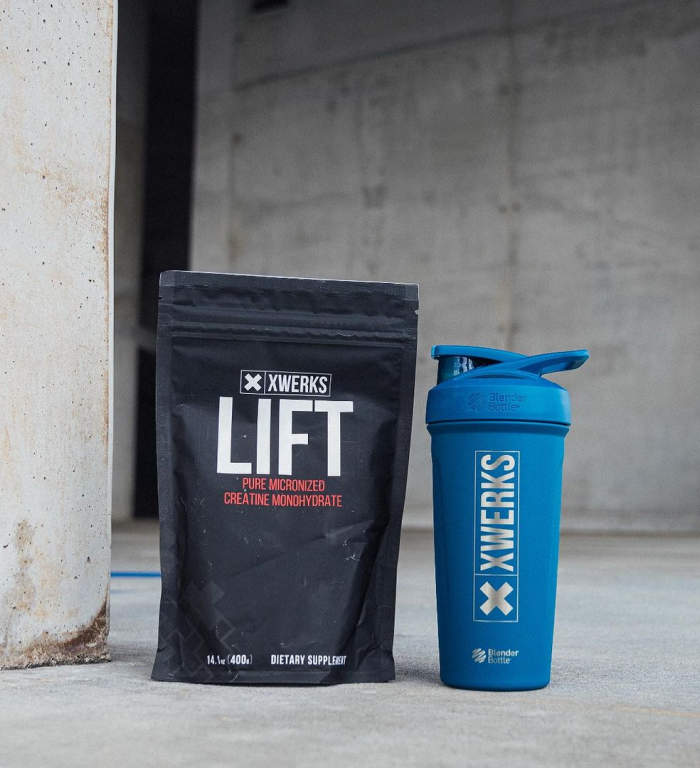
3-5g daily with food and waterThe most-researched and most-affordable creatine form. Micronized monohydrate uses smaller particle sizes that dissolve more completely than non-micronized monohydrate. Once GI variables are controlled (loading phase skipped, taken with food, adequate water), the vast majority of users tolerate micronized monohydrate without issues. XWERKS Lift uses micronized monohydrate.
Cost per gram: $0.05-0.15. The category benchmark for cost-effectiveness.
Creatine gummies (genuine digestion solution through format change)
5 gummies = 5g creatineCreatine gummies solve the digestion problem through format rather than chemistry. The gummy format provides: pre-portioned doses (no measuring, no overdoing it), no powder dissolution issues (no gritty residue, no incomplete mixing), easy to take with food (chew with breakfast or any meal), better-tolerated by users with sensitive stomachs (the slow chewing/digestion of gummies versus rapid water-based delivery), and convenient for travel (no shaker bottle needed).
The chemistry is still creatine monohydrate — the same well-researched compound. The format change is what differentiates the experience. XWERKS Build provides 1g creatine per gummy in a pre-portioned format. For users who specifically struggle with powder-based creatine, gummies are typically the most reliable solution.
Cost per gram: $0.30-0.50. Higher than monohydrate powder but justified for users who genuinely don't tolerate powder forms.
Buffered creatine (Kre-Alkalyn — marketing exceeds research)
1.5-3g dailyBuffered creatine is marketed as a "gentler" form supposedly offering better absorption and reduced GI distress. The reality: research consistently shows buffered creatine doesn't outperform monohydrate for either performance or tolerance. The "buffered" claims center on supposedly preventing creatine breakdown to creatinine — but this breakdown is minimal in monohydrate anyway, and the alkaline buffering doesn't survive stomach acid.
Some users do tolerate buffered creatine better, but this is more likely due to lower per-dose amounts (1.5-3g vs. 5g monohydrate) than from any chemistry advantage. The same lower-dose approach with monohydrate works equally well at lower cost.
Cost per gram: $0.40-0.80. Premium pricing for marketing claims rather than research-supported advantages.
Creatine HCl (smaller per-dose, weak research support)
1-2g dailyCreatine HCl (hydrochloride) is marketed as more soluble and better absorbed than monohydrate, requiring smaller doses (often 1-2g) for equivalent effects. The reality: limited research directly comparing creatine HCl to monohydrate at equivalent doses. The "smaller dose" advantage may simply reflect the smaller dose itself being better-tolerated rather than chemical superiority.
For users who experience GI issues at 5g monohydrate doses, dropping monohydrate to 2-3g daily often produces similar tolerance benefits to switching to HCl, at substantially lower cost.
Cost per gram: $0.50-1.20. Highest cost in the creatine category for relatively weak research support.
Creatine ethyl ester (avoid)
Not recommendedCreatine ethyl ester was marketed in the 2000s as more bioavailable than monohydrate. Subsequent research showed the ethyl ester actually breaks down to creatinine more rapidly than monohydrate, producing worse — not better — tissue creatine levels. The form has largely been discontinued by quality brands. Avoid.
Liquid creatine (avoid)
Not recommendedLiquid creatine products break down in solution to creatinine relatively quickly. By the time you consume the product, much of the creatine has degraded. Stick to powder or gummy formats which preserve creatine integrity until consumption.
Creatine magnesium chelate (Magnapower — limited research)
2-5g dailyCreatine bound to magnesium. Some research suggests modestly better absorption than monohydrate, but limited evidence for actual tolerance or performance advantages. The added magnesium may have independent benefits but at much lower doses than dedicated magnesium supplementation. Not recommended over micronized monohydrate or gummies for most users.
How to choose based on your specific situation
If you've never tried creatine before
Start with micronized creatine monohydrate at 3-5g daily, taken with food and adequate water. Skip the loading phase. Build up over 3-4 weeks for full saturation. The vast majority of new creatine users tolerate this protocol fine.
If you tried creatine and got GI issues with a loading phase
The loading phase was likely the problem. Try monohydrate again at 3-5g daily without loading. With food. Adequate water. Most users find that the GI issues vanish entirely without the 20g/day loading dose.
If you tried monohydrate at 5g daily without loading and still had issues
Drop to 3g daily, split into 1.5g twice daily, both doses with food. Increase water intake. If issues persist after 2 weeks of this protocol, monohydrate may genuinely not work for you — switch to creatine gummies.
If you don't want to deal with powder, dosing, or mixing
Creatine gummies solve the experience problem regardless of GI tolerance. Pre-portioned, easy to take with breakfast, no shaker bottle needed, no incomplete dissolution. Worth the cost premium for many users who'd otherwise skip creatine entirely due to powder format.
If you've tried multiple forms and still have GI issues
Consider underlying GI conditions. IBS, SIBO, lactose intolerance, food intolerances may be the actual issue rather than creatine specifically. Discuss with physician. Some people simply don't tolerate creatine well; the benefits don't outweigh persistent GI distress for these users.
If you want maximum cost-efficiency and have no GI sensitivity
Quality micronized monohydrate is the value benchmark. $10-25 for 60-100 servings. No reason to pay premium pricing for "easier" forms if monohydrate works fine for you.
What to look for in any creatine product
Pure creatine — no proprietary blends
Single-ingredient products preferredQuality creatine products list creatine monohydrate (or other creatine form) as the only active ingredient. "Proprietary creatine blends" combining multiple creatine forms or adding "absorption enhancers" charge premium pricing for marketing claims rather than research-backed advantages. Stick to single-ingredient products.
Micronization specified
200-mesh micronized for monohydrate powderMicronized creatine has substantially better dissolution than non-micronized. Quality monohydrate products specify "micronized" or "200-mesh" on the label. Non-micronized creatine is cheaper but produces the gritty texture that contributes to GI issues.
Third-party tested (where available)
Informed Sport or NSF Certified for SportFor drug-tested athletes, third-party certification protects against contamination. Common contaminations in cheap creatine products include traces of banned stimulants from shared manufacturing equipment.
Reasonable dose per serving
3-5g per serving for monohydrate; 1g per gummy for gummiesQuality creatine products provide 3-5g monohydrate per serving (5g is the most-researched dose). Gummy products typically provide 1g per gummy with 5 gummies as standard daily serving. Products providing 10g+ per serving overshoot research-backed doses.
Creapure certification (gold standard)
Creapure-branded creatine indicates pharmaceutical-gradeCreapure is a pharmaceutical-grade creatine monohydrate produced by AlzChem in Germany. Products using Creapure branding indicate higher-quality source material with stricter testing for impurities. Not the only quality creatine, but a reliable signal of quality.
What to skip
• Cheap non-micronized creatine: Saves a few dollars but causes the gritty residue and GI issues most "creatine doesn't agree with me" complaints describe. Spend the $5-10 extra for micronized.
• Loading phase protocols (20-25g daily for 5-7 days): Largely unnecessary; the primary cause of GI issues among new creatine users. Skip entirely.
• Pre-workouts with creatine added: Often provide 1-3g creatine in pre-workout costing $30-50 per month. Standalone creatine monohydrate at $10-15 per month provides more creatine more reliably. Don't pay pre-workout pricing for creatine.
• Proprietary creatine blends: "Performance creatine matrix" with 5+ creatine forms at small individual doses. Marketing positioning rather than research support. Stick to single-form products.
• "Absorption enhancers" added to creatine: Black pepper extract, BioPerine, alpha-lipoic acid, and similar additions don't meaningfully improve creatine absorption beyond what micronized monohydrate provides naturally.
• Creatine ethyl ester: Worse than monohydrate, not better. Largely discontinued by quality brands; avoid.
• Liquid creatine: Breaks down in solution. By the time you drink it, creatinine content is elevated and creatine content is reduced.
• "Stim-free pre-workouts" with creatine as primary ingredient: Often provide modest creatine doses at premium pricing. Direct creatine supplementation is more cost-effective.
• Overpriced creatine HCl when monohydrate would work fine: Drop monohydrate to 2-3g daily before switching to HCl at 4x the cost. Often resolves the issue.
• Buffered creatine ("Kre-Alkalyn") at premium pricing: Research doesn't support meaningful advantages over monohydrate. Don't pay 3-5x for marketing claims.
XWERKS Build vs Lift vs leading "easy digestion" creatine options
Now that you understand the actual variables driving creatine GI issues — and the honest research picture on the various "easier digestion" forms — here's how XWERKS Build (gummies) and Lift (micronized monohydrate powder) compare to the leading creatine options targeting the digestion-sensitive audience.
| Criterion | XWERKS Build (gummies) | XWERKS Lift (powder) | Kre-Alkalyn (buffered) | Creatine HCl (Promera Con-Cret) | Bear Balanced (gummies) | Generic micronized monohydrate |
|---|---|---|---|---|---|---|
| Form | Gummies (creatine monohydrate) | Micronized monohydrate powder | Buffered monohydrate capsules | HCl powder/capsules | Gummies (creatine monohydrate) | Micronized monohydrate powder |
| Daily serving | 5 gummies (5g) | 1 scoop (5g) | 1.5-3g (capsules) | 1-2g | 4 gummies (4g) | 1 scoop (5g) |
| Research support | ✓ Same as monohydrate | ✓ Most-researched form | Mixed; weak vs monohydrate | Limited direct comparison | ✓ Same as monohydrate | ✓ Most-researched form |
| Powder dissolution issues | None (no powder) | Minimal (micronized) | None (capsules) | Minimal | None (no powder) | Variable by brand |
| Pre-portioned dosing | ✓ 1g per gummy | Requires scooping | ✓ Per-capsule | ✓ Per-capsule | ✓ 1g per gummy | Requires scooping |
| Easy with food | ✓ Chew with breakfast | Mix with water/shake | Swallow capsules | Swallow capsules | ✓ Chew with breakfast | Mix with water/shake |
| Travel-friendly | ✓ No shaker needed | Needs water/shaker | ✓ Capsules | ✓ Capsules | ✓ No shaker needed | Needs water/shaker |
| Cost per gram | ~$0.40 | ~$0.10 | ~$0.60 | ~$1.00 | ~$0.50 | ~$0.05-0.15 |
| Best for | Powder-averse users; tolerance issues | Cost-conscious; no GI issues | Capsule preference; willing to pay | Smallest possible dose | Powder alternative | Maximum cost efficiency |
The form decision matters more than the chemistry decision. All six options use creatine monohydrate or creatine HCl as the active ingredient — same well-researched compounds. The differences are in delivery format (powder vs capsule vs gummy) and cost. Choosing based on the format that fits your routine produces better adherence than chasing premium "easy digestion" chemistry claims.
Cost spread is dramatic. Generic monohydrate at $0.05-0.15 per gram vs. creatine HCl at $1.00 per gram represents a 7-20x cost difference for the same fundamental performance benefit. The premium forms (HCl, Kre-Alkalyn) charge for marketing positioning rather than research-supported advantages.
Where Build wins: The genuine "easy digestion" solution for users who tolerate powder-based creatine poorly despite controlling all variables. Pre-portioned doses, no powder concerns, easy to take with breakfast, travel-friendly. The cost premium ($0.40 vs. $0.10 per gram) is justified for users who specifically need the format change to maintain consistent supplementation.
Where Lift wins: The cost-effective baseline for users who don't have GI issues with monohydrate. $0.10 per gram is hard to beat. For users willing to control variables (skip loading, take with food, adequate water), Lift produces all the research-backed benefits at a fraction of the cost of premium "easy digestion" forms.
Where competitors win: Bear Balanced is a quality competitor in the gummy space at similar pricing. Generic micronized monohydrate from quality brands offers similar value to Lift. Kre-Alkalyn for users who specifically prefer capsule form. Promera Con-Cret HCl for users who want the smallest possible per-dose amount.
The honest framing: if you're searching for "best creatine for easy digestion," the answer depends on what you've already tried. New to creatine: start with micronized monohydrate (Lift) and control GI variables. Tried monohydrate and had issues: try the fix-it-first protocol before switching. If issues persist despite controlling variables: switch to gummies (Build). The chemistry-based premium forms (HCl, buffered) are rarely the right answer for digestion specifically.
The decision framework
Step 1: Identify what you've already tried
Have you tried creatine before? What form, what dose, what protocol (loading vs. no loading), with food vs. empty stomach? The right next step depends entirely on your prior experience.
Step 2: Try the fix-it-first protocol with monohydrate (if not already done)
Skip loading. 3-5g daily. With food. With adequate water. Use micronized monohydrate. Test for 2 weeks. This resolves GI issues for most users at the lowest possible cost.
Step 3: If monohydrate still fails, switch to gummies
Creatine gummies bypass the powder/dissolution/dosing concerns through format change. Use gummies if monohydrate consistently produces issues despite controlling variables.
Step 4: Skip the premium "chemistry" forms
Buffered creatine (Kre-Alkalyn) and creatine HCl are typically not the right answer for digestion specifically. The premium pricing isn't justified by research. The exception: capsule preference (Kre-Alkalyn) or specific small-dose tolerance pattern (HCl).
Step 5: Verify product quality
Single-ingredient products (no proprietary blends), micronized for powder, third-party tested where possible, Creapure-branded for premium quality assurance. Quality matters more than form chemistry for digestion outcomes.
Common questions about creatine and digestion
"Will the GI issues go away on their own with continued use?"
Often, yes — many users find initial GI distress resolves over 1-2 weeks of consistent use as the body adapts. If you're early in supplementation and issues are mild, controlling variables (food, water, micronized form, no loading) and continuing for 2 weeks often resolves the problem. Persistent severe issues warrant switching forms.
"Why does creatine sometimes cause diarrhea?"
The primary cause: too much creatine in the gut at once with insufficient water. This produces an osmotic effect drawing water into the gut. Solutions: split doses, increase water intake, take with food, ensure micronized product. Persistent diarrhea after these adjustments suggests a different issue (food intolerance, IBS) or that creatine genuinely doesn't work for you.
"Should I take creatine with carbs for better absorption?"
Some research supports modestly better creatine uptake when taken with carbs (insulin response increases creatine transport into muscles). The effect is small in practice; most users don't see meaningful difference. Don't add carbs solely for creatine absorption; if you're eating a meal anyway, time creatine with the meal.
"Can creatine cause bloating?"
Creatine causes intracellular water retention (water inside muscle cells) — this isn't bloating in the traditional sense. The 1-2 lb weight gain typical in the first 2 weeks is normal and represents desired muscle hydration, not gut bloating. Actual gut bloating from creatine usually resolves with the variable controls described above.
"Are creatine gummies as effective as powder?"
Yes — creatine gummies typically use creatine monohydrate, the same well-researched compound. The format change doesn't reduce effectiveness; it changes the consumption experience. Same saturation effects, same performance benefits. The only practical difference: ensure adequate hydration with gummies (people sometimes drink less water with gummies than with powder mixed in water).
"Should I switch to gummies if I tolerate powder fine?"
Not necessarily. Gummies cost more per gram than powder. If powder works for you, the cost difference adds up over time. Gummies are valuable for users who genuinely struggle with powder format or want maximum convenience; not necessary for users with no problems.
"Does it matter if I take creatine pre-workout vs post-workout vs morning?"
For chronic effects (saturation): timing doesn't matter. Take at any consistent time that fits your routine. For acute effects (single-session benefits): minor research suggests post-workout may be slightly better for absorption, but the effect is small. Daily consistency matters substantially more than timing.
The Bottom Line
Most creatine GI issues come from preventable causes — loading doses, empty stomach, non-micronized powder, dehydration, single doses too high — not from creatine monohydrate itself being inherently hard to digest.
Fix monohydrate first: skip the loading phase, take 3-5g daily with food and adequate water, use micronized monohydrate, split larger doses across the day. This protocol resolves digestion issues for most users at the lowest cost.
If monohydrate still fails despite controlling variables: creatine gummies bypass the powder-mixing problem entirely through format change. Pre-portioned doses, no dissolution issues, easy to take with food. The chemistry is still creatine monohydrate; the format change is what makes them tolerable for sensitive users.
"Buffered" creatine (Kre-Alkalyn) and creatine HCl have weak research support over micronized monohydrate. The premium pricing typically isn't justified. The exception: users who specifically prefer capsule form (Kre-Alkalyn) or want the smallest possible per-dose amount (HCl).
Skip: cheap non-micronized creatine, loading phase protocols, pre-workouts with creatine as a marketing add-on, proprietary creatine blends, "absorption enhancer" combinations, creatine ethyl ester (discontinued for good reason), liquid creatine (breaks down in solution).
The decision flow: new to creatine → micronized monohydrate (Lift). Tried creatine and had issues → fix-it-first protocol with monohydrate. Issues persist despite controls → gummies (Build). Don't want to deal with powder regardless → gummies (Build). The chemistry-based premium forms are rarely the right answer.
Dig deeper: best creatine gummies for men · best creatine gummies for women · can you take too much creatine · can you put creatine in coffee
Two Solutions for Easy Creatine Digestion
XWERKS Build — creatine monohydrate gummies, 1g per gummy, pre-portioned 5-gummy daily serving. Bypasses powder dissolution and dosing concerns through format change. The genuine "easy digestion" solution for users who tolerate powder-based creatine poorly.
XWERKS Lift — micronized creatine monohydrate powder. The cost-effective baseline for users without GI issues. Use the fix-it-first protocol (skip loading, take with food, adequate water) and most users tolerate it without problems.
Shop Build Gummies