

TL;DR
- Most triathletes assume creatine is "for lifters" and skip it. The research actually supports modest benefits across all three triathlon disciplines — including improved recovery between sessions, late-race anaerobic effort, muscle preservation, cognitive function during long efforts, and bone density.
- The water weight concern is overstated. 1-2 lbs intracellular water in the first 2-3 weeks typically resolves into baseline body composition; performance benefits typically more than offset the small theoretical pace cost.
- Optimal protocol: 3-5g daily, no loading phase, take with food and adequate water. Saturation reached in 3-4 weeks; benefits build over the saturation period.
- Particularly valuable for: Olympic and shorter triathletes (more anaerobic component), aging triathletes (muscle preservation), female triathletes (bone density and perimenopause/menopause), athletes balancing triathlon with strength training.
- Skip: loading phase protocols (cause GI issues), expensive premium creatine forms (monohydrate is well-researched), creatine in pre-workout (overpriced for what you get), "performance creatine matrix" proprietary blends.
Creatine for triathletes is one of the most underrated supplement decisions in endurance sports. The conventional wisdom — "creatine is for lifters and sprinters; endurance athletes don't need it" — has been outdated for years, but the assumption persists in triathlete culture. The honest research picture: creatine produces modest but real benefits across all three triathlon disciplines. Improved running economy in some studies. Better recovery between sessions. Enhanced late-race anaerobic effort (final swim sprint, bike attack, run kick). Muscle preservation during high-volume training. Cognitive function during long efforts. Bone density support — particularly relevant for runners and aging athletes. The water weight concern that drives most triathletes away from creatine is real but overstated — 1-2 lbs of intracellular water during the first 2-3 weeks of saturation, which typically resolves into normal body composition. The performance benefits typically more than offset the small theoretical pace cost from this water weight. This guide covers the research-backed case for triathlete creatine supplementation, the specific benefits across each discipline, the protocol that works (skip loading), how to assess whether creatine is right for your specific goals, and how creatine fits into a comprehensive triathlete supplementation framework.
Why most triathletes skip creatine — and why the conventional wisdom is wrong
Several beliefs drive most triathletes away from creatine:
1. "Creatine is for sprinters and lifters." True for the marketed positioning, but the research extends well beyond pure power sports. Creatine effects on muscle preservation, recovery, and late-race anaerobic effort are documented in endurance contexts.
2. "The water weight will slow me down." Real concern but overstated. The initial 1-2 lbs intracellular water during the first 2-3 weeks typically isn't dramatic enough to overcome the performance benefits creatine provides. The water is intracellular (in muscle cells) — different from gut bloating or extracellular fluid. Body composition effects normalize for most athletes.
3. "I don't need explosive power; I need endurance." True for the steady-state portions of triathlon. But the start of races (swim chaos, group bike start), late-race surges, sprint finishes, and brick workout transitions all involve anaerobic effort that creatine supports. The "endurance only" framing misses the multi-discipline reality of triathlon.
4. "Creatine causes GI issues." Loading phase protocols cause GI issues for most users. Daily 3-5g without loading produces minimal GI effects for the vast majority of triathletes.
5. "I don't want to gain weight." The 1-2 lbs from saturation is intracellular water, not body fat. For most triathletes, the performance benefit substantially outweighs the small body composition effect.
The reality: creatine is one of the most-researched supplements in sports nutrition. The ISSN position stand documents safety and efficacy across diverse populations including endurance athletes. Triathletes who dismiss it without honest evaluation miss meaningful performance and recovery support.
What creatine does for triathletes specifically
Improved recovery between sessions
3-5g daily, chronic effectCreatine supports faster recovery between training sessions — particularly relevant for triathletes managing two-a-days, brick workouts, and high training volume. The mechanism involves muscle protein synthesis support and enhanced energy system recovery. Effects build over weeks of consistent supplementation rather than appearing acutely.
For triathletes training 5-7 days per week with multiple sessions, the recovery benefit alone often justifies creatine supplementation.
Enhanced late-race anaerobic effort
Improvement in late-race surges, sprints, kicksTriathlon races include anaerobic moments despite their endurance frame: the chaotic swim start, group bike attacks, sprint finishes on the run, brick transitions. Creatine supports phosphocreatine system function — the energy system powering 0-15 second high-intensity efforts. Better creatine status = more reserve for these moments.
The closing miles of an Olympic triathlon when other athletes are running on fumes, the final 200m sprint to the line, the kick when someone tries to pass you in the last mile — these are creatine moments.
Muscle preservation during high-volume training
3-5g daily during peak training blocksHigh-volume endurance training combined with caloric demands can produce muscle loss. Creatine supports muscle preservation through several mechanisms — improved cellular hydration, enhanced muscle protein synthesis, reduced muscle damage from training. Particularly relevant during peak Ironman preparation, multi-day events, and athletes with elevated training volume.
For aging triathletes facing sarcopenia (age-related muscle loss), the muscle preservation effect compounds with adequate protein and resistance training to slow age-related decline.
Improved running economy (in some studies)
Modest effect, varies by individualSome research shows modest improvements in running economy with creatine supplementation. The effects aren't universal across all studies — individual response varies. The mechanism may involve improved cellular hydration, reduced muscle damage from foot strikes, or other indirect effects. Worth noting but not the primary reason to use creatine for triathlon.
Cognitive function during long efforts
Brain creatine effects support sustained focusCreatine isn't just stored in muscle — the brain also stores and uses creatine. Research supports modest cognitive function benefits, particularly under stress, fatigue, and sleep restriction. For Ironman athletes maintaining race execution over 9-17 hours, the cognitive support matters. Pacing decisions, fueling timing, mental endurance during difficult late-race moments all benefit from supported brain energy metabolism.
Bone density support
Indirect effect via muscle stimulusCreatine supports muscle preservation and modest strength gains. Stronger muscles produce greater bone-loading stress during weight-bearing activity (running, brick workouts). The combined effect on bone density is meaningful for runners and aging athletes facing bone density concerns.
Female triathletes specifically benefit — research supports creatine's value during perimenopause and menopause for muscle and bone preservation. See our creatine for women guide.
Brick workout performance
Repeated session efforts benefitBrick workouts (back-to-back disciplines) are a hallmark of triathlon training. Creatine supports the cumulative demand of brick training — enhanced recovery between disciplines within a session, improved energy system function during the second discipline, reduced muscle damage from compound stress. Triathletes doing significant brick work see particular benefit.
Who specifically benefits most from creatine in triathlon
Olympic and shorter triathletes
Olympic distance and sprint triathletes have higher anaerobic demands than Ironman athletes. The phosphocreatine system contributions to swim sprint, late-race surges, and sprint finishes are more substantial. Creatine benefits typically more pronounced for shorter-distance triathletes than for ultra-endurance athletes.
Aging triathletes (40+)
Sarcopenia (age-related muscle loss) accelerates without intervention. Creatine combined with adequate protein and resistance training significantly slows age-related decline. Aging triathletes face the highest demand for muscle preservation; creatine provides one of the most cost-effective tools.
Female triathletes
Research strongly supports creatine for women — particularly during perimenopause and menopause when hormonal shifts compound muscle and bone loss concerns. Female triathletes who dismiss creatine miss important benefits documented in research.
Triathletes who include strength training
Many triathletes incorporate strength training to support performance and prevent injury. Creatine supports strength training effects more than endurance training alone. Triathletes with strength training in their program get compounding benefits.
Triathletes managing high training volume
Athletes training 20+ hours weekly face elevated muscle damage and recovery demands. Creatine's recovery support effects produce more meaningful gains for high-volume athletes than for moderate volume.
Triathletes with two-a-days or brick workouts
The cumulative demand of multiple sessions per day or back-to-back disciplines creates conditions where creatine's recovery benefits compound. Different training pattern, different benefit profile.
The optimal triathlete creatine protocol
Skip the loading phase
Start with 3-5g daily; no 20g loadingThe loading phase (20g daily for 5-7 days) is unnecessary and causes GI issues for many users. Daily 3-5g produces full saturation in 3-4 weeks with substantially fewer GI complaints. Skip loading entirely.
Take with food and adequate water
3-5g daily with meal · 16+ oz waterTake creatine with a meal (any meal — breakfast, lunch, dinner, doesn't matter for chronic effects). Mix in at least 16 oz of water; drink additional water within 30 minutes. This protocol minimizes GI effects and supports proper saturation.
Use micronized monohydrate
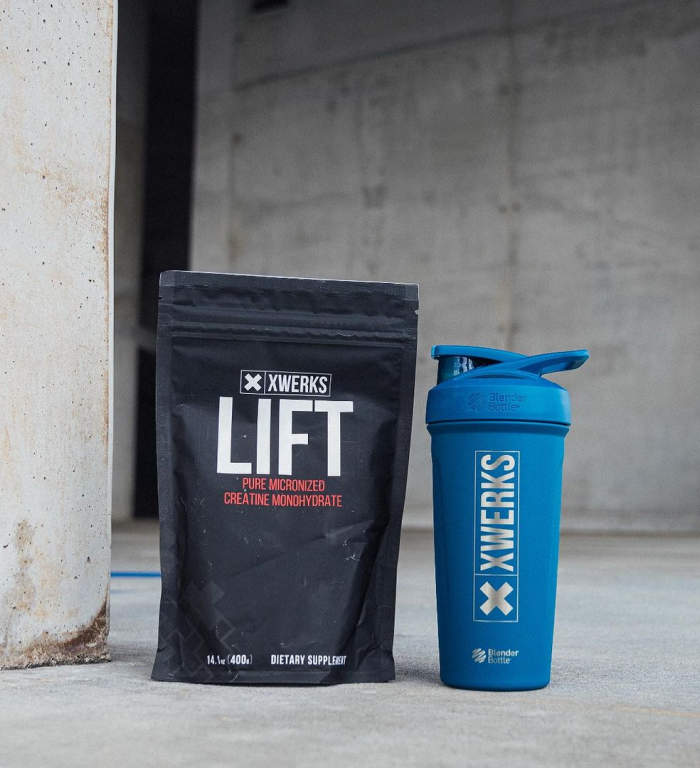
Most-researched form; cost-effectiveCreatine monohydrate is the most-researched form. Micronized monohydrate (200-mesh particle size) dissolves more completely than non-micronized for better tolerance. XWERKS Lift for powder; Build for gummies if powder is unappealing. See our best creatine for easy digestion guide for more on form selection.
Train through the saturation period
3-4 weeks to full effectSaturation builds over 3-4 weeks of consistent daily use. Don't expect immediate effects; benefits develop over the saturation period. Performance benefits typically noticeable around weeks 2-4 of consistent supplementation. Maintenance dose continues thereafter for ongoing benefits.
Don't cycle for endurance use
Continuous daily useThe "cycling" advice (8 weeks on, 2 weeks off) doesn't have strong research support and produces no benefit. Continuous daily use produces consistent saturation and ongoing benefit. Cycling produces unnecessary saturation/desaturation cycles that don't serve endurance goals.
Race-week considerations
Maintain dose; don't experimentMaintain your standard creatine dose during race week. Don't add or change anything in the final week before competition. The chronic saturation has already built; race-week experimentation only introduces variables.
Some triathletes worry about water weight during race week. The water weight from creatine is intracellular and stable at saturation — you've been at this baseline for weeks if you've been supplementing. It's not a race-week concern.
Race-day creatine considerations
Olympic and sprint triathlons
Standard daily creatine dose race-morning. The acute effects are minimal; chronic saturation is what matters. Don't load up extra creatine race-morning; just maintain the standard dose.
Half-Ironman
Maintain standard daily dose in the days leading up to and including race day. Some athletes split the morning dose with breakfast/pre-race meal; this is fine but not necessary. Chronic saturation provides the benefits, not acute timing.
Ironman
Standard maintenance dose throughout race week. The longer race demands more from all energy systems including creatine-supported anaerobic moments. The sustained focus and cognitive demand of 9-17 hour racing also benefits from chronic creatine status.
Multi-day events and training camps
Continue daily creatine throughout multi-day events. The recovery support between days compounds over multiple consecutive efforts. Skipping creatine during long events for "weight savings" misses one of its most valuable benefits — recovery between session days.
What to skip
• Loading phase protocols (20g daily for 5-7 days): Causes GI issues. Unnecessary. Daily 3-5g without loading produces full saturation in 3-4 weeks.
• Expensive premium creatine forms (HCl, buffered, ethyl ester): Marketing claims exceed research support. Monohydrate is the most-researched and most cost-effective form.
• Creatine in pre-workout products: Often provides 1-3g creatine in pre-workout costing $30-50 per month. Standalone creatine monohydrate at $10-15 per month provides more creatine more reliably.
• "Performance creatine matrix" proprietary blends: Multiple creatine forms at sub-clinical doses each. Marketing positioning rather than research support. Single-form monohydrate works better.
• Cycling protocols: No strong research support for cycling creatine. Continuous daily use produces consistent benefits.
• Skipping creatine during taper or race week: Maintains saturation; don't add or remove creatine in race week. Last-minute changes introduce variables without benefit.
• Race-morning creatine "loading": Doesn't produce acute effects beyond standard daily dose. Save the extra creatine for ongoing daily supplementation.
• Dismissing creatine because of water weight: Real but overstated effect. The 1-2 lbs intracellular water typically doesn't compromise endurance performance to the degree the recovery and late-race benefits provide.
Common questions about creatine for triathletes
"Will creatine actually help my triathlon performance?"
For most triathletes, yes — modest benefits across recovery, late-race anaerobic effort, muscle preservation, and cognitive function during long efforts. Effects aren't dramatic; they're modest but real. Combined with adequate protein, sleep, and training, creatine produces meaningful incremental support.
"What about the water weight?"
1-2 lbs intracellular water during initial 2-3 weeks of saturation. This is muscle hydration, not gut bloating. Most triathletes don't notice meaningful pace impact from this small water weight; the recovery and performance benefits typically outweigh the small theoretical cost.
"Should I use creatine year-round?"
Yes — continuous daily use produces consistent benefits. Cycling has no research support and produces unnecessary saturation/desaturation cycles. Daily 3-5g, every day, indefinitely.
"How long until I notice effects?"
Subjective effects typically develop over weeks 2-4 of saturation. The benefits are recovery and late-effort focused — you'll likely notice better recovery between sessions before noticing anything during sessions. Performance effects build through the saturation period.
"Can I take creatine with my pre-workout?"
Sure, but daily creatine doesn't need to be in pre-workout. The chronic saturation matters; acute timing doesn't. Take creatine with any meal that fits your routine. Most triathletes find taking it with breakfast easiest for daily consistency.
"Is creatine worth it for older triathletes?"
Particularly so. Aging triathletes face accelerated muscle loss without intervention. Creatine combined with adequate protein and resistance training significantly slows sarcopenia and supports continued athletic function. The benefit profile is even stronger for aging athletes than for younger triathletes.
"What about creatine for female triathletes?"
Research strongly supports creatine for women — particularly during perimenopause and menopause. Female triathletes who skip creatine due to outdated "for men" framing miss important benefits documented in research. See our creatine for women guide.
"Should I switch to gummies for triathlon?"
Powder and gummies both work; chemistry is the same. Choose based on convenience and tolerance preference. Travel-heavy triathletes often prefer gummies (no shaker bottle needed during training camps and races). At-home daily use, powder is more cost-effective. XWERKS Build for gummies; XWERKS Lift for powder.
The Bottom Line
Creatine produces modest but real benefits across all three triathlon disciplines — improved recovery between sessions, enhanced late-race anaerobic effort, muscle preservation, cognitive function during long efforts, bone density support. The "creatine is for lifters only" framing misses meaningful evidence for endurance applications.
The water weight concern is overstated. 1-2 lbs intracellular water during 2-3 weeks of saturation — not gut bloating, not body fat. Performance benefits typically substantially outweigh the small body composition effect.
Optimal protocol: 3-5g daily, no loading phase, take with food and adequate water. Use micronized monohydrate. Saturation reached in 3-4 weeks; benefits build over the saturation period.
Particularly valuable for: Olympic and shorter triathletes (more anaerobic component), aging triathletes (muscle preservation), female triathletes (research strongly supports), athletes with strength training in program, high-volume triathletes, brick workout-heavy athletes.
Skip: loading phase protocols (cause GI issues, unnecessary), expensive premium forms (monohydrate is well-researched), creatine in pre-workout (overpriced), proprietary creatine blends, cycling protocols (no research support).
Race-week: maintain standard daily dose. Don't add or experiment. The chronic saturation is what produces benefits; acute timing doesn't matter for race performance.
Dig deeper: protein for triathletes · carbs for triathletes · creatine for marathon runners · best creatine for easy digestion
Creatine for the Triathlete Recovery Stack
XWERKS Lift — micronized creatine monohydrate. 5g per serving, the most-researched form, transparent dosing. The supplement most triathletes skip but shouldn't — modest benefits across recovery, late-race effort, and muscle preservation that compound over the saturation period.
Or XWERKS Build for gummies — same creatine monohydrate, pre-portioned 1g per gummy, no powder concerns.
Shop Lift