Pre-Workout for Cycling: The Evidence-Based Guide
TL;DR
- Cycling is exceptionally caffeine-responsive — research shows 3-6mg/kg caffeine improves time trial performance and FTP efforts in trained cyclists.
- Ideal profile: moderate caffeine (150-300mg), citrulline malate (3-6g), beta-alanine (1.5-3g), L-tyrosine (1-2g). For sustained aerobic rides, stimulation without jitters is the goal.
- Power-to-weight matters: watch total caffeine stacking, skip creatine in pre-workout (daily creatine is fine), avoid high-calorie pre-workouts that add weight without performance benefit.
- For rides over 90 minutes, pair pre-workout with intra-ride carbs and electrolytes — pre-workout alone doesn't fuel sustained efforts.
Cycling is one of the most ergogenically-responsive endurance sports to caffeine. Research across time trials, FTP tests, and sustained efforts consistently shows 2-5% performance improvements at 3-6mg per kg body weight. The flat, repetitive nature of cycling — particularly on the road — means that mental fatigue and perceived effort often limit performance before physical capacity does, and caffeine directly addresses both. The evidence-backed profile for cycling: moderate caffeine (150-300mg depending on body weight), citrulline malate (3-6g for blood flow to working leg muscles), L-tyrosine (1-2g for focus on long efforts), and beta-alanine (1.5-3g for lactate buffering on threshold work). Take 45-60 minutes before riding. For rides over 90 minutes, pre-workout supports the start; intra-ride carbs and electrolytes fuel the sustained effort. Power-to-weight considerations matter — stick to low-calorie pre-workouts and avoid unnecessary stacking that adds mass without adding power.

Why cycling responds well to caffeine
The mental fatigue connection
Cycling efforts often end when perceived effort becomes intolerable, not when the legs physically fail. Caffeine reduces ratings of perceived exertion (RPE) at any given power output — meaning 250 watts feels like 230 watts. This directly extends time to exhaustion on FTP and threshold efforts.
Sustained aerobic + repeated anaerobic surges
Road cycling alternates sustained tempo with attacks, sprint finishes, and climbs. The sustained component responds to caffeine + citrulline. The surge component responds to beta-alanine's lactate buffering. A complete pre-workout covers both energy systems.
Fat oxidation support
Caffeine promotes free fatty acid mobilization, which may spare glycogen during moderate-intensity rides. The effect is modest but cumulative over long rides where glycogen management matters.
What to look for in a cycling pre-workout
Caffeine: 150-300mg (3-6mg/kg)
For a 70kg (155-lb) cyclist: 210-420mg total. For criteriums and sprint events, upper end. For long gran fondos and endurance rides, lower end with mid-ride top-up.
Citrulline malate: 3-6g
Supports blood flow and NO production — valuable during sustained leg work when perfusion matters. 3g lower-effective dose; 6-8g research-optimal.
Beta-alanine: 1.5-3g per serving
Lactate buffering during threshold and VO2 efforts. Hobson 2012 meta-analysis shows clear benefits for 1-4 minute efforts — mapping onto climbing surges and intervals. Requires 4-6 weeks consistent loading for full muscle carnosine saturation.
L-tyrosine: 1-2g
Supports focus and stress tolerance — valuable for long rides, race-day nerves, and heat/cold conditions.
What to avoid for cycling
• Mega-stim pre-workouts: Elevated resting heart rate on top of sustained riding cardiovascular load. Not useful.
• DMAA / DMHA / exotic stimulants: Banned by UCI and most cycling governing bodies. Cardiovascular risks with sustained high heart rates.
• Creatine in pre-workout: Creatine works through saturation, not acute effect. Cyclists concerned with power-to-weight sometimes skip creatine — but 1-2 lbs intracellular water is a reasonable trade for power benefits. Take it separately daily if you use it.
• Niacin-flush products: Skin flushing during a ride is unpleasant and distracting on technical descents.
• Heavy carbs pre-workout mixed with stim: Can cause GI distress; keep pre-workout separate from fueling.
Protocol by ride type
Short rides (30-60 min)
Optional. 100-150mg caffeine (a single cup of coffee) is plenty. Full pre-workout is overkill for commute or recovery rides.
Tempo / threshold / FTP rides (60-90 min)
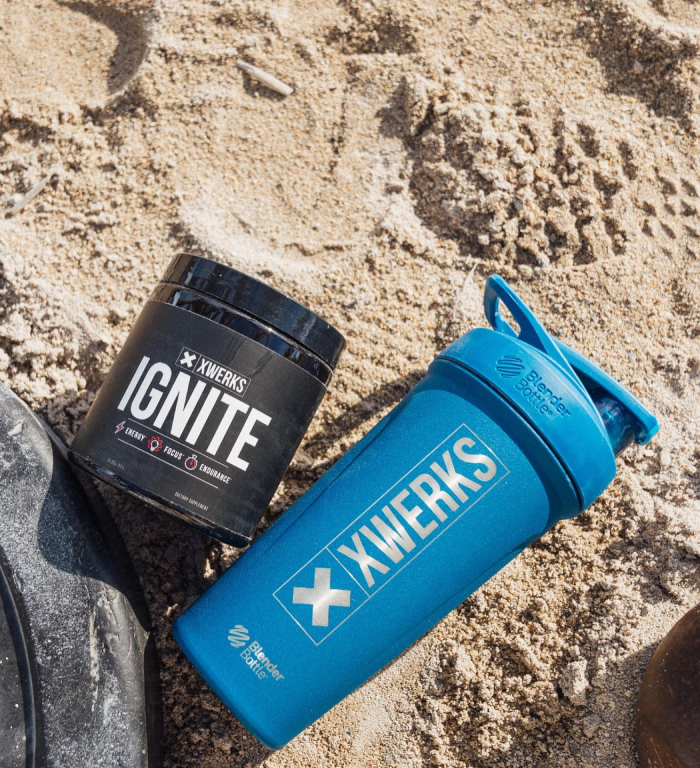
Pre-workout 45 min before. XWERKS Ignite's 150mg caffeine works well; add coffee earlier if you want higher total caffeine.
Long rides (2-5 hours)
Pre-workout 45-60 min before. Pair with intra-ride fueling: 30-60g carbs/hour from Cluster Dextrin (XWERKS Motion), 400-800mg sodium/hour. Consider a caffeinated gel at the 90-min mark for a second caffeine dose.
Race day (crits, road races, gran fondos)
Only use products tested extensively in training. Target 3-6mg/kg caffeine 45-60 min before start. For multi-hour races, plan for intra-race caffeine and carbohydrate separately.
The Bottom Line
Cycling is exceptionally caffeine-responsive — 2-5% performance improvements at 3-6mg/kg body weight for time trials, FTP, and sustained efforts.
Target profile: moderate caffeine (150-300mg), citrulline (3-6g), beta-alanine (1.5-3g), L-tyrosine (1-2g). Low-calorie formula matters for power-to-weight. Take 45-60 min pre-ride.
Pre-workout supports the start — intra-ride carbs and electrolytes fuel the sustained effort. Pair XWERKS Ignite with XWERKS Motion for rides over 90 minutes.
Further Reading
Pre-Workout for Mountain Biking
The Athletic Benefits of Caffeine
References
1. Guest NS, et al. ISSN position stand: caffeine and exercise performance. J Int Soc Sports Nutr. 2021;18(1):1.
2. Hobson RM, et al. Effects of β-alanine supplementation on exercise performance: meta-analysis. Amino Acids. 2012;43(1):25-37.
3. Perez-Guisado J, Jakeman PM. Citrulline malate enhances athletic anaerobic performance. J Strength Cond Res. 2010;24(5):1215-1222.