


How Long Does It Take for Caffeine to Wear Off?
TL;DR
- Caffeine has a half-life of approximately 5 hours in most healthy adults — meaning half the dose is still in your system 5 hours after consumption.
- Peak blood levels hit 30-60 minutes after consumption. Full elimination takes approximately 10 hours (2 half-lives for the dose to drop to 25%).
- A 200mg coffee at 2pm means ~100mg still in your system at 7pm and ~50mg at midnight — potentially interfering with sleep even if you don't feel "wired."
- Individual variation is huge. Genetics (CYP1A2), pregnancy, medications, and liver function can double or halve your personal caffeine half-life.
Caffeine has a half-life of approximately 5 hours in most healthy adults — meaning if you drink a 200mg coffee at 10am, about 100mg is still in your system at 3pm, 50mg at 8pm, and 25mg at 1am. Peak blood levels occur 30-60 minutes after consumption, and full elimination (to the point where caffeine no longer affects sleep architecture) typically takes 8-10 hours. Individual variation is significant — genetics, pregnancy, medications, and liver function can dramatically change how quickly you metabolize caffeine.
The basics: half-life and elimination
Caffeine is processed primarily by the liver through the cytochrome P450 enzyme CYP1A2, which metabolizes around 95% of the caffeine you consume. The average half-life — the time it takes for your body to eliminate half of a dose — is approximately 5 hours in healthy adults, though ranges of 3-7 hours are well within normal.
Half-life math matters for understanding real-world effects:
The caffeine timeline (for a 200mg dose at 8am)
8:00am: You drink coffee. 200mg enters your system.
8:15-9:00am: Caffeine begins absorbing through the GI tract. Blood levels rise.
9:00-9:30am: Peak blood caffeine concentration (~200mg). Maximum alertness, focus, and physical performance effects.
1:00pm (5 hours): One half-life elapsed. ~100mg still in your system.
6:00pm (10 hours): Two half-lives. ~50mg remaining.
11:00pm (15 hours): Three half-lives. ~25mg remaining — still pharmacologically active and still affecting sleep architecture in sensitive individuals.
4:00am (20 hours): Four half-lives. ~12mg remaining. Essentially negligible for most people.
What affects how fast you metabolize caffeine?
That 5-hour half-life is an average, but individual variation is enormous. Some people clear caffeine in 2-3 hours; others take 8-10. Factors that affect your personal caffeine metabolism:
Genetics (CYP1A2)
The biggest factor. Variants in the CYP1A2 gene determine whether you're a "fast metabolizer" (caffeine clears quickly, minimal sleep disruption, often tolerates larger doses) or a "slow metabolizer" (caffeine lingers, sleep is easily disrupted, sensitive to even small doses). Roughly 40-50% of people are fast metabolizers, 40-50% are intermediate, and 10% are slow metabolizers. You can get this tested through services like 23andMe or similar genetic panels.
Pregnancy
Pregnancy dramatically slows caffeine metabolism. In the third trimester, caffeine half-life can increase from 5 hours to 15 hours or more. This is why pregnancy guidelines recommend limiting caffeine to 200mg per day or less — it accumulates in the body for much longer than normal.
Oral contraceptives
Hormonal birth control can roughly double caffeine half-life (to ~10 hours) by inhibiting CYP1A2 activity. Women on oral contraceptives often notice they're more sensitive to caffeine than expected.
Smoking
Cigarette smoking induces CYP1A2, speeding up caffeine metabolism. Smokers often metabolize caffeine about 50% faster than non-smokers — which is why smokers often drink more coffee to get the same effect. Notably, when smokers quit, their caffeine sensitivity suddenly increases, which can contribute to withdrawal symptoms.
Medications
Several common medications inhibit CYP1A2 and slow caffeine metabolism: fluvoxamine (Luvox), ciprofloxacin (Cipro), verapamil, and others. If you've suddenly become "caffeine sensitive" without explanation, check whether you've started a new medication.
Liver health
Since the liver metabolizes caffeine, impaired liver function (cirrhosis, fatty liver disease) slows caffeine clearance. This is rarely clinically relevant for healthy adults but can matter in older individuals or those with liver disease.
Age
Older adults generally metabolize caffeine slightly slower than younger adults, though the effect is modest compared to genetics or medications.
How long do the stimulant effects actually last?
There's a difference between "caffeine still in your system" and "feeling the effects of caffeine." The noticeable stimulant effects — alertness, focus, euphoria — typically peak around 1-2 hours after consumption and begin declining after 3-4 hours for most people. By 5-6 hours, most of the noticeable "buzz" is gone, even though half the caffeine is still in your bloodstream.
This is because caffeine works by blocking adenosine receptors. Adenosine is a neurotransmitter that accumulates throughout your waking hours and causes drowsiness. Caffeine occupies the same receptor sites and prevents adenosine from binding — which is why you feel alert.
As caffeine blood levels drop below a certain threshold, adenosine begins binding again, and you start feeling tired. But the caffeine that's still in your system (even if not producing a subjective "buzz") continues to interfere with sleep architecture at night — particularly deep sleep (slow-wave sleep) and REM sleep.
Caffeine tolerance: Why it stops "working"
With regular daily use, your body adapts to caffeine by upregulating adenosine receptors — essentially growing more of them to compensate for the ones being blocked. This is why someone who drinks 3 cups of coffee every day eventually "doesn't feel" their morning coffee the way they did when they first started.
Tolerance doesn't mean caffeine is "not working" — your alertness, focus, and physical performance are still elevated compared to if you hadn't consumed caffeine. But the subjective experience of feeling wired and energized becomes muted. To restore the "wake-up" feeling, you either need to increase the dose (escalating, which has diminishing returns and sleep costs), or take a break from caffeine to let your receptors downregulate.
A full caffeine reset typically takes 7-14 days of abstinence. Most people don't need to reset fully — periodic low-caffeine days or switching to lower-caffeine options can maintain sensitivity without the pain of full withdrawal.
How much caffeine is in common sources?
Understanding dose helps you plan your caffeine timing. Rough guide:
Drip coffee (8oz): 95-165mg, varies by roast and brewing
Espresso shot (1oz): 60-80mg
Cold brew (8oz): 150-250mg (generally stronger than drip)
Starbucks Grande (16oz): ~310mg
Black tea (8oz): 40-70mg
Green tea (8oz): 20-45mg
Monster Energy (16oz): ~160mg
Red Bull (8.4oz): ~80mg
Pre-workout (varies): 150-400mg typical range
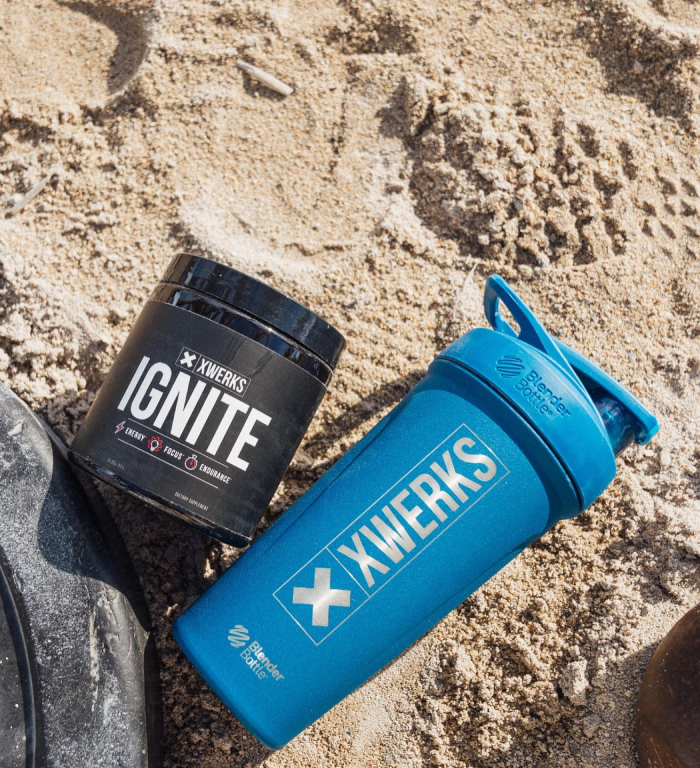
XWERKS Ignite pre-workout: 150mg per serving — a deliberate "sweet spot" dose for effective stimulation without the crash from high-stim products
Caffeine cutoff times for good sleep
Based on the 5-hour half-life and sleep research, here's a practical cutoff guide:
Target bedtime 10pm
Stop caffeine by noon-2pm. This gives 8-10 hours for caffeine to drop below the sleep-disruption threshold.
Target bedtime 11pm
Stop caffeine by 1-3pm.
If you're caffeine-sensitive or a slow metabolizer
Even stricter: no caffeine after 10-11am if you want optimal sleep. Slow metabolizers may need to limit themselves to morning-only caffeine.
Evening training with pre-workout
If you train at 6-7pm and use a caffeinated pre-workout, you're likely disrupting sleep. Options: switch to a lower-stim or stim-free pre-workout for evening sessions, use Ignite at half dose (75mg) in the evening, or time your training for earlier in the day.
How to feel caffeine wear off faster
Once caffeine is in your system, you can't really speed up metabolism meaningfully. But you can manage the effects:
Hydrate aggressively. Caffeine is a mild diuretic. Drinking water helps flush caffeine metabolites and supports the liver's detoxification processes.
Exercise moderately. Physical activity can help metabolize caffeine slightly faster and reduces some of the jitter. Don't overdo it — you'll just add more adrenaline on top.
Eat food. Food slows additional caffeine absorption and can help buffer the effects if you've just overdone it.
Wait. The most effective strategy. Half-life is half-life — you're not going to drop 200mg to 20mg in an hour regardless of what you do.
Avoid adding more stimulants. Don't pile on nicotine, energy drinks, or more coffee. You'll just extend the problem.
The Bottom Line
Caffeine half-life is ~5 hours in most healthy adults. Half the dose is still in your system after 5 hours. Full elimination takes approximately 10 hours.
Peak effects at 30-60 minutes. Noticeable stimulation declines after 3-4 hours, but caffeine remains active in your system for much longer — particularly affecting sleep architecture.
Individual variation is huge. Genetics (CYP1A2), pregnancy, medications, smoking, and liver function can double or halve your personal half-life. Know your own response.
For good sleep, cut caffeine 8-10 hours before bedtime. For most people, that means no caffeine after noon-2pm. Slow metabolizers may need even earlier cutoffs.
Clean 150mg Pre-Workout
XWERKS Ignite delivers 150mg of caffeine — enough for real performance enhancement without the 300mg+ overstimulation and crash of high-stim pre-workouts. Paired with citrulline, tyrosine, rhodiola, and BioPerine for sustained focus.
SHOP IGNITE →Further Reading
References
1. Institute of Medicine. Caffeine for the Sustainment of Mental Task Performance: Formulations for Military Operations. National Academies Press; 2001.
2. Drake C, et al. Caffeine effects on sleep taken 0, 3, or 6 hours before going to bed. J Clin Sleep Med. 2013;9(11):1195-1200.
3. Nehlig A. Interindividual differences in caffeine metabolism and factors driving caffeine consumption. Pharmacol Rev. 2018;70(2):384-411.
4. Cornelis MC, et al. Genetic polymorphism of the adenosine A2A receptor is associated with habitual caffeine consumption. Am J Clin Nutr. 2007;86(1):240-244.
5. Institute of Medicine. Caffeine in Food and Dietary Supplements: Examining Safety. National Academies Press; 2014.