Best Meal Replacement Shakes: What Actually Works
TL;DR
- A good meal replacement shake should deliver 25-40g protein, 30-50g carbs, 10-20g healthy fats, and key micronutrients — roughly 400-600 calories per serving.
- Commercial meal replacements (Huel, Soylent, Ka'Chava) are convenient but expensive (~$4-6 per serving) and often over-processed.
- A DIY meal replacement built around quality whey protein is usually cheaper, better-tasting, and nutritionally superior — you control every ingredient.
- Meal replacements work best as occasional substitutes (busy mornings, travel, post-workout windows) — not as primary nutrition. Whole food should still anchor your diet.
A meal replacement shake is designed to deliver the macronutrients, calories, and micronutrients of a balanced meal in liquid form — usually around 400-600 calories with 25-40g protein, 30-50g carbs, 10-20g healthy fats, plus vitamins and minerals. The best meal replacement isn't necessarily a commercial brand like Huel or Ka'Chava — it's often a DIY shake built around a quality whey protein isolate, real food ingredients, and a blender. This approach costs less, tastes better, and gives you full control over every ingredient that goes in.
What makes a meal replacement shake actually "complete"?
The term "meal replacement" gets thrown around loosely. A protein shake with just whey and water isn't a meal replacement — it's a protein supplement. To actually replace a meal, a shake needs to hit the nutritional targets your body would get from a balanced whole-food meal:
Protein (25-40g)
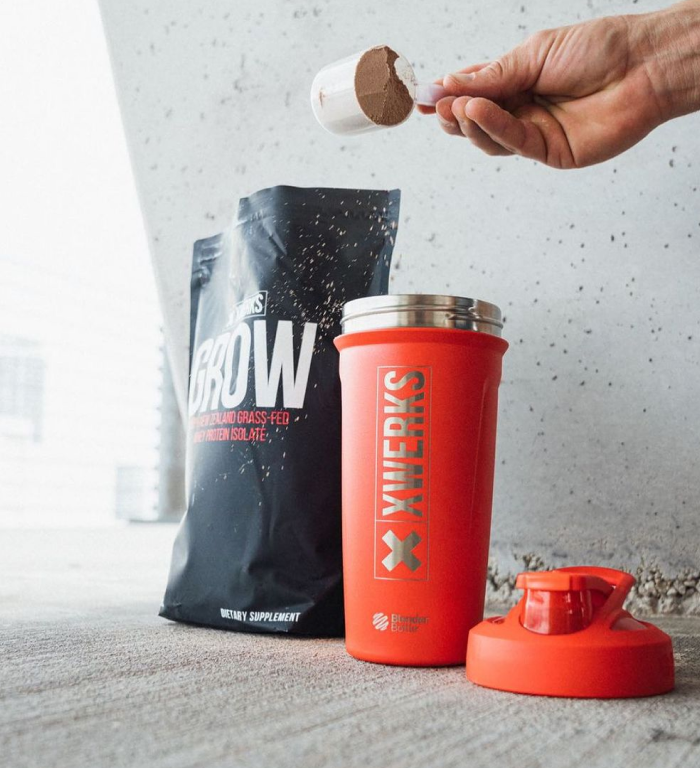
Enough to maximally stimulate muscle protein synthesis — roughly 2.5-3g of leucine per serving. A quality whey protein isolate like XWERKS Grow delivers 25g of protein with the full leucine threshold crossed in a single scoop.
Carbohydrates (30-50g)
For energy, recovery, and satiety. The source matters: oats, banana, berries, and other whole-food carbs beat refined maltodextrin or added sugar. If you're replacing a post-workout meal, faster carbs are fine. If you're replacing breakfast or lunch, slower-digesting carbs (oats) give better sustained energy.
Healthy fats (10-20g)
Fats slow digestion (improving satiety), support hormone production, and help absorb fat-soluble vitamins. Nut butters (almond, peanut), chia seeds, flax, avocado, or MCT oil are all solid choices. Skip fat-free shakes — they leave you hungry within an hour.
Fiber (5-10g)
Most liquid meals move through you too fast without fiber. Adding oats, chia, flax, or berries provides the fiber that whole-food meals naturally contain. This improves satiety and supports gut health.
Micronutrients
Whole-food ingredients (fruit, greens, nut butters, dairy) provide most micronutrients naturally. Commercial meal replacements often add synthetic vitamins to hit RDI targets, but a shake built with real food generally needs less supplementation.
Commercial meal replacements: Are they worth it?
Several commercial brands dominate the meal replacement category. Here's an honest look at the category:
Huel, Soylent, Ka'Chava, Garden of Life, Orgain
Pros: Convenient, pre-measured, portable, shelf-stable, nutritionally balanced. Good for travel, office desks, and people who genuinely can't or won't prep a DIY shake.
Cons: Expensive ($4-6+ per serving), often taste mediocre, many contain synthetic vitamins and processed ingredients, and the protein quality varies widely. Some use plant-based proteins (pea, rice) that have lower leucine content and require larger servings to match whey's muscle-building stimulus.
When they make sense: Travel days, back-to-back meetings, people who hate prepping food. Not a daily solution for most serious trainees.
The DIY meal replacement: What actually works
For most people — especially anyone training hard — a homemade meal replacement is superior in every meaningful way. It's cheaper, tastes better, and you control every ingredient.
Here's a template that hits all the targets:
The XWERKS Meal Replacement (≈550 calories, 40g protein)
• 1 scoop XWERKS Grow (25g protein, ~110 cal)
• 1 cup milk or unsweetened almond milk (~90-150 cal, 8g protein if dairy)
• 1 banana or 1 cup frozen berries (~100 cal, carbs + micronutrients)
• 1/2 cup rolled oats (~150 cal, 27g slow carbs, 5g fiber)
• 1 tbsp almond butter or peanut butter (~95 cal, 8g fat, healthy fats + satiety)
• Optional: handful of spinach (micronutrients, zero taste impact), ice, cinnamon
Result: ~550 calories, 40g protein, 60-70g carbs, 14g fat, 8g fiber. Hits all the nutritional targets of a balanced meal for under $3 per serving.
Meal replacement shakes for different goals
For weight loss: Aim for 300-400 calories. Use Grow + unsweetened almond milk + berries + chia seeds. Skip the oats and nut butter if you need to cut calories further. The high protein content (25g+) keeps you full and supports muscle retention during the deficit.
For weight gain: Aim for 600-800+ calories. Double the oats, add a full tablespoon of nut butter, include a whole avocado or tablespoon of MCT oil, and use whole milk. This makes it easier to hit aggressive caloric targets for bulking.
For post-workout: Use faster carbs (banana, honey, rice milk), slightly less fat (fats slow digestion, which isn't ideal right after training), and 25-30g of whey protein. XWERKS Motion (cluster dextrin + BCAAs + electrolytes) can be added for maximum absorption speed.
For breakfast replacement: Include slow carbs (oats), protein (whey + milk), fats (nut butter), and fiber (chia, berries). This creates sustained energy for 3-4 hours — the kind of meal that holds you through a busy morning.
Meal replacement vs. protein shake: What's the difference?
A protein shake is just whey protein + liquid. ~120-150 calories, 25g protein, minimal carbs/fats. Designed to supplement a diet, not replace a meal. You'll be hungry again in an hour.
A meal replacement shake is a complete balanced meal in liquid form. 400-600 calories, 25-40g protein, 30-50g carbs, 10-20g fats, plus fiber and micronutrients. Designed to actually substitute for a meal. Satisfies hunger for 3-4 hours.
Both have a place — just don't confuse them. If you're using a pure protein shake to "replace" breakfast, you're going to feel hungry, fatigued, and probably overeat at lunch.
When to use meal replacements
Travel days. Airports, hotels, and unfamiliar cities often offer poor food options. A shaker bottle with pre-portioned ingredients is a reliable fallback.
Busy mornings. If you'd otherwise skip breakfast or grab something terrible, a 60-second blended meal replacement is a massive upgrade.
Post-workout window. When you need quick, digestible nutrition right after training, a liquid meal absorbs faster than solid food.
Weight loss phases. A controlled-calorie shake removes the guesswork of meal prep and makes adherence easier.
Weight gain phases. Liquid calories are easier to consume than solid food, making it easier to hit aggressive caloric surpluses.
What to look for in a meal replacement protein
The protein powder you choose is the foundation of any good DIY meal replacement. Look for:
Whey protein isolate over concentrate. Isolate has more protein per gram, less lactose, and faster digestion. XWERKS Grow uses 100% whey isolate from grass-fed New Zealand cows.
25g+ protein per serving. This hits the leucine threshold for muscle protein synthesis. Lower doses won't maximally stimulate muscle building.
Clean ingredient list. Avoid artificial colors, flavors, or excessive sweeteners. A good whey powder should have fewer than 10 ingredients.
Good mixability and taste. You're going to drink this every day — if you hate the flavor or texture, you'll quit. Grow blends smoothly and tastes clean without the chalky aftertaste of cheaper powders.
The Bottom Line
A real meal replacement hits all the targets of a balanced meal: 25-40g protein, 30-50g carbs, 10-20g healthy fats, fiber, and micronutrients — typically 400-600 calories per serving.
Commercial brands (Huel, Ka'Chava, etc.) are convenient but expensive and often over-processed. Great for travel, unnecessary for daily use.
The DIY approach wins. Whey protein + milk + fruit + oats + nut butter = a better, cheaper, tastier meal replacement. Costs under $3, tastes great, and gives you full ingredient control.
Use strategically, not exclusively. Meal replacements are a tool for busy mornings, travel, and post-workout windows — not a replacement for whole-food nutrition. Anchor your diet with real food.
The Foundation of Every Great Meal Replacement
XWERKS Grow — 25g NZ grass-fed whey protein isolate per scoop. Mixes instantly, tastes clean, crosses the leucine threshold every time.
SHOP GROW →Further Reading
How Much Protein Can Your Body Absorb
Protein Powder for Weight Gain
References
1. Jäger R, et al. International Society of Sports Nutrition position stand: protein and exercise. J Int Soc Sports Nutr. 2017;14:20.
2. Morton RW, et al. A systematic review, meta-analysis and meta-regression of the effect of protein supplementation on resistance training-induced gains in muscle mass and strength. Br J Sports Med. 2018;52(6):376-384.
3. Paddon-Jones D, et al. Protein, weight management, and satiety. Am J Clin Nutr. 2008;87(5):1558S-1561S.
4. Leidy HJ, et al. The role of protein in weight loss and maintenance. Am J Clin Nutr. 2015;101(6):1320S-1329S.