Is Protein Powder Good for You? An Honest Look
TL;DR
- Yes — protein powder is safe and beneficial for nearly everyone when used appropriately. It's one of the most studied and well-tolerated supplements in nutrition science.
- Quality matters enormously. A clean whey isolate (like XWERKS Grow) is nutritionally comparable to chicken breast or eggs — just more convenient.
- Common concerns (kidney damage, liver damage, hormonal effects) are not supported by evidence in healthy adults. Protein powder doesn't carry meaningful health risks at normal doses.
- The real concerns are product quality (heavy metals, artificial additives, fillers) and overreliance (using powder to replace whole food entirely). Both are addressable with smart choices.
Protein powder is one of the most unfairly maligned supplements in nutrition culture. The reality: protein powder is simply concentrated protein extracted from whole food sources (milk for whey, soybeans for soy, peas for pea protein). It's been studied extensively, has an excellent safety profile, and is nutritionally similar to the whole foods it comes from. The concerns you've heard — kidney damage, liver damage, hormonal disruption — are either unsupported by evidence in healthy adults or apply only to specific medical conditions. Quality matters (clean whey isolate beats cheap concentrate), and it shouldn't replace whole food entirely, but for healthy adults, protein powder is a safe and effective tool.
What protein powder actually is
Protein powder isn't a lab-created synthetic substance. It's concentrated protein extracted from whole foods through filtration, drying, and packaging. The most common types:
Whey protein — The liquid that separates from milk curds during cheese-making. Rich in essential amino acids, particularly leucine. The gold standard for muscle building. Comes in three forms: concentrate (~70-80% protein), isolate (90%+ protein), and hydrolysate (pre-digested).
Casein protein — The other major milk protein. Digests slowly (over 6-8 hours), making it popular as a pre-bed protein.
Plant proteins — Pea, rice, hemp, soy. Useful for vegetarians and vegans, but generally have lower leucine content per gram and need to be consumed in larger amounts or as blends to match whey's muscle-building stimulus. Deep dive on whey vs. pea protein here.
Egg white protein — Dehydrated egg whites. Dairy-free option with a complete amino acid profile.
In every case, you're consuming the same basic protein and amino acids you'd get from whole food — just more concentrated and convenient.
The real benefits of protein powder
When used correctly, protein powder offers several well-documented benefits:
Makes hitting daily protein targets easier
Most active adults need 1.6-2.2g of protein per kg body weight daily for optimal muscle growth and recovery. For a 180 lb athlete, that's 130-180g per day. Getting that from whole food alone is logistically difficult — it requires preparing 5-6 high-protein meals per day. A single scoop of whey provides 25g of protein in 30 seconds. Protein powder is a gap-closing tool, and that's its primary value.
Supports muscle growth and recovery
The Morton et al. 2018 meta-analysis in the British Journal of Sports Medicine pooled data from dozens of studies and confirmed that protein supplementation meaningfully increases muscle mass and strength gains from resistance training compared to placebo. The effect is strongest when total daily protein is below optimal and supplementation helps close the gap.
Helps with weight loss (satiety and thermic effect)
Protein has the highest thermic effect of any macronutrient — 20-30% of protein calories are burned during digestion, compared to 5-10% for carbs and 0-3% for fats. High-protein meals also produce greater satiety, meaning you feel fuller longer and tend to eat less overall. Multiple studies have shown that people in caloric deficit who maintain high protein intake preserve more muscle and lose more fat compared to those on lower protein.
Convenient, portable, shelf-stable
A bag of protein powder provides ~30 servings of high-quality protein in a portable form that doesn't require refrigeration, cooking, or preparation. Compare this to the logistics of having 30 chicken breasts available throughout your week.
Supports healthy aging
Older adults often struggle to consume adequate protein due to reduced appetite and "anabolic resistance" (requiring more protein per meal to stimulate muscle protein synthesis). Protein powder is an effective tool for preventing sarcopenia (age-related muscle loss) and maintaining strength and function into later life.
Addressing the concerns
Several concerns about protein powder come up repeatedly. Here's what the actual evidence says:
"Protein powder damages your kidneys"
This is perhaps the most persistent myth. The origin: people with pre-existing chronic kidney disease need to limit protein to slow disease progression. From this medical recommendation, the myth emerged that protein damages healthy kidneys.
The evidence in healthy adults doesn't support this. Multiple systematic reviews, including work by Devries et al. 2018 in the Journal of Nutrition, have found no evidence that high-protein diets harm kidney function in people with healthy kidneys. Protein intake up to 2.2g/kg/day or higher has been studied extensively and consistently found safe.
Exception: If you have diagnosed kidney disease, diabetic nephropathy, or other conditions where protein restriction is clinically indicated, work with a physician. For everyone else, high protein is safe.
"Protein powder damages your liver"
Similar story. There's no evidence that normal protein intake — from whole food or supplements — damages healthy liver function. The liver processes protein as part of normal metabolism, and it's adapted to handle substantial protein loads. Like kidneys, the liver only struggles with high protein when there's pre-existing disease (cirrhosis, severe hepatitis).
"Whey protein causes hormonal problems"
This concern typically stems from confusion about soy protein (which contains phytoestrogens) being extrapolated to all protein powders. Whey protein has no meaningful hormonal effect beyond what any high-quality dietary protein would have — in fact, dairy protein generally supports testosterone through its amino acid profile and bioactive peptides. Whey protein is not "feminizing" and doesn't disrupt testosterone, thyroid, or other hormonal systems in healthy adults.
"Protein powder is processed and unnatural"
This concern has some validity depending on the product. Cheap mass-market powders often contain artificial colors, flavors, excessive sweeteners, fillers, and in some cases, detectable heavy metals (from growing conditions of the dairy cows). These are quality concerns, not inherent to all protein powder.
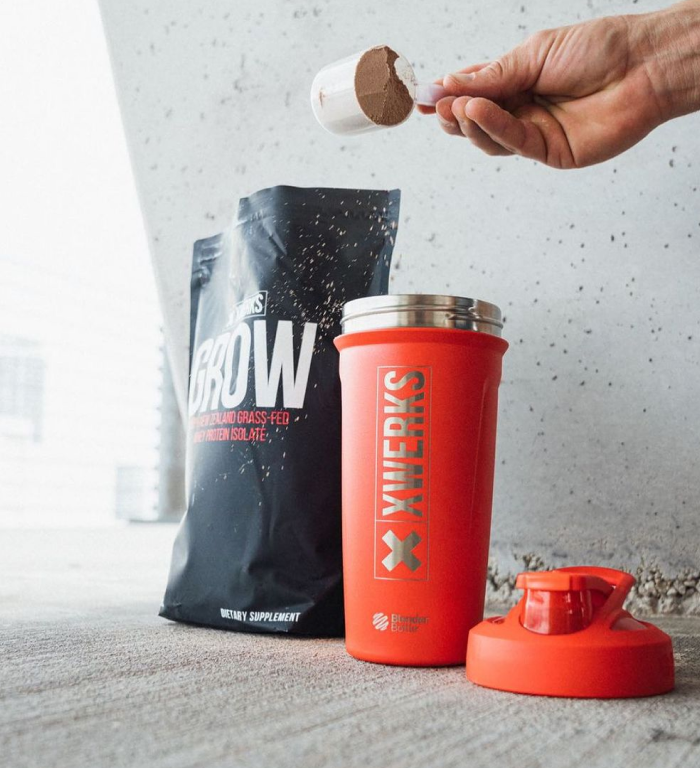
Quality powders like XWERKS Grow address these: grass-fed New Zealand cows (cleaner raw material), cold-processed microfiltration (preserves protein fractions), no artificial colors or flavors, naturally sweetened with stevia, and third-party tested for purity. The processing involved is filtration and drying — not chemical synthesis.
"Protein powder causes acne"
There's some truth here, but it's nuanced. Dairy can trigger acne in some people through IGF-1 elevation, and whey protein (being dairy-derived) occasionally contributes. However, the effect is individual — many people consume whey without any skin issues. If you're acne-prone and suspect whey is contributing, try whey isolate (which has less lactose and dairy fat than concentrate), or switch to an egg white or plant protein for 4-6 weeks to test.
"Heavy metals in protein powder"
This is a real concern for low-quality products. Reports (notably from Consumer Reports in 2010 and 2018 Clean Label Project studies) found detectable levels of lead, cadmium, arsenic, and mercury in many mass-market protein powders — particularly plant-based powders grown in contaminated soils.
Quality matters enormously here. Buy from brands that do third-party testing for purity and heavy metals. Whey from grass-fed New Zealand dairy is among the cleanest starting materials available, since NZ has strict environmental and agricultural standards. XWERKS Grow uses this sourcing specifically to minimize contaminant exposure.
How to choose a quality protein powder
Whey isolate over concentrate — higher protein per gram, less lactose, fewer additives. Better for most people.
Grass-fed sourcing — New Zealand and Irish dairy have the strictest quality standards. Grass-fed cows produce milk with a better fatty acid profile and lower contaminant risk.
Minimal ingredient list — A quality whey protein should have fewer than 10 ingredients. Avoid products with long lists of fillers, artificial colors, or proprietary "muscle-building complexes."
Naturally sweetened — Stevia, monk fruit, or small amounts of natural sweeteners beat sucralose, aspartame, or artificial colors. XWERKS Grow uses stevia.
Third-party tested — Look for products tested for purity, heavy metals, and label accuracy by independent labs (NSF, Informed Sport, Labdoor, etc.).
25g+ protein per serving — Enough to cross the leucine threshold and maximally stimulate muscle protein synthesis.
Who should (and shouldn't) use protein powder?
Should use it: Anyone with elevated protein needs (athletes, strength trainees, older adults at risk of sarcopenia), anyone struggling to hit daily protein targets from whole food alone, anyone needing convenient post-workout nutrition, people in weight loss phases who want to preserve muscle.
Should be cautious: People with diagnosed kidney disease, severe liver disease, milk allergy (choose non-dairy alternatives), or severe lactose intolerance (choose isolate or non-dairy alternatives).
Should avoid: Essentially no one without a specific medical reason. Protein powder is one of the safest and most well-tolerated supplements available.
The Bottom Line
Protein powder is safe and effective for healthy adults when used appropriately. It's one of the most extensively studied supplements with an excellent safety profile.
The common concerns (kidney damage, liver damage, hormonal effects) are not supported by evidence in healthy people. They apply only to specific pre-existing medical conditions.
Quality matters. Choose clean whey isolate from grass-fed sources, minimal ingredients, naturally sweetened, and third-party tested. XWERKS Grow meets all these criteria.
Use it as a tool, not a replacement. Protein powder is best used to close the gap between whole-food protein intake and your daily target. Whole food should still anchor your diet.
Clean, Honest Whey Protein
XWERKS Grow — 100% New Zealand grass-fed whey isolate. No artificial flavors or colors, naturally sweetened with stevia, and 25g of protein per scoop. The clean, effective foundation of any good protein supplementation strategy.
SHOP GROW →Further Reading
How Much Protein Can Your Body Absorb
References
1. Jäger R, et al. International Society of Sports Nutrition position stand: protein and exercise. J Int Soc Sports Nutr. 2017;14:20.
2. Morton RW, et al. A systematic review, meta-analysis and meta-regression of the effect of protein supplementation on resistance training-induced gains in muscle mass and strength. Br J Sports Med. 2018;52(6):376-384.
3. Devries MC, et al. Changes in kidney function do not differ between healthy adults consuming higher- compared with lower- or normal-protein diets: a systematic review and meta-analysis. J Nutr. 2018;148(11):1760-1775.
4. Antonio J, et al. A high protein diet has no harmful effects: a one-year crossover study in resistance-trained males. J Nutr Metab. 2016;2016:9104792.