

TL;DR
- The 10,000-step target wasn't derived from research — it originated from a 1965 Japanese pedometer marketing campaign for a device called Manpo-kei ("10,000 steps meter"). The number stuck because it sounded clean, not because it was scientifically optimal.
- Modern research suggests most mortality and health benefits accrue between 4,000-8,000 steps daily, with diminishing returns after roughly 7,500-10,000 for adults under 60. Lee et al.'s research in older women found benefits leveling off around 7,500 steps daily.
- For older adults specifically: even 4,400 daily steps showed significantly lower mortality vs. 2,700 — the dose-response is steepest at the low end of the curve. Going from 3,000 to 6,000 produces vastly more benefit than going from 9,000 to 12,000.
- The real takeaway isn't a magic number — it's moving meaningfully more than you currently do. Sedentary adults walking 5,000-7,000 daily steps capture most of the mortality benefit; 10,000+ is fine but not required.
- Steps alone don't replace resistance training, adequate protein, and proper sleep — they're an aerobic and NEAT (non-exercise activity thermogenesis) layer that supports body composition and cardiovascular health, not a complete training stimulus.
"10,000 steps a day" is one of the most repeated health targets in modern fitness culture — quoted by physicians, programmed into every smartwatch on the market, and treated as a meaningful threshold separating active people from sedentary ones. The honest picture: the number wasn't derived from research, the dose-response curve doesn't actually peak at 10,000, and the original target reflects a 1965 Japanese marketing campaign more than any scientific finding. None of which means walking isn't valuable. Walking is one of the best-tolerated, most-sustainable forms of movement humans can do — and increasing daily step counts produces real, well-documented mortality and cardiovascular benefits. But the specific 10,000 target obscures more than it clarifies. The benefits start much earlier (around 3,000-4,000 steps), accumulate steeply through the middle range, and largely plateau by 7,500-8,000 steps for most adults under 60. For older adults, the plateau arrives even earlier. The dose-response evidence supports "move meaningfully more than you currently do" much better than it supports "hit exactly 10,000 every day or you're not active." This guide covers where the 10,000-step number came from, what the actual research shows, how step targets vary by age and goal, where steps fit alongside other training, and how to set realistic targets you'll actually maintain.
Where the 10,000-step target actually came from
The 10,000-step target traces back to a Japanese company called Yamasa Tokei Keiki, which in 1965 began marketing a pedometer called the Manpo-kei — literally "10,000 steps meter" in Japanese. The number was chosen partly because the Japanese character for 10,000 (万) visually resembles a person walking, partly because the figure sounded memorable, and partly because Yamasa's research at the time suggested it correlated with reasonable daily activity for the target market.
The campaign was enormously successful. The Manpo-kei sold widely, the 10,000-step concept spread through Japan, and over the following decades it crossed into Western fitness culture as a generic activity target. By the time fitness trackers became consumer products in the 2010s, the 10,000-step default was so entrenched that Fitbit, Apple Watch, Garmin, and others adopted it as the standard daily goal — reinforcing the number across hundreds of millions of devices.
What never happened: a rigorous scientific derivation of 10,000 as the optimal daily target. The marketing came first; the science came later, and only partially supports the original number. I-Min Lee's 2019 JAMA Internal Medicine research on step counts in older women was one of the first major studies to specifically test whether 10,000 was special — and it found that benefits leveled off well before that number for the population studied.
This doesn't mean 10,000 steps is wrong or harmful as a target. It means the specific number is largely arbitrary, and the obsession with hitting exactly 10,000 (rather than "more than you currently do") reflects marketing legacy more than research.
What the research actually shows
Multiple large studies have tested the relationship between daily step counts and mortality, cardiovascular events, and other health outcomes. The consistent finding: benefits accumulate steeply in the low-to-middle step range and plateau (or nearly plateau) at higher counts.
Older women (Lee et al., 2019): Followed 16,741 women, average age 72. Compared to those averaging 2,700 daily steps:
• Women at 4,400 steps had ~41% lower all-cause mortality risk
• Benefits continued to accrue up to about 7,500 daily steps
• Above 7,500, additional steps showed no meaningful additional mortality benefit
• Step intensity (cadence) added separate benefit beyond raw count
Adults across age groups (Paluch et al., 2022, Lancet Public Health): Meta-analysis of 15 studies covering 47,471 adults. Found:
• Lower mortality risk with increasing daily steps up to ~6,000-8,000 in adults 60+
• Lower mortality risk up to ~8,000-10,000 in adults under 60
• Above these thresholds, additional steps showed minimal additional mortality benefit
• The most dramatic benefit was in moving from very low (under 2,000-3,000) to moderate (5,000-7,000) levels
Cardiovascular events (Banach et al., 2023, European Journal of Preventive Cardiology): Meta-analysis covering over 226,000 participants. Found:
• Each additional 1,000 daily steps associated with 15% lower all-cause mortality
• Each additional 500 daily steps associated with 7% lower cardiovascular mortality
• Benefits continued up to higher counts but with diminishing returns
• Even 4,000 daily steps produced meaningful benefit compared to inactive baseline
The honest summary of the research:
• Going from 2,000 to 5,000 produces enormous mortality benefit
• Going from 5,000 to 8,000 produces additional meaningful benefit
• Going from 8,000 to 12,000 produces small additional benefit
• Above 12,000 the curve mostly flattens
The biggest health wins are at the low end of the curve, not at the top. The "10,000 or bust" framing has it backwards — the difference between 3,000 and 7,000 matters far more than the difference between 8,000 and 12,000.
Step targets by age and goal
Adults under 60 — general health
7,000-10,000 daily steps captures most benefitsFor most adults under 60 with general health goals, 7,000-10,000 daily steps captures the bulk of documented mortality and cardiovascular benefits. Above 10,000 the dose-response curve mostly flattens — hitting 12,000 or 15,000 daily is fine but doesn't produce proportional additional health benefit beyond 10,000 unless body composition or fitness is a specific goal.
Adults 60+ — general health
6,000-8,000 daily steps captures most benefitsOlder adults reach the plateau at lower step counts. Lee's research suggested benefits level off around 7,500 in women over 70. For most adults 60+, 6,000-8,000 daily captures most of the available health benefit. Pushing for 10,000+ daily is fine for capable older adults but isn't necessary for the documented mortality reduction.
Currently sedentary adults (any age)
Build from current baseline, not to 10,000The single most important insight from the research: going from very low to moderate produces the most benefit. A sedentary adult averaging 2,500 daily steps will get vastly more mortality reduction from reaching 5,500 than from then pushing to 10,000. Build progressively from your current baseline. Adding 1,000-2,000 daily steps over 4-6 weeks is sustainable; jumping from 2,500 to 10,000 overnight usually isn't.
Adults with body composition goals
10,000+ daily steps supports caloric deficitStep count matters more when fat loss is a specific goal. NEAT (non-exercise activity thermogenesis) from daily steps can contribute 200-400+ daily calories to total expenditure, which compounds over a cutting phase. Adults pursuing meaningful body composition change benefit from higher step counts (10,000-15,000) as a caloric expenditure layer alongside training and nutrition. See how many carbs to lose belly fat for the nutrition side.
Endurance athletes
Steps from training count; daily total varies widelyMarathoners, ultramarathoners, and other endurance athletes typically accumulate substantial daily steps through training itself. A 60-minute easy run is roughly 8,000-10,000 steps depending on pace and stride. For endurance athletes, the question isn't "hit 10,000" but rather "how does total daily activity affect recovery on training days vs. rest days." Excessive non-training steps during heavy training blocks can compromise recovery. See carbs for marathon runners.
Resistance training-focused lifters
8,000-12,000 daily steps for hybrid benefitLifters who don't do separate cardio benefit from steps as their primary aerobic and NEAT layer. 8,000-12,000 daily supports cardiovascular health, body composition, and recovery without competing with strength adaptation. The "interference effect" between cardio and strength is minimal at walking intensity — walking doesn't compromise lifting gains the way hard interval training can. See naturally raise testosterone for the broader framework.
Step intensity matters separately
Cadence adds independent benefitBeyond raw step count, walking cadence (steps per minute) matters. Brisk walking (100+ steps per minute) produces additional cardiovascular benefit beyond what slower walking provides. Research suggests cadence contributes independently of total step count — meaning 8,000 steps with some brisk-walking time may produce more benefit than 10,000 steps at slow shuffle pace. Mix some moderate-pace walking into your daily total for compound benefit.
What steps don't replace
Step targets are useful but limited. They don't replace several important training components:
• Resistance training: Walking doesn't build or maintain muscle mass meaningfully. Sarcopenia (age-related muscle loss) requires actual loading. For adults 40+, resistance training 2-3x weekly matters more for long-term function than step count.
• Higher-intensity cardiovascular work: Walking is excellent moderate-intensity exercise but doesn't substitute for the VO2 max-building benefits of harder cardiovascular training. Some weekly higher-intensity work (zone 4-5 efforts) adds different cardiovascular benefits beyond walking.
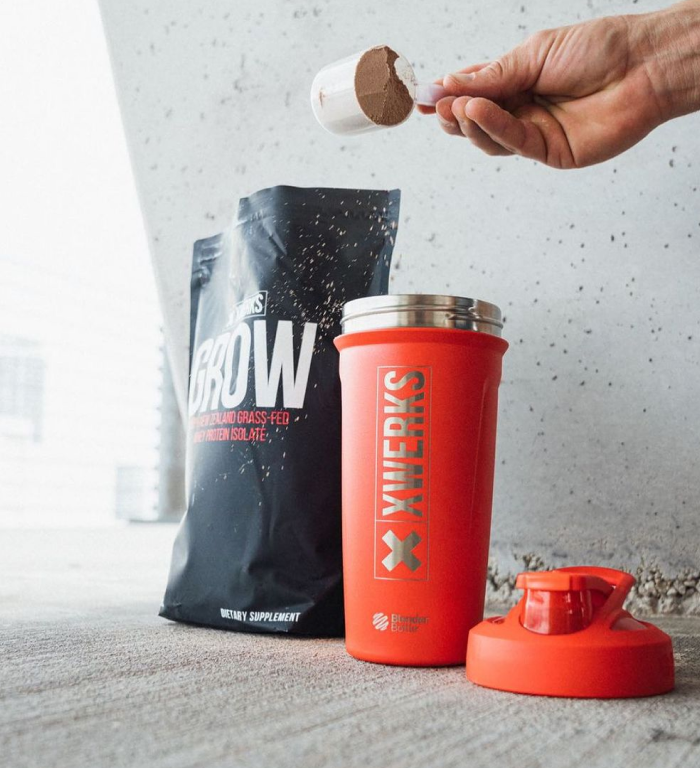
• Protein intake: Steps don't build muscle protein synthesis. Adequate daily protein (0.7-1g per pound bodyweight for active adults) supports body composition independent of step count. XWERKS Grow provides 25g grass-fed whey isolate to make daily protein targets practical.
• Sleep: No amount of walking compensates for chronic sleep deprivation. Sleep quality affects body composition, recovery, hormone health, and cognitive function more than most adults realize. See hack your sleep.
• Nutrition fundamentals: Walking 12,000 steps doesn't override caloric balance for fat loss or protein adequacy for muscle preservation. Steps are an expenditure layer, not a substitute for nutritional discipline.
• Mobility and flexibility: Walking maintains some mobility but doesn't address tight hips, immobile shoulders, or postural patterns that develop from desk work. Specific mobility work matters alongside steps.
The honest framework: steps are a foundation, not a complete training program. They reliably support cardiovascular health, body composition, and longevity — but they don't replace structured training, adequate recovery, or proper nutrition.
Practical ways to actually hit step targets
Walking meetings and calls
Substitution rather than additionPhone calls, podcast listening, and audio-only meetings can happen while walking. 30 minutes of walking calls daily adds roughly 3,000-4,000 steps without requiring dedicated workout time. Substituting walking for sitting during activities you'd do anyway is the most sustainable step strategy.
Treadmill desk or under-desk walker
High step output during workWalking desks let knowledge workers accumulate 5,000-10,000+ daily steps without dedicated walking time. Slow pace (1.5-2.5 mph) doesn't significantly impact typing or focus for most tasks. Initial setup cost is meaningful but the long-term step accumulation is unmatched for desk-bound work. Best for adults whose work involves significant typing and computer time.
Post-meal walks
10-15 minutes after meals = 1,000-1,500 stepsA 10-15 minute walk after meals adds roughly 1,000-1,500 steps three times daily (3,000-4,500 total) and produces glucose-related benefits beyond steps alone. Particularly valuable post-dinner when sedentary evening hours typically follow eating. See continuous glucose monitor for athletes.
Park further, take stairs
Small substitutions compoundParking at the back of the lot, taking stairs instead of elevators, walking to nearby destinations rather than driving — each small substitution adds 100-500 steps. Cumulatively across a day these often total 2,000-3,000+ steps that wouldn't otherwise happen.
Dedicated morning or evening walks
30-45 minutes = 3,500-5,000 stepsA dedicated 30-45 minute walk adds 3,500-5,000 steps in one block. Often the most practical way to hit higher daily targets for people whose work doesn't allow much movement during the day. Morning walks support circadian rhythm; evening walks support post-dinner glucose management. Either works.
Walking with a weighted vest
Higher caloric expenditure, more loadingA weighted vest (10-30 lbs) increases caloric expenditure and adds bone-loading stimulus that regular walking doesn't provide. Particularly valuable for older adults concerned about bone density, and for younger adults wanting more training stimulus from daily walking. Start light (10 lbs) and progress gradually — wearing too heavy too soon can stress joints and the lower back.
Common questions about 10,000 steps
"Do I really need to hit exactly 10,000 every day?"
No. The research supports a general principle ("more movement than you currently do, with most benefits captured by 7,000-10,000") rather than a specific magic number. Daily variation is fine; the 7-day average matters more than any single day. Hitting 8,000 most days with occasional 6,000 or 12,000 days is great.
"What if I hit 10,000 but I do nothing else?"
Better than not hitting 10,000, but you're missing important training components. Resistance training 2-3x weekly, adequate protein, and quality sleep matter substantially for body composition and long-term function. Steps are a foundation; not a complete program.
"Does step quality matter or just the count?"
Both. Cadence (pace) adds independent benefit — brisk walking (100+ steps per minute) produces more cardiovascular adaptation than slow shuffling. Mix some moderate-pace walking into your total. 8,000 steps with 30 minutes of brisk walking beats 12,000 steps at very slow pace for cardiovascular fitness.
"Do steps from running or cycling count toward the target?"
Step counts during running absolutely count and often exceed walking step rates per minute. Cycling typically doesn't register many steps despite being cardiovascular exercise. For active athletes, total exercise time and aerobic load matter more than step count specifically. The 10,000 framing applies most clearly to sedentary or moderately active adults; not to athletes already doing substantial training.
"How accurate are step trackers?"
Wrist-worn trackers (Apple Watch, Fitbit, Garmin) typically count steps within 5-10% accuracy under normal conditions. Step counts are less accurate during activities like cycling, weightlifting (arms moving without walking), or when pushing strollers (wrist isn't swinging). Don't obsess over exact numbers — trends matter more than precise daily counts.
"Should I aim higher than 10,000 for fat loss?"
For body composition goals, yes. 12,000-15,000+ daily steps creates meaningful additional caloric expenditure (NEAT) that supports a caloric deficit alongside training and nutrition. The 10,000 target was designed for general health, not body composition optimization specifically.
"Will walking interfere with my lifting?"
Generally no. Walking is low enough intensity that it doesn't trigger the "interference effect" that can occur between hard cardiovascular training and resistance training adaptation. 10,000-12,000 daily steps is compatible with serious strength and hypertrophy goals.
The Bottom Line
The 10,000-step target wasn't derived from research — it originated from a 1965 Japanese pedometer marketing campaign. The number stuck because it sounded clean, not because it was scientifically optimal.
Modern research shows the dose-response curve peaks earlier than 10,000. Most mortality and health benefits accrue between 4,000-8,000 daily steps for older adults, with the curve mostly plateauing by 7,500-10,000 for adults under 60. The biggest wins are at the low end of the curve, not the top.
The honest framework: move meaningfully more than you currently do, with most benefits captured by 7,000-10,000 daily steps for adults under 60 and 6,000-8,000 for adults 60+. Adults pursuing body composition goals benefit from higher counts (10,000-15,000+) as a caloric expenditure layer.
Step intensity matters separately. Brisk walking (100+ steps per minute) produces additional cardiovascular adaptation beyond what slow walking provides. Mix some moderate-pace walking into your daily total.
Steps don't replace: resistance training, higher-intensity cardiovascular work, adequate protein, quality sleep, or nutrition fundamentals. They're a foundation layer that supports cardiovascular health, body composition, and longevity — but they aren't a complete training program.
Skip: obsessing over hitting exactly 10,000 every single day, treating step count as the primary health metric, ignoring step cadence (pace matters), using steps to substitute for actual training, expensive step-counting devices when basic ones work fine.
The realistic ladder: sedentary adult at 2,500-3,500 daily → build to 5,000-6,000 over 4-6 weeks (captures most mortality benefit) → build to 7,500-10,000 over the following months (captures most remaining benefit) → optionally push higher for body composition goals. Don't try to jump straight to 10,000+ — the progression matters for sustainability.
Dig deeper: how many carbs to lose belly fat · carbs for marathon runners · naturally raise testosterone · hack your sleep · CGM for athletes · grounding/earthing benefits · sun exposure for testosterone
Fuel the work that actually moves the needle
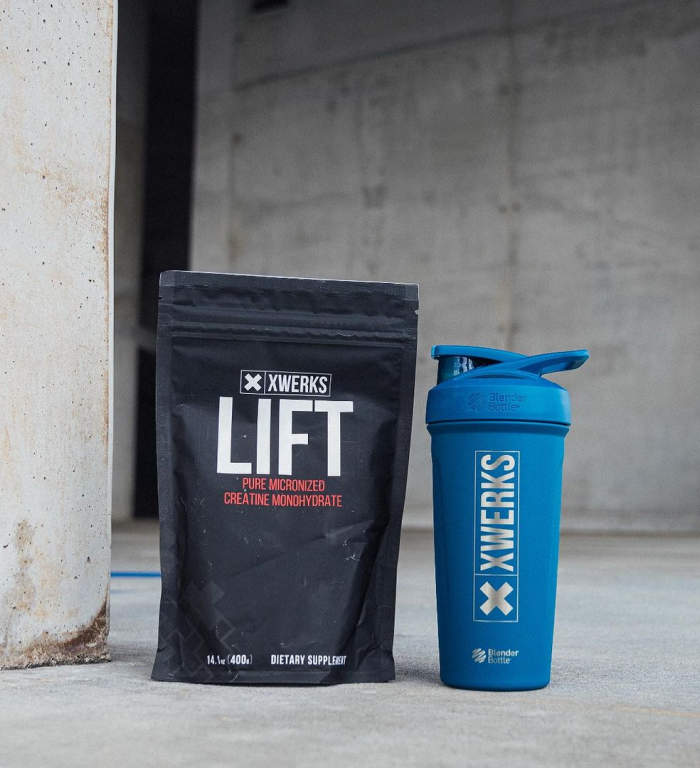
Daily steps are a foundation. The training that builds and preserves muscle, supports recovery, and drives body composition needs nutrition that matches the work. XWERKS Grow provides 25g grass-fed New Zealand whey isolate for daily protein targets, and Lift delivers 5g daily creatine monohydrate for strength and recovery. Steps support cardiovascular health and body composition; protein and creatine support the muscle that makes movement effective.
Shop Grow