

TL;DR
- Whey protein powder starts as a byproduct of cheese-making — the liquid whey that separates from milk curds is filtered, dried, and powdered. This base process produces all whey concentrate, isolate, and hydrolysate products.
- The most important manufacturing variable is filtration method. Cross-flow microfiltration (gentle, preserves bioactive compounds) is preferred over ion-exchange filtration (harsh, denatures some proteins). Better products use cross-flow.
- Concentrate, isolate, and hydrolysate differ by how much filtration and processing occurred. Concentrate is 70-80% protein with more lactose/fat. Isolate is 90%+ protein with minimal lactose/fat. Hydrolysate is pre-digested for faster absorption.
- Plant proteins (pea, rice, soy) are made through different processes — extraction from plant material rather than dairy filtration. Different quality variables apply.
- Quality indicators that matter: sourcing (grass-fed, country of origin, dairy quality standards), filtration method, drying method (low-temperature spray drying preserves more bioactive compounds), and third-party testing for contamination.
Protein powder is one of the most consumed supplements globally, but most people who use it daily have only a vague idea of how it's actually made. This matters more than it might seem — manufacturing decisions determine ingredient quality, bioactive compound preservation, lactose content, taste, mixability, cost, and even potential contamination risks. Two protein powders with identical "Whey Protein Isolate" labels can have meaningfully different qualities depending on the milk source, filtration method, drying technique, and processing additives. Understanding how protein powder is actually made gives you the framework to evaluate quality independent of marketing claims, recognize legitimate quality differentiators, and avoid the manufacturing shortcuts that produce inferior products at lower price points. This guide covers the complete manufacturing process for whey protein (the most common type), plant-based protein production, the key quality variables at each step, and what the choices on the label actually mean.
The basic whey protein process
Whey protein starts with one of nature's most abundant byproducts: the liquid that separates from milk during cheese-making. When milk is processed into cheese, it separates into two components — solid curds (which become cheese) and liquid whey. For most of human history, this liquid whey was either discarded or fed to livestock. Modern dairy science figured out how to filter, concentrate, and dry it into a high-protein powder.
The basic sequence:
1. Milk collection: Raw milk from dairy cows enters the processing facility.
2. Pasteurization: Heat treatment kills harmful microorganisms. Industrial dairy uses HTST (High Temperature Short Time) pasteurization or UHT (Ultra-High Temperature).
3. Curd formation: Rennet (an enzyme) and bacterial cultures are added to milk, causing the casein proteins to coagulate into solid curds. The remaining liquid is whey.
4. Whey separation: The liquid whey is drained from the curds. This raw whey is approximately 6% solids — primarily protein, lactose, minerals, and small amounts of fat.
5. Filtration and concentration: The protein content is concentrated through filtration methods that remove water, lactose, fat, and minerals while retaining protein.
6. Drying: The concentrated liquid protein is spray-dried into powder form.
7. Flavoring and packaging: Finished protein powder is blended with sweeteners, flavors, and any other ingredients, then packaged.
Step-by-step whey manufacturing
Step 1: Milk sourcing and quality
The foundation determines final qualityThe protein powder you eventually consume reflects the milk it started from. Key sourcing variables:
Country of origin: New Zealand and Ireland have the strictest dairy quality regulations globally. New Zealand cows graze on pasture year-round (climate permits), don't receive synthetic growth hormones, and live with comprehensive welfare standards. American dairy varies dramatically — quality grass-fed dairy exists, but commodity dairy may include grain feeding, hormone use, and antibiotic exposure.
Grass-fed vs. grain-fed: Grass-fed milk has higher omega-3 content, higher CLA (conjugated linoleic acid), and higher beta-carotene. Quality differences are real but modest. "Grass-fed" labeling in the US is loosely regulated; New Zealand grass-fed standards are stricter.
Hormone and antibiotic policies: rBST/rBGH (recombinant bovine growth hormone) is permitted in US dairy and prohibited in NZ, EU, Canada, and most of the world. Quality protein brands use rBST-free milk regardless of country.
Pasture-raised standards: "Pasture-raised" in NZ typically means cows graze on pasture year-round. In the US, "pasture-raised" can mean substantially less actual pasture access depending on the certifier.
Step 2: Pasteurization and initial processing
Heat treatment kills pathogens but can affect proteinsPasteurization is non-negotiable for safety — raw milk can contain pathogens including E. coli, Salmonella, and Listeria. The question is how the heat treatment affects protein quality.
HTST (High Temperature Short Time): 161°F (72°C) for 15 seconds. The standard for most commercial dairy. Effective for safety; minor protein denaturation.
UHT (Ultra-High Temperature): 280°F (138°C) for 2-4 seconds. More thorough sterilization but more protein denaturation. Used for shelf-stable milk products.
Cold processing methods: Some premium protein producers use lower-temperature processing throughout the chain to minimize protein denaturation. The protein content is identical numerically, but bioactive compounds (immunoglobulins, lactoferrin, lactoperoxidase) are better preserved at lower processing temperatures.
Step 3: Cheese-making and whey collection
The "byproduct" with the proteinMost whey protein comes from cheese production at scale. Cheese-makers add rennet (an enzyme that coagulates milk proteins) and bacterial cultures to pasteurized milk. The casein proteins coagulate into solid curds; the whey proteins remain in the liquid that drains off.
Some protein producers use direct membrane filtration of milk (without cheese-making) — known as native whey or BiPRO. This avoids the rennet step and produces slightly different whey protein composition. More expensive process; some research suggests modestly better preservation of certain bioactive fractions. Not commonly used in consumer products.
Step 4: The critical filtration step
Where most quality differences emergeThe liquid whey collected from cheese-making contains roughly 6% solids — and that's only ~3.5% protein, with the rest being lactose, fat, water, and minerals. To produce protein powder, this whey must be filtered to concentrate the protein content. The filtration method used here is the single most important variable in protein quality.
Cross-flow microfiltration (CFM) — the premium method:
Liquid whey is forced through ceramic or polymeric membranes with extremely fine pores under low pressure. Protein molecules are retained while smaller molecules (lactose, water, some fats) pass through. The process operates at low temperatures (typically below 50°F / 10°C) and uses no chemicals or harsh conditions.
Benefits: Preserves bioactive compounds (lactoferrin, immunoglobulins, alpha-lactalbumin, beta-lactoglobulin) in their native form. Maintains protein structural integrity. Produces a cleaner-tasting product.
Cost: More expensive equipment and slower processing. Quality protein producers absorb this cost; commodity producers cut corners with alternatives.
Ion-exchange filtration — the older method:
Whey passes through ion-exchange columns that bind proteins based on electrical charge. Acid or base solutions then release the proteins. The process is harsher and at higher temperatures.
Drawbacks: Denatures some bioactive proteins. The acid/base exposure breaks delicate protein structures. Can result in higher beta-lactoglobulin (a major allergen) concentration. Bioactive fractions are partially destroyed.
Why it persists: Cheaper. Produces extremely high protein percentages (often 95%+). Some commodity protein products still use this method.
Ultrafiltration:
Similar to microfiltration but uses larger pore sizes. Produces whey concentrate (70-80% protein) without further processing. Commonly used for whey protein concentrate products.
Step 5: Optional further processing — hydrolysis
Pre-digesting protein for faster absorptionSome protein products undergo additional processing where enzymes break down whole proteins into smaller peptide chains. This is "hydrolyzed whey" or whey hydrolysate.
The process: After filtration, enzymes (proteases) are added to break peptide bonds in the protein chains. The reaction is controlled to produce specific peptide chain lengths, then enzymes are deactivated through heat or filtration.
Effect: Faster absorption and digestion in the body. Useful for certain medical applications, athletes wanting fastest possible amino acid delivery, or people with severe digestive issues. Distinctive bitter taste from the smaller peptides — masks more difficult than standard whey.
Tradeoffs: More expensive. Bitter taste requires more flavoring. May not produce dramatically better outcomes than standard whey isolate for most users — the marginal absorption speed difference rarely translates to meaningful performance differences.
Step 6: Drying — turning liquid into powder
Most products use spray dryingThe concentrated liquid protein needs to be dried into stable powder form. The dominant method is spray drying.
Spray drying: Liquid is sprayed as a fine mist into a heated chamber. Water evaporates instantly, leaving dried protein particles that fall to the bottom and are collected. Standard spray-drying temperatures are 350-400°F (180-200°C), but the protein only experiences this heat momentarily as droplets.
Low-temperature spray drying: Some premium producers use modified spray drying at lower temperatures (often 250-300°F). Better preserves bioactive compounds at higher cost.
Freeze drying (lyophilization): Liquid is frozen and water sublimated under vacuum. Preserves nearly all bioactive compounds but is dramatically more expensive and slower. Used for premium specialty products.
Properly spray-dried protein powder maintains protein content and amino acid profile, with primary quality differences in bioactive compound preservation and overall product cleanliness.
Step 7: Flavoring, sweetening, and packaging
Where many products lose qualityThe dried protein base is then blended with flavoring agents, sweeteners, thickeners, and any other ingredients before final packaging.
Sweeteners: Stevia and monk fruit (natural, no aftertaste at quality dosing), sucralose (cheap, common, can produce chemical aftertaste), aspartame (older synthetic sweetener, less common now), sugar alcohols (erythritol, xylitol — can cause GI issues at higher doses).
Flavoring: Cocoa powder for chocolate, vanilla bean extract for vanilla, fruit powders for fruit flavors. "Natural flavors" can mean genuine food-derived flavors or chemically processed compounds; legally, both qualify.
Thickeners and stabilizers: Xanthan gum, guar gum, sunflower lecithin, soy lecithin. Small amounts improve mixing and texture; excessive amounts cause GI issues.
Other additives: Digestive enzymes (legitimately useful for some users), branched-chain amino acids (often present at sub-clinical doses for marketing), creatine (effective at clinical doses, often present at sub-clinical for marketing), various herbs and adaptogens (usually present for marketing rather than measurable effect).
Packaging affects shelf life and freshness. Quality products use opaque packaging (UV light degrades some bioactive compounds) and oxygen-resistant materials (oxidation degrades fats and proteins over time).
Concentrate vs isolate vs hydrolysate — what the labels mean
Whey Protein Concentrate (WPC)
70-80% protein by weightThe least-processed form. Produced through ultrafiltration of liquid whey. Contains 70-80% protein, with the remainder being lactose (4-8g per scoop typically), fat (2-5g), and minerals.
Pros: Cheapest form. Retains the most bioactive compounds (immunoglobulins, lactoferrin) since processing is minimal. More micronutrients than isolate.
Cons: Higher lactose content can cause GI issues for lactose-sensitive users. Higher fat content means more calories per gram of protein. "Whey blend" products often use concentrate as the bulk protein with token isolate added for marketing.
Best for: Cost-conscious users who tolerate lactose well and aren't extremely calorie-conscious.
Whey Protein Isolate (WPI)
90%+ protein by weight, minimal lactose and fatFurther-processed form. Produced through additional filtration (typically cross-flow microfiltration or ion-exchange) to remove lactose, fat, and minerals to near-zero levels. Typical product: 25g protein per 27-30g serving, ~0-1g lactose, ~0-2g fat.
Pros: Highest protein content per gram. Tolerated by most lactose-sensitive users. Minimal calories per gram of protein. Good for cutting phases or calorie-conscious users.
Cons: More expensive than concentrate. Some bioactive compounds are reduced compared to concentrate (depends heavily on filtration method — cross-flow preserves more than ion-exchange). Premium versions cost noticeably more.
Best for: Most serious users. Lactose-sensitive individuals. Athletes prioritizing protein-per-calorie ratio. People wanting cleanest whey product available.
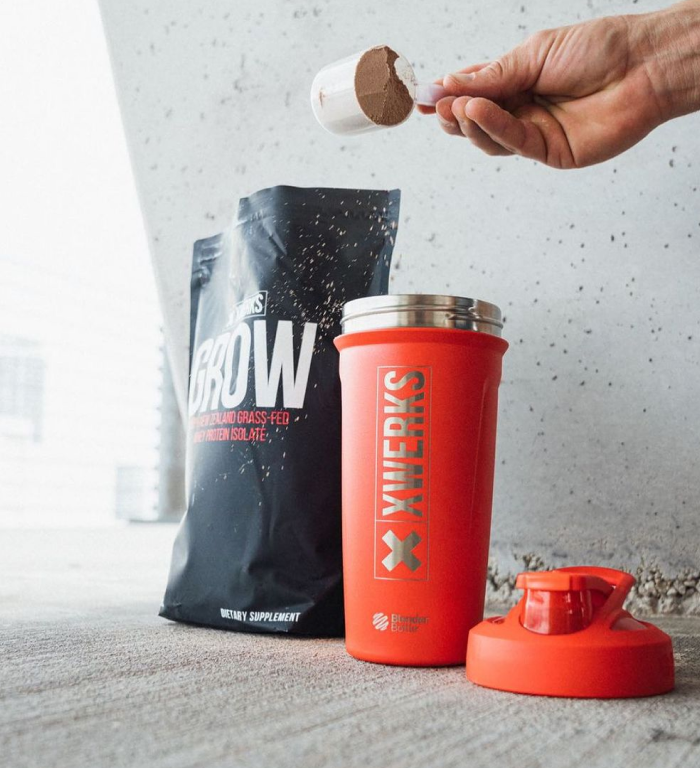
The "best" version: Cross-flow microfiltered isolate from grass-fed dairy. XWERKS Grow uses NZ grass-fed cross-flow microfiltered isolate.
Whey Protein Hydrolysate (WPH)
Pre-digested for fast absorptionMost-processed form. Whey isolate or concentrate further treated with enzymes that pre-digest the protein into smaller peptide chains. Typically 80-90% protein with characteristic bitter taste.
Pros: Fastest absorption. Useful for medical applications, post-workout when fastest possible delivery matters, and severe digestive sensitivity cases.
Cons: Most expensive. Bitter taste requires aggressive flavoring. Marginal benefits over isolate for most users. Some bioactive compounds destroyed during enzymatic processing.
Best for: Specific use cases where absorption speed matters. Most users don't need hydrolysate's marginal benefits over quality isolate.
"Whey Blend" or "Tri-Phase Protein"
Mixture of forms — read labels carefullyMany commercial products are blends combining concentrate, isolate, and sometimes casein. The label might say "whey protein blend" with no breakdown of what proportion is each form.
How blends are usually constructed: Concentrate forms the bulk (cheapest), with token amounts of isolate added so "whey isolate" can appear on the label. The actual product is mostly concentrate with a marketing nod to isolate.
What to look for: Quality products list the specific protein source as the first ingredient (e.g., "Whey Protein Isolate" — not "Whey Protein Blend"). Single-source isolate products are nearly always better quality than blends at similar prices.
Plant protein manufacturing
Plant proteins are produced through fundamentally different processes than dairy proteins. Each plant source has its own manufacturing path:
Pea protein
Yellow split peas → protein powderYellow split peas are dried, milled into flour, and then processed through a combination of water-based extraction and filtration to separate the protein from starch and fiber. The protein-rich liquid is then concentrated and spray-dried similar to whey.
Key variables: Quality of the source peas, extraction efficiency, residual fiber content (some pea protein products contain significant fiber that can cause GI issues), and additives. Premium pea proteins are around 85% protein content; lower-quality versions are 70-75% with more residual carbs and fiber.
Rice protein
Brown rice → enzyme treatment → proteinBrown rice is treated with enzymes that break down starch, leaving protein behind. The protein is then filtered, concentrated, and dried. Rice protein is naturally low in lysine (an essential amino acid), which is why rice and pea proteins are often combined in plant-based blends — they complement each other's amino acid profiles.
Soy protein
Soybeans → defatting → protein extractionSoybeans are first defatted (oil is extracted for cooking oil production). The remaining "soybean meal" is then processed through alkaline extraction and acid precipitation to isolate the protein. The isolated protein is washed, neutralized, and dried.
Quality variables: Hexane is sometimes used as a solvent in defatting; some products specify "hexane-free" processing. Source soybean quality (organic vs. conventional, GMO vs. non-GMO) varies. Soy protein has a complete amino acid profile but contains phytoestrogens that some users avoid.
Hemp, brown rice protein blends, sunflower protein
Various extraction methodsNewer plant proteins use various extraction processes — typically water-based extraction with mechanical separation. Hemp protein retains more of the original plant's fat and fiber, producing a more "whole-food" protein product but with less concentrated protein content. Sunflower protein is gaining traction as a hypoallergenic alternative.
Quality differentiators — what to look for
1. Specific sourcing claims: "New Zealand grass-fed dairy," "rBST-free," "USDA organic certified" — vague claims like "premium" or "high quality" mean nothing.
2. Filtration method disclosed: Quality products specify "cross-flow microfiltered" rather than just "filtered." If filtration method isn't mentioned, ion-exchange or commodity processing is more likely.
3. Single-source proteins: "Whey Protein Isolate" as the only or primary ingredient, not "Whey Protein Blend."
4. Minimal ingredient lists: Quality whey isolate products often have 4-6 total ingredients (protein, flavor, sweetener, sometimes lecithin and minor additives). 12+ ingredient lists usually indicate marketing additives or quality concerns.
5. Natural sweeteners: Stevia or monk fruit rather than sucralose/acesulfame K + multiple sugar alcohols.
6. Third-party testing: NSF Certified for Sport, Informed Sport, USP Verified — these certifications confirm product testing for contamination and label accuracy.
7. Transparent dosing: Individual ingredient amounts disclosed; no "proprietary blend" hiding ingredient quantities.
8. Reasonable protein percentage: A 25g protein serving in a 30g scoop (83% protein) suggests quality isolate; 25g protein in a 35-40g scoop (60-70% protein) indicates concentrate-heavy formulation.
What to avoid — manufacturing red flags
• Proprietary blends in protein products: "Tri-protein matrix" or "performance protein blend" with no individual ingredient breakdown. Hides what ratio of cheap concentrate to expensive isolate is actually present.
• "Amino spiking" — adding free amino acids to inflate protein numbers: Some manufacturers add cheap amino acids (glycine, taurine, creatine) to inflate the total protein number on the label. Look for products that specifically state "no amino spiking" or list the protein source clearly.
• Vague country of origin: "Imported dairy" without specifics. Quality products specifically state country of origin and dairy quality standards.
• Excessive thickeners and gums: Multiple gums combined (xanthan + guar + carrageenan) often indicate the manufacturer is masking poor base protein quality with texture additives.
• Suspiciously low prices: A 5-lb tub at $20 means the manufacturer is cutting costs somewhere — usually source quality, processing method, or ingredient transparency. Quality whey isolate has minimum production costs that establish a floor price.
• "Customer choice" sweetener confusion: Products that include both sucralose AND stevia AND ace-K AND erythritol typically indicate the manufacturer didn't get the flavor right with quality ingredients alone.
• "Fortified" with vitamins and minerals: Often indicates concentrate base with added micronutrients to mask the lower bioactive content. Quality whey isolate from grass-fed dairy contains naturally-occurring micronutrients.
• Protein products with prominent caffeine claims: Caffeine doesn't belong in whey protein products. If your protein has 100mg caffeine per serving, you're paying for both at sub-clinical doses of each.
• Lack of recent third-party testing: Reputable manufacturers can produce current Certificate of Analysis (COA) documents showing protein content, contamination testing, and ingredient verification. Lack of COAs or only outdated COAs is a red flag.
Sustainability and ethical considerations
Dairy sustainability
Dairy production has significant environmental footprint. Some production systems (rotational grazing, pasture-based dairying like NZ) are more sustainable than commodity feedlot dairy. Premium grass-fed dairy is often more sustainable than commodity options, in addition to producing higher-quality protein.
Animal welfare standards
New Zealand and European dairy operate under stricter animal welfare regulations than commodity US dairy. For consumers prioritizing animal welfare, sourcing matters as much as quality. Look for specific welfare certifications.
Plant protein sustainability
Plant proteins generally have lower environmental footprint than animal-derived proteins per gram. Pea protein, in particular, requires less water and land than dairy. For consumers prioritizing environmental impact, plant proteins are typically the more sustainable choice.
How XWERKS Grow is made
The full manufacturing chain for our whey isolate
• Source: Grass-fed cows in New Zealand, pasture-raised year-round (climate permits) under NZ's strict dairy quality regulations
• Hormone and antibiotic policy: No rBST, no synthetic growth hormones, no routine antibiotic use
• Initial processing: Pasteurization in NZ dairy facilities
• Filtration method: Cross-flow microfiltration — the gentle method that preserves bioactive compounds (lactoferrin, immunoglobulins, alpha-lactalbumin, beta-lactoglobulin, glycomacropeptide, serum albumin)
• Drying: Spray drying to powder form
• Flavoring: Real cocoa bean for chocolate, vanilla bean for vanilla, peanut butter powder + cocoa for peanut butter, with stevia as the only sweetener
• Final ingredient list: Whey protein isolate (NZ grass-fed), natural flavors (cocoa, vanilla bean, peanut butter, etc.), xanthan gum (for mixability), stevia (sweetener)
• Result: 25g protein per 30g scoop (83%+ protein content), under 1g lactose, 0g sugar, 110 calories, with bioactive compound preservation
The Bottom Line
Protein powder is made through a series of processing steps — milk collection, pasteurization, cheese-making (or direct membrane filtration), filtration to concentrate protein, optional further processing (hydrolysis), drying, and flavoring/packaging. Each step affects final quality.
The most important variables: milk sourcing (grass-fed, country of origin, hormone policies), filtration method (cross-flow microfiltration > ion-exchange), drying technique (low-temperature methods preserve more bioactive compounds), and ingredient additives (minimal is usually better).
What the labels actually mean: Concentrate (70-80% protein, more lactose/fat, cheapest), Isolate (90%+ protein, minimal lactose/fat, mid-tier), Hydrolysate (pre-digested, fastest absorption, most expensive). Most users are best-served by quality cross-flow microfiltered isolate.
Plant proteins use different processes — pea, rice, soy, hemp, and others each have their own extraction and processing methods. Quality variables include source quality, residual carbs/fiber, and processing aids used.
Quality indicators: specific sourcing claims, filtration method disclosed, minimal ingredient lists, natural sweeteners, third-party testing, transparent dosing, reasonable protein percentage in the scoop.
Avoid: proprietary blends, amino-spiked products, vague country of origin, excessive thickeners, suspiciously low prices, and products that combine multiple sweeteners to mask quality issues.
Whey Protein Made the Right Way
XWERKS Grow — 100% New Zealand grass-fed whey protein isolate, cross-flow microfiltered to preserve bioactive compounds (lactoferrin, immunoglobulins, alpha-lactalbumin). 25g protein per 30g scoop, real food flavoring (cocoa bean, vanilla bean, peanut butter powder), stevia-only sweetening. Four ingredients total. The way protein powder should be made.
Shop Grow