Does Creatine Break a Fast?
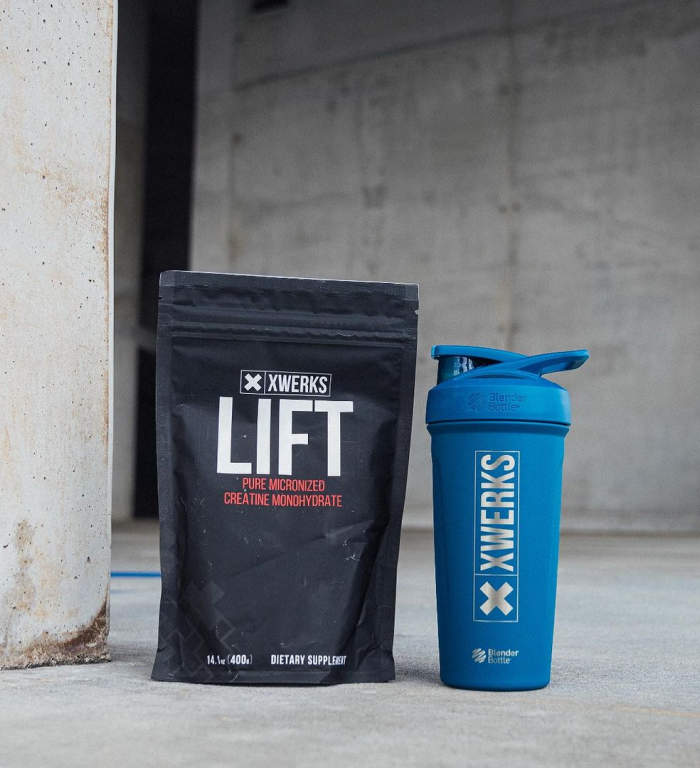
No — pure creatine monohydrate does not break a fast for most practical purposes. It contains negligible calories (under 5 per serving), does not trigger an insulin response, and does not raise blood sugar. You can take your daily dose during your fasting window without compromising the metabolic benefits of intermittent fasting.

Why it doesn't break your fast
Whether something "breaks a fast" depends on your definition, and there are three common frameworks people use.
The caloric definition
Verdict: doesn't break itA standard 5g serving of pure creatine monohydrate contains fewer than 5 calories — below the threshold FDA labeling requires manufacturers to report, which is why labels often show zero. By any practical caloric definition this is negligible. For comparison, black coffee — universally accepted during fasts — contains roughly 2-5 calories per cup.
The insulin response definition
Verdict: doesn't break itCreatine is a non-proteinogenic amino acid derivative. It is not a carbohydrate, contains no sugars, and no clinical trial has demonstrated that creatine alone meaningfully spikes insulin in humans. The insulin increases observed in research occur when creatine is co-ingested with glucose — which you wouldn't be consuming during a fast.
The autophagy definition
Verdict: the nuanced oneAutophagy — the cellular recycling process that fasting is often undertaken to promote — is inhibited primarily by insulin and amino acids via the mTOR pathway. Since creatine is an amino acid derivative, there's a theoretical concern it could modestly affect autophagy.
Being straight about the state of the evidence here: autophagy is difficult to measure directly in living humans, and most of what's claimed about fasting and autophagy in popular content extrapolates from animal and cell studies. There is no direct human research showing that a 5g dose of creatine meaningfully suppresses autophagy. The reasonable position is that the effect is likely negligible compared to actual food — not that it has been definitively ruled out.
If autophagy is your primary reason for fasting and you want to be maximally conservative, take creatine in your eating window. You lose nothing by doing so, because creatine works through saturation rather than timing.
How to take creatine while fasting
During your fasting window
Mix 3-5g of pure creatine monohydrate in water and drink it. No meaningful insulin response, negligible calories, fast preserved. This is the simplest approach and works for the vast majority of fasting protocols (16:8, 20:4, alternate-day).
During your eating window
If you prefer maximum caution — particularly if autophagy is your goal — take creatine with your first meal. Research suggests co-ingesting creatine with carbohydrates and protein may modestly improve uptake by leveraging insulin's role in creatine transport into muscle. This isn't necessary, since creatine works through sustained daily saturation rather than acute timing, but it's a legitimate option.
In black coffee or plain tea
Creatine mixes into black coffee or unsweetened tea without breaking your fast, and this is a popular approach for morning fasters. One practical note: creatine degrades faster in hot liquid over time, so drink it rather than letting it sit. More detail in our guide to creatine in coffee.
The most important principle: consistency matters more than timing. Creatine works by maintaining saturated muscle stores over time. Whether you take it fasted or fed, morning or night, the long-term outcome is the same. Pick the timing that fits your routine and stick with it daily.
What about a loading phase while fasting?
A creatine loading phase (20g/day for 5-7 days) is impractical during fasting because it requires four separate 5g doses spread through the day — and 20g at once on an empty stomach commonly causes GI discomfort. If you're fasting, skip loading and take 3-5g daily from day one. You'll reach the same muscle saturation in 3-4 weeks with no digestive issues.
The Bottom Line
Pure creatine monohydrate does not break a fast. It contains negligible calories, doesn't trigger a meaningful insulin response, and has no demonstrated effect on autophagy at standard doses. Take 3-5g daily — fasting window or eating window, your choice — and prioritise consistency over timing.
The one real exception: creatine products with added sugars, sweeteners, or other caloric ingredients will break your fast. Read the label, or use a single-ingredient product.
If autophagy specifically is why you fast, the conservative move is taking it with your first meal — it costs you nothing, since creatine doesn't depend on timing.
Further Reading
How Much Creatine Should I Take? — Loading vs. maintenance dosing.
Creatine Timing — Why consistency matters more than when.
How Long Does Creatine Take to Work? — The saturation timeline.
Does Creatine Help with Weight Loss? — Body composition during caloric restriction.
References
1. Kreider RB, et al. ISSN position stand: safety and efficacy of creatine supplementation. JISSN. 2017;14:18.
2. Antonio J, et al. Common questions and misconceptions about creatine supplementation. JISSN. 2021;18(1):1-16.
3. de Souza e Silva A, et al. Effects of creatine supplementation on glucose tolerance and insulin sensitivity. Amino Acids. 2015;47(8):1621-1629.