

TL;DR
- Protein requirements go up when calories go down — typically to 2.0-2.4g/kg during a deficit, higher than the 1.6-2.2g/kg used for muscle gain.
- Three reasons: your body will break down muscle for energy in a deficit, protein is the most satiating macronutrient, and it has the highest thermic effect (20-30% of its calories are burned digesting it).
- The leaner you already are and the steeper the deficit, the higher the requirement — lean athletes in aggressive cuts sit at the top of the range or above.
- Practical effect: on a 1,800-calorie day, hitting 170g of protein means protein occupies a large share of your intake by design, not by accident.
- Resistance training is the other half. Protein supplies the material for muscle retention; training supplies the reason to keep it.
Most people reduce protein when they diet, because they reduce everything — smaller portions across the board. That's backwards. A calorie deficit is precisely the condition in which protein requirements rise, and getting this wrong is why so many people finish a diet lighter but softer than they hoped, having lost a meaningful chunk of muscle along with the fat. Here's the mechanism, the numbers, and how to fit a higher protein target into fewer calories.

Why the requirement rises
1. Your body starts looking at muscle as fuel
In an energy deficit, the body mobilises stored energy — primarily fat, but also amino acids from muscle tissue, particularly when protein intake is low or the deficit is steep. Higher protein intake provides circulating amino acids and, together with resistance training, signals that muscle should be preserved rather than broken down.
This is the main event. Everything else is secondary.
2. Protein is the most satiating macronutrient
Gram for gram and calorie for calorie, protein produces greater fullness than carbohydrate or fat. In a deficit — where hunger is the primary reason diets fail — that's a practical advantage, not a theoretical one. Higher protein diets consistently show better adherence and reduced spontaneous calorie intake in controlled trials.
3. It has the highest thermic effect
Roughly 20-30% of protein's calories are used digesting and metabolising it, compared with 5-10% for carbohydrate and 0-3% for fat. So 100 calories of protein nets closer to 75. It's a small effect in absolute terms but it runs in your favour every day of a diet.
Your number in a deficit
2.0-2.4g per kg body weight
• Moderate deficit, average body fat: 2.0g/kg is plenty
• Steeper deficit, or already lean: 2.2-2.4g/kg
• Very lean athletes in aggressive cuts: some evidence supports going higher still — this is the population where muscle loss risk peaks
For a 180lb (82kg) person: 165-195g daily. If you carry substantial body fat, scale from goal weight or lean mass rather than total weight — otherwise the target inflates unhelpfully.
What that looks like on limited calories
On 1,800 calories with a 170g protein target, protein alone accounts for 680 calories — roughly 38% of intake. That's intentional. It leaves about 1,100 calories for carbs and fat, which is enough to train on but requires choosing lean protein sources rather than fatty ones.
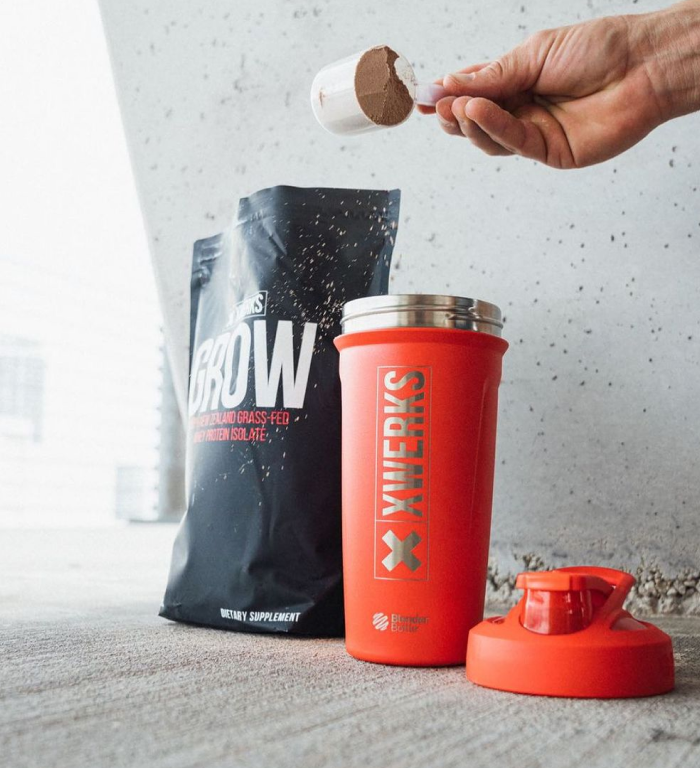
This is where protein-per-calorie becomes the operative metric: chicken breast, white fish, egg whites, Greek yogurt, lean beef, and whey isolate all deliver protein without much else attached.
Fitting it in
• Front-load breakfast. A 10g breakfast forces the rest of the day to carry an impossible load. 30-40g early makes the target achievable and blunts mid-morning hunger.
• Eat your protein rather than drinking it, where you can. Chewed food is more satiating than liquid. Use shakes to fill gaps, not to replace meals you could have eaten.
• Choose lean cuts deliberately. The difference between chicken breast and chicken thigh is 100+ calories per serving for similar protein — that's a meaningful trade when calories are tight.
• Keep resistance training in. Cutting training volume while dieting is the fastest route to losing muscle. Protein without the training stimulus doesn't preserve much.
• Don't crash the deficit. Very aggressive deficits accelerate muscle loss regardless of protein intake. 300-500 calories below maintenance is the sustainable range for most people.
FAQ
How much protein should I eat when cutting?
2.0-2.4g per kg of body weight daily, higher than the 1.6-2.2g/kg used for muscle gain. Lean individuals in steeper deficits should sit at the top of that range.
Why do protein needs go up in a deficit?
Because the body will use amino acids from muscle for energy when calories are short. Higher protein, combined with resistance training, protects lean mass. Protein also improves satiety and has the highest thermic effect of the macronutrients.
Can too much protein stall fat loss?
Only in the sense that any calories count. Protein's calories are real, but its satiety and thermic effect mean it's the macronutrient least likely to work against a deficit.
Do I still need high protein if I'm not training?
Yes, and arguably more — without a training stimulus, higher protein is the main defence against losing muscle in a deficit. But the combination of both is dramatically more effective than either alone.
The Bottom Line
Protein goes up when calories go down — 2.0-2.4g/kg during a deficit, above the muscle-building range. Cutting protein alongside everything else is the most common dieting mistake.
Three mechanisms: muscle preservation, satiety, and the highest thermic effect of any macronutrient.
Protein-per-calorie becomes the operative metric. Lean sources and isolate leave room for the carbs and fat you still need to train on.
Keep lifting. Protein supplies the material; resistance training supplies the reason to hold onto it. Neither works nearly as well alone.
Further Reading
Can You Build Muscle in a Calorie Deficit?
How Much Protein Do You Need to Build Muscle?