The Problem with Proprietary Blends: What Supplement Companies Don't Want You to Know
If the label won't tell you how much of each ingredient is inside, there's usually a reason — and it's not to protect a secret formula.
Pick up a pre-workout, testosterone booster, or fat burner from most supplement brands and you'll see it somewhere on the Supplement Facts panel: "Proprietary Blend," "Performance Matrix," "Anabolic Complex," or some other branded name followed by a single total weight — and absolutely no breakdown of the individual ingredients.
This is legal. It's also one of the biggest scams in the supplement industry.
Here's how it works, what it costs you, and how to avoid it.
What a Proprietary Blend Actually Is
Under the Dietary Supplement Health and Education Act of 1994 (DSHEA), supplement manufacturers are required to list every ingredient on the label along with its quantity per serving. But there's a significant exception: if ingredients are grouped as a "proprietary blend," the company only has to disclose the total combined weight of the entire blend. The individual amounts of each ingredient can remain hidden.
The FDA requires that ingredients within a proprietary blend be listed in descending order by weight — so the first ingredient listed weighs the most — but that's where the transparency ends. You know what's in the blend. You have no idea how much of any of it you're getting.
Why Companies Use Proprietary Blends
The official justification is intellectual property protection — companies claim they need to hide their formula to prevent competitors from copying it. And in rare cases involving genuinely novel formulations, that argument has some merit.
But let's be honest about what's actually happening most of the time. The vast majority of proprietary blends contain common, widely available ingredients — caffeine, beta-alanine, citrulline, creatine, green tea extract. There's no secret recipe. Everyone in the industry knows what these ingredients are and what they do. The only "secret" is how little of each one the company actually put in.
The real reasons are simpler and less flattering:
Cost reduction. Effective doses of research-backed ingredients are expensive. Citrulline malate works at 6-8 grams per serving. Beta-alanine works at 3.2 grams. Cluster dextrin works at 25+ grams. When a company can hide behind a proprietary blend, they can include just enough of each ingredient to list it on the label — sometimes as little as 50-100mg — while filling the rest of the blend with cheap filler ingredients. The result is a product that looks impressive on the label but does almost nothing in your body.
Marketing leverage. A label with 15 ingredients sounds more impressive than one with 4. Proprietary blends let companies list trendy ingredients without committing to effective doses. This is what the industry calls "fairy dusting" or "label dressing" — sprinkling in trace amounts of popular ingredients purely for marketing appeal.
Avoiding comparison. When every ingredient and dose is visible, consumers can compare products directly. That's a problem for companies selling underdosed formulas at premium prices. Proprietary blends prevent apples-to-apples comparison.
Fairy Dusting: The Worst Offense
The most egregious form of proprietary blend abuse is fairy dusting — including a clinically studied ingredient at a dose so small it has zero physiological effect, purely so the ingredient name appears on the label.
Consider citrulline malate. The research consistently shows performance benefits at 6-8 grams per serving. Many proprietary blend pre-workouts list citrulline in their blend, but the total blend is only 4-5 grams across 8+ ingredients. It's mathematically impossible for citrulline to be dosed effectively in that formula. But the consumer sees "citrulline malate" on the label and assumes they're getting a research-backed product.
The same trick happens with beta-alanine (needs 3.2g, often included at a fraction), creatine (needs 5g, sometimes included at 1-2g in a blend), and dozens of other ingredients. The label looks scientific. The product is functionally a sugar pill with caffeine.
The Safety Problem Nobody Talks About
Underdosing gets most of the attention, but there's a flip side that's arguably more dangerous: you also can't tell when a stimulant ingredient is overdosed.
If a proprietary blend contains caffeine anhydrous and the total blend is 3,500mg, the caffeine could be 100mg or it could be 400mg. You have no way of knowing. For someone sensitive to caffeine, or someone already drinking coffee, that ambiguity creates real risk. The same applies to other stimulants that sometimes appear in pre-workout blends — synephrine, yohimbine, or ingredients that interact with medications and blood pressure.
As one registered dietitian noted in a MedShadow Foundation report, stimulants hidden within proprietary blends can elevate blood pressure or interact with medications without the consumer ever being aware of the risk. This isn't a hypothetical concern — it's a documented pattern in the supplement industry, particularly in weight-loss products, pre-workouts, and "fat incinerators."
How to Read a Label Like a Skeptic
Protecting yourself doesn't require a nutrition degree. It requires a calculator and five minutes.
Look for individual ingredient doses. If every ingredient in the Supplement Facts panel has a specific milligram amount next to it, you're looking at a transparent label. If you see a single total weight for a group of ingredients, that's a proprietary blend. Prefer the former.
Do the math on blend totals. If a proprietary blend lists 8 ingredients and weighs 3,000mg total, the average dose per ingredient is 375mg. For most performance ingredients, that's well below clinical thresholds. The more ingredients crammed into a small blend, the more certain it is that most are fairy-dusted.
Check the order. Ingredients in a proprietary blend are listed by weight, highest first. If the cheap filler ingredient (like maltodextrin or silicon dioxide) is listed first in a "performance blend," the expensive active ingredients that follow are present in even smaller amounts.
Cross-reference clinical doses. Know the effective doses for the ingredients you care about. If you're buying a pre-workout for beta-alanine, you need 3.2g. If you're buying a testosterone support product for Tongkat Ali, you need 200-400mg. If the label can't confirm those numbers, the product can't deliver those results.
Be wary of creative names. "Nitric Oxide Explosion Matrix," "Anabolic Growth Complex," "Thermogenic Ignition Blend" — these are marketing terms, not scientific ones. They exist to make a proprietary blend sound proprietary. The fancier the name, the more skeptical you should be.
The Bottom Line
Proprietary blends exist primarily to hide underdosing. They allow companies to list impressive-sounding ingredients at ineffective amounts, charge premium prices for cheap formulas, and prevent consumers from making informed comparisons.
The best supplement companies don't need to hide what's in their products. They put every ingredient and every dose on the label because the formula can stand up to scrutiny. Transparency isn't a marketing gimmick — it's the minimum standard for taking your money seriously.
Before you buy any supplement, ask a simple question: does the label tell me exactly what I'm getting? If the answer is no, your money is better spent somewhere else.
What Transparent Labeling Looks Like
Every XWERKS product uses fully transparent labeling with individual ingredient doses clearly listed. No proprietary blends. No "matrix" names. No hidden amounts. Here's what that means in practice:
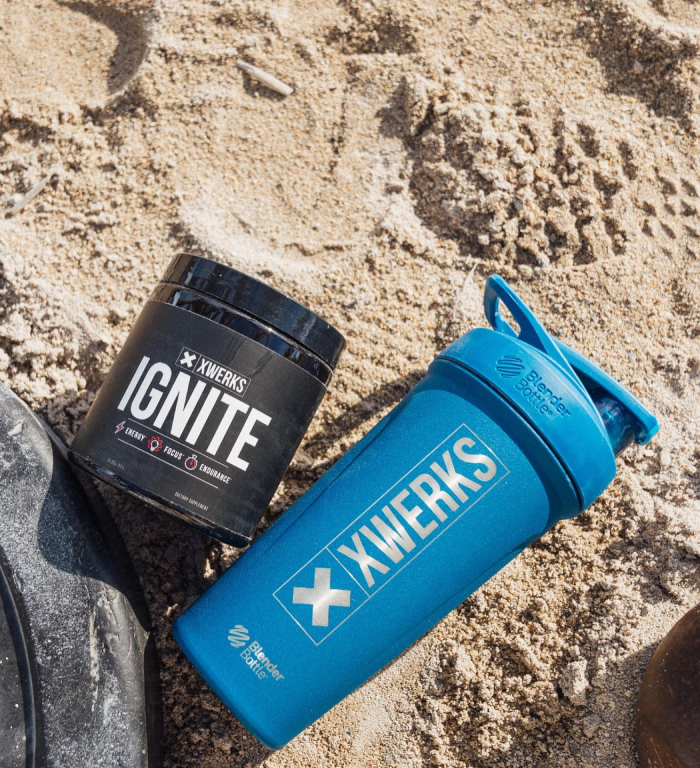
Ignite (Pre-Workout): Every ingredient — caffeine, beta-alanine, and the full lineup — listed individually with exact milligram amounts. You know exactly how much stimulant you're consuming.
Motion (Intra-Workout): 25g of Cluster Dextrin, 3g of BCAAs in a 2:1:1 ratio, plus electrolytes — all individually declared. No blend hiding a sugar-heavy filler.
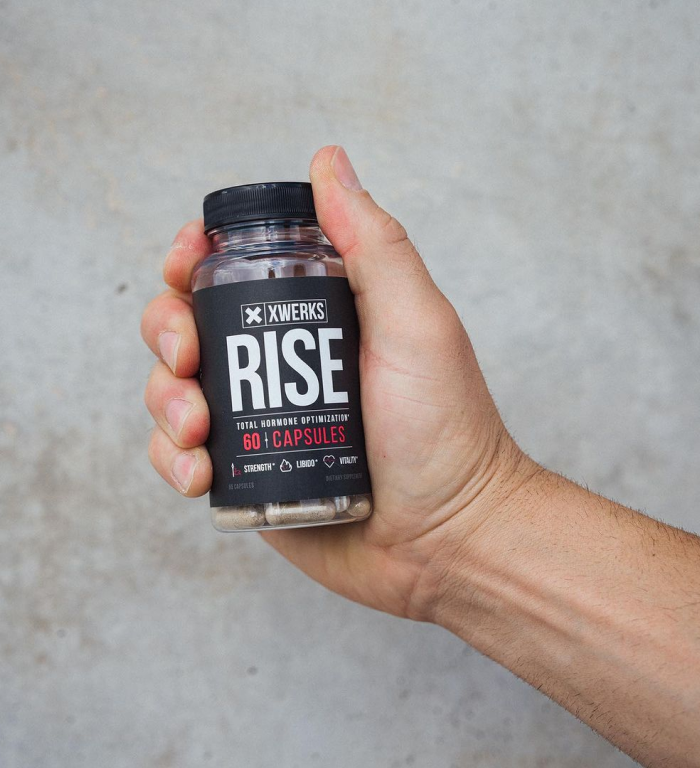
Rise (Testosterone Support): 400mg Tongkat Ali, 250mg Shilajit, 15mg Zinc, 6mg Boron, 10mg BioPerine. Four active ingredients, all at clinical doses, all visible. Nothing hidden.
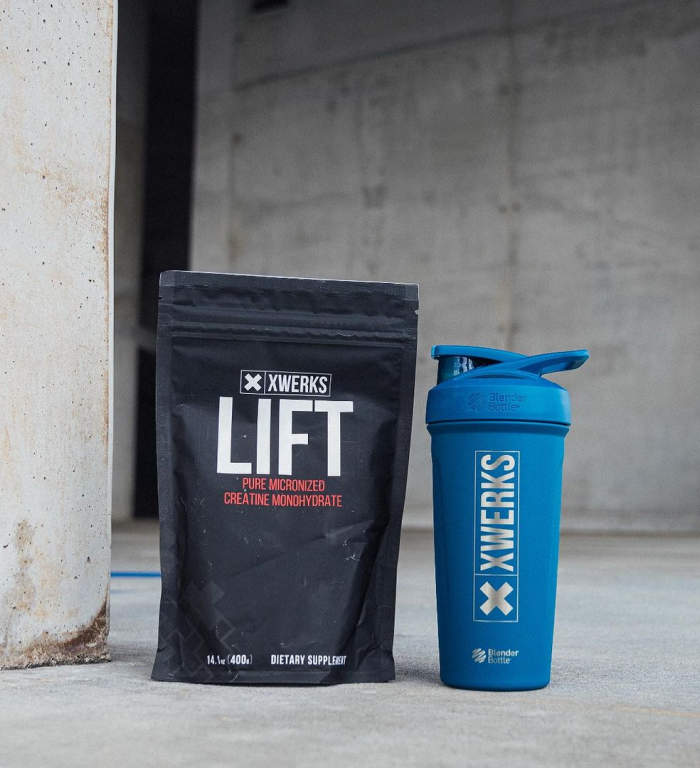
Lift (Creatine): One ingredient. 5g micronized creatine monohydrate. That's it. Because that's all you need.
No Proprietary Blends. No Guessing.
Every XWERKS product lists every ingredient at its exact dose. Because if a company won't tell you what's in the bottle, why would you trust what it does?
SHOP ALL PRODUCTS →References
1. U.S. Food & Drug Administration. Dietary Supplement Labeling Guide: Chapter IV. Nutrition Labeling. 21 CFR 101.36.
2. Cohen PA. The supplement paradox: negligible benefits, robust consumption. JAMA. 2016;316(14):1453-1454.
3. Kerksick CM, et al. International Society of Sports Nutrition Position Stand: Nutrient Timing. JISSN. 2017;14:33.
4. Dwyer JT, Coates PM. Perspectives on the Use of Proprietary Blends in Dietary Supplements. Nutrients. 2023;15(9):2048.
5. Dietary Supplement Health and Education Act of 1994 (DSHEA). 21 U.S.C. § 343(q)(5)(F).