


TL;DR
- Testosterone in men has declined 20-50% over the last several decades, with research showing roughly 1-1.2% drops per year. A 60-year-old in 2004 had T levels 17% lower than a 60-year-old in 1987.
- Main drivers: obesity, lack of resistance training, poor sleep, and exposure to endocrine-disrupting chemicals (pesticides, parabens, phthalates, BPA).
- The basics that actually move the needle: train hard, prioritize sleep, limit alcohol, reduce processed food and seed oils, minimize plastic exposure.
- Supplement support: vitamin D, fish oil, magnesium, zinc as foundation. Tongkat Ali, boron, and shilajit have research backing for natural T support (the ingredients in XWERKS Rise). Ashwagandha helps lower cortisol, the antagonist hormone to testosterone.
- Outside of TRT injections (which carry their own trade-offs), there's no magic bullet. The protocol below is what actually works.
It's an epidemic — low testosterone is impacting more and more men. Depending on the source, testosterone in men has declined 20-50% over the last several decades.
One of the larger studies, performed back in 2007, showed an alarming drop in T since the 1980s with average levels declining 1% per year. This means a 60-year-old man in 2004 had testosterone levels 17% lower than those of a 60-year-old in 1987.
A more recent study in 2020 showed the trend continuing with a 1.2% decline in testosterone per year. They found 35% of patients had low T in 2002 — by 2011 that number jumped to a staggering 47.3%.
Why testosterone is declining
There's no single answer. Multiple environmental, social, and psychological factors contribute.
This could be the main reason. Being overweight isn't just a cosmetic issue — it makes testosterone plummet while increasing estrogen. A pretty horrible combo for men.
According to the CDC, in 1962 roughly 13.4% of Americans were obese. By 2018 that jumped to 43%.
A 2007 study of men ages 40 and above found each one-point increase in BMI was associated with a 2% decrease in testosterone. Another study showed a 4-inch increase in waist circumference increased odds of low testosterone by 75%.
Resistance training is well known to increase testosterone — and only 30% of the population strength trains two or more times per week.
Most testosterone is released at night during sleep, and modern sleep habits are pretty crappy — an estimated 70 million Americans suffer from sleep issues.
Just one week of sleep restriction can decrease testosterone by 10-15%.
This topic has come to light more recently. We're exposed to a bunch of endocrine-disrupting chemicals daily:
• Pesticides like Glyphosate (Round-up), increasingly found in our food
• Parabens — chemical preservatives common in cosmetics
• Phthalates and bisphenol A (BPA) — found in plastics
All of these can negatively impact testosterone and other hormones. The Joe Rogan episode with Dr. Shanna Swan goes deep on this topic.
What to do about it
Not all hope is lost. There are concrete actions that move the needle on natural T levels.
Get in the gym. Self-explanatory. Heavy compound lifts, two or more sessions per week. This isn't optional.
Stop eating out so much. You're more likely to be exposed to those chemicals above the more you eat fast food (or even at nice restaurants). Seed oils used for cooking can also possibly lower testosterone.
Get some sleep. Check out our sleep hacking guide or this episode of Dr. Andrew Huberman's podcast for some tips.
Avoid plastic. Plastic — especially heated plastic — contains phthalates, BPA, and other estrogenic chemicals. Never microwave food in plastic containers. Use glass or metal whenever possible. Bottled water can be especially bad too.
Limit the booze. Alcohol can decrease testosterone while increasing estrogen — ever notice heavy drinkers have "man-boobs"? It also wreaks havoc on sleep.
Phthalate-free personal care. Soaps, shampoo, conditioners, lotions — anything you put on your body should be phthalate-free.
Quality water filter. Microplastics are being found in our drinking water, so investing in a filter that can remove them isn't a bad idea.
Supplement support
The basics
Foundation stackVitamin D, fish oil, magnesium, and zinc. These are the foundational micronutrients linked to testosterone production. Don't skip them chasing fancier compounds.
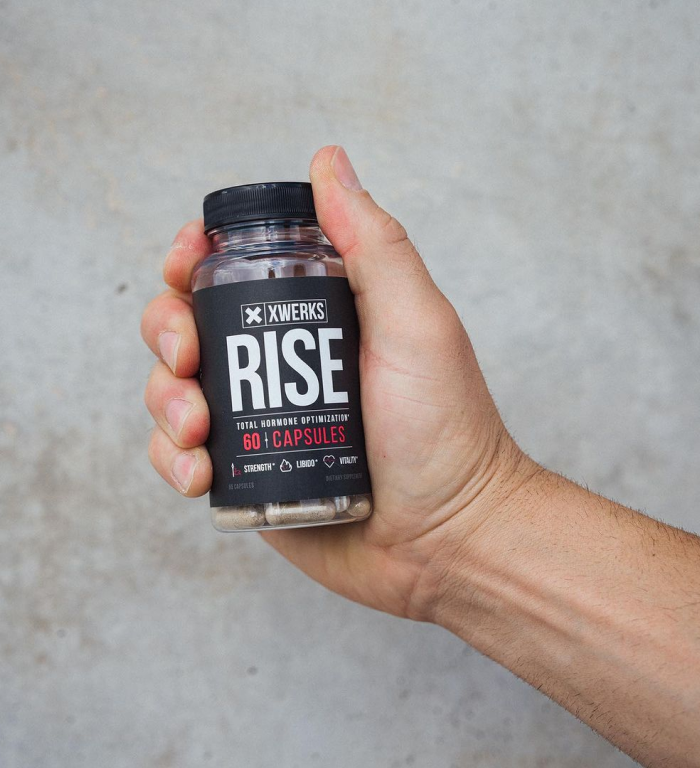
XWERKS Rise — natural T support
Tongkat Ali + Boron + Shilajit + ZincThe ingredients in XWERKS Rise have research support for naturally raising testosterone:
• Boron — research shows boron can increase free testosterone
• Shilajit — supports T levels through Pandit 2016 and related research
• Tongkat Ali — adaptogenic root with T-supporting research
• Zinc — foundational mineral for testosterone production
Ashwagandha
Cortisol supportAshwagandha lowers cortisol — the stress hormone that's antagonist to testosterone. Higher cortisol means lower T. XWERKS Ashwa contains 1,500mg Withania somnifera per serving.
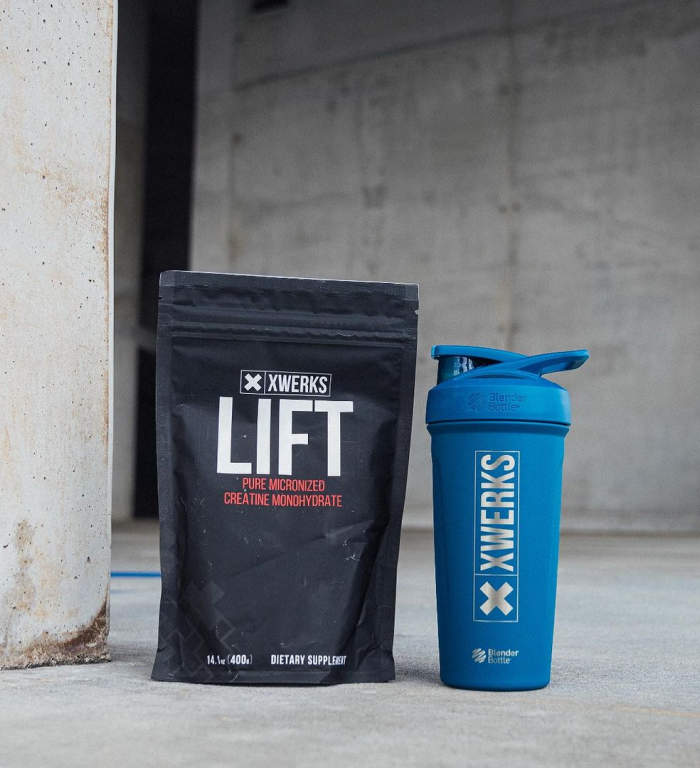
XWERKS Lift — train harder, not a T booster
5g creatine monohydrateBeing straight about this one: creatine does not raise testosterone. Studies looking for a direct hormonal effect haven't found a meaningful one, and any supplement marketed to you as a creatine-based T booster is overselling it.
What it does is support the thing at the top of this article's list — resistance training. Creatine is the most-researched strength supplement there is: more work per session, better recovery between sets, more total training volume over months. Since heavy lifting is one of the few interventions that genuinely moves natural testosterone, anything that lets you train harder and more consistently is working on the problem indirectly.
XWERKS Lift is micronized creatine monohydrate, unflavored, 5g daily. Timing doesn't matter — it works by saturating muscle stores, so daily consistency is the whole protocol.
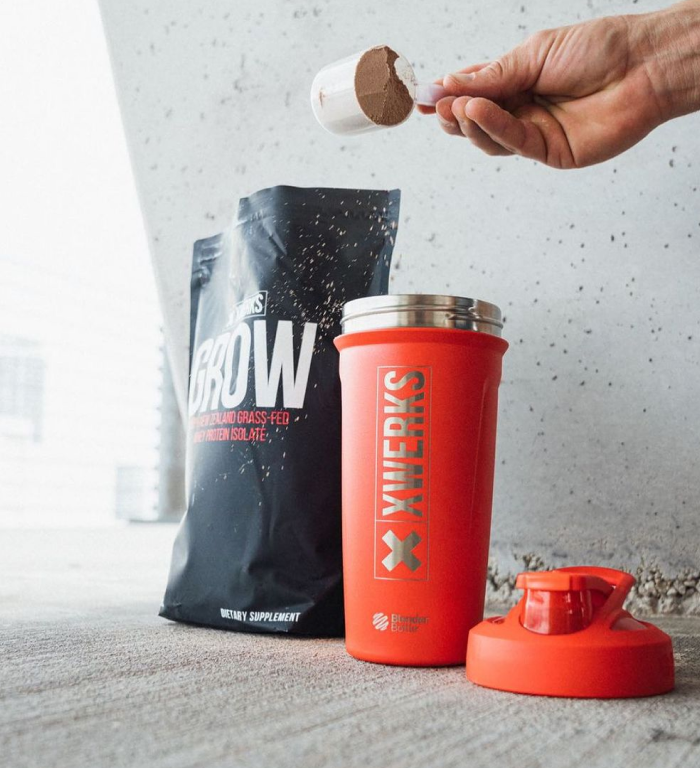
XWERKS Grow — protein for the body-composition lever
25g whey isolate per scoopSame honesty applies: protein powder is not a testosterone supplement. But look again at what this article named as possibly the main driver of declining T — obesity. Each one-point increase in BMI was associated with a 2% decrease in testosterone, and a 4-inch larger waist raised the odds of low T by 75%.
Protein is the macronutrient that does the most work on that variable. It's the most satiating, has the highest thermic effect (20-30% of its calories are burned digesting it), and protects muscle while you lose fat. Hitting 1.6-2.2g per kg of body weight daily is the single most useful dietary change for body composition, and it's also what makes the training in point one actually produce something.
XWERKS Grow is 25g of grass-fed New Zealand whey isolate at 110 calories, four ingredients, 0g sugar. More on the numbers in our protein intake guide.
The Bottom Line
Outside of injecting testosterone (which has its own downsides and risks), there's no magic bullet to fix your T.
But following this framework — train hard, prioritize sleep, limit alcohol and processed food, minimize plastic exposure, supplement smart — can absolutely help you feel like your former self.
Dig deeper: how to increase testosterone · signs of high testosterone in a man · boron and free testosterone · shilajit science vs hype · nicotine and testosterone · do receipts lower testosterone