

TL;DR
- The core difference: isolate is more filtered than concentrate. Isolate is roughly 90%+ protein by weight with minimal carbs, fat, and lactose; concentrate is roughly 70-80% protein with more carbs, fat, and lactose retained.
- Isolate advantages: higher protein per scoop, much lower lactose (better for sensitive stomachs), leaner macros, faster absorption. Concentrate advantages: lower cost, slightly more of the beneficial milk-derived compounds, fuller flavor.
- For muscle protein synthesis, both work — the protein quality and amino acid profile are very similar. The differences are about macros, digestion, and cost, not whether the protein "works."
- Choose isolate if you're lactose-sensitive, cutting and counting macros tightly, or want max protein per calorie. Choose concentrate if budget is the priority and you tolerate dairy well.
- Many products blend both. Reading the label — protein per scoop, lactose content, and whether "concentrate" appears first in the ingredient list — tells you more than the name on the front.
"Whey protein isolate vs concentrate" is one of the most common decisions when buying protein powder, and it's often presented as a quality hierarchy — isolate as the premium option, concentrate as the budget one. The reality is more nuanced. Isolate and concentrate are the same protein source processed to different degrees of filtration. Isolate is filtered further, which strips out more of the carbs, fat, and lactose, leaving a higher percentage of pure protein. Concentrate is filtered less, so it retains more of those other components. Neither is "better protein" in terms of muscle-building — the amino acid profiles are very similar and both effectively support muscle protein synthesis. The real differences are about macros, digestibility, lactose content, cost, and flavor. This guide breaks down exactly how they differ, who should choose which, what the processing actually does, and how to read a label so you know what you're actually buying.
What the difference actually is
Both whey isolate and whey concentrate start from the same place: whey, the liquid portion left over from cheese production. The difference is how much it's processed afterward.
Whey concentrate:
• Filtered to roughly 70-80% protein by weight
• Retains more carbohydrate (including lactose) and more fat
• A typical scoop might deliver 20-24g protein with 2-4g carbs and 1-3g fat
• Less processing means lower production cost
Whey isolate:
• Filtered further — to roughly 90%+ protein by weight
• Most of the carbohydrate (including most lactose) and most of the fat are removed
• A typical scoop might deliver 23-27g protein with under 1-2g carbs and 0-1g fat
• More processing means higher production cost
The key insight: isolate isn't a different or "better" protein — it's the same whey protein with more of the non-protein components filtered out. Whether that filtering matters to you depends entirely on your goals, your digestion, and your budget.
For the deeper look at what whey is and how it's made, see whey protein: what it's made of.
Side-by-side comparison
Protein percentage: Isolate ~90%+ · Concentrate ~70-80%
Protein per scoop: Isolate higher · Concentrate slightly lower
Carbs per scoop: Isolate very low (often under 2g) · Concentrate higher (2-4g+)
Fat per scoop: Isolate minimal (0-1g) · Concentrate higher (1-3g)
Lactose: Isolate very low — often tolerable for the lactose-sensitive · Concentrate retains meaningfully more lactose
Calories per gram of protein: Isolate leaner · Concentrate slightly higher
Absorption speed: Isolate slightly faster · Concentrate slightly slower (the difference is small and rarely practically meaningful)
Cost: Isolate higher · Concentrate lower
Flavor and texture: Concentrate often slightly fuller and creamier from the retained fat and carbs · Isolate cleaner and lighter
Muscle protein synthesis: Both effective — amino acid profiles are very similar
Beneficial milk compounds: Concentrate retains slightly more of certain milk-derived bioactive compounds; the practical significance is modest
Where isolate wins
Lactose sensitivity
The biggest practical advantageThis is isolate's strongest case. Because the additional filtration removes most of the lactose, whey isolate is far better tolerated by people who get bloating, gas, or GI discomfort from concentrate. If dairy gives you stomach trouble, isolate is usually the answer. See whey protein for sensitive stomachs.
Cutting and tight macro tracking
Maximum protein per calorieWhen you're in a caloric deficit and counting macros tightly, isolate's leaner profile is genuinely useful — more protein, fewer "incidental" carbs and fat per scoop. Over a day of multiple shakes, that adds up. If every calorie is accounted for, isolate gives you the most protein for the calorie budget.
Higher protein per scoop
EfficiencyBecause isolate is a higher percentage protein, you get more protein per scoop and per gram of powder. For people with high daily protein targets, this means hitting the target with less total powder.
Cleaner taste and lighter texture
Preference, not performanceIsolate mixes lighter and cleaner. Many people prefer it in water specifically because it isn't weighed down by the retained fat and carbs. This is a preference factor, not a performance one — but preference drives adherence.
Where concentrate wins
Cost
The biggest practical advantageLess processing means lower cost. Concentrate is typically meaningfully cheaper per serving than isolate. If budget is the constraint and you tolerate dairy fine, concentrate delivers effective protein for less money. The protein still works — you're just paying less for slightly less filtration.
Fuller flavor and creamier texture
The retained fat and carbs do somethingThe small amount of retained fat and carbohydrate gives concentrate a fuller, creamier mouthfeel. Many people find concentrate tastes richer, especially when mixed with milk. Again, a preference factor — but a real one.
Slightly more milk-derived compounds
Modest practical significanceConcentrate retains slightly more of certain bioactive compounds naturally present in whey. The practical significance for a healthy person hitting their protein target is modest — it's a minor point in concentrate's favor, not a decisive one.
What doesn't actually differ much
• Muscle-building effectiveness: Both isolate and concentrate effectively support muscle protein synthesis. The amino acid profiles are very similar. Neither builds meaningfully more muscle than the other when total protein intake is matched.
• Absorption speed: Isolate absorbs slightly faster, but the difference is small and rarely practically meaningful. Both are "fast" proteins. The "isolate absorbs faster so it's better post-workout" argument is overstated — total daily protein matters far more than minutes of absorption difference.
• Protein quality: Both are high-quality complete proteins with excellent amino acid profiles, including high leucine content. Neither is a "low quality" protein.
The honest framing: the choice between isolate and concentrate is about macros, digestion, cost, and taste — not about whether the protein works. Both work.
How to choose
Choose isolate if...
Digestion, cutting, macro precision• You're lactose-sensitive or dairy gives you GI trouble
• You're cutting and counting macros tightly
• You want maximum protein per calorie and per scoop
• You prefer a lighter, cleaner taste and texture, especially in water
• You have a high daily protein target and want to hit it efficiently
Choose concentrate if...
Budget, dairy tolerance, flavor preference• Budget is the priority
• You tolerate dairy and lactose without issues
• You prefer a fuller, creamier flavor and texture
• You're not tracking macros so tightly that a few incidental grams of carbs and fat matter
Read the label, not the front of the tub
What actually tells you what you're buyingMany products are blends of both. To know what you're really getting:
• Check the ingredient list order — ingredients are listed by weight, so whichever appears first is the dominant form
• Check protein per scoop relative to scoop size — a high protein percentage points to isolate
• Check carbs and fat per scoop — very low numbers indicate isolate; higher numbers indicate concentrate or a blend
• Check for stated lactose content or "lactose-free" claims if digestion is your concern
The name on the front ("Whey Protein," "100% Whey," etc.) often doesn't tell you which form dominates. The nutrition panel and ingredient list do.
Common questions about isolate vs concentrate
"Is isolate better than concentrate?"
Not "better" — more filtered. Isolate has advantages (lower lactose, leaner macros, more protein per scoop) and concentrate has advantages (lower cost, fuller flavor). Both build muscle effectively. "Better" depends entirely on your goals and digestion.
"Does isolate build more muscle than concentrate?"
No — not when total protein intake is matched. The amino acid profiles are very similar. The differences are macros, digestion, cost, and taste, not muscle-building effectiveness.
"Which is better for weight loss?"
Isolate has a slight edge for cutting because of its leaner profile — more protein per calorie, fewer incidental carbs and fat. But concentrate works fine for weight loss too if you account for the macros. The bigger factor is total daily protein and total calories, not which form you use.
"I get bloated from protein powder — will isolate help?"
Often yes. If the bloating is from lactose (common with concentrate), isolate's much lower lactose content frequently solves it. If the issue is something else, see whey protein for sensitive stomachs for the fuller breakdown.
"Is concentrate low quality?"
No. Concentrate is a high-quality complete protein with an excellent amino acid profile. It's less filtered than isolate, not lower quality. The "concentrate is the cheap inferior option" framing is marketing, not nutrition science.
"What about hydrolyzed whey — where does that fit?"
Hydrolyzed whey is whey (isolate or concentrate) that's been partially "pre-digested" by breaking the protein into smaller fragments. It's a separate processing step. For that comparison, see whey protein isolate vs hydrolyzed.
The Bottom Line
Isolate is more filtered than concentrate — that's the core difference. Isolate is ~90%+ protein with minimal carbs, fat, and lactose; concentrate is ~70-80% protein with more of those components retained. Same protein source, different degree of processing.
Isolate advantages: much lower lactose (better for sensitive stomachs), leaner macros, higher protein per scoop, cleaner taste, slightly faster absorption.
Concentrate advantages: lower cost, fuller and creamier flavor, slightly more milk-derived bioactive compounds.
What doesn't differ much: muscle-building effectiveness, protein quality, and — in practical terms — absorption speed. Both are high-quality complete proteins that effectively support muscle protein synthesis.
Choose isolate if you're lactose-sensitive, cutting and tracking macros tightly, or want max protein per calorie. Choose concentrate if budget is the priority and you tolerate dairy well.
Read the label, not the front of the tub. Many products blend both. Ingredient list order, protein percentage, and carb/fat numbers tell you what you're actually buying.
Dig deeper: whey protein: what it's made of · whey protein isolate vs hydrolyzed · whey protein isolate benefits · whey protein for sensitive stomachs · why grass-fed New Zealand whey · best-tasting whey protein
Grass-fed New Zealand whey isolate
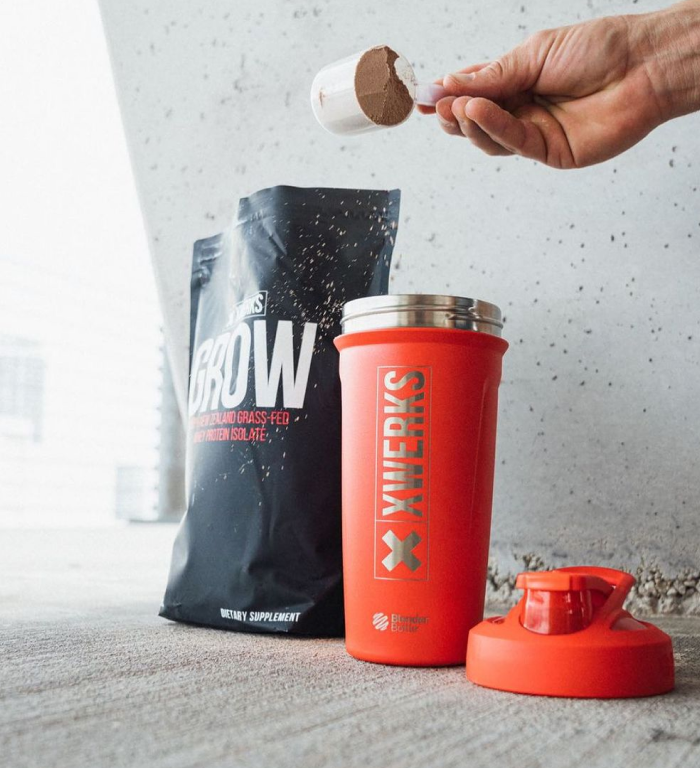
XWERKS Grow is 100% grass-fed whey protein isolate — 25g protein per scoop, ~110 calories, minimal carbs and fat, and very low lactose for easy digestion. The filtered, leaner form of whey, sourced from grass-fed New Zealand dairy. Four ingredients, four flavors.
Shop Grow