







Whey Protein for Sensitive Stomachs: Why Most Protein Powders Make You Bloat (And How to Fix It)
Approximately 65% of adults worldwide have some degree of lactose malabsorption. If your protein shake gives you bloating, gas, or cramps, you're not alone — and you don't have to switch to plant protein. The solution is almost always the type of whey, not the whey itself.
If you've tried whey protein and ended up with a bloated, gassy mess of a stomach, the logical conclusion seems to be that whey doesn't agree with you. But in most cases, the problem isn't whey — it's the specific form of whey you used, the additives in the formula, or both.
Understanding the difference between whey protein isolate and whey protein concentrate — and why the processing method matters as much as the protein type — can mean the difference between giving up on the best-studied protein source in sports nutrition and finding one that works perfectly for your gut.
Why Whey Concentrate Causes Digestive Problems
Whey protein concentrate (WPC) is the most common and cheapest form of whey. It typically contains 70-80% protein by weight, with the remaining 20-30% made up of lactose, fats, and other milk components. A standard 30g scoop of WPC can contain 3-5 grams of lactose — enough to trigger symptoms in anyone with lactose sensitivity.
Lactose intolerance isn't an allergy. It's an enzyme deficiency. Your small intestine produces lactase, the enzyme that breaks lactose down into glucose and galactose for absorption. When lactase production is insufficient — which is the case for the majority of adults globally — undigested lactose passes into the colon, where gut bacteria ferment it. That fermentation produces gas, which causes the bloating, cramping, flatulence, and sometimes diarrhea that people associate with "whey protein not agreeing with me."
This response is dose-dependent. Some people can handle small amounts of lactose without issue but react to larger doses. A single scoop of concentrate may be fine; two scoops may not be. Add in the artificial sweeteners, thickening gums (xanthan, guar, carrageenan), artificial flavors, and maltodextrin fillers common in budget protein powders, and you've stacked multiple potential GI irritants into one shake.
Why Whey Isolate Solves the Problem
Whey protein isolate (WPI) undergoes additional filtration that removes the vast majority of lactose, fat, and carbohydrates. The result is a powder that's 90-95% protein by weight, with less than 1% lactose — typically less than 0.5 grams per serving. For context, most people with lactose intolerance can tolerate up to 12 grams of lactose in a single sitting without symptoms (per the NIH). A serving of quality WPI contains roughly 1/24th of that threshold.
This is why the switch from concentrate to isolate resolves digestive issues for the vast majority of people who thought they "couldn't tolerate whey." They weren't intolerant to whey protein — they were intolerant to the lactose that came along for the ride in concentrate.
Why Processing Method Matters: Cold Micro-Filtration vs. Ion Exchange
Not all whey isolates are created equal. The method used to separate protein from lactose and fat affects both the nutritional profile and the digestibility of the final product.
Ion exchange uses chemical reagents (hydrochloric acid and sodium hydroxide) to separate protein based on electrical charge. It produces very high protein concentrations, but the chemical process can denature delicate protein fractions — including immunoglobulins, lactoferrin, and glycomacropeptides — that play active roles in gut health and immune function.
Cross-flow micro-filtration (CFM) is a physical process that uses ceramic membranes to separate proteins from lactose and fat at low temperatures, without chemicals. This preserves the native structure of bioactive protein fractions that support digestion and gut health.
XWERKS Grow uses cold-processed, non-ion-exchange micro-filtration. This is deliberate: the cold process preserves immunoglobulins (IgG), lactoferrin, lactoperoxidase, and glycomacropeptides — all of which have documented roles in gut immune defense, antimicrobial activity, and digestive comfort. These aren't marketing buzzwords; they're biologically active proteins that the aggressive chemical processing in cheaper isolates strips away.
The Five Things That Cause Protein Shake Bloating
If you're experiencing digestive issues from protein shakes, the culprit is usually one or more of these:
1. Lactose. The most common cause by far. Switching from concentrate to a quality isolate with less than 0.5g lactose per serving eliminates this for most people.
2. Artificial sweeteners. Sucralose, acesulfame potassium, and especially sugar alcohols (sorbitol, maltitol, xylitol) can cause GI distress in sensitive individuals. These are osmotically active — they draw water into the intestine and can cause bloating, gas, and diarrhea. Grow uses stevia (a natural, non-osmotic sweetener) and contains no artificial sweeteners.
3. Thickening gums and fillers. Xanthan gum, guar gum, carrageenan, and maltodextrin are common in budget proteins. Some people tolerate these fine; others experience significant bloating, especially carrageenan (which has been linked to intestinal inflammation in animal studies). Grow contains none of these.
4. Too much protein at once. Consuming 40-50g of protein in a single sitting can slow gastric emptying and cause discomfort regardless of the source. If you're double-scooping and feeling heavy, try splitting into two separate servings.
5. Drinking on an empty stomach. Whey protein is fast-absorbing, which is usually an advantage — but on a completely empty stomach, the rapid delivery of amino acids can sometimes cause nausea or cramping. Having your shake with food, or at minimum with a small amount of carbohydrate, can improve tolerance.
Why Grass-Fed Sourcing Matters for Digestion
The source of your whey affects more than just ethics and environmental impact. Grass-fed whey from pasture-raised cows — like the New Zealand-sourced whey in Grow — comes from animals that are not treated with growth hormones (rBGH/rBST) or routine antibiotics.
Conventional dairy operations often use grain-based feed, which changes the fatty acid profile of the milk and can introduce residues from pesticides, herbicides, and medications into the whey. New Zealand has some of the strictest dairy regulations in the world — no hormones, no antibiotics in milk production, and mandatory pasture-grazing practices. The result is a cleaner raw material that undergoes less aggressive processing to reach the same purity level.
While the direct digestive impact of grass-fed versus conventional sourcing is hard to isolate in controlled studies, the principle is straightforward: fewer contaminants and chemical residues in the raw material means fewer potential irritants in the final product.
What to Look for in a Sensitive-Stomach Protein
If you've had bad experiences with protein powder, here's the checklist for finding one that won't repeat the problem:
100% whey protein isolate — not a blend that leads with concentrate and adds a token amount of isolate. If the label says "whey protein blend" as the first ingredient, concentrate is the majority of the formula.
Cold-processed / micro-filtered — preserves bioactive fractions that support digestion. Avoid ion-exchanged isolates if gut health is a priority.
Natural sweeteners only — stevia or monk fruit. No sucralose, no acesulfame K, no sugar alcohols.
Minimal ingredient list — the fewer ingredients, the fewer potential irritants. Grow contains whey protein isolate, natural flavoring, stevia, and sunflower lecithin (for mixability). That's it.
No thickeners or gums — no xanthan, no guar, no carrageenan, no maltodextrin filler.
Lactose and fat content clearly stated or verifiable — reputable isolates have less than 1% lactose and less than 1g fat per serving.
What If Isolate Still Causes Issues?
For a small percentage of people, even whey isolate causes problems. This is usually one of three situations:
True dairy allergy (not lactose intolerance). A dairy allergy is an immune reaction to milk proteins (casein or whey), not to lactose. It's far less common than lactose intolerance, but it means whey protein in any form — including isolate — will cause a reaction. If you have a diagnosed dairy allergy, whey is not for you regardless of purity. Plant-based protein (pea, rice, hemp) is the appropriate alternative.
Severe lactose intolerance. While most people with moderate lactose intolerance handle WPI without issue, a very small number are sensitive to even trace amounts (below 0.5g). If this describes you, look for products specifically labeled "lactose-free" or consider hydrolyzed whey, which breaks down both protein and remaining lactose into smaller, more digestible fragments.
FODMAP sensitivity / IBS. People following a low-FODMAP diet for IBS may react to components in protein powders beyond lactose — including certain sweeteners, fibers, or additives. A clean WPI with minimal ingredients (like Grow) is typically the most FODMAP-friendly whey option available, but individual tolerance varies.
The Bottom Line
Most people who think they "can't tolerate whey protein" are actually reacting to lactose, artificial sweeteners, or additives — not to whey itself. Switching from concentrate to a quality whey protein isolate that's cold-processed, naturally sweetened, and free of fillers resolves the problem for the vast majority of sensitive stomachs.
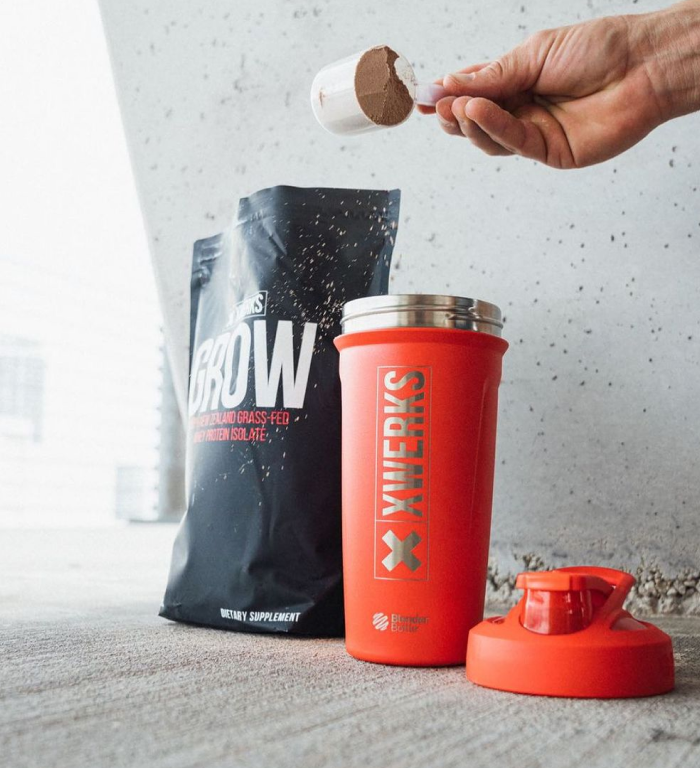
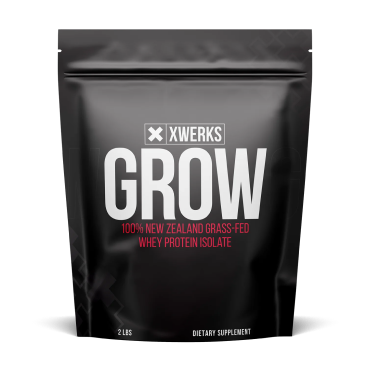
XWERKS Grow is built for exactly this situation: 100% grass-fed whey isolate, cold micro-filtered to preserve bioactive fractions, naturally sweetened, and formulated with the shortest ingredient list possible. 25g of protein per scoop with zero lactose, zero artificial sweeteners, and zero gums or fillers.
If you've given up on whey because of one bad experience with a cheap concentrate, it's worth trying isolate before you abandon the highest-quality protein source in sports nutrition.
25g of Protein. Zero Bloat. Four Ingredients.
XWERKS Grow — 100% New Zealand grass-fed whey protein isolate. Cold-processed, naturally sweetened, soy-free, gluten-free. The cleanest protein available.
SHOP GROW →Further Reading
Whey Protein Isolate Benefits — A deeper look at the advantages of isolate over concentrate and hydrolysate.
Whey Protein: What It's Made Of — The complete breakdown of whey's amino acid and micro-fraction profile.
The Ultimate Whey Protein Guide — Everything you need to know about whey protein in one place.
Whey Protein Isolate vs Hydrolyzed — When hydrolysate makes sense and when isolate is enough.
Grass-Fed Whey: Is It Worth the Extra Cost? — Why sourcing matters for both nutrition and digestion.
What Is Clear Protein Powder? — How clear protein compares to traditional whey isolate and what you lose in the process.
References
1. NIH/NIDDK. Lactose intolerance: definition and facts. National Institute of Diabetes and Digestive and Kidney Diseases.
2. Smithers GW. Whey and whey proteins — from 'gutter-to-gold'. Int Dairy J. 2008;18(7):695-704.
3. Marshall K. Therapeutic applications of whey protein. Altern Med Rev. 2004;9(2):136-156.
4. Ha E, Zemel MB. Functional properties of whey, whey components, and essential amino acids. J Nutr Biochem. 2003;14(5):251-258.
5. Etzel MR. Manufacture and use of dairy protein fractions. J Nutr. 2004;134(4):996S-1002S.
6. Brück WM, et al. Bioactivity of proteins and peptides from whey. Int Dairy J. 2003;13(11):801-812.