TL;DR
- Pre-workout supports muscle gain by amplifying training quality — more reps before failure, better focus on heavy lifts, sustained intensity across sets. It doesn't build muscle on its own.
- The hypertrophy-relevant ingredient profile: caffeine (150-300mg), citrulline malate (6-8g for full clinical effect), beta-alanine (1.5-3g per serving), tyrosine (1-2g). Citrulline is the standout for hypertrophy — supports the volume that drives muscle growth.
- What actually drives muscle gain: progressive overload + adequate protein (1.6-2.2g/kg) + caloric surplus + sleep + recovery. Pre-workout amplifies these but doesn't substitute for any.
- Stack pre-workout with: creatine (5g daily) for strength + power, whey protein (1.6-2.2g/kg daily) for muscle synthesis, and consistent training. Pre-workout is one of four supplements that genuinely support hypertrophy.
- Skip: products marketed primarily on "pump" hype (pumps fade in an hour and don't drive long-term gains), proprietary blends hiding doses, and mega-stim formulas that crash recovery.
"Best pre-workout for muscle gain" is one of the more product-saturated search queries — virtually every pre-workout on the market positions itself as ideal for "explosive pumps," "insane gains," and "muscle-building intensity." The honest picture: pre-workout supports muscle gain by amplifying training quality, not by directly building muscle. The actual muscle-building drivers are progressive overload (gradually increasing weight, reps, or volume over months and years), adequate protein intake, modest caloric surplus, sleep, and recovery. A quality pre-workout makes hard training sessions slightly more productive — more reps before failure, better focus on heavy lifts, sustained intensity across sets — which compounds over months into measurable hypertrophy benefits. The right pre-workout for muscle gain emphasizes ingredients with research backing for training volume and intensity: caffeine for output and focus, citrulline for blood flow and pump, beta-alanine for sustained intensity in 1-4 minute work, tyrosine for cognitive performance under stress. This guide covers what the research supports, what to avoid (the products that prioritize "pump" marketing over actual training-quality ingredients), and how Ignite compares to the most popular hypertrophy-focused pre-workouts.
What pre-workout actually does for muscle gain
Pre-workout supports muscle gain through three real mechanisms:
1. Increased training volume per session. Caffeine reduces perceived effort and supports more reps before failure. An extra 1-2 reps on each working set adds 10-15% to weekly training volume — a meaningful contribution to hypertrophy when sustained over months.
2. Better intensity sustainability across sets. Beta-alanine buffering and citrulline blood flow support help maintain power output across multiple working sets. The 5th set looks more like the 1st than it would without pre-workout.
3. Cognitive engagement on heavy lifts. Tyrosine and caffeine support focus on heavy compound movements (squats, deadlifts, presses) where mental engagement directly affects performance. Heavy lifting under-recovered or distracted is suboptimal training.
What pre-workout does NOT do: directly stimulate muscle protein synthesis, "force" hypertrophy beyond what training would produce, replace adequate protein intake, or substitute for caloric surplus during gain phases. The "pump" feeling some products emphasize is real (intracellular fluid shifts during training) but doesn't drive long-term muscle growth — it's a sensation, not a hypertrophy mechanism.
What actually drives muscle gain
The hierarchy of impact
1. Progressive overload — gradually increasing the demands placed on muscles over weeks and months. This is the primary muscle-building stimulus; everything else is support.
2. Adequate protein (1.6-2.2g/kg body weight) — provides the amino acid substrate for muscle protein synthesis. Below this range, gains slow regardless of training quality. Above 2.2g/kg, additional protein doesn't accelerate gains further for most people.
3. Modest caloric surplus during gain phases (200-400 calories above maintenance) — supports muscle protein synthesis and recovery. Larger surpluses produce more fat gain than additional muscle.
4. Sleep (7-9 hours) — growth hormone release during deep sleep, recovery between sessions, hormonal regulation affecting hypertrophy. Sleep-deprived training produces meaningfully less muscle gain.
5. Training consistency — three sessions per week for years beats six sessions for a month. Hypertrophy compounds over time; intermittent high-effort training underperforms sustained moderate-effort training.
6. Creatine (5g daily) — most-researched performance supplement; supports strength, power, and lean mass gains beyond training alone.
7. Pre-workout (training days) — amplifies items 1, 4, 5 (training quality); modest contribution but real. The "training amplifier," not a primary driver.
The hypertrophy-relevant ingredient profile
Citrulline malate — the standout hypertrophy ingredient
6-8g for full clinical effect · 3-4g for moderate effectThe most relevant pre-workout ingredient for muscle gain specifically. Increases nitric oxide for vasodilation, supports muscular endurance during sets, and produces the "pump" feeling many lifters value subjectively. Perez-Guisado 2010 found 8g citrulline malate enabled more reps before failure across multiple sets — directly relevant to training volume that drives hypertrophy. Higher-end pre-workouts deliver 6-8g full doses; mid-tier products typically provide 3-4g (still meaningful, but below research-backed maximum).
Caffeine — the foundation
150-300mg per serving · 3-6mg per kg body weightReduces perceived effort, improves focus, supports strength output. Most relevant for the heavy compound work that drives hypertrophy: squats, deadlifts, bench press, rows. For most lifters 160-200 lbs, 200-300mg is the sweet spot. Adding morning coffee earlier supports the upper range on hardest training days.
Beta-alanine
1.5-3g per serving · 3-6g daily total via loadingLactate buffering supports the 8-15 rep range that's central to hypertrophy training. Hobson 2012 meta-analysis documented benefits for 1-4 minute efforts — directly applicable to high-rep working sets and rest-pause/drop set protocols. Loaded effects develop over 4-6 weeks of consistent intake.
L-tyrosine
1-2g per servingSupports focus on heavy lifts where mental engagement directly affects performance. Training a heavy 5-rep deadlift requires substantial cognitive engagement — tyrosine supports this particularly when underslept or stressed. Subtle effect but legitimate.
Creatine — the highest-ROI muscle-building supplement
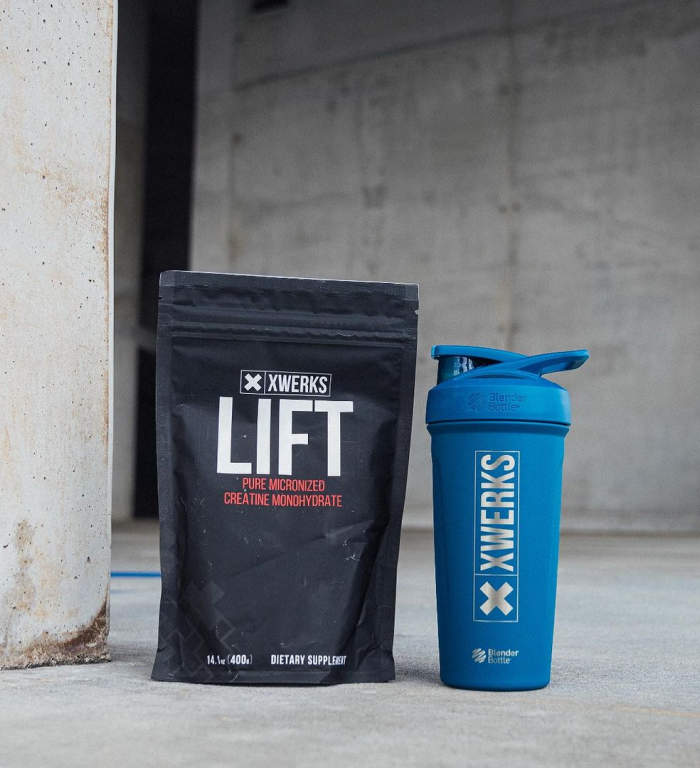
5g daily, any timeSome pre-workouts include creatine; most don't. Either way, creatine works through saturation, not pre-workout timing — daily consistent intake produces benefits. XWERKS Lift at 5g daily is one of the highest-impact muscle-building supplements available, complementary to pre-workout's training-quality benefits. Don't pay premium pricing for pre-workouts that include creatine; buy it separately.
Optional: Betaine (TMG)
2.5g per servingSome research supports modest strength and body composition benefits at 2.5g daily. Effects are smaller than creatine but real. Some quality pre-workouts include betaine; not essential but a quality inclusion.
What to avoid in a hypertrophy-focused pre-workout
• "Pump"-focused products with proprietary blends: Many "pump" pre-workouts use proprietary "pump matrices" that hide individual citrulline, agmatine, or arginine doses. Pumps are fine subjectively but don't drive long-term hypertrophy. Look for transparent dosing of citrulline (the actual research-backed pump ingredient).
• Mega-stim products (400mg+ caffeine): Sleep disruption from late-day mega-caffeine undermines recovery and growth hormone release during sleep — actively counterproductive during muscle gain phases. Moderate caffeine + sleep > mega caffeine + reduced sleep.
• Pre-workouts with token creatine claims: Products marketing "with creatine!" but at 1-2g doses are below the 5g daily research target. If you want creatine, buy it separately at proper dose.
• Products with arginine instead of citrulline: Older pre-workouts use arginine for "NO support." Research shows oral arginine has poor bioavailability — it's largely metabolized in the liver before reaching muscle. Citrulline is more effective; products still using arginine are using outdated formulations.
• Excessive ingredient counts (15+ ingredients): Kitchen-sink products try to include everything possible at sub-clinical doses. Five ingredients at clinical doses produces better hypertrophy outcomes than fifteen at marketing-display doses.
• Fat-burner pre-workouts during a bulk: Yohimbine and synephrine in "thermogenic" pre-workouts work against caloric surplus. If you're trying to gain muscle, you don't need (or want) acute metabolic-rate elevation.
• "Hardcore" branded products at the expense of formula quality: Aggressive masculine branding ("alpha," "savage," "beast") doesn't correlate with hypertrophy effectiveness. Quality formula matters; marketing positioning is irrelevant.
Pre-workout's role in your hypertrophy stack
The complete muscle-gain supplementation framework
Pre-workout works alongside other supplements that genuinely support hypertrophy:
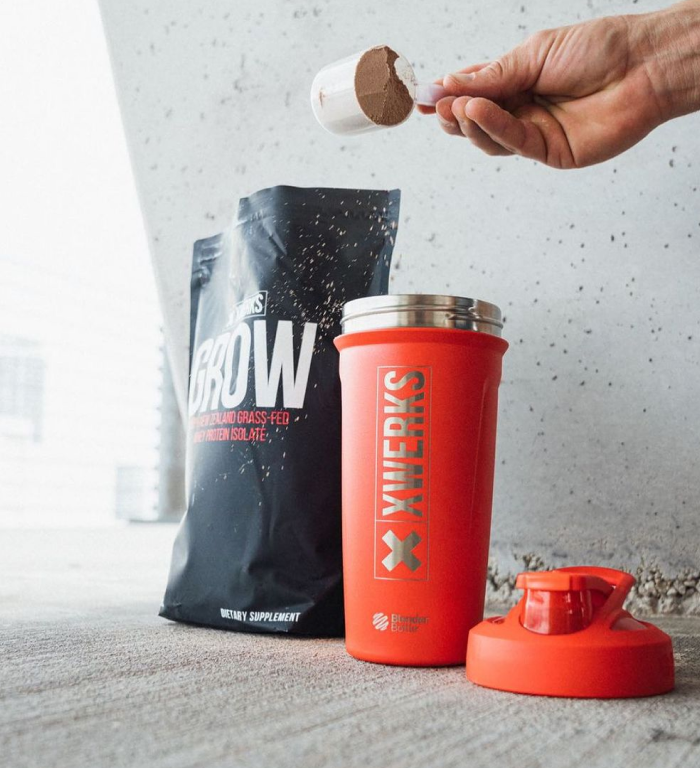
• Whey protein isolate (1.6-2.2g/kg body weight daily): Foundation of muscle protein synthesis. XWERKS Grow for high-leucine fast-digesting protein.
• Creatine monohydrate (5g daily): Most-researched performance supplement. XWERKS Lift at any consistent time.
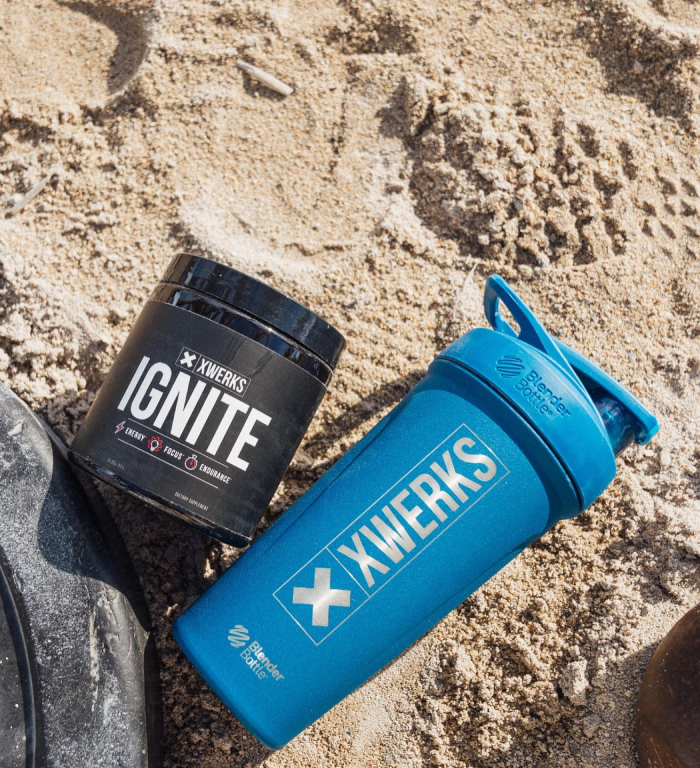
• Pre-workout (training days): Training-quality amplifier. XWERKS Ignite.
• Intra-workout carbs for long sessions: Cluster Dextrin for 60+ min training sessions. XWERKS Motion.
• Foundation supplements: Vitamin D3 (2,000-4,000 IU), omega-3 (2-3g EPA+DHA), magnesium glycinate (200-400mg evening for sleep).
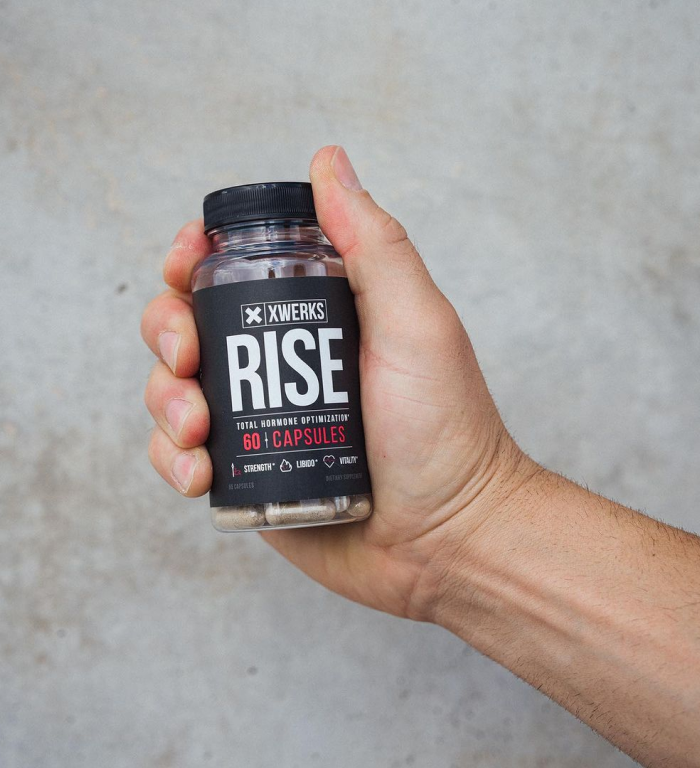
• Optional for men 35+: Testosterone support (XWERKS Rise) addresses age-related testosterone decline that affects hypertrophy.
XWERKS Ignite vs the leading pre-workouts for muscle gain — head-to-head
Now that you understand what actually drives muscle gain — progressive overload, protein, caloric surplus, sleep — and what pre-workout contributes (training-quality amplification, particularly through citrulline and caffeine), here's how Ignite compares to the most popular pre-workouts targeting hypertrophy and strength training audiences. Notice the differences in citrulline dosing — the standout hypertrophy ingredient — across the category.
| Criterion | XWERKS Ignite | Pre-Kaged Elite | Transparent Labs BULK | Legion Pulse | Gorilla Mode | Wrecked Pre-Workout |
|---|---|---|---|---|---|---|
| Caffeine | 150mg | 388mg | 200mg | 350mg | 175mg (Original) | 350mg |
| L-Citrulline (research dose: 6-8g) | 3g (citrulline malate) | 8.5g | 8g | 8g | 9g | 8g |
| Beta-Alanine (research dose: 1.5-3g) | 1.5g (CarnoSyn) | 3.2g | 4g | 3.6g | 3.2g | 3.5g |
| Creatine included | None (buy separately) | 3g | None | None | 2.5g | None |
| Betaine (research dose: 2.5g) | None | 2.5g | 2.5g | 2.5g | 1.25g | 2.5g |
| L-Tyrosine (research dose: 1-2g) | 2g | 2g | 2.5g | None disclosed | 1.5g | 2g |
| Adaptogens / Additional | 500mg Rhodiola | Coconut water powder | Theanine, Synephrine | Theanine, Alpha-GPC | L-Tyrosine, Glycerol | Pink Himalayan salt |
| Transparent dosing | ✓ Full disclosure | ✓ Full disclosure | ✓ Full disclosure | ✓ Full disclosure | ✓ Full disclosure | ✓ Full disclosure |
| Cost per serving | ~$1.65 | ~$2.50 | ~$1.65 | ~$1.65 | ~$1.50 | ~$2.00 |
| Best for | Moderate-stim lifters | Tested athletes; max-dose users | Full clinical doses across | High-stim transparent value | Hypertrophy-focused; full doses | Mega-stim; volume-focused |
Citrulline is where the hypertrophy difference shows up. Five of the six products in this comparison deliver clinical citrulline doses (8-9g) — appropriate for the volume-focused training that drives muscle gain. Ignite at 3g is meaningful but below clinical for hypertrophy specifically. For lifters whose primary goal is maximum pump and citrulline benefits, the clinical-dose options have a measurable edge.
Where Ignite wins for muscle gain: Moderate caffeine (150mg) supports training quality without disrupting sleep — particularly important during bulks when recovery and growth hormone release matter. Tyrosine at full clinical dose. Rhodiola adaptogen. Flexibility to stack with coffee for higher caffeine on hard sessions. The "training quality without sleep disruption" framing is genuinely valuable during muscle-gain phases.
Where competitors win: Pre-Kaged Elite and Wrecked for the highest citrulline + creatine + betaine triple-stack at the cost of mega-caffeine. Transparent Labs BULK for full clinical doses across citrulline + beta-alanine + tyrosine + betaine. Legion Pulse for similar profile at moderate price. Gorilla Mode for the highest citrulline dose (9g) plus included creatine.
Honest framing: Lifters specifically pursuing maximum pump and full citrulline benefits should consider Ignite + standalone citrulline powder (NOW Foods, Bulk Supplements, Nutricost sell quality citrulline at low cost). This combination delivers Ignite's caffeine + tyrosine + rhodiola benefits plus full clinical citrulline (6-8g) at lower cost than premium hypertrophy pre-workouts. For users who want everything in one product, Transparent Labs BULK or Gorilla Mode offer comprehensive single-product options.
Don't pay premium for included creatine. Pre-Kaged Elite and Gorilla Mode include creatine in their formulations. This adds to perceived value but creatine is dirt-cheap (~$0.20/serving) when bought separately. Don't pay premium pre-workout pricing for an ingredient you can buy as standalone monohydrate at a fraction of the cost.
Pre-workout protocol for hypertrophy training
Take 30-45 min before training
Caffeine peaks in blood at 30-60 minutes; citrulline effects develop over 60 minutes. Pre-workout 30-45 min before lifting hits both windows during your working sets.
Dose for training intensity, not every session
Use full pre-workout for hard training days (heavy compounds, volume blocks, intensity sessions). Skip or use half-dose for accessory days, mobility days, or easier sessions. This preserves caffeine sensitivity and reduces tolerance buildup.
Don't replace pre-training nutrition
Pre-workout doesn't replace eating before training. For hypertrophy specifically, train with meaningful glycogen stores — eat 30-50g carbs + 25-40g protein 1-2 hours pre-training (or smaller portion 30-60 min before). Pre-workout supplements this; doesn't substitute for it.
Pair with intra-workout carbs for long sessions
Sessions over 60-75 minutes benefit from intra-workout carb fueling (Cluster Dextrin or similar) to maintain training intensity in later working sets. XWERKS Motion at 25g Cluster Dextrin per serving works well for this.
The Bottom Line
Pre-workout supports muscle gain by amplifying training quality — more reps before failure, sustained intensity across sets, focus on heavy lifts. It doesn't directly stimulate muscle protein synthesis or substitute for the actual hypertrophy drivers.
The hierarchy that drives muscle gain: progressive overload > adequate protein (1.6-2.2g/kg) > caloric surplus > sleep > training consistency > creatine > pre-workout. Pre-workout is the training amplifier; the foundation has to come first.
Hypertrophy-relevant ingredient profile: citrulline malate (6-8g for full clinical effect), caffeine (150-300mg), beta-alanine (1.5-3g), tyrosine (1-2g), optional betaine (2.5g). Citrulline is the standout for muscle gain specifically — supports the volume-focused training that drives hypertrophy.
Skip: "pump"-focused proprietary blends, mega-stim formulas (sleep disruption undermines bulks), products with token creatine at premium pricing, arginine-based formulations (poor bioavailability vs citrulline), kitchen-sink ingredient lists, and fat-burner pre-workouts during gain phases.
Quality options: XWERKS Ignite (moderate-stim, transparent, stack with coffee), Transparent Labs BULK (full clinical doses), Pre-Kaged Elite (tested athletes, mega doses), Gorilla Mode (highest citrulline + creatine), Legion Pulse (high-stim transparent value), Wrecked (mega-stim volume-focused).
Best stack for muscle gain: pre-workout + protein (1.6-2.2g/kg) + creatine 5g daily + sleep + progressive overload training. Pre-workout amplifies the training that drives the gains; the protein and creatine support the muscle-building substrate.
Pre-Workout for Hypertrophy Training
XWERKS Ignite — 150mg caffeine + 3g citrulline malate + 2g L-tyrosine + 1.5g beta-alanine + 500mg rhodiola. Moderate caffeine that supports training quality without disrupting recovery and sleep — both critical during muscle-gain phases. For maximum citrulline benefit, stack Ignite with 5g standalone citrulline powder. Pair with XWERKS Grow (whey isolate) and XWERKS Lift (creatine) for the complete hypertrophy stack.
Shop Ignite