A 200:1 Tongkat Ali extract is not automatically twice as effective as a 100:1 extract. An extract ratio describes botanical input relative to extract output. It does not tell you how much eurycomanone is present or predict a health outcome. Compare the ingredient form, serving amount, standardization, testing and research on the actual preparation.
Two bottles can put very different numbers on the front and still leave the most useful questions unanswered. What exactly is in a serving? Which compounds were measured? Does the research being cited use the same ingredient?
This guide shows how to read those numbers without treating a large ratio as a performance score.
What do 100:1 and 200:1 actually mean?
Under a botanical-input-to-extract convention, 100:1 describes 100 units of starting material used to produce one unit of extract. A 200:1 ratio describes 200 units for one unit of extract. The European Medicines Agency's herbal-preparation guidance distinguishes the genuine extract from added excipients and identifies the extraction solvent as relevant information. This is terminology guidance for European herbal medicines, not a certification of a U.S. supplement.
Before comparing two labels, ask what each manufacturer means by its ratio: which plant part, what starting-material basis, and whether the stated weight includes carriers. A ratio printed without that context leaves room for an incomplete comparison.
Extract ratio vs. standardization: the label comparison
| Label statement | What you can calculate | What remains unknown |
|---|---|---|
| 200 mg of a 100:1 extract | 20,000 mg, or 20 g, of nominal botanical input | Eurycomanone amount and clinical effect |
| 100 mg of a 200:1 extract | 20,000 mg, or 20 g, of nominal botanical input | Whether its composition matches the first extract |
| 200 mg extract standardized to 1% eurycomanone | 2 mg eurycomanone, if the percentage applies to that extract amount | Whether the preparation is appropriate for a particular person or goal |
| 400 mg Tongkat Ali root powder | The stated mass of root powder | An extract ratio or eurycomanone amount, unless separately disclosed |
The first two examples produce the same input-equivalent arithmetic. That does not make them chemically equivalent. Neither figure tells you which constituents were retained or their concentration in the finished ingredient.
Standardization addresses a different question. According to the NIH Office of Dietary Supplements, manufacturers can use markers to help make botanical preparations consistent. However, the term “standardized” has no legal or regulatory definition for U.S. dietary supplements and does not itself guarantee quality.
How to calculate a disclosed eurycomanone amount
Extract amount in milligrams × eurycomanone percentage ÷ 100 = eurycomanone milligrams. For example, 200 mg × 1 ÷ 100 = 2 mg.
Check that both numbers describe the same serving and ingredient. If the percentage is missing, the calculation cannot be completed. Do not substitute the extract ratio for the percentage: 100:1 does not mean 100% eurycomanone.
This calculation is a label-reading tool. It is not a dose recommendation, a safety threshold or proof that more eurycomanone produces a better result. A measured marker is still only one part of an ingredient's identity.
Does research show that 200:1 works better?
A ratio alone cannot establish superiority. To support a comparison, research would need to examine the relevant preparations and outcomes rather than just attach a study about Tongkat Ali to a different product.
For example, a 2021 randomized trial studied a specific water-based root extract, Physta, in 105 men aged 50–70 with low total testosterone. The trial used 100 mg and 200 mg daily for 12 weeks, and described an eurycomanone specification of 0.8–1.5%. It did not compare retail products labeled 100:1 and 200:1, and it did not test XWERKS Rise.
When a product cites a study, check the preparation, participants, amount and duration. A matching plant name is a starting point; it does not make every powder or extract interchangeable with the studied ingredient.
Five questions to ask before choosing a product
- What is the ingredient? Look for the botanical name, Eurycoma longifolia, the plant part and whether it is a powder or extract.
- How much is in a full serving? Compare serving amounts, not just the number of capsules in the bottle.
- What does the manufacturer disclose? Separate the extract ratio from a measured constituent percentage and from the extraction method.
- What testing is available? Ask for a current, batch-specific report covering identity, relevant markers and contaminants. Check that the report actually matches the product and batch.
- How closely does the evidence match? Look for research on the same preparation, rather than assuming that a larger number on the label means better evidence.
If the information needed for your comparison is absent, mark it “not disclosed.” Filling in that blank with an assumed percentage creates a precise-looking answer from missing data.
How the current XWERKS Rise label fits
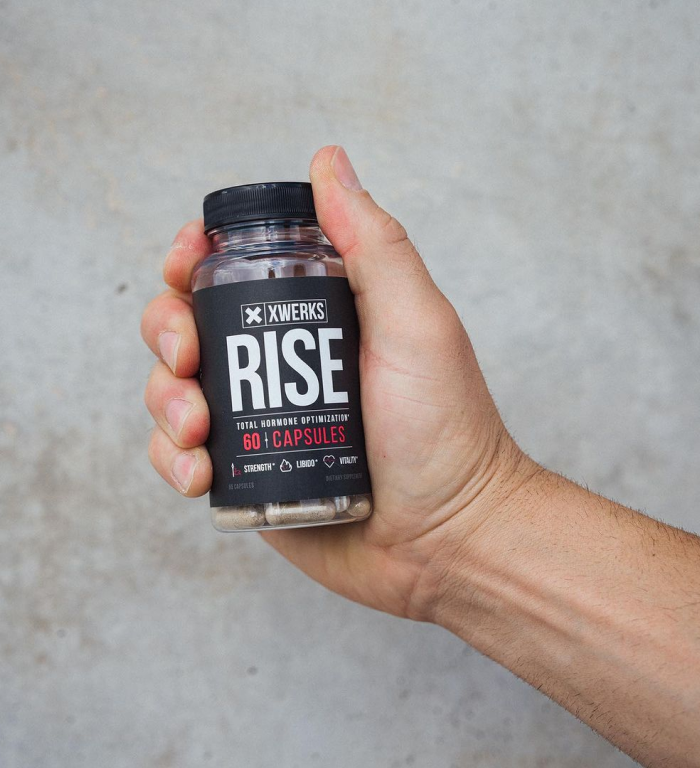
The Rise Supplement Facts panel reviewed for this article lists 400 mg of Tongkat Ali root powder per two-capsule serving. It does not disclose a Tongkat Ali extract ratio or eurycomanone percentage. The formula also includes other ingredients, which should be evaluated on their own terms.
That means Rise should not be described as a 100:1 or 200:1 Tongkat Ali extract based on this label. Nor can its root-powder amount be converted into a studied extract dose. Use the actual panel when comparing Rise's complete formula, and check the packaging you receive for the current formulation.
Frequently asked questions
Is 200:1 Tongkat Ali stronger than 100:1?
The larger ratio represents more nominal starting material per unit of extract under the same reporting convention. It does not establish twice the eurycomanone, twice the effect or better results.
Can I compare root powder and extract milligram for milligram?
No. They describe different ingredient forms. A useful comparison needs more information about composition and the evidence for each preparation.
Does a higher percentage mean I should take less?
Do not create your own dosing conversion from a percentage or ratio. Follow the product's directions and discuss suitability with a qualified clinician, particularly if you take medication or have a hormone-related condition.

Read the full Rise formula
See the ingredient amounts and directions together so you can evaluate the product beyond a single botanical.
View XWERKS RiseSources and label reference
- European Medicines Agency: declaration of herbal substances and preparations.
- NIH Office of Dietary Supplements: Botanical Dietary Supplements—Background Information.
- Chinnappan et al., 2021: randomized trial of a standardized Tongkat Ali extract.
- XWERKS Rise Supplement Facts, checked October 15, 2026.