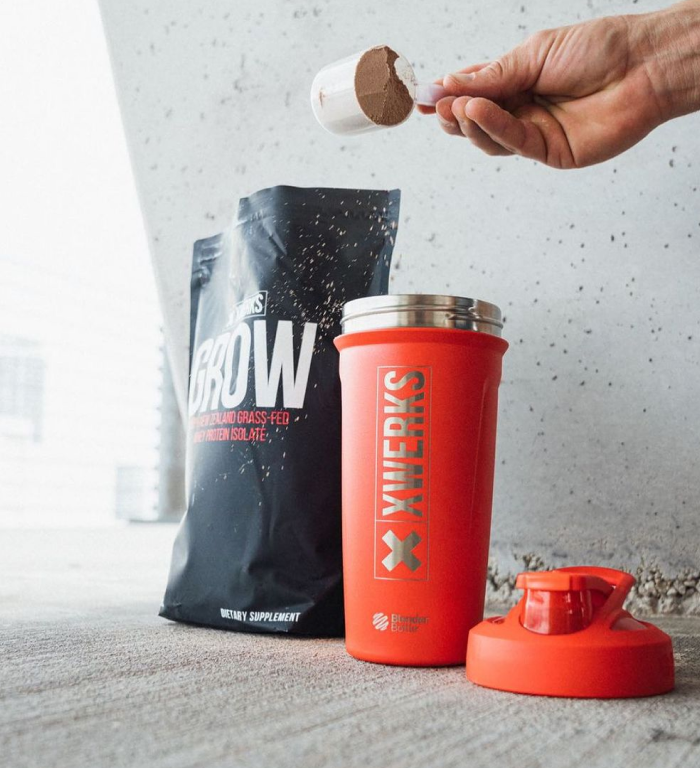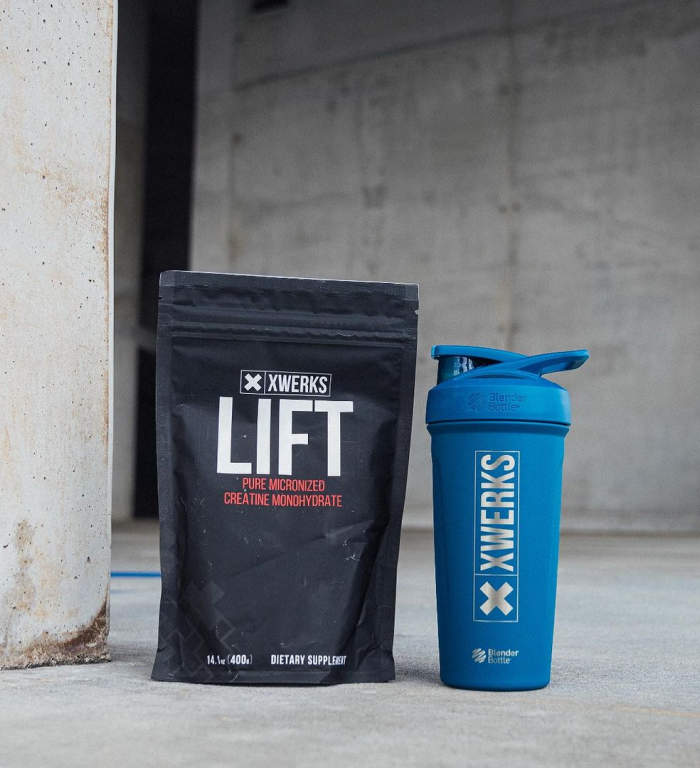


Protein powder is often the better fit when you want protein with fewer additional calories; a protein bar is often the better fit when you want a portable snack that requires no mixing. In the examples below, XWERKS Grow Chocolate provides 25 g protein for $2.30 and 110 calories. A Quest Chocolate Chip Cookie Dough bar provides 21 g for about $2.96 and 190 calories. The right choice depends on whether you need a drink ingredient or a ready-to-eat snack.
XWERKS sells Grow. This comparison uses two specific manufacturer labels and one-time US prices checked October 9, 2026. It does not represent every powder or bar, and we have not run a taste, satiety or performance test between the products.
How do the actual labels compare?
Grow Chocolate is the leaner protein serving in this comparison, while the Quest bar includes more fat, carbohydrate and fiber. Those additional nutrients are part of the snack format, not automatically a disadvantage.
| Per labeled serving | Grow Chocolate, mixed with water | Quest Chocolate Chip Cookie Dough bar |
|---|---|---|
| Protein | 25 g | 21 g |
| Calories | 110 | 190 |
| Total carbohydrate | 1 g | 22 g |
| Total fat | 0.5 g | 9 g |
| Dietary fiber | Not used in this comparison | 12 g |
| Sugar alcohols | Not listed in the examined ingredient list | 6 g |
| Package price | $69 / 30 servings | $35.49 / 12 bars |
| Cost per serving | $2.30 | About $2.96 |
Sources: Grow Chocolate label and price; Quest Chocolate Chip Cookie Dough label and 12-count price. Prices exclude tax, shipping and discounts. Other flavors can have different nutrition.
The table compares a prepared shake with water against one bar. Adding milk, oats or nut butter to powder changes the comparison. A recipe may become a more substantial snack, but its calories and cost belong in the calculation.
Which option gives more protein for your money?
Grow Chocolate costs less per equal amount of protein in this price snapshot. Equal-protein math prevents a 21 g bar from being compared as if it supplied the same protein as a 25 g shake.
Use this formula: package price ÷ servings × 25 ÷ protein grams per serving. Grow works out to $2.30 per 25 g. Quest works out to $35.49 ÷ 12 × 25 ÷ 21, or about $3.52 per 25 g.
The 25 g equivalent is roughly 1.19 Quest bars. That is a comparison unit, not a recommended portion. Most people eat a whole bar, so keep both the actual serving cost and the equal-protein cost visible when budgeting.
| Equal-protein comparison | Grow Chocolate | Quest example |
|---|---|---|
| Protein used for comparison | 25 g | 25 g |
| Equivalent servings | 1 scoop | About 1.19 bars |
| Equivalent calories | 110 | About 226 |
| Equivalent cost | $2.30 | About $3.52 |

The calorie difference does not mean a bar is a poor choice. If you need a snack with more than protein, the additional energy can fit the purpose. If you only need to close a protein gap, the leaner serving may be easier to fit into your day.
Should you compare total carbs or net carbs?
Compare total carbohydrate with total carbohydrate before considering a separate net-carb claim. Comparing a powder's Nutrition Facts total with a bar's front-label net number mixes two different measures.
The examined Quest label lists 22 g total carbohydrate, including 12 g fiber and 6 g sugar alcohols. Subtracting those two values gives the marketed 4 g net figure. Grow Chocolate's examined panel lists 1 g total carbohydrate. The 22 g and 1 g figures are the like-for-like label comparison. Quest nutrition panel; Grow panel.
Use the nutrition approach appropriate to your needs rather than treating a smaller front-label number as the only criterion. If you follow a clinician-directed nutrition plan, use the tracking method that plan specifies.
Are bars better for fullness than shakes?
The Grow and Quest nutrition labels do not establish whether a protein shake or protein bar will keep an individual fuller. The bar provides a solid snack and the powder provides a drink ingredient, but personal preference and the rest of the meal matter.
Ask a practical question: are you trying to add protein to an existing meal, or avoid having no food available during a busy afternoon? Powder added to a meal and a bar eaten alone solve different problems. Choose the option that makes the routine work without assuming the format guarantees a particular appetite response.
A person who dislikes drinking a shake may find a bar easier to use consistently. A person who enjoys a shake at home may prefer the lower cost and flexible serving. Both are reasonable decisions without a claim that one format is universally more satisfying.
How should you assess ingredients and tolerance?
Read the ingredient and allergen lists for the exact flavor you buy, especially if milk, nuts, soy or particular sweeteners are a concern. A category name such as “protein bar” does not provide enough information.
The examined Quest bar contains milk, almonds and soy, and lists sugar alcohols and fiber ingredients. Grow Chocolate contains milk and is sweetened with stevia. A whey isolate is still a milk-protein product; choosing powder does not solve a milk allergy. Quest ingredients; Grow ingredients.
Try a manageable amount of a new food in an ordinary setting before relying on it around an important workout or travel day. The point is to learn what works for you, not to label every ingredient you have not used before as harmful.
Which option fits your routine best?
Powder fits a routine with access to mixing and cleanup; bars fit a routine where portability and immediate eating are the priority. You can keep each for the situation it handles well.
| Your main need | Better starting option | Why |
|---|---|---|
| Protein with fewer extra calories | A lean protein powder mixed with water | Easier to control the rest of the recipe |
| A snack without a shaker or water source | A protein bar | Open the wrapper and eat |
| Adding protein to oats or a smoothie | Powder | It can become part of an existing meal |
| Lowest cost per 25 g in these examples | Grow Chocolate | $2.30 versus approximately $3.52 |
| Avoiding milk protein | Neither examined example | Both contain milk |
A bar in your bag and powder at home can be a sensible combination. The goal is a useful food routine, not winning a category argument. For another format comparison, whey isolate versus concentrate separates ingredient choice from packaging.
Questions about protein powder and bars
Compare protein powder and protein bars by the job each needs to do and the serving you will actually eat. These short answers cover the remaining details.
Can I replace a meal with a protein shake or bar?
A protein shake or protein bar is not automatically a complete meal. Consider the full meal's energy, variety and nutrients rather than its protein total alone.
Are all protein powders cheaper than bars?
Protein powders are not always cheaper than protein bars; package price, protein per serving, promotions and shipping can change the comparison. Recalculate using the two products you are deciding between.
Do I need a bar as well as a shake after training?
A protein bar and a shake are not both required after training. Count both in the day's food intake instead of treating two protein formats as two separate requirements.
Can powder work for meal preparation?
Protein powder can be used in planned shakes and recipes. See protein powder for weekly meal prep for ways to make a planned food routine more convenient.