Can whey before bed help you sleep? A small 2026 experiment found better sleep after whey than after a calorie-matched carbohydrate drink following resistance exercise. It offers an interesting lead, but it does not establish whey as a sleep treatment.
A bedtime protein shake is usually discussed in terms of muscle recovery. This study asked a different question: could the type of drink also affect the night that follows a workout?
What the researchers tested
In a randomized, double-blind crossover study, nine resistance-trained adults completed three conditions. After resistance exercise, they consumed 40 grams of whey protein, 40 grams of casein, or an isocaloric maltodextrin drink 30 minutes before bed.
| Outcome | Whey | Casein | Carbohydrate |
|---|---|---|---|
| Time to fall asleep | 9 minutes | 16 minutes | 19 minutes |
| Total sleep | 400 minutes | 390 minutes | 363 minutes |
| Sleep efficiency | 96% | 96% | 93% |
Whey improved these measures compared with the carbohydrate control. However, the researchers did not find significant differences between whey and casein. Exercise performance also did not differ between conditions.
Why the comparison matters
“Whey beat the control” and “whey beat casein” are different claims. Only the first is supported here. A result can reach statistical significance against one comparison drink without proving superiority over the other protein.
Also notice the context: a specific dose, after resistance exercise, in a very small group. These findings do not tell us what happens in people with chronic insomnia, on rest days, or after a smaller serving. The 37-minute gap between group medians is not a promise that your next shake will add 37 minutes of sleep.
How this fits with bedtime protein research
There is a separate reason athletes consider evening protein. An earlier controlled study in 16 young men found that 40 grams of casein before sleep was digested and absorbed overnight after evening exercise, supplying amino acids and increasing overnight protein synthesis compared with placebo.
That study concerns recovery physiology. The new trial concerns sleep outcomes. Put them together and you get two research questions worth following—not proof that every athlete needs a bedtime shake.
What to do with the finding
Start with your overall protein intake. The International Society of Sports Nutrition’s nutrient-timing position stand places daily intake and distribution within the wider training and nutrition plan. A convenient evening serving can help fill a gap; timing alone does not rescue an otherwise inadequate diet.
If you already enjoy a shake after a late workout, this is a reason to be curious about how it fits your routine. Pay attention to comfort, bedtime, and whether the extra food is actually needed. Persistent sleep problems deserve more than an experiment with protein powder.
Does one scoop of Grow match the study?
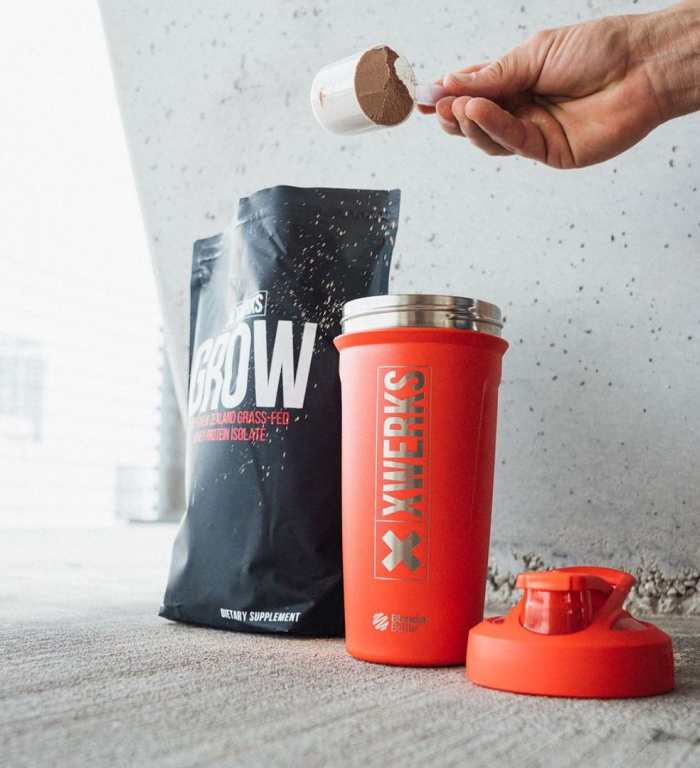
XWERKS Grow is whey protein isolate. Most flavors provide 25 grams of protein per serving; peanut butter provides 23 grams. That differs from the trial’s 40 grams of protein, and Grow itself was not tested. Follow your flavor’s nutrition label when counting daily intake.
For a broader view of evening protein, read our protein shake before bed guide. To work out where a shake fits, see how much whey to take per day.
Evidence assessment: an encouraging, small crossover trial that needs replication. The product connection is ingredient relevance, not a clinical trial of Grow.