California has enacted a law restricting sales of certain muscle-building and weight-loss supplements to people under 18, with new age-verification requirements starting January 1, 2027. Creatine is specifically named in the law, but AB 2030 does not ban adults from buying creatine.
The headline is real. The details matter—especially if you order supplements online. Here is what California shoppers should know before the new rules begin.
Information checked November 9, 2026. The January 2027 requirements described below are not yet in effect.
What is California’s new creatine law?
AB 2030 is an age-restriction law covering over-the-counter diet pills and dietary supplements marketed for weight loss or muscle building. Governor Gavin Newsom signed it on September 28, 2026, as part of a package of health legislation. The Governor’s signing announcement confirms its passage.
The law adds Section 109030 to California’s Health and Safety Code. Its January 1, 2027 start follows the state’s ordinary effective-date rule for regular-session statutes, explained by the California Secretary of State. The American Herbal Products Association’s September 2026 summary also identifies that start date.
Is creatine banned in California?
No. Adults are not prohibited from purchasing creatine under AB 2030. The restriction concerns selling covered products to people under 18; the age threshold is 18, not 21. The final text also includes an exception for a person under 18 with a prescription for a covered product. That is a specific exception, not a general parental-permission provision. See the chaptered law, Section 109030(b), (f), and (g).
For adult shoppers, the practical distinction is purchase eligibility versus verification. Being old enough to buy a product does not mean the seller will skip checking your age.
Why does creatine fall into the discussion?
Creatine is one of the ingredients a court may consider when deciding whether a supplement falls within the law’s muscle-building or weight-loss category. Coverage also depends on how the product is labeled, marketed, categorized, and presented. The final bill text reproduced by Digital Democracy lists these factors in Section 109030(e).
That makes “California banned creatine” an incomplete description. The law addresses a broader sales category. Creatine’s presence matters, but so do claims about muscle, strength, weight, and metabolism, along with the way a retailer groups or advertises products.
Protein powders are not automatically exempt. California’s law does not contain an express protein-product exemption. The Council for Responsible Nutrition’s retailer analysis highlights that distinction and the need to evaluate product presentation. That does not mean every protein food or powder automatically has the same legal status.
What will buying a covered supplement look like?
Expect age checks to become part of purchasing covered products, including online orders delivered in California. The experience can differ by retailer and sales channel.
| Shopping situation | What to expect from January 1, 2027 |
|---|---|
| Adult buying in a store | Adults remain eligible. Be prepared to show valid identification for a covered product. |
| Adult ordering for delivery in California | The seller must use the law’s database-verification route, adult-signature delivery route, or both. |
| Buyer under 18 | Covered sales are restricted, subject to the law’s prescription exception. |
| Shopper comparing protein powders | Do not assume a blanket exemption. Product classification and marketing matter. |
Sources: the bill author’s legislative summary, AB 2030’s final text, and CRN’s implementation overview.
For delivery sales, the law specifies two verification options:
- Database verification: Collect the purchaser’s full name, birth date, and residential address, then verify that information through qualifying commercially available databases based primarily on government-source data. The seller cannot control or modify the database.
- Adult-signature delivery: Use shipping that requires a recipient aged 18 or older to sign and present valid government-issued photo identification proving their age.
Those alternatives appear in Section 109030(c). A simple birthday field should not be confused with the database-verification process described there.
Example: An adult buying a covered supplement for personal use might complete verification during ordering, while another retailer might use a qualifying signature-required delivery service. The second order could require someone to be available to receive it. Check the seller’s instructions before choosing a delivery address or assuming the package will be left unattended.
Why did California pass the restriction?
California officials framed the measure around protecting minors from risks associated with weight-loss and muscle-building products. The Governor’s announcement cites concerns about dangerous or mislabeled products and eating disorders.
Industry groups disagree with the breadth of the approach. AHPA’s response argues that the category is too loosely defined and can restrict access to beneficial products. AHPA represents the supplement industry; its position should be read as an industry response, not a neutral scientific verdict.
A law regulating a category does not establish that every ingredient in that category has identical effects or risks. Creatine-specific evidence still needs to be evaluated separately.
Does the law change what we know about creatine?
The law changes sales rules; it is not a new clinical trial of creatine. The NIH Office of Dietary Supplements describes evidence that creatine can improve performance during repeated, short bursts of intense activity, such as sprinting and weightlifting. Responses vary, and benefits in those activities do not establish a benefit for every sport.
Evidence in healthy adults should not be turned into a blanket recommendation for teenagers or people with medical conditions. NIH recommends discussing performance supplements with a health care professional, particularly for teenagers, people with health conditions, or those taking medication.
If your concern is a blood-test result, our creatine vs. creatinine guide explains a separate question: how supplementation and kidney-function markers can interact, and why abnormal results still need clinical interpretation.
What should California shoppers do now?
Focus on understanding the product and the purchase process before the January 2027 change. Read the label, check the retailer’s current age-verification and delivery instructions, and distinguish an ingredient’s research from claims about a particular finished product.
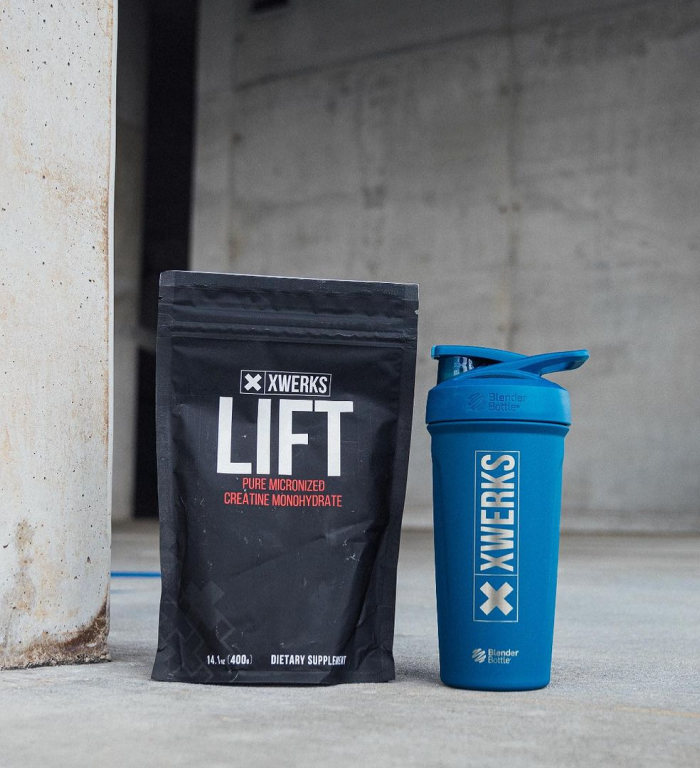
Adult shoppers comparing creatine formulas can review XWERKS Lift’s current ingredient and serving information.