

The Keto Diet, Testosterone, and Cortisol: What the Research Actually Shows
TL;DR
- Well-formulated keto diets generally have neutral-to-positive effects on testosterone in men — some studies show small T increases, others show no change.
- Cholesterol (the raw material for testosterone) and dietary fat intake both increase on keto, which theoretically supports steroid hormone production.
- However: aggressive caloric restriction + keto can elevate cortisol and suppress T. The problem isn't keto — it's under-eating while training hard.
- Athletic performance on keto is mixed: fine for endurance and low-intensity, impaired for high-intensity/glycolytic work (CrossFit, Hyrox, intervals).
The ketogenic diet — very low carb (typically under 50g/day), moderate protein, and high fat — has a more nuanced relationship with testosterone and cortisol than most keto advocates or critics admit. Well-formulated keto with adequate calories generally has neutral or mildly positive effects on testosterone, likely due to increased cholesterol and dietary fat (both raw materials for steroid hormone production). But aggressive caloric restriction combined with keto — especially alongside heavy training — can elevate cortisol and suppress testosterone, producing the opposite of the intended effect.
Why diet affects testosterone and cortisol at all
Before looking at keto specifically, it helps to understand why any diet affects these hormones.
Testosterone is synthesized from cholesterol through a multi-step enzymatic process in the Leydig cells of the testes. Cholesterol → pregnenolone → DHEA → androstenedione → testosterone. This means dietary cholesterol and dietary fat (from which the body synthesizes its own cholesterol) both contribute raw material to testosterone production. Very low-fat diets — below 15-20% of total calories — have been associated with reduced testosterone in some studies.
Cortisol is released in response to stress, including the physiological stress of caloric restriction. When the body senses it isn't getting enough fuel, the HPA axis ramps up cortisol to mobilize stored energy (fat, muscle glycogen, and in extreme cases, muscle tissue). Chronic caloric restriction — especially combined with heavy training — can keep cortisol chronically elevated, which then suppresses testosterone through the HPA-HPG axis crosstalk.
These two mechanisms — the "raw material" effect on testosterone and the "stress response" effect on cortisol — are the two main ways diets influence these hormones. Keto can affect both.
What the research says about keto and testosterone
The evidence base on keto-specific effects on testosterone is smaller than most people assume, and the results are mixed. Here's what we actually know:
Volek et al. 2002 — Found that a low-fat diet (19% fat) reduced testosterone compared to a higher-fat diet (41% fat) in resistance-trained men. Not a direct keto study, but supports the fat-and-T connection.
Wilson et al. 2020 — A study on resistance-trained men following either a ketogenic diet or a Western diet for 11 weeks found that the keto group had increased total testosterone compared to baseline, while the Western diet group saw modest decreases. This is one of the more commonly cited studies supporting keto for testosterone.
Vargas-Molina et al. 2020 — Examined ketogenic diets in trained women (less relevant to male testosterone but useful context). Found mixed hormonal effects.
Urbain et al. 2017 — Found that a ketogenic diet in healthy adults didn't significantly change testosterone levels over 6 weeks, suggesting neutral rather than positive effects.
Hämäläinen et al. 1984 (historical) — Found that reducing dietary fat from 40% to 25% decreased serum testosterone in middle-aged men, while increasing fiber intake had no effect. Supporting evidence for the fat-T relationship.
The overall picture: well-formulated keto with adequate calories tends to be neutral-to-positive for testosterone in men. The effect isn't dramatic — studies don't show 50% increases or anything like that. But keto doesn't appear to harm testosterone when calories are adequate, and may modestly support it through the increased fat intake.
The cortisol problem (and when keto causes it)
Here's where the story gets more complicated. Some people report elevated cortisol, fatigue, and reduced performance on keto — and the keto advocates will blame "keto flu" or electrolyte imbalance. The real issue is usually simpler:
Under-eating + heavy training + keto = high cortisol
Keto is often adopted alongside caloric restriction for weight loss. If you're already eating in a deficit, and you also eliminate carbs (which affects workout fueling for glycolytic training), and you continue training hard — your body interprets this as chronic stress. The HPA axis responds by elevating cortisol, which then suppresses testosterone through the inverse T-cortisol relationship.
The problem isn't keto specifically. The same thing happens on a very low-calorie diet of any composition when combined with heavy training. Keto just makes it more likely because it's often associated with aggressive weight loss efforts and because the carb restriction adds an additional stressor for people who train hard.
Glycogen depletion and high-intensity training stress
Carbohydrates fuel high-intensity exercise through glycolysis — the anaerobic energy system that powers sprints, heavy lifts, and interval training. On a true ketogenic diet, muscle glycogen stores are significantly depleted, and high-intensity work becomes noticeably harder.
For endurance athletes and people doing low-intensity work, this isn't a major issue — fat provides plenty of fuel for Zone 2 cardio. For Hyrox racers, CrossFitters, sprinters, and anyone doing high-intensity intervals, keto impairs performance. Training at a lower level of performance every session accumulates as additional stress, which can elevate cortisol over time.
Inadequate fat intake on "keto"
Some people think they're doing keto but are actually doing a low-carb, moderate-fat, moderate-protein diet — which ends up being a low-calorie diet by default (because they've removed carbs without increasing fat proportionally). This reproduces the caloric restriction problem and elevates cortisol.
True keto (typically 70-75% fat, 20-25% protein, 5-10% carb) requires deliberately eating large amounts of fat. If you're not eating enough fat, you're not really doing keto — you're doing a hypocaloric low-carb diet that creates the exact cortisol/testosterone problems you're trying to avoid.
Who might benefit from keto for hormonal health?
Men with insulin resistance or metabolic syndrome. Keto has strong evidence for improving insulin sensitivity, reducing visceral fat, and addressing the metabolic dysfunction that can suppress testosterone. For men in this category, keto often improves hormonal markers through its effect on body composition and insulin signaling.
Men who have been on very low-fat diets. If you've been following low-fat dietary advice for years and have suboptimal testosterone, increasing dietary fat (through keto or just a higher-fat balanced diet) may improve your levels by providing more raw material for steroid hormone production.
People whose body composition is the primary T-suppressing factor. Excess body fat increases aromatase activity, converting testosterone to estrogen. If keto helps you lose body fat, the downstream effect on testosterone can be significant — not because of ketosis specifically, but because of fat loss.
Endurance athletes who have adapted to keto. Some endurance athletes successfully adapt to keto and perform well at submaximal intensities. For these athletes, keto isn't necessarily bad for hormones — it's just a different fuel system.
Who should probably avoid keto?
Athletes in glycolytic sports. CrossFit, Hyrox, HIIT, competitive weightlifting, sprinting, team sports. These activities are heavily dependent on muscle glycogen, and keto impairs performance. Chronic underperformance is itself a stressor.
People already lean who train hard. If you're a male at 8-12% body fat doing heavy training, aggressive keto + caloric deficit is likely to elevate cortisol and suppress testosterone. You don't have the fat stores to fuel extended low-carb training without significant hormonal disruption.
People with a history of disordered eating or high stress. Restrictive diets of any kind can worsen stress, and keto's rigidity (avoiding a large category of foods) can make it harder to sustain without triggering cortisol elevation.
Anyone who can't commit to adequate fat intake. If you can't or won't eat 150-200g of fat per day, you're going to end up in a calorie-restricted state that hurts hormones. Better to do a balanced whole-food diet than a half-assed keto that's really just undereating.
A more practical alternative for most men
For most men interested in optimizing testosterone, keto isn't necessary. A moderate-fat, adequate-protein, whole-food diet produces most of the same benefits without the restrictions:
30-40% of calories from fat (especially saturated fat from quality sources, monounsaturated from olive oil and nuts, and omega-3s from fish). This provides ample raw material for steroid hormone synthesis without requiring ketosis.
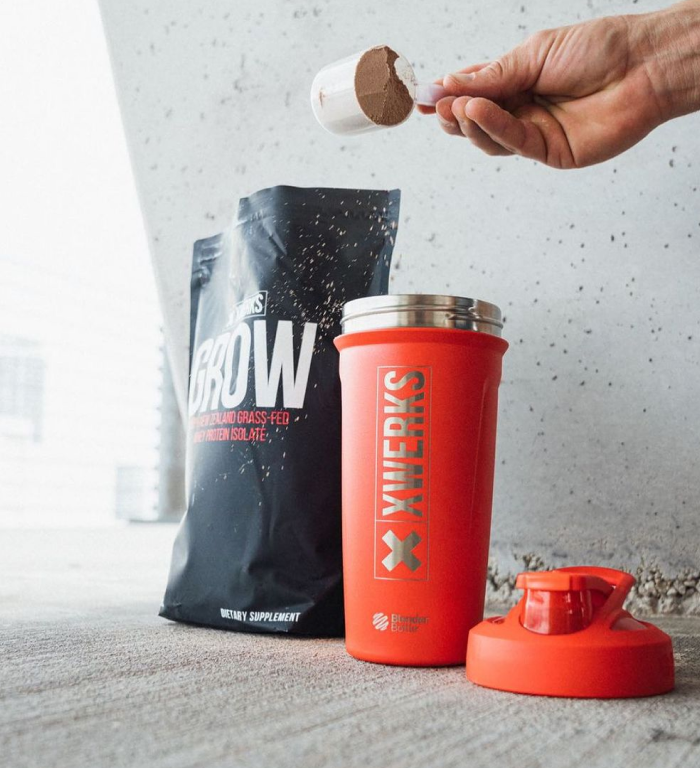
1.6-2.2g of protein per kg body weight daily, distributed across 3-5 meals. XWERKS Grow helps hit this target conveniently.
Adequate carbs to fuel training (especially for glycolytic sports) — typically 2-4g per kg body weight per day for active people, more for athletes in intense training.
Caloric intake at maintenance or slight deficit (no more than 20% below maintenance). Avoid aggressive cutting phases longer than 12 weeks.
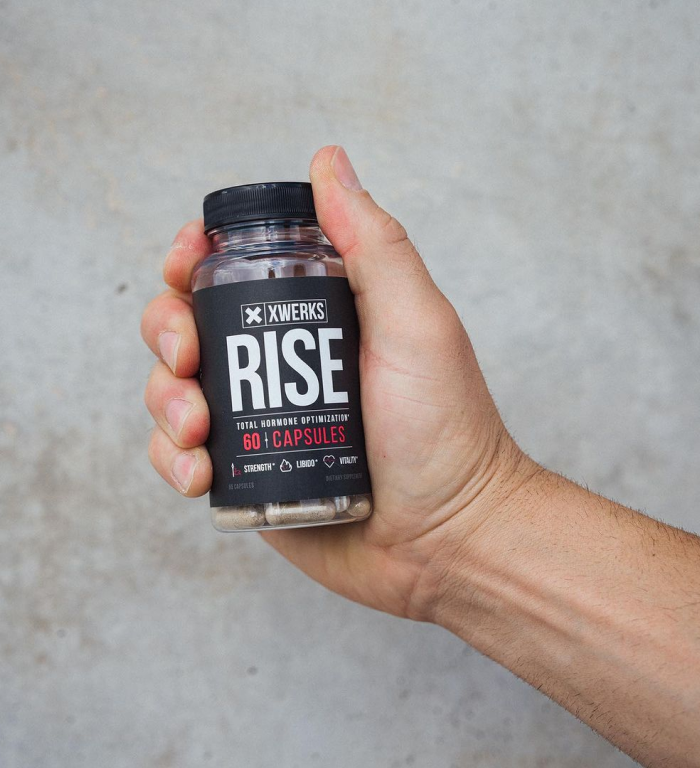
Combined with good sleep, resistance training, and stress management, this approach supports testosterone without the restrictions and potential downsides of strict keto. For targeted hormonal support, XWERKS Rise (Tongkat Ali, Zinc, Boron, Shilajit) and XWERKS Ashwa (ashwagandha for cortisol reduction) address both sides of the T-cortisol equation.
The Bottom Line
Well-formulated keto with adequate calories is generally neutral to mildly positive for testosterone in men, likely due to the increased fat intake providing raw material for steroid hormone production.
Poorly-executed keto — combining aggressive caloric restriction, heavy training, and inadequate fat intake — elevates cortisol and suppresses testosterone through the HPA-HPG axis crosstalk.
Keto isn't necessary for hormonal optimization. A moderate-fat, whole-food diet (30-40% calories from fat) with adequate protein and strategic carbs produces most of the same benefits without the restrictions.
For most men, the bigger levers are: body composition, sleep, resistance training, stress management, and targeted supplementation like Rise and Ashwa — not specific macronutrient ratios.
Natural Hormonal Support Stack
XWERKS Rise (Tongkat Ali + Zinc + Boron + Shilajit) for testosterone support + XWERKS Ashwa (ashwagandha) for cortisol reduction. Address both sides of the hormonal equation.
SHOP RISE → SHOP ASHWA →Further Reading
Unhealthy Lifestyle Habits and Low T
What Causes Low T in Young Males
Does Ashwagandha Increase Testosterone?
References
1. Volek JS, et al. Testosterone and cortisol in relationship to dietary nutrients and resistance exercise. J Appl Physiol. 1997;82(1):49-54.
2. Wilson JM, et al. The effects of ketogenic dieting on body composition, strength, power, and hormonal profiles in resistance training males. J Strength Cond Res. 2020;34(12):3463-3474.
3. Hämäläinen EK, et al. Diet and serum sex hormones in healthy men. J Steroid Biochem. 1984;20(1):459-464.
4. Urbain P, et al. Impact of a 6-week non-energy-restricted ketogenic diet on physical fitness, body composition and biochemical parameters in healthy adults. Nutr Metab. 2017;14:17.
5. Chandrasekhar K, et al. A prospective, randomized double-blind, placebo-controlled study of safety and efficacy of ashwagandha root. Indian J Psychol Med. 2012;34(3):255-262.