The History and Uses of Tongkat Ali: Ancient Herb, Modern Research
TL;DR
- Tongkat Ali (Eurycoma longifolia) is a Southeast Asian herb used in traditional medicine for centuries — the name means "Ali's walking stick" in Malay, referring to its reputation as an aphrodisiac.
- Unlike most traditional remedies, it has a genuine modern research base: multiple randomized placebo-controlled trials, a meta-analysis, and decades of traditional safety data.
- The main benefits: supports free testosterone (by reducing SHBG), reduces cortisol, improves male fertility, supports libido, and may reduce fatigue and improve strength in deficient men.
- Effective dose: 200-400mg daily of standardized root extract, typically taken for 4-12 weeks. XWERKS Rise contains 400mg per serving.
Tongkat Ali is one of the few traditional herbal supplements with a genuine modern research base. It's been used for centuries in Malaysia, Indonesia, and Vietnam as an aphrodisiac and male vitality tonic, and modern clinical trials have validated several of its traditional uses — particularly supporting free testosterone by reducing SHBG, lowering cortisol, improving male fertility markers, and supporting libido and physical performance. Effective doses range from 200-400mg daily of standardized water extract, and the safety profile is strong in short-term studies.
What is Tongkat Ali?
Tongkat Ali is the common name for Eurycoma longifolia Jack, a flowering shrub native to the jungles of Southeast Asia. It grows primarily in Malaysia, Indonesia, and Vietnam, with related species found in Cambodia, Myanmar, Thailand, and the Philippines. The plant is a slender understory shrub reaching 15-18 feet at maturity, with pinnate leaves and small red fruits.
It goes by several names across the region: Tongkat Ali in Malaysia (the most widely recognized name internationally), Pasak Bumi in Indonesia (literally "earth's peg," referring to the plant's long taproot), Cây Bá Bệnh in Vietnam (translated as "the tree that cures a hundred diseases"), and Long Jack in Western supplement markets. The scientific name Eurycoma longifolia comes from the Greek for "long-leaved broad basket."
The part of the plant used medicinally is the root — specifically the deep taproot, which can grow several meters into the soil. The roots contain the bioactive compounds responsible for the plant's effects: a class of peptides called eurypeptides, along with quassinoids (including eurycomanone, eurycolactone, and eurycomaoside), alkaloids, and flavonoids. These compounds are concentrated in the root and extracted through water-based processes to create the standardized extracts used in both traditional preparations and modern supplements.
The name "Tongkat Ali" and its cultural history
The name literally translates from Malay as "Ali's walking stick." There are two explanations for this name — both tied to the plant's reputation as a male vitality tonic.
The first interpretation refers to the plant's long, straight taproot that resembles a walking stick. The second — and more famous — is the euphemistic reference to the herb's aphrodisiac reputation: "Ali's walking stick" as a metaphor for male sexual function. Both interpretations may be accurate. In Malay traditional culture, the plant has been used for centuries as an aphrodisiac, a tonic for weakness and fatigue, and a general rasayana (rejuvenator) in the same category as ginseng in Chinese tradition.
Historical records document Tongkat Ali's use in traditional Malay medicine going back at least 300 years, with likely use predating that. It's been prescribed for fever, malaria, diabetes, dysentery, and "male weakness" — that last category encompassing low libido, erectile dysfunction, fatigue, and what we'd now recognize as symptoms of low testosterone or chronic stress. Traditional preparation involved boiling the root for hours to extract a bitter decoction, which was then consumed as a tonic.
The plant has also long been associated with the Malaysian national identity — the Malaysian government has invested in research and cultivation of Tongkat Ali, and standardized extracts produced in Malaysia (particularly under the "Physta" and "LJ100" brand names) are often considered the benchmark for quality.
The bioactive compounds that make it work
Unlike many traditional herbs whose mechanisms remain mysterious, Tongkat Ali's bioactive compounds have been identified and studied. The three main classes are:
Eurypeptides. These are small peptides (short chains of amino acids) found specifically in Eurycoma longifolia root. Research suggests eurypeptides are responsible for much of the plant's hormonal effects — particularly stimulation of steroidogenesis (hormone production) in Leydig cells. Standardized extracts are often standardized to eurypeptide content (typically 22% or higher).
Quassinoids. A class of bitter-tasting compounds including eurycomanone (the most studied), eurycolactone, and eurycomaoside. Quassinoids have demonstrated antimalarial, anti-inflammatory, and cytotoxic effects in research. Eurycomanone specifically has been shown to inhibit aromatase (the enzyme that converts testosterone to estrogen), which may contribute to Tongkat Ali's effect of supporting testosterone and reducing estradiol.
Alkaloids and flavonoids. Various alkaloids including canthin-6-one derivatives and beta-carboline alkaloids contribute to the plant's pharmacology. Flavonoids provide antioxidant activity.
The main benefits (and the research behind them)
1. Supports free testosterone by reducing SHBG
Tongkat Ali's most researched and reliable effect is supporting free testosterone — the bioavailable fraction not bound to SHBG (sex hormone binding globulin). A 2013 study by Henkel et al. in Phytotherapy Research found that 200mg of standardized Tongkat Ali extract daily for 5 weeks increased testosterone and reduced SHBG in men with low T. The mechanism appears to involve both stimulation of the HPG axis and reduction of SHBG at the liver, making existing testosterone more bioavailable to tissues.
Importantly, Tongkat Ali doesn't push testosterone above normal physiological ranges — it restores levels in men whose testosterone has declined due to aging, stress, or lifestyle factors. This distinction separates it fundamentally from testosterone replacement therapy or prohormones. Full deep dive on Tongkat Ali and SHBG here.
2. Reduces cortisol and stress markers
A landmark 2013 study by Talbott et al. published in the Journal of the International Society of Sports Nutrition found that 200mg of Tongkat Ali daily for 4 weeks reduced cortisol by 16% and increased testosterone by 37% in moderately stressed subjects, while also improving mood profile scores for tension, anger, and confusion. This dual effect on cortisol and testosterone is rare among natural compounds — most herbs affect one side of the hormonal equation, not both.
This matters because cortisol and testosterone have an inverse relationship. Reducing cortisol doesn't just lower stress — it releases the cortisol-driven suppression of the HPG axis, indirectly supporting testosterone through a second pathway alongside Tongkat Ali's direct stimulation.
3. Improves male fertility markers
Research has examined Tongkat Ali's effects on male fertility with encouraging results. A 2010 study by Tambi et al. in Andrologia found that 200mg daily of standardized Tongkat Ali extract for 3 months in men with idiopathic infertility produced significant improvements in sperm concentration, motility, and volume — with 14.7% of the couples achieving pregnancy during the study period. Another study showed improvements in semen quality across multiple parameters.
The fertility benefits likely result from the combined effects on testosterone, reduction of oxidative stress in the testes, and possibly direct effects on spermatogenesis. For men with fertility concerns, Tongkat Ali represents one of the few natural compounds with meaningful human clinical evidence.
4. Supports libido and sexual function
The traditional use of Tongkat Ali as an aphrodisiac is supported by modern research. Multiple clinical studies have documented improvements in libido, sexual performance, and erectile function in men supplementing with standardized extract. A 2012 study by Ismail et al. found that 300mg daily for 12 weeks improved sexual function scores and satisfaction in middle-aged men. The effect appears to be mediated through both direct hormonal effects (testosterone and free T) and improvements in energy and mood.
Interestingly, some research suggests women may also experience libido benefits from Tongkat Ali, though the research in women is limited compared to men.
5. Physical performance and body composition
Research has examined whether Tongkat Ali can improve athletic performance and body composition. Results are mixed but generally favorable for men with suboptimal testosterone — in these populations, studies have shown improvements in strength, muscle mass, and reduced fatigue. In already-optimized young healthy men, the effects on performance are less clear.
A 2003 study found that Tongkat Ali supplementation during a strength training program produced greater gains in lean mass and strength compared to placebo. The mechanism likely involves the combined effects of increased free testosterone and reduced cortisol — creating a more anabolic hormonal environment for training adaptations.
The safety profile
Tongkat Ali has a strong short-term safety profile in human clinical studies. Doses up to 300-400mg daily for up to 12 weeks have been well-tolerated in multiple trials, with side effects similar to placebo. A 2016 study specifically examining safety found no significant adverse effects on liver function, kidney function, or blood chemistry at 200mg daily for 5 weeks.
That said, there are a few important considerations:
Long-term safety isn't fully established. Most human studies are 4-12 weeks. Longer-term use (6+ months) hasn't been systematically studied. Based on the short-term safety data and traditional use patterns, it appears safe for sustained use, but this isn't formally validated.
Potential drug interactions. Tongkat Ali may interact with antidiabetic drugs (hypoglycemic effect), immunosuppressants, and hormone therapies. If you're on any prescription medications, consult your physician before supplementing.
Not for people with hormone-sensitive conditions. Men with prostate cancer, elevated PSA, or other hormone-sensitive conditions should avoid Tongkat Ali or use only under medical supervision, as the effect on testosterone could theoretically affect these conditions.
Pregnancy and breastfeeding. Tongkat Ali has not been studied in pregnant or breastfeeding women and should be avoided.
Some users report stimulation. Tongkat Ali can produce subjective feelings of increased energy and alertness. For sensitive individuals, this can manifest as restlessness, irritability, or difficulty sleeping if taken late in the day. Taking it in the morning generally avoids sleep interference.
How to take Tongkat Ali effectively
Dose. Research-backed doses are 200-400mg daily of standardized water extract. The Talbott 2013 study used 200mg; other studies used 300-400mg. XWERKS Rise contains 400mg per serving — in the upper end of the research-backed range.
Form. Standardized water extract is the evidence-based choice. Avoid raw root powder (contains minimal active compounds) and alcohol-based tinctures (different extraction profile than research used). Look for products standardized to eurypeptide content or specifying eurycomanone content.
Timing. Take in the morning or early afternoon. Taking late in the day can interfere with sleep for sensitive individuals due to the stimulating effects.
Duration. Effects typically become noticeable within 2-4 weeks of consistent use, with full benefits appearing at 8-12 weeks. Some users take Tongkat Ali continuously; others cycle (8 weeks on, 2 weeks off). Either approach is reasonable based on current evidence.
Stacking. Tongkat Ali works well alongside other testosterone-supporting compounds that address different mechanisms: zinc (supports testosterone synthesis), boron (lowers SHBG via a different pathway), shilajit (HPG axis support and mitochondrial benefits), and ashwagandha (cortisol reduction from a different angle). XWERKS Rise combines Tongkat Ali with zinc, boron, shilajit, and BioPerine for multi-pathway support.
The Bottom Line
Tongkat Ali is a Southeast Asian herb with centuries of traditional use and a legitimate modern research base — making it one of the few natural testosterone-support ingredients with real clinical evidence. Benefits include supporting free testosterone (by reducing SHBG), reducing cortisol (Talbott 2013 showed 16% cortisol reduction and 37% T increase), improving male fertility markers, supporting libido, and enhancing physical performance in men with suboptimal T.
Effective dose: 200-400mg daily of standardized water extract. Safety profile is strong in short-term studies. Best taken in the morning, alone or stacked with complementary ingredients like zinc, boron, and shilajit. XWERKS Rise delivers 400mg of Tongkat Ali per serving alongside all four of those complementary ingredients.
400mg Tongkat Ali + Zinc + Boron + Shilajit
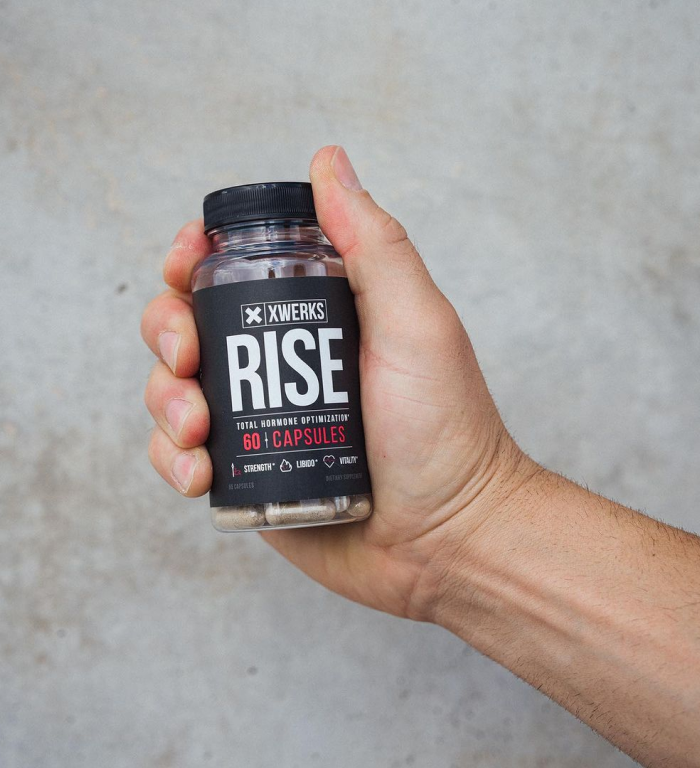
XWERKS Rise — 400mg Tongkat Ali, 15mg Zinc, 6mg Boron, 250mg Shilajit, 10mg BioPerine. Evidence-backed natural testosterone support with ingredients that work through distinct, complementary pathways.
SHOP RISE →Further Reading
Tongkat Ali FAQ — Common questions and practical guidance.
Tongkat Ali and SHBG — How SHBG affects free testosterone.
Tongkat Ali vs. Fadogia Agrestis — Why the evidence strongly favors Tongkat Ali.
Cortisol vs. Testosterone — The inverse relationship Tongkat Ali addresses.
Benefits of Boron — The complementary Rise ingredient.
Does Zinc Increase Testosterone?
References
1. Talbott SM, et al. Effect of Tongkat Ali on stress hormones and psychological mood state in moderately stressed subjects. J Int Soc Sports Nutr. 2013;10(1):28.
2. Tambi MI, et al. Standardised water-soluble extract of Eurycoma longifolia, Tongkat Ali, as testosterone booster for managing men with late-onset hypogonadism? Andrologia. 2012;44 Suppl 1:226-230.
3. Henkel RR, et al. Tongkat Ali as a potential herbal supplement for physically active male and female seniors. Phytother Res. 2014;28(4):544-550.
4. Ismail SB, et al. Randomized clinical trial on the use of PHYSTA freeze-dried water extract of Eurycoma longifolia for the improvement of quality of life and sexual well-being in men. Evid Based Complement Alternat Med. 2012;2012:429268.
5. George A, Henkel R. Phytoandrogenic properties of Eurycoma longifolia as natural alternative to testosterone replacement therapy. Andrologia. 2014;46(7):708-721.
6. Rehman SU, et al. Review on a traditional herbal medicine, Eurycoma longifolia Jack (Tongkat Ali): its traditional uses, chemistry, evidence-based pharmacology and toxicology. Molecules. 2016;21(3):331.