

TL;DR
- When you stop taking creatine, your muscle creatine stores gradually return to baseline over a few weeks — typically around 4-6 weeks — as your body uses and excretes creatine without replacement.
- The most noticeable change is usually a small drop in scale weight, mostly from reduced intramuscular water. This is water, not muscle — you are not losing actual muscle tissue by stopping creatine.
- You may notice a slight reduction in performance on short, intense efforts (top-end strength, rep capacity, sprint power) as phosphocreatine availability returns to baseline. The effect is modest, not dramatic.
- Stopping creatine does not cause muscle loss, a "crash," rebound fat gain, or any withdrawal effect. Your body simply resumes producing its own baseline creatine as it always did.
- There's no need to cycle off creatine — research supports continuous long-term use. But if you do stop, restarting just means re-saturating, which takes a few weeks (or faster with a loading phase).
"What happens when you stop taking creatine?" is a question that often comes loaded with anxiety — people worry about losing muscle, crashing, rebound weight gain, or some kind of withdrawal. The reality is far less dramatic. When you stop taking creatine, your elevated muscle creatine stores simply drift back down to your natural baseline over a few weeks, and the modest performance and water-weight benefits of supplementation fade with them. That's it. There's no crash, no muscle loss, no withdrawal, no rebound. Your body produces its own creatine and always has — supplementation just tops the stores up above baseline, and stopping just removes that top-up. This guide covers exactly what changes when you stop, what doesn't change, the realistic timeline, why the scale-weight drop isn't muscle loss, whether you should cycle off at all, and what restarting looks like.
What actually happens when you stop
Supplementing creatine raises your muscle creatine and phosphocreatine stores above the level your body maintains on its own. When you stop supplementing, here's the actual sequence:
• Your body keeps using and excreting creatine daily — it converts to creatinine and is cleared through the kidneys, as always
• Without the daily dose replacing it, muscle stores gradually decline
• Over roughly 4-6 weeks, stores return to your natural baseline — the level your body maintained before you ever supplemented
• Your body continues producing its own creatine the entire time, from amino acids in your liver and kidneys, just as it always did
The key word is gradual. This isn't a switch that flips off. It's a slow drift over weeks, and it lands at your normal baseline — not below it. You don't end up worse off than before you started; you end up where you started.
The changes you might actually notice
A small drop in scale weight
Water, not muscleThis is the most commonly noticed change. Creatine increases the water content inside your muscle cells — intramuscular water. When you stop and muscle creatine declines, that extra intramuscular water goes with it, and the scale typically drops by a small amount over the following weeks.
Critical point: this is water, not muscle. Losing intramuscular water is not losing muscle tissue. Your actual muscle — the contractile tissue you built through training — is unaffected by stopping creatine. The scale drop can feel alarming if you don't understand the mechanism, but it's the same water that showed up when you first started creatine, simply leaving again.
Slightly less "full" looking muscles
Cosmetic, from the same waterThe same intramuscular water that affects the scale also contributes to a fuller, slightly larger muscle appearance. Stopping creatine can make muscles look marginally less full. Again — this is the water volume changing, not the muscle itself. The effect is modest and cosmetic.
A modest dip in short, intense performance
Top-end strength, rep capacity, sprint powerCreatine's performance benefit comes from supporting the rapid energy system used in short, high-intensity efforts — heavy lifts, the last couple reps of a hard set, sprints, jumps. As phosphocreatine availability returns to baseline, you may notice a slight reduction in this kind of performance: maybe a rep or two less on a hard set, slightly less at the very top end of strength.
The effect is modest, not dramatic. You won't suddenly be weak. Your training, your technique, and your accumulated muscle and strength are all still there. You're just operating without the extra phosphocreatine buffer. Many people barely notice it day to day; the difference is more measurable than it is dramatic.
Possibly nothing obvious at all
For many people, day to dayPlenty of people stop creatine and don't notice anything dramatic in daily life. The scale drifts down a little, training feels roughly the same, life goes on. The changes are real but small — they're more noticeable to someone tracking numbers closely than to someone just training normally.
What does NOT happen when you stop
• You do NOT lose muscle. Stopping creatine doesn't cause loss of actual muscle tissue. The scale drop is intramuscular water. Your built muscle is unaffected — it's maintained by training and protein intake, not by creatine supplementation.
• There is NO "crash" or withdrawal. Creatine isn't a stimulant and isn't habit-forming. Stopping produces no withdrawal symptoms, no energy crash, no rebound effect. Your body just resumes its normal baseline production.
• Your body does NOT "forget" how to make creatine. A persistent myth. Your natural creatine production isn't shut down or impaired by supplementation — your body keeps producing its baseline amount the entire time you supplement, and continues normally after you stop.
• There is NO rebound fat gain. Stopping creatine has nothing to do with fat gain. The only weight change is the small loss of intramuscular water.
• Your strength does NOT collapse. You lose the modest phosphocreatine buffer, not your training adaptations. The strength and muscle you built through training stay with you.
• You do NOT have to taper off. There's no need to gradually reduce the dose. You can simply stop. The decline to baseline happens gradually on its own regardless.
Do you even need to stop? (Cycling)
A common reason people ask "what happens when you stop" is that they've heard you should "cycle" creatine — take it for a while, then stop for a while. The honest answer: cycling creatine isn't necessary and isn't supported by a clear research rationale.
• Creatine monohydrate has been studied extensively for long-term continuous use and has a strong long-term safety profile in healthy people
• Your body doesn't "adapt" to creatine in a way that makes it stop working — saturated stores stay beneficial
• Cycling off just means periodically losing the benefit and then having to re-saturate — it accomplishes nothing positive
• The continuous-use model (take it every day, indefinitely) is the approach the research supports
If you stop, it should be because you chose to — not because you believe a cycle is required. There's no built-in reason to take breaks.
That said, if you do stop — ran out, taking a break, lost interest — nothing bad happens. You just drift back to baseline as described above. And restarting is simple.
What restarting looks like
Re-saturation, same as the first time
A few weeks at 3-5g, or faster with loadingIf you've stopped and your stores have returned to baseline, restarting just means re-saturating. The process is identical to starting for the first time:
• Standard approach: 3-5g daily; full re-saturation over roughly 3-4 weeks
• Loading approach: ~20g daily split into 4 doses for 5-7 days, then 3-5g daily maintenance — re-saturates faster, within about a week
Either way, the benefits return as the stores refill. There's no penalty for having stopped, and no special protocol needed for restarting — it's just the normal saturation process again. For the full breakdown, see how long does creatine take to work and how much creatine should I take.
If you stopped only briefly
Just resume — minimal re-saturation neededIf you only stopped for a short time (a week or two — travel, ran out, forgot), your stores haven't fully declined to baseline yet. Just resume your normal 3-5g daily dose. You'll top back up quickly because you didn't drift far. No loading phase needed for short interruptions.
Common questions about stopping creatine
"Will I lose muscle if I stop taking creatine?"
No. Stopping creatine doesn't cause loss of muscle tissue. The small scale-weight drop is intramuscular water, not muscle. Your built muscle is maintained by training and protein intake — it doesn't depend on creatine supplementation.
"How long until creatine is out of my system?"
Muscle creatine stores return to your natural baseline over roughly 4-6 weeks after stopping. It's a gradual decline, not a sudden drop — and it lands at your normal baseline, not below it.
"Why did the scale drop when I stopped creatine?"
Creatine increases intramuscular water. When you stop and muscle creatine declines, that extra water leaves, and the scale drops a small amount. It's water, not fat and not muscle — the same water that appeared when you first started.
"Is there a withdrawal from stopping creatine?"
No. Creatine isn't a stimulant and isn't habit-forming. There's no withdrawal, no crash, no rebound. Your body simply resumes its normal baseline creatine production, which it was doing the whole time anyway.
"Do I need to cycle off creatine periodically?"
No. Cycling creatine isn't necessary and isn't supported by a clear research rationale. Creatine monohydrate has a strong long-term safety profile for continuous use in healthy people. Take it every day, indefinitely — that's the approach the research supports.
"If I stop and restart, do I have to load again?"
Only if you want faster re-saturation. After a full stop, restarting means re-saturating — either gradually at 3-5g daily over a few weeks, or faster with a loading phase. After only a brief interruption, just resume your normal dose; you didn't drift far enough to need loading.
"Will stopping creatine make me weaker?"
Slightly, on short intense efforts — you lose the modest phosphocreatine buffer that helps with top-end strength and rep capacity. But it's a modest effect, not a collapse. Your training adaptations, technique, and built muscle all stay with you.
The Bottom Line
When you stop taking creatine, your muscle creatine stores gradually return to your natural baseline over about 4-6 weeks. That's the whole story — a slow drift back to where you started, not a crash or a decline below baseline.
What you might notice: a small drop in scale weight (intramuscular water, not muscle), slightly less "full" looking muscles, and a modest dip in short intense performance like top-end strength and rep capacity. For many people, day to day, nothing dramatic.
What does NOT happen: you don't lose muscle, there's no crash or withdrawal, your body doesn't "forget" how to make creatine, there's no rebound fat gain, your strength doesn't collapse, and you don't need to taper off.
You don't need to cycle off. Cycling creatine isn't necessary or research-supported. Continuous daily use is the approach the evidence backs, and creatine monohydrate has a strong long-term safety profile in healthy people.
Restarting is simple: re-saturate at 3-5g daily over a few weeks, or faster with a loading phase. After only a brief break, just resume your normal dose. No penalty for having stopped.
Practical takeaway: stopping creatine is low-stakes and reversible. You drift back to baseline, the modest benefits fade, and if you restart, they come back. There's nothing to fear in stopping — and no real reason you need to.
Dig deeper: how long does creatine take to work · how much creatine should I take · should you take creatine on rest days · understanding creatine: common questions · does creatine cause hair loss · creatine monohydrate vs creatine HCL
The creatine worth staying consistent with
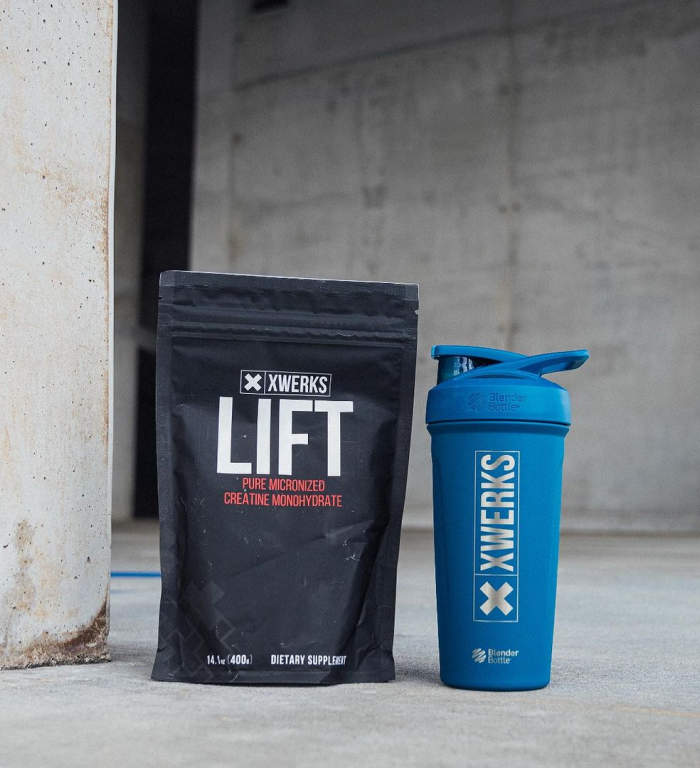
XWERKS Lift is 100% pure micronized creatine monohydrate — 5g per serving, no fillers, flavorless, mixes into anything. The most well-researched performance supplement, built for continuous daily use. Stay saturated, stay ready.
Shop Lift