What Causes Low Testosterone in Young Males?
Low testosterone in men under 30 is more common than most people realize — and it's increasing. The primary drivers are excess body fat, chronic sleep deprivation, high stress/cortisol, poor diet, sedentary lifestyle, and environmental endocrine disruptors. Unlike age-related decline (which begins around 30), low T in young men is almost always caused by modifiable lifestyle factors — meaning it's largely fixable without medical intervention.
Excess body fat
This is the single most impactful modifiable cause. Adipose tissue (body fat) contains aromatase — the enzyme that converts testosterone to estrogen. More body fat means more aromatase activity, more testosterone converted, and lower circulating testosterone levels. This creates a vicious cycle: low testosterone promotes fat storage, which further lowers testosterone.
The data is stark. Obesity in young men is associated with testosterone levels 30-50% lower than lean age-matched peers. A 2007 study in Clinical Endocrinology found that each one-point increase in BMI was associated with a 2% decrease in testosterone. For a young man at a BMI of 35 vs. 25, that's roughly a 20% testosterone difference from body fat alone.
The fix: Reduce body fat through a moderate caloric deficit, resistance training, and adequate protein intake. Even modest fat loss (10-15 lbs) can produce measurable testosterone improvement. This should always be priority one.
Chronic sleep deprivation
Testosterone production is pulsatile, with the largest release occurring during deep (stage 3-4 NREM) sleep. Chronically sleeping under 6 hours disrupts this process significantly. A study by Leproult and Van Cauter (2011) published in JAMA found that just one week of 5-hour sleep reduced daytime testosterone by 10-15% in young healthy men — an effect equivalent to aging 10-15 years.
This is particularly relevant for younger men who often sacrifice sleep for work, socializing, gaming, or screen time. Chronic 5-6 hour sleep is common in the 18-30 demographic and represents one of the most overlooked causes of hormonal disruption.
The fix: 7-9 hours of quality sleep per night. Consistent sleep/wake times. Minimize blue light exposure 1-2 hours before bed. Cool, dark bedroom. Caffeine cutoff by early afternoon. Magnesium before bed can support sleep quality.
Chronic stress and cortisol
Cortisol and testosterone have an inverse relationship mediated by the hypothalamic-pituitary-adrenal (HPA) and hypothalamic-pituitary-gonadal (HPG) axes. When cortisol is chronically elevated — from academic pressure, career stress, financial worry, relationship problems, overtraining, or constant digital stimulation — the HPA axis suppresses the HPG axis, directly reducing LH secretion and testosterone production.
Young men in high-stress environments (college, early career, military) are particularly vulnerable to this mechanism. The stress doesn't have to be dramatic — chronic low-grade stress accumulated over months is sufficient to measurably suppress testosterone.
The fix: Stress management practices (exercise is the single most effective one), adequate sleep, social connection, and reducing unnecessary stressors. Ashwagandha (KSM-66) has clinical evidence for reducing cortisol by up to 30%, and Tongkat Ali directly addresses the cortisol-testosterone relationship.
Poor diet
Several dietary patterns suppress testosterone in young men. Excess sugar acutely lowers testosterone — glucose ingestion reduces testosterone by approximately 25% within 2 hours (Caronia 2013). Ultra-processed food diets (high in refined carbs, seed oils, trans fats, and chemical additives) are associated with lower testosterone across multiple observational studies. Chronic caloric surplus drives the fat gain that activates aromatase. Very low fat diets (<15% of calories from fat) can impair testosterone synthesis, since cholesterol is the precursor molecule for all steroid hormones. Zinc deficiency reliably reduces testosterone — and zinc status is often suboptimal in young men eating processed food diets. Excessive alcohol consumption suppresses testosterone through direct Leydig cell damage and cortisol elevation.
The fix: Adequate total calories (not too much, not too little), adequate fat (25-30% of calories), adequate protein (1.6-2.2g/kg), minimize ultra-processed foods and excess sugar, moderate alcohol, and ensure sufficient zinc (15mg/day), vitamin D (2,000-5,000 IU), and magnesium.
Sedentary lifestyle
Physical inactivity is associated with lower testosterone through multiple mechanisms: increased fat accumulation (aromatase), reduced muscle mass (which supports hormonal signaling), decreased insulin sensitivity (insulin resistance is linked to lower testosterone and higher SHBG), and reduced acute testosterone release from training (resistance exercise produces a temporary testosterone spike that contributes to the overall hormonal environment).
Young men who spend most of their day sitting — desk job, commuting, screen-based entertainment — are at higher risk for hormonal disruption than their more active peers.
The fix: Resistance training 3-4 times per week (compound movements: squats, deadlifts, bench, rows, overhead press). This is the single most effective exercise modality for testosterone support. Add regular walking/movement throughout the day. Creatine supplementation enhances training performance and supports the muscle mass that contributes to a healthy hormonal environment.
Environmental endocrine disruptors
Young men today are exposed to significantly more endocrine-disrupting chemicals (EDCs) than any previous generation. BPA (from plastics, food packaging, receipts), phthalates (personal care products, plastics), PFAS ("forever chemicals" in water, cookware, food packaging), pesticide residues in conventional produce, and microplastics (now detected in human blood, testicular tissue, and semen) — all have documented or suspected effects on male reproductive hormones.
The Endocrine Society has formally classified these as endocrine-disrupting chemicals with potential effects on testosterone, sperm quality, and reproductive health. A 2024 review found microplastics present in testicular tissue from 100% of tissue samples tested. While the exact testosterone impact of each exposure is still being quantified, the cumulative burden of lifelong EDC exposure is a plausible contributor to the generational decline in testosterone observed in Western nations.
The fix: Reduce exposure where practical — minimize plastic food/drink containers (use glass/stainless), filter drinking water, choose natural personal care products, eat organic when feasible for the "dirty dozen" produce. These are harm-reduction strategies, not guarantees — total EDC avoidance is impossible in modern life.
Overtraining
While moderate exercise supports testosterone, excessive training volume without adequate recovery suppresses it. Overtraining syndrome involves chronically elevated cortisol, depleted glycogen, insufficient recovery, and — as a consequence — suppressed HPG axis function and reduced testosterone. This is particularly common in young endurance athletes (runners, cyclists, triathletes) and CrossFit enthusiasts who combine high volume with insufficient calories and sleep.
The fix: Adequate caloric intake for training volume, 1-2 rest days per week, sleep prioritization, and periodized programming that includes deload weeks. Intra-workout nutrition supports recovery during high-volume sessions.
Medical causes
While lifestyle factors dominate in young men, medical conditions can also cause low testosterone. Klinefelter syndrome (47,XXY), pituitary tumors or dysfunction, testicular injury or undescended testes, type 2 diabetes and insulin resistance, thyroid disorders, and certain medications (opioids, corticosteroids, SSRIs, some anticonvulsants) can all suppress testosterone. Prior anabolic steroid use — even short courses — can cause long-lasting HPG axis suppression.
If lifestyle optimization doesn't improve symptoms and blood work over 3-6 months, a medical evaluation for these conditions is warranted.
The Priority Order
1. Body composition: Get to a healthy body fat percentage. This is the single biggest lever.
2. Sleep: 7-9 hours, consistent schedule. Non-negotiable.
3. Resistance training: 3-4x/week, compound movements. The most effective exercise for testosterone.
4. Diet: Adequate fat, adequate protein, minimize processed food and excess sugar, moderate alcohol.
5. Stress management: Exercise + sleep cover most of this. Ashwagandha and Tongkat Ali for targeted support.
6. Micronutrients: Zinc (15mg), vitamin D (2,000-5,000 IU), magnesium. Correct deficiencies first.
7. Targeted supplementation: Tongkat Ali (400mg), boron (6mg), ashwagandha — after the lifestyle foundations are in place.
Address the Foundations First. Then Supplement.
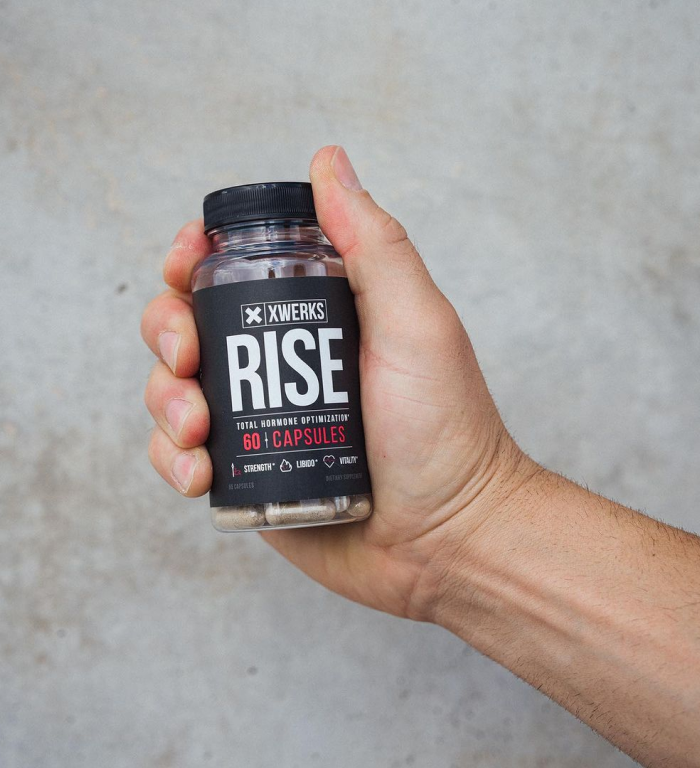
XWERKS Rise — 400mg Tongkat Ali, 15mg Zinc, 6mg Boron, 250mg Shilajit, 10mg BioPerine. Targeted testosterone support for the lifestyle factors most young men aren't covering.
SHOP RISE →Further Reading
Testosterone-Killing Foods — The dietary patterns that suppress T, rated by evidence strength.
Cortisol vs. Testosterone — How chronic stress suppresses the HPG axis.
Tongkat Ali FAQ — The most evidence-backed natural testosterone-support ingredient.
Testosterone Levels by Country — What the global data tells us about lifestyle and hormonal health.
Low Testosterone: What Are the Symptoms? — How to recognize the signs.
TRT Side Effects — What to know before considering medical intervention.
References
1. Leproult R, Van Cauter E. Effect of 1 week of sleep restriction on testosterone levels in young healthy men. JAMA. 2011;305(21):2173-2174.
2. Caronia LM, et al. Abrupt decrease in serum testosterone levels after an oral glucose load in men. Clin Endocrinol. 2013;78(2):291-296.
3. Travison TG, et al. A population-level decline in serum testosterone levels in American men. J Clin Endocrinol Metab. 2007;92(1):196-202.
4. Gore AC, et al. EDC-2: The Endocrine Society's second scientific statement on endocrine-disrupting chemicals. Endocr Rev. 2015;36(6):E1-E150.
5. Bhasin S, et al. Testosterone therapy in men with hypogonadism: an Endocrine Society clinical practice guideline. J Clin Endocrinol Metab. 2018;103(5):1715-1744.
6. Grossmann M. Low testosterone in men with type 2 diabetes: significance and treatment. J Clin Endocrinol Metab. 2011;96(8):2341-2353.