Supplements for GLP-1 Muscle Loss: The Evidence-Based Protocol
TL;DR
- GLP-1 medications (semaglutide/Wegovy/Ozempic, tirzepatide/Mounjaro/Zepbound) cause substantial muscle loss — 25-40% of weight lost is lean mass in some studies, compared to ~25% in natural weight loss.
- The top evidence-backed supplements for preserving muscle on GLP-1s: whey protein isolate (to hit 2.0-2.4g/kg), creatine monohydrate (5g daily), vitamin D3, and omega-3 fish oil.
- GLP-1 users need far more protein than standard guidelines suggest — appetite suppression makes hitting targets through whole food nearly impossible without supplementation.
- Critical truth: supplements alone don't prevent GLP-1 muscle loss. The complete protocol is resistance training + high protein intake + creatine + targeted supplementation. Missing any component and the muscle loss continues.
GLP-1 receptor agonists — semaglutide (Wegovy, Ozempic), tirzepatide (Mounjaro, Zepbound), and liraglutide — are producing dramatic weight loss results for millions of patients. But analysis of STEP, SURMOUNT, and related clinical trials reveals a critical problem: a substantial portion of the weight lost is lean muscle mass, not just fat. Wilding et al. 2021 (STEP 1 trial) found that roughly 40% of total weight lost on semaglutide came from lean body mass. Other studies have found similar or higher percentages. For patients already at risk of sarcopenia (adults over 40-50), these losses can be particularly consequential. The good news: muscle loss on GLP-1s is largely preventable with the right combination of resistance training, elevated protein intake (2.0-2.4g/kg), creatine monohydrate, vitamin D3, and omega-3s. Without this protocol, patients lose function, metabolic rate, and physical capacity they may never recover.
The problem: what the GLP-1 body composition data shows
To understand why a muscle-preservation protocol matters, you need to understand what's actually happening in GLP-1 users. The trial data is sobering:
STEP 1 trial (Wilding 2021) — Semaglutide 2.4mg
68 weeks of treatment produced ~15% total body weight loss. DEXA body composition analysis found that approximately 40% of weight lost was lean body mass, not fat. That's significantly higher than typical caloric restriction weight loss, where lean mass losses are closer to 20-25%.
SURMOUNT-1 (Jastreboff 2022) — Tirzepatide
Tirzepatide produced even greater weight loss (~20-22% at highest dose over 72 weeks). Body composition analysis showed similar patterns — substantial lean mass loss accompanying fat loss. For a 250 lb patient losing 50 lbs, that could mean 15-20 lbs of muscle gone.
Ida Research Consortium 2023 analyses
Subsequent analyses of GLP-1 body composition changes across multiple trials have consistently found 25-40% of weight lost as lean mass, depending on baseline characteristics, age, and activity level. Older patients and those not engaged in resistance training lose the highest percentages of lean mass.
Why GLP-1 medications cause disproportionate muscle loss
The high lean-mass losses on GLP-1s aren't random. Several mechanisms contribute:
1. Severe caloric restriction
GLP-1s reduce appetite and food intake dramatically — often by 30-40% or more. That level of caloric restriction, without compensating protein and resistance training, always produces significant muscle loss. This is biology, not a quirk of GLP-1 drugs specifically.
2. Dramatically reduced protein intake
Because GLP-1s suppress appetite so strongly, most users eat much less total food — including much less protein. Many GLP-1 users report eating 40-60g of protein per day when they should be consuming 120-180g+ to preserve muscle during aggressive weight loss. Protein intake collapses exactly when it should be highest.
3. Nausea reducing high-protein food tolerance
Nausea is one of the most common GLP-1 side effects, and many patients find high-protein whole foods (meat, eggs, cottage cheese) particularly unappealing during GLP-1 use. They shift toward simple carbohydrates and bland foods — further reducing protein intake.
4. Sedentary behavior during treatment
Many GLP-1 users feel fatigued, nauseated, or otherwise low-energy and reduce physical activity — including resistance training. Without the anabolic stimulus of training, the body has no signal to preserve muscle during caloric restriction.
5. Possible direct GLP-1 effects on muscle
Some preliminary research suggests GLP-1 receptors may have direct effects on muscle protein metabolism, though this is still being investigated. The bulk of observed muscle loss appears driven by caloric restriction and low protein intake rather than direct drug effects on muscle — meaning it's largely preventable with proper intervention.
The non-negotiable protein target for GLP-1 users
If you remember only one thing from this article, remember this: you need significantly more protein than standard guidelines suggest, and it's physically difficult to get it without supplementation.
Target: 2.0-2.4g of protein per kg body weight daily (higher than standard 1.6-2.2g/kg for active adults).
Why higher than normal? Because during aggressive caloric deficit — which is exactly what GLP-1s produce — the body uses muscle protein for energy more aggressively. Elevated protein intake is required to spare muscle from being broken down.
Practical targets by body weight:
| Body Weight | Daily Protein Target | Per-meal target (4 meals) |
|---|---|---|
| 150 lbs (68 kg) | 135-165g | ~35-40g |
| 180 lbs (82 kg) | 165-195g | ~40-50g |
| 200 lbs (91 kg) | 180-220g | ~45-55g |
| 250 lbs (113 kg) | 225-270g | ~55-70g |
The evidence-backed supplement protocol
1. Whey Protein Isolate — THE critical supplement
Why it matters most: Whey isolate provides the highest-quality, most leucine-rich, most easily consumed protein available. 25g of whey isolate in a shake is much easier to consume than 4 oz of chicken breast when appetite is suppressed. This is the single highest-impact intervention you can make.
What it does: Provides leucine (~2.5-3g per 25g scoop) to maximally stimulate muscle protein synthesis. Enables hitting 180-220g protein targets that would otherwise be impossible.
Dose for GLP-1 users: 2-4 scoops per day (50-100g), depending on body size and whole-food protein intake. This is significantly more than typical supplementation because total protein targets are higher and appetite is suppressed.
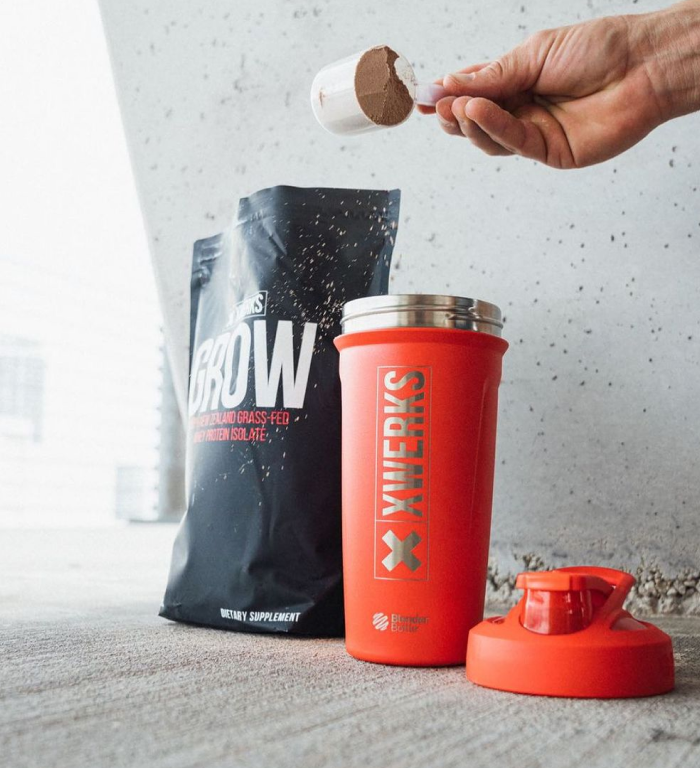
Why isolate specifically: Isolate is ~90% protein by weight with virtually no lactose or fat — better tolerated during the GI sensitivity common with GLP-1s than cheaper concentrate forms. XWERKS Grow uses NZ grass-fed whey isolate for maximum tolerability and quality.
2. Creatine Monohydrate — Muscle Preservation Multiplier
Why it matters: Creatine has been shown repeatedly to preserve lean mass during caloric restriction — exactly the context GLP-1 users face. The Chilibeck 2017 meta-analysis confirmed creatine supplementation combined with resistance training produces significantly greater muscle mass preservation than training alone in older adults.
What it does: Supports ATP regeneration during training (enabling higher training volume and intensity), has cell-volumizing effects that may spare muscle protein breakdown, and provides cognitive benefits during caloric restriction when brain function often suffers.
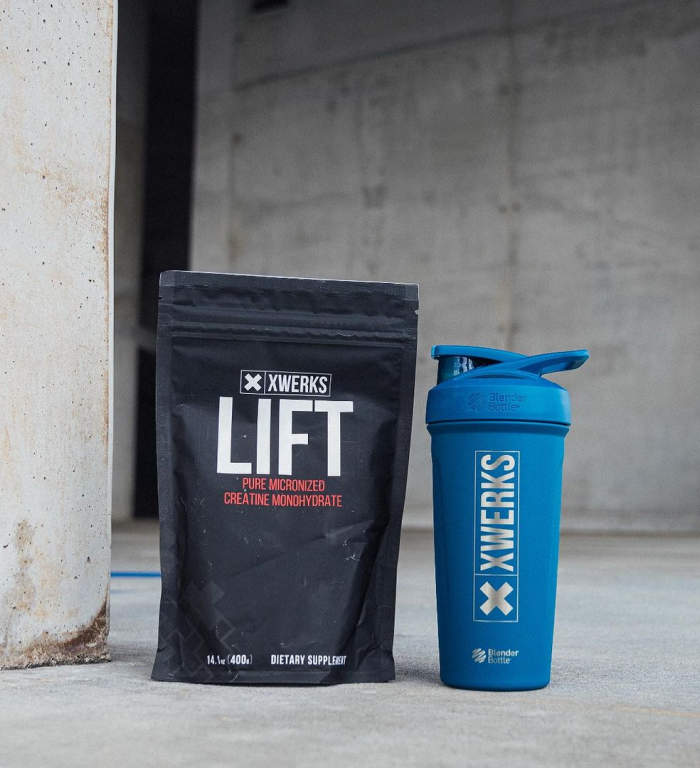
Dose: 5g daily of creatine monohydrate. No loading needed. Take consistently. XWERKS Lift provides 5g per scoop of micronized monohydrate.
Bonus for GLP-1 users: Creatine improves cognitive function during caloric restriction when brain fog is common, and may support mood regulation (particularly in women taking creatine per Lyoo 2012).
3. Vitamin D3 — Multiple Supportive Roles
Why it matters: Vitamin D deficiency is associated with reduced muscle strength, increased fall risk, and accelerated muscle loss. Many GLP-1 users are already deficient due to obesity-related factors (vitamin D sequesters in adipose tissue).
What it does: Directly supports muscle function, testosterone production, bone density (critical when losing weight rapidly), and immune function. Beaudart 2014 meta-analysis confirmed strength benefits in vitamin D-deficient older adults.
Dose: 2,000-4,000 IU daily. 5,000+ IU if confirmed deficient. Test 25(OH)D blood levels — target 40-60 ng/mL.
4. Omega-3 Fish Oil (EPA/DHA) — Anabolic Support
Why it matters: Smith et al. 2011 and 2015 found omega-3 supplementation directly enhanced muscle protein synthesis response in older adults — partially overcoming the blunted anabolic response common in GLP-1 users during caloric restriction.
What it does: Reduces chronic inflammation, enhances muscle protein synthesis response, supports cardiovascular health (particularly important for obese patients on GLP-1s), and may reduce GLP-1 side effects like nausea in some individuals.
Dose: 2-3g combined EPA+DHA daily. Take with a meal containing fat for absorption.
5. Electrolytes (especially Magnesium and Sodium)
Why it matters: Reduced food intake on GLP-1s often means reduced electrolyte intake. Sodium, potassium, and magnesium deficiencies are common and contribute to fatigue, muscle cramps, and impaired exercise tolerance — making training harder to maintain.
What it does: Supports muscle function, hydration, energy metabolism, and sleep quality. Magnesium specifically supports muscle recovery and sleep.
Dose: 200-400mg magnesium glycinate evening, plus adequate sodium through food or an electrolyte supplement during training. Some GLP-1 users benefit from products like XWERKS Motion for sustained electrolyte and carbohydrate support during exercise.
6. HMB — Consider for High-Risk Patients
What it is: β-Hydroxy β-Methylbutyrate, a metabolite of leucine that reduces muscle protein breakdown.
When relevant: Older GLP-1 users (over 60), patients with significant pre-existing sarcopenia, or patients unable to hit protein targets consistently. Stronger evidence in catabolic states than in healthy active adults.
Dose: 3g daily, split into three 1g doses.
Priority: Secondary to the main protocol. Add only if you're higher-risk or struggling to preserve muscle despite the core interventions.
The non-supplement essentials (80% of the work)
Supplements address the nutritional side of muscle preservation, but the stimulus for preservation comes from training. No supplement stack preserves muscle without resistance training in a caloric deficit.
Resistance training, 3-4x per week
This is non-negotiable. Heavy compound movements (squats, deadlifts, rows, presses, pulls) using progressive overload. Even 30-45 minute sessions 3x per week produce substantial muscle preservation effects.
Start wherever you are. If you haven't trained in years, bodyweight exercises and light dumbbells are a legitimate starting point. The critical thing is consistency and progressive load over time.
Training intensity matters
Light, casual exercise isn't enough. To signal muscle preservation, you need to train in the 6-15 rep range with sufficient intensity that the last 2-3 reps of each set are genuinely challenging. Getting close to failure matters.
Daily walking
150+ minutes of walking per week supports cardiovascular health, energy metabolism, and general activity. But walking alone doesn't preserve muscle — it needs to be paired with resistance training.
Adequate sleep
7-9 hours per night. Sleep is when growth hormone peaks and muscle repair/growth occurs. Poor sleep during GLP-1 weight loss accelerates muscle loss significantly.
Sample daily protocol for a 200-lb GLP-1 user
Morning (7:00 AM)
3 eggs + 1 scoop XWERKS Grow in coffee = 45g protein
+ Vitamin D3 (3,000 IU) + magnesium (200mg) + omega-3 fish oil (2g EPA+DHA)
Mid-morning (10:00 AM)
Greek yogurt (1 cup) + berries = 25g protein
Lunch (12:30 PM)
4 oz grilled chicken breast + vegetables = 35g protein
+ XWERKS Lift (5g creatine) with the meal
Afternoon shake (3:30 PM)
1 scoop XWERKS Grow in milk = 35g protein
Pre/post-workout (5:00 PM)
Resistance training 45 minutes (bonus: electrolytes during training)
Post-training: 1 scoop XWERKS Grow = 25g protein
Dinner (7:30 PM)
5 oz salmon or lean beef + vegetables = 40g protein
Daily total: ~205g protein — right in the 2.0-2.4g/kg target range for a 200-lb user. Protein distributed evenly across 6 small feedings, with 2-3 whey shakes making the total achievable despite appetite suppression.
Common mistakes GLP-1 users make
Mistake 1: Not adjusting protein targets upward. Most GLP-1 users don't realize their protein needs are higher, not lower, than before. They eat less total food and proportionally less protein — exactly the wrong move for muscle preservation.
Mistake 2: Skipping resistance training. Many GLP-1 users focus on cardio or walking and skip resistance training. Without the training stimulus, all the protein in the world won't preserve much muscle.
Mistake 3: Relying on whole-food protein alone. Appetite suppression makes hitting 180-220g protein through whole food alone physically difficult or impossible. Whey supplementation isn't optional.
Mistake 4: Using cheap/low-quality protein powder. GI sensitivity is common on GLP-1s. Cheap concentrates with lactose, fillers, or artificial additives can worsen nausea and digestive issues. Invest in clean isolate.
Mistake 5: Cycling off training during nausea periods. Nausea comes and goes with GLP-1 dosing. Many users stop training during bad weeks and never restart. Even modified or shorter sessions maintain the training signal.
Mistake 6: Ignoring creatine. Creatine is one of the cheapest, most evidence-backed supplements for muscle preservation during caloric deficit. Many GLP-1 users skip it, missing a high-value intervention.
Mistake 7: Losing weight too quickly. Some patients push GLP-1 dosing aggressively for fast results. Faster weight loss almost always means more muscle loss. Slower, more sustainable loss with muscle preservation produces much better long-term outcomes.
What to expect with proper intervention
Patients who follow a muscle-preservation protocol during GLP-1 use generally see:
15-20% body weight loss (comparable to GLP-1 trials) with significantly better body composition — meaning more of the loss comes from fat, less from muscle.
Preserved or improved strength rather than declining strength
Higher metabolic rate at the end of weight loss (vs patients who lose significant muscle)
Better maintenance if coming off the medication (muscle mass protects against weight regain)
Improved insulin sensitivity beyond what GLP-1s alone provide (muscle is a major site of glucose disposal)
Functional improvements — ability to do physical activities that were previously difficult
The contrast with un-intervened GLP-1 weight loss (losing 30-40% of weight as muscle) is dramatic. Two patients who each lose 50 lbs on semaglutide may end up with very different body compositions, metabolic rates, and long-term outcomes depending on whether they followed a muscle-preservation protocol.
The Bottom Line
GLP-1 medications cause disproportionate muscle loss — 25-40% of weight lost is lean mass in clinical trials, vs ~25% in natural weight loss. For patients over 40-50, this can accelerate sarcopenia significantly.
The evidence-backed supplement protocol: whey protein isolate (2-4 scoops daily to hit 2.0-2.4g/kg target), creatine monohydrate (5g daily), vitamin D3 (2,000-4,000 IU), omega-3 fish oil (2-3g EPA+DHA), and magnesium (200-400mg). HMB for high-risk patients.
Whey supplementation isn't optional on GLP-1s. Appetite suppression makes it physically impossible to hit elevated protein targets through whole food alone. A 200-lb user needs ~205g protein daily — which requires 2-3 whey shakes on top of whole-food meals.
Supplements work alongside resistance training — not instead of it. 3-4 sessions per week of heavy compound movements with progressive overload provides the muscle preservation signal. Without training, supplements alone won't preserve much muscle during aggressive caloric deficit.
The Muscle Preservation Protocol for GLP-1 Users
XWERKS Grow (25g whey isolate per scoop) + Lift (5g creatine) — the two most evidence-backed supplements for preserving muscle mass during aggressive caloric deficit. Built for GI tolerance, optimized for the protein targets that GLP-1 users need to hit.
SHOP GROW → SHOP LIFT →Further Reading
How to Maintain Muscle on Semaglutide
Sarcopenia Prevention Supplements
Whey Protein for Preventing Muscle Loss with Age
How Much Protein Can Your Body Absorb?
References
1. Wilding JPH, et al. Once-Weekly Semaglutide in Adults with Overweight or Obesity (STEP 1). N Engl J Med. 2021;384(11):989-1002.
2. Jastreboff AM, et al. Tirzepatide Once Weekly for the Treatment of Obesity (SURMOUNT-1). N Engl J Med. 2022;387(3):205-216.
3. Wharton S, et al. Managing Obesity: What to Consider When Prescribing GLP-1 Receptor Agonists. Can J Diabetes. 2023;47(5):441-450.
4. Bauer J, et al. Evidence-based recommendations for optimal dietary protein intake in older people: position paper from the PROT-AGE Study Group. J Am Med Dir Assoc. 2013;14(8):542-559.
5. Chilibeck PD, et al. Effect of creatine supplementation during resistance training on lean tissue mass and muscular strength in older adults: a meta-analysis. Open Access J Sports Med. 2017;8:213-226.
6. Smith GI, et al. Dietary omega-3 fatty acid supplementation increases the rate of muscle protein synthesis in older adults. Am J Clin Nutr. 2011;93(2):402-412.
7. Cava E, et al. Preserving Healthy Muscle during Weight Loss. Adv Nutr. 2017;8(3):511-519.