Sarcopenia Prevention Supplements: An Evidence-Based Guide
TL;DR
- Sarcopenia (age-related muscle loss) affects ~30% of adults over 60 and 50% over 80. It's a leading cause of frailty, falls, fractures, and loss of independence.
- Prevention starts in midlife (40s-50s) — sarcopenia accelerates dramatically once it begins, so the goal is preventing the trajectory, not reversing established disease.
- Top evidence-backed supplements: whey protein, creatine monohydrate, vitamin D3, omega-3s, and HMB in specific situations. All work in combination with resistance training.
- The biological foundation: combat anabolic resistance (older muscle needs more protein), maintain vitamin D status (muscle directly uses it), reduce chronic inflammation, and provide energy substrates (creatine).
Sarcopenia is the progressive loss of muscle mass, strength, and function with aging — affecting roughly 30% of adults over 60 and 50% over 80. It's a leading cause of frailty, falls, fractures, hospitalizations, and loss of independence in older adults. The good news: sarcopenia is largely preventable with the right combination of resistance training, adequate protein intake, and targeted supplementation. The most evidence-backed supplements for sarcopenia prevention are whey protein isolate (to overcome anabolic resistance), creatine monohydrate (for energy and muscle preservation), vitamin D3 (for direct muscle function), and omega-3 fatty acids (for anti-inflammatory and pro-anabolic effects). Prevention should start in midlife — once sarcopenia is established, it's much harder to reverse.
What sarcopenia actually is
Sarcopenia is a clinical condition with specific diagnostic criteria established by the European Working Group on Sarcopenia in Older People (EWGSOP). It's defined by:
1. Low muscle mass (measured by DEXA scan, BIA, or anthropometry)
2. Low muscle strength (measured by grip strength or chair-rise test)
3. Low physical performance (measured by gait speed)
Adults are diagnosed with sarcopenia when they show low muscle mass plus either low strength or low performance. Severe sarcopenia involves all three.
Sarcopenia is distinct from normal age-related muscle loss — it's the clinical condition where muscle loss has progressed to the point of functional impairment. Cachexia (severe muscle wasting from disease) is yet another related but distinct condition.
The mechanisms driving sarcopenia
Anabolic resistance
The most important mechanism. Older muscles produce a smaller protein synthesis response to a given protein dose. A 25-year-old reaches near-maximal MPS at 20g of protein per meal; a 65-year-old needs roughly 40g for the same response. Without compensation through higher protein intake, daily MPS falls below daily breakdown — leading to net muscle loss.
Hormonal decline
Testosterone (-1%/year after 30), growth hormone (50% reduction by 60), IGF-1, and DHEA all decline with age. These hormones support muscle maintenance, and their decline reduces the body's anabolic environment.
Motor neuron loss
The number of motor neurons declines with age. When a motor neuron dies, all the muscle fibers it controlled atrophy unless reinnervated by another motor neuron. This particularly affects type II (fast-twitch) fibers — the powerful fibers used for explosive movement.
Inflammation
Chronic low-grade inflammation ("inflammaging") directly suppresses muscle protein synthesis and accelerates breakdown. IL-6, TNF-α, and CRP all increase with age and contribute to muscle loss.
Mitochondrial dysfunction
Aging muscle cells have fewer and less efficient mitochondria, reducing energy production and contributing to fatigue and impaired protein synthesis.
Reduced physical activity
Most adults become less active with age. Loss of training stimulus directly accelerates muscle loss through "use it or lose it" effects. This may be the single largest modifiable factor.
Inadequate protein intake
Most older adults consume significantly less than the 1.6-2.2g/kg they need. The combination of reduced appetite, dietary changes, and outdated RDA recommendations (0.8g/kg) leaves most adults under-eating protein during the years they need it most.
The evidence-backed sarcopenia prevention supplements
1. Whey Protein Isolate
Why: Highest leucine content per gram of any common protein source. Leucine is the primary trigger for muscle protein synthesis. Older adults need ~3g of leucine per meal to maximally stimulate MPS — which means ~40g of high-quality protein.
Mechanism: Provides amino acids needed for muscle protein synthesis. Helps overcome anabolic resistance through high leucine concentration. Fast digestion makes it useful at any meal.
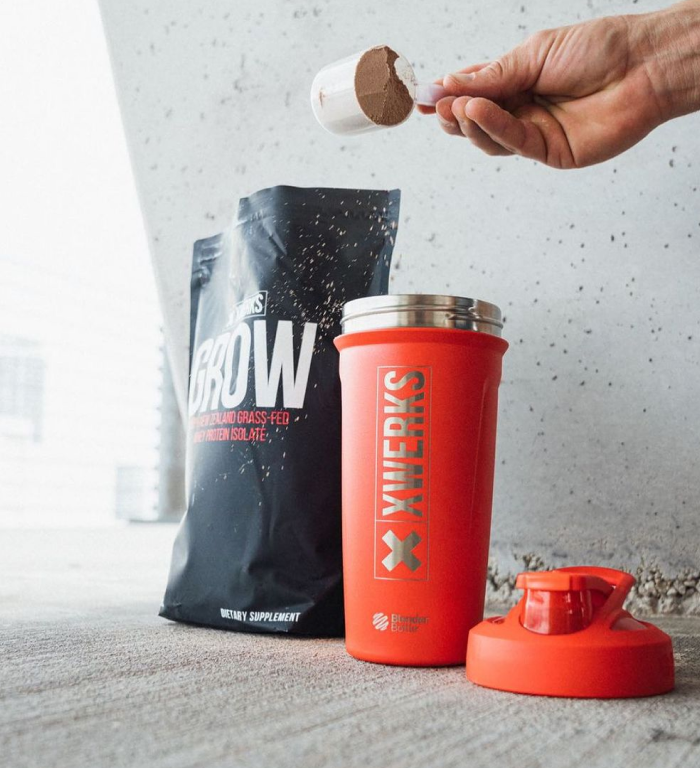
Dose: 25-50g per serving, 1-3 servings per day to hit daily target of 1.6-2.2g/kg. XWERKS Grow provides 25g of NZ grass-fed whey isolate with ~2.5-3g leucine per scoop.
Evidence: Multiple meta-analyses confirm whey protein supplementation in older adults preserves and builds muscle mass when combined with resistance training. Cermak et al. 2012 meta-analysis found significantly greater muscle mass and strength gains with protein supplementation in older adults.
2. Creatine Monohydrate
Why: One of the most studied supplements for older adult muscle preservation. Multiple meta-analyses confirm benefits for both muscle mass and strength.
Mechanism: Increases phosphocreatine stores in muscle, supporting ATP regeneration during exercise. Enables higher training volume and intensity, which drives muscle adaptations. Also has cell-volumizing effects.
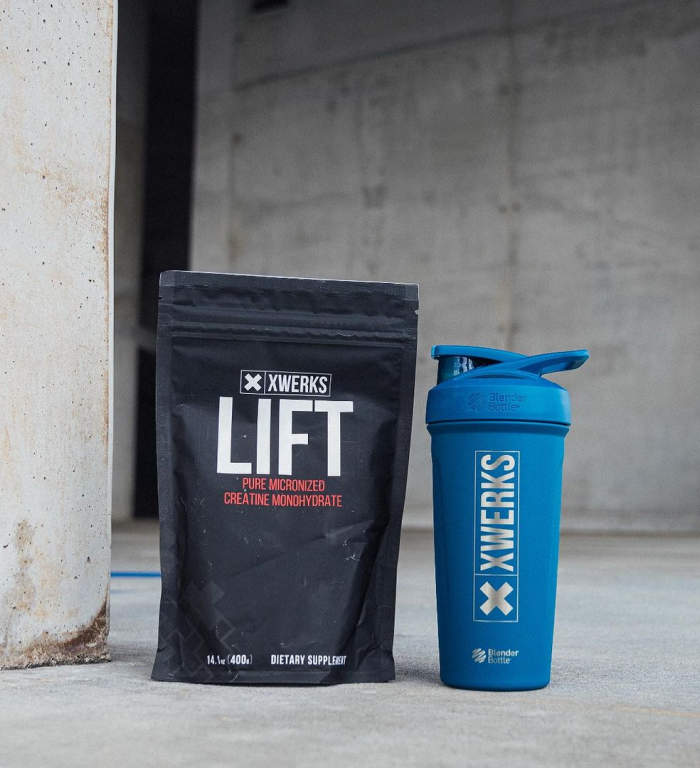
Dose: 5g daily, every day. No loading phase needed. XWERKS Lift provides 5g micronized monohydrate per scoop.
Evidence: Chilibeck et al. 2017 meta-analysis pooled data from 14 RCTs in older adults and found creatine + resistance training significantly improved lean tissue mass, chest press strength, and leg press strength compared to training alone.
Bonus: Also supports cognitive function in older adults — a major value-add.
3. Vitamin D3
Why: Vitamin D receptors are present in muscle tissue, and deficiency is directly linked to muscle weakness, fall risk, and accelerated muscle loss in older adults.
Mechanism: Supports muscle fiber type II (fast-twitch) preservation, reduces fall risk through improved muscle function, and may support muscle protein synthesis. Also supports testosterone in deficient men, indirectly supporting muscle.
Dose: 2,000-4,000 IU daily for most adults; 5,000+ IU if deficient. Test 25(OH)D blood levels — target 40-60 ng/mL.
Evidence: Beaudart et al. 2014 meta-analysis confirmed strength benefits in vitamin D-deficient older adults. Deficiency rates exceed 40% in older populations, making this a high-value intervention.
4. Omega-3 Fatty Acids (EPA/DHA)
Why: Smith et al. 2011 and 2015 found that omega-3 supplementation directly enhanced muscle protein synthesis response in older adults — partially overcoming anabolic resistance.
Mechanism: Reduces chronic inflammation that suppresses muscle protein synthesis. May enhance the anabolic response to amino acids. Supports cardiovascular and brain health, which keeps you active enough to maintain muscle.
Dose: 2-3g of combined EPA+DHA daily. Choose high-concentration fish oil to avoid taking many capsules.
5. HMB (β-Hydroxy β-Methylbutyrate)
What: A metabolite of leucine that may reduce muscle protein breakdown.
Best evidence in: Older adults with established sarcopenia, post-surgical recovery, bed rest, or other catabolic states. Less impressive evidence in healthy active older adults.
Mechanism: Appears to reduce muscle protein breakdown more than it increases synthesis. Particularly valuable in conditions where breakdown is elevated.
Dose: 3g daily, split into 1g doses three times daily.
When to consider: Recovery from surgery or extended bed rest. Sarcopenia or pre-sarcopenic conditions. Frail older adults. Skip it if you're healthy and training regularly — adequate protein intake makes it largely redundant.
6. Magnesium
Why: Magnesium is essential for muscle function, energy production (ATP), and protein synthesis. Deficiency is common in older adults and contributes to muscle weakness, cramps, and impaired recovery.
Mechanism: Required for hundreds of enzymatic reactions including muscle contraction, energy metabolism, and protein synthesis. Also supports sleep quality (essential for recovery and growth hormone).
Dose: 200-400mg of magnesium glycinate or citrate daily, preferably evening. Avoid magnesium oxide (poorly absorbed).
Supplements with weaker or insufficient evidence
Not every "anti-aging" or "muscle preservation" supplement actually has good evidence. To be honest about this:
Collagen: Useful for joint and skin health but doesn't replace whey for muscle protein synthesis (low leucine content). Add it for connective tissue support, not as your primary muscle protein source.
BCAAs (alone): Largely redundant if total protein intake is adequate. Jackman 2017 found BCAAs alone produce only 22% of the muscle protein synthesis response of complete protein. Skip them; eat more whey instead.
Ursolic acid: Animal studies show muscle-preserving effects but human evidence is limited. May have some role but not yet established.
Testosterone replacement (TRT): This is medication, not supplementation. Effective for clinical hypogonadism but requires medical supervision. Don't self-administer.
Growth hormone or peptides: Not appropriate for general sarcopenia prevention. Significant risks and minimal evidence for healthy aging applications.
The non-supplement foundations
Worth restating: supplements alone don't prevent sarcopenia. They work alongside the foundational interventions:
Resistance training, 2-4x per week. The single most important intervention. Heavy compound movements (squats, deadlifts, presses, rows) using progressive overload. Older adults can and should lift heavy — research consistently shows ability to build muscle and strength into the 80s with appropriate training.
Protein at every meal. 30-50g of high-quality protein at each of 3-4 meals throughout the day. Don't save it all for dinner. Whey supplementation makes this much easier.
Adequate calories. Older adults often under-eat. Energy availability is required for muscle maintenance.
Sleep. 7-9 hours per night. Growth hormone peaks during deep sleep, and muscle protein synthesis is largely a nighttime process.
Walking and cardiovascular activity. Daily walking, plus moderate cardio 2-3x per week. Supports cardiovascular health, energy metabolism, and overall capacity.
Stress management. Chronic cortisol elevation directly accelerates muscle breakdown. Sleep, social connection, time outdoors, and stress reduction all matter.
The complete sarcopenia prevention stack
Daily essentials (for everyone over 50)
Whey protein isolate: 1-3 scoops daily to hit 1.6-2.2g/kg target
Creatine monohydrate: 5g daily, taken consistently
Vitamin D3: 2,000-4,000 IU daily (test blood levels, target 40-60 ng/mL)
Omega-3 fish oil: 2-3g combined EPA+DHA daily
Magnesium glycinate: 200-400mg evening
Strong adds for healthy aging
Multivitamin: Insurance against multiple micronutrient deficiencies common in older adults
Vitamin K2 (MK-7): 100-200mcg with vitamin D3 for bone and cardiovascular health
Ashwagandha: 1,500mg daily for cortisol management and modest testosterone support
Situational additions
HMB: 3g daily during recovery from surgery, bed rest, or with established sarcopenia
Collagen: 10-20g daily for joint and connective tissue support (alongside, not instead of, whey)
Probiotic: Some evidence for gut health affecting protein absorption in older adults
Turn a protein target into a meal plan
Once you have an appropriate daily target, make the arithmetic explicit. For example, a chosen target of 120 grams could be divided into four eating occasions of about 30 grams. This is a planning example, not a recommendation that every older adult should use that amount.
Count protein from normal meals first. A shake should fill the remaining gap, not become an automatic addition regardless of intake. If appetite, a medical condition, or a prescribed diet makes the plan difficult, work with a qualified clinician or dietitian.
For more practical context, see protein after 60 and whey and age-related muscle loss.
The Bottom Line
Sarcopenia affects 30% of adults over 60 and 50% over 80. It's a leading cause of frailty, falls, and loss of independence — and it's largely preventable.
Prevention starts in midlife (40s-50s), not after symptoms appear. Building muscle reserves before you start losing them is far easier than reversing established sarcopenia.
Evidence-backed supplements: whey protein isolate (1.6-2.2g/kg target), creatine monohydrate (5g daily), vitamin D3 (2,000-4,000 IU), omega-3 fish oil (2-3g EPA+DHA), and magnesium. HMB has specific value in clinical/recovery situations.
Supplements work alongside resistance training — not instead of it. Heavy compound lifting 2-4x per week is the single most important intervention. Supplements multiply the effect; they don't replace the foundation.
The Sarcopenia Prevention Stack
XWERKS Grow (25g whey isolate) + Lift (5g creatine) — the two most evidence-backed supplements for preventing age-related muscle loss when combined with resistance training.
SHOP →Further Reading
Supplements for Muscle Preservation After 50
Whey Protein for Preventing Muscle Loss with Age
Best Supplements for Healthy Aging Men
Best Supplements for Men Over 50
Protein Intake for Longevity Research
References
1. Cruz-Jentoft AJ, et al. Sarcopenia: revised European consensus on definition and diagnosis. Age Ageing. 2019;48(1):16-31.
2. Cermak NM, et al. Protein supplementation augments the adaptive response of skeletal muscle to resistance-type exercise training: a meta-analysis. Am J Clin Nutr. 2012;96(6):1454-1464.
3. Chilibeck PD, et al. Effect of creatine supplementation during resistance training on lean tissue mass and muscular strength in older adults: a meta-analysis. Open Access J Sports Med. 2017;8:213-226.
4. Beaudart C, et al. The effects of vitamin D on skeletal muscle strength, muscle mass, and muscle power: a systematic review and meta-analysis. J Clin Endocrinol Metab. 2014;99(11):4336-4345.
5. Smith GI, et al. Dietary omega-3 fatty acid supplementation increases the rate of muscle protein synthesis in older adults. Am J Clin Nutr. 2011;93(2):402-412.
6. Bauer J, et al. Evidence-based recommendations for optimal dietary protein intake in older people: a position paper from the PROT-AGE Study Group. J Am Med Dir Assoc. 2013;14(8):542-559.