Supplements for Athletes: The Evidence-Based Guide
TL;DR
- Most "athlete supplements" marketed to the public are not supported by research. The short list of supplements with strong evidence is actually quite short — maybe 6-8 items total.
- The A-tier supplements (strong evidence, safe, effective): creatine monohydrate, caffeine, whey protein, beta-alanine, nitrate/beetroot, sodium bicarbonate.
- Foundation nutrients athletes commonly need: vitamin D3, omega-3s (EPA+DHA), magnesium, iron (if deficient). These aren't sexy but they're often where athletes are actually falling short.
- The B-tier and C-tier supplements (situational, emerging, or weak evidence) fill out the picture: citrulline, BCAAs/EAAs, tart cherry, tyrosine, rhodiola, ashwagandha, and others.
- What's NOT on this list: fat burners, testosterone boosters, most "greens powders," and 90% of the proprietary blends marketed as performance enhancers.
The supplement industry is estimated at $50+ billion globally, and most of it is marketed to athletes. But the actual list of supplements with strong research support for athletic performance is short — maybe 6-8 ergogenic aids plus a handful of foundation nutrients. This guide covers what the research actually supports, organized by evidence strength (A-tier, B-tier, C-tier), with specific dosing, timing, and mechanism details. Unlike most supplement guides, this one covers non-XWERKS options honestly — fish oil, magnesium, tart cherry juice, vitamin D, sodium bicarbonate, nitrate/beetroot juice, and others available anywhere. Where XWERKS products fit the evidence-backed profile (whey isolate, creatine monohydrate, transparent pre-workout, Cluster Dextrin), we're straightforward about that — but the framework here applies whether you're buying from us, Costco, or Amazon. The goal: help you build a stack that actually improves training outcomes rather than one that drains your wallet on proprietary blends with no research behind them.
Evidence tier explanation:
A-tier = Strong evidence across multiple well-designed studies; consistent effects; safety well-established at recommended doses.
B-tier = Moderate evidence; effects are real but smaller or conditional; useful in specific situations.
C-tier = Emerging evidence, mixed results, or effects are small enough that real-world impact is uncertain.
The A-tier ergogenic supplements
These six supplements have the strongest evidence base for athletic performance. Every serious athlete should consider each of them; most will benefit from several. The Australian Institute of Sport Supplement Framework (a widely-cited reference in sports nutrition) includes most of these in its Group A category — research confirmed, athlete-appropriate.
Creatine Monohydrate A-TIER
5g daily, monohydrate form, any time of dayThe most-researched sports supplement in history. Over 500 peer-reviewed studies document benefits for strength, power, high-intensity repeated efforts, muscle mass, and increasingly, cognitive function. Benefits aren't limited to strength sports — runners, cyclists, swimmers, team sport athletes, and older adults all benefit through different mechanisms.
What it does: Creatine increases phosphocreatine stores in muscle, supporting ATP regeneration during explosive efforts. Also has cognitive benefits and supports muscle preservation with aging.
Product options: Any creatine monohydrate product from a reputable manufacturer works. The form (micronized vs regular) doesn't significantly affect efficacy. Skip buffered creatine, creatine HCl, creatine nitrate — all marketing-driven alternatives without research advantage.
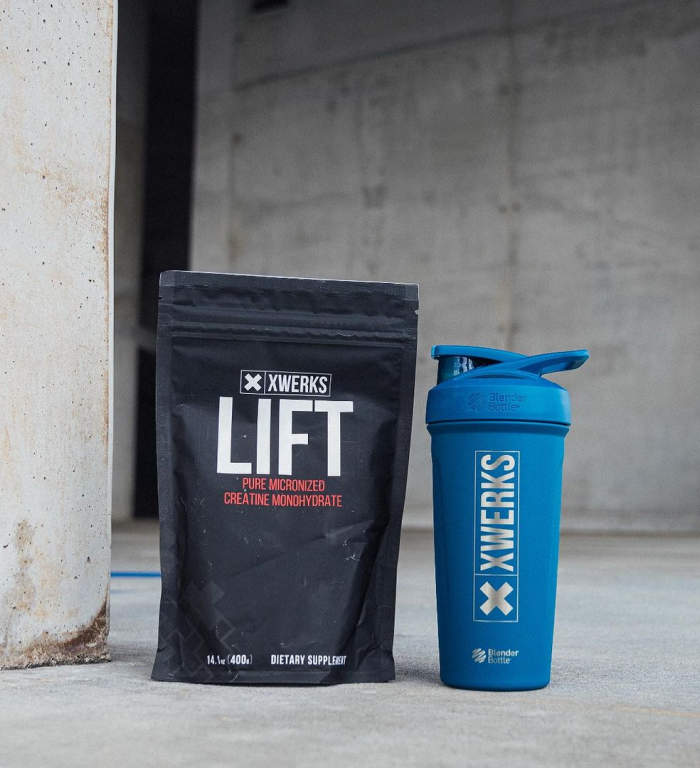
XWERKS option: XWERKS Lift provides 5g micronized monohydrate per scoop. Third-party alternatives that work: Creapure-branded products (German-made monohydrate, widely used in research), generic monohydrate from any reputable source.
Caffeine A-TIER
3-6mg per kg body weight, 30-60 min pre-exerciseCaffeine has one of the most robust evidence bases of any ergogenic aid (Guest 2021 ISSN position stand). Benefits documented across endurance events, strength/power sports, team sports, and skill-based sports. Effects include reduced perceived effort, improved endurance performance (2-4% improvements), and enhanced focus.
What it does: Blocks adenosine receptors in the brain, reducing perception of fatigue. Also increases fat oxidation, mobilizes calcium in muscle, and has multiple other performance-relevant effects.
Sources: Coffee (95-100mg per 8oz cup), caffeine tablets (100-200mg standard doses, cheap and predictable), pre-workout supplements (150-300mg typical), caffeinated gels for endurance athletes (25-100mg per serving).
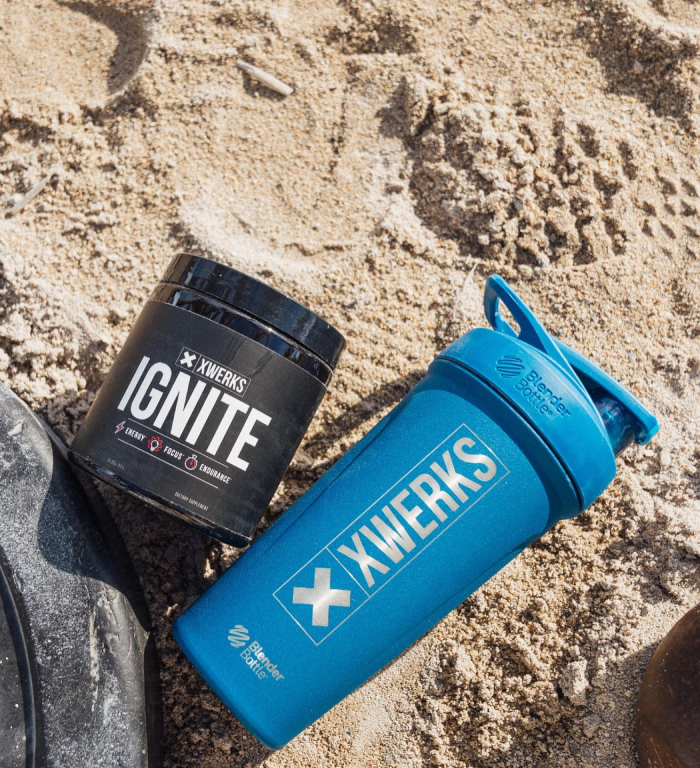
XWERKS option: XWERKS Ignite provides 150mg per serving alongside other pre-workout ingredients. Plain caffeine tablets work just as well for pure ergogenic effect.
Whey Protein A-TIER
25-40g per meal, 1.6-2.2g per kg body weight daily totalWhey protein isn't strictly "ergogenic" (it doesn't directly enhance performance in a single session), but it's the most-researched protein source for athletic populations. Meta-analyses (Morton 2018) confirm benefits for muscle mass, strength gains, and recovery.
What it does: Supplies amino acids for muscle protein synthesis. Whey specifically has the highest leucine content (~10-12%) of common proteins, making it the most effective at triggering the muscle protein synthesis response post-training.
Product options: Whey isolate (lowest lactose, lowest fat, fastest digesting — best for post-workout), whey concentrate (cheaper, slightly more lactose, similar benefits), casein (slow-digesting, good for pre-bed). Plant-based athletes: pea+rice blends, soy isolate.
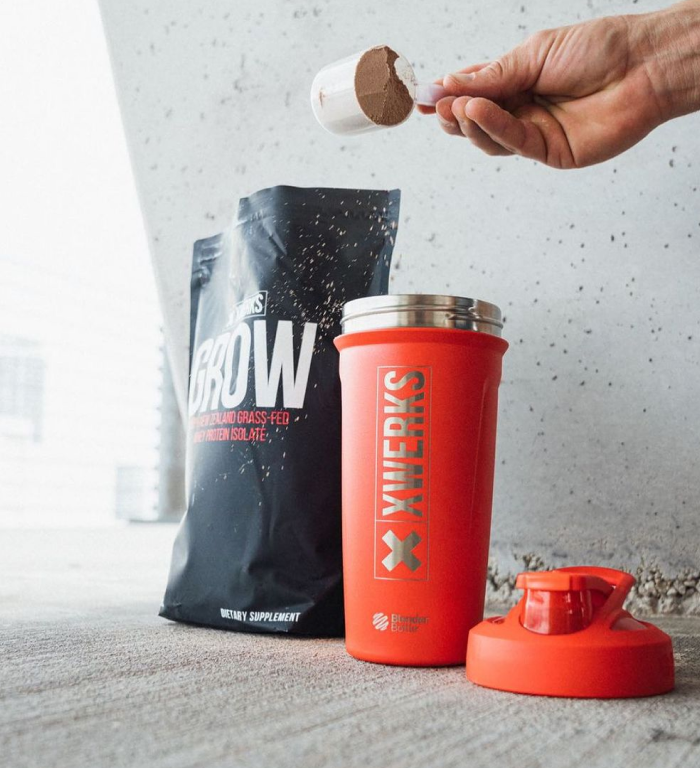
XWERKS option: XWERKS Grow is NZ grass-fed whey isolate, 25g per scoop. Other quality options: Optimum Nutrition Gold Standard, Dymatize ISO100, NOW Foods Whey Isolate. Third-party tested (NSF Certified for Sport, Informed Sport) products are recommended for competitive athletes.
Beta-Alanine A-TIER
3-6g daily, loaded chronically over 4-6 weeksHobson 2012 meta-analysis documented clear benefits for 1-4 minute efforts — directly applicable to rowing, middle-distance running, BJJ rolls, hockey shifts, CrossFit WODs, cycling intervals, and sustained strength work. Requires chronic loading; acute dosing doesn't work.
What it does: Increases muscle carnosine, which buffers hydrogen ion accumulation during high-intensity work. Translation: delays the burn that ends hard efforts.
Product options: Available as standalone beta-alanine powder (cheapest way to hit 3-6g daily) or as part of pre-workout formulas (typically 1.5-3g per serving). Athletes loading for specific events often combine both. The tingling sensation (paresthesia) is normal and fades with use.
XWERKS option: XWERKS Ignite includes 1.5g per serving. For full loading, add standalone beta-alanine powder (available from any major supplement brand) to reach 3-6g daily.
Nitrate / Beetroot Juice A-TIER
5-9 mmol nitrate (typically 250-500ml concentrated beetroot juice), 2-3 hours pre-eventStrong evidence for endurance performance benefits, particularly at sub-maximal aerobic intensities. Jones 2018 and subsequent research documented 1-3% improvements in time to exhaustion and time trial performance.
What it does: Dietary nitrate converts to nitric oxide in the body, improving vascular function, reducing oxygen cost of exercise, and supporting mitochondrial efficiency.
Sources: Beetroot juice concentrate (Beet It, Cherry Active, generic brands), beetroot powder, or simply whole beets (less concentrated but works). Red spinach extract is an alternative. Commercial options typically 500ml servings of concentrate.
No XWERKS product here — this is a space where a third-party specialty product is the standard approach. Endurance athletes doing time trials, long events, or altitude training should have this in the toolkit.
Sodium Bicarbonate A-TIER
0.2-0.3 g/kg body weight, 60-180 min pre-exerciseOne of the older ergogenic aids with consistent research support for 1-10 minute high-intensity efforts. Particularly valuable for middle-distance running, swimming, rowing, cycling time trials, and combat sports.
What it does: Acts as an extracellular buffer, helping neutralize the hydrogen ions produced by high-intensity exercise. Complements beta-alanine (which buffers intracellularly).
Sources: Baking soda (yes, the kitchen product), or purpose-made sports nutrition products like Maurten Bicarb System. GI distress is the major limiting factor — test extensively in training before competition. Split dosing across 60-90 minutes reduces GI issues.
No XWERKS product here — baking soda is effectively free. The main commercial innovation is Maurten's microencapsulation that dramatically reduces GI distress at the cost of higher price.
Foundation nutrients athletes commonly need
These aren't "ergogenic aids" in the strict sense — they don't directly enhance performance in a single session. But athletes are frequently deficient in them, and deficiency meaningfully impacts training capacity, recovery, and long-term health. Address these before worrying about more exotic supplements.
Vitamin D3 A-TIER
2,000-4,000 IU daily (most adults); test and adjustVitamin D deficiency is endemic in athletes — a meta-analysis by Farrokhyar 2015 found that 56% of athletes had insufficient or deficient vitamin D levels. Indoor-training sports (basketball, gymnastics, volleyball), northern latitudes, and winter months all raise risk. Deficiency impairs muscle function, immune function, bone density, and recovery.
What it does: Regulates calcium/phosphorus metabolism (bone), modulates immune function, supports muscle protein synthesis, and has roles in hormone regulation (including testosterone).
Optimal blood levels: 30-50 ng/mL minimum for general health; many sports nutritionists target 40-60 ng/mL for athletes. Test annually. Cheap blood test; ask your primary care physician or use a direct-to-consumer service.
Product options: Any D3 (cholecalciferol) from a reputable brand. Nordic Naturals, NOW Foods, Thorne, Pure Encapsulations all reliable. Take with a meal containing fat for better absorption. D3 is more effective than D2.
Omega-3 (EPA + DHA) A-TIER
2-3g combined EPA+DHA dailyMeta-analyses document benefits for recovery, inflammation management, cardiovascular health, and cognitive function. Most athletes consume far less omega-3 than is optimal — particularly if they don't eat fatty fish 3+ times per week.
What it does: Reduces inflammation, supports cell membrane function, modulates recovery from exercise-induced muscle damage, supports cardiovascular and brain health. Some research suggests benefits for concussion recovery in contact sports.
Product options: Fish oil (most affordable, widely available), krill oil (more expensive, modest bioavailability advantage), algae-based omega-3 (for vegan/vegetarian athletes). Look for products with at least 500mg EPA + DHA per soft gel to avoid taking 6+ capsules daily. Third-party tested for heavy metals and oxidation.
Quality brands: Nordic Naturals, Carlson Labs, Thorne, Wiley's Finest, Kirkland Signature (Costco's is legitimately high-quality). For concentrated options: Nordic Naturals Ultimate Omega or ProOmega.
Magnesium A-TIER
200-400mg daily (magnesium glycinate or threonate preferred)Magnesium is involved in 300+ enzymatic processes including muscle contraction, protein synthesis, energy production, and sleep quality. Dietary intake is often below optimal, particularly for athletes who lose magnesium through sweat.
What it does: Supports muscle function (cramping prevention), energy metabolism, sleep quality, stress response, bone health.
Forms matter: Magnesium glycinate — well-absorbed, calming, best for sleep. Magnesium threonate — crosses blood-brain barrier, cognitive benefits. Magnesium citrate — decent absorption, can cause loose stools at higher doses. Magnesium oxide — poorly absorbed, avoid. Skip products listing just "magnesium" without specifying form.
Quality brands: Pure Encapsulations, Thorne, Doctor's Best, Natural Vitality (Calm), Life Extension. Take in the evening for sleep quality benefit.
Iron (if deficient) A-TIER
Requires medical diagnosis — do not self-supplement high-dose ironIron deficiency is common in female athletes, endurance athletes, and vegetarians/vegans. Deficiency causes fatigue, reduced exercise capacity, and poor recovery. But iron overload is also a problem — which is why iron should be supplemented only based on blood testing, not assumed.
Testing to request: Serum ferritin (iron storage), hemoglobin, transferrin saturation. Optimal ferritin for athletic women: 50+ ng/mL; many function sub-optimally at ferritin below 30 even with "normal" hemoglobin.
If supplementation is indicated: Work with a physician. Common options include ferrous sulfate (cheapest, often causes GI issues), ferrous bisglycinate (better tolerated), or heme iron from liver-based supplements. Take with vitamin C for absorption; avoid taking with calcium or coffee/tea.
B-tier supplements (moderate evidence, situational use)
These have real but smaller effects, or work well in specific situations. Useful additions to a stack once the A-tier basics are covered.
Citrulline Malate / L-Citrulline B-TIER
6-8g citrulline malate or 3-5g L-citrulline, 30-60 min pre-exercisePerez-Guisado 2010 documented improved muscular endurance (more reps to failure) with 8g citrulline malate in trained lifters. Effects on blood flow and nitric oxide are real but smaller than the marketing suggests for "pump" products.
Best use: As part of pre-workout formulations, or standalone pre-workout for serious lifters. XWERKS Ignite provides 3g per serving; standalone powder available from most supplement brands for higher doses.
Tart Cherry Extract / Juice B-TIER
480mg extract or 250-350ml juice, twice dailyMeta-analyses support benefits for recovery from exercise-induced muscle damage, reduced soreness, and sleep quality. Particularly useful around high-volume events (marathons, tournaments) and during heavy training blocks.
Sources: CherryActive, Montmorency tart cherry juice concentrate, tart cherry capsule supplements. Not typically part of pre-workout stacks; used as a recovery aid around key sessions.
L-Tyrosine B-TIER
1-2g pre-exercise or pre-cognitive-taskJongkees 2015 documented benefits for cognitive performance under stress. Useful for sports requiring sustained focus (combat sports, technical lifting, long cognitive tasks).
Best use: Commonly included in pre-workout formulas. XWERKS Ignite includes 2g per serving. Standalone powder widely available.
EAAs / BCAAs B-TIER
5-10g EAAs or 3-5g BCAAs during training (primarily for fasted sessions)BCAAs specifically have weaker evidence than marketed — when total daily protein is adequate, adding BCAAs doesn't meaningfully improve outcomes. EAAs (full essential amino acid profile) have better evidence, particularly during fasted training or extended fasting.
Best use: During fasted training to support muscle protein synthesis without breaking the fast. Most athletes eating adequate whole-food protein don't need daily BCAA supplementation.
Rhodiola Rosea B-TIER
200-500mg daily (3% rosavins, 1% salidroside standardized)Adaptogenic herb with moderate research support for reducing perception of fatigue during stress. Small effect sizes but favorable safety profile.
Best use: Often included in pre-workout or adaptogenic stacks. Standalone options: Nordic Naturals, NOW Foods, Thorne.
Ashwagandha (Withania somnifera) B-TIER
300-600mg root extract dailyResearch supports benefits for stress reduction, sleep quality, and potentially testosterone support in stressed males. Effects on muscle and strength are emerging but smaller than sometimes claimed.
Forms: KSM-66 (most-studied standardized extract), Shoden (newer standardized form), or traditional root extract. All can work; standardized extracts have more research.
XWERKS option: XWERKS Ashwa uses 1,500mg Withania somnifera root from 30:1 extract (3% withanolides). Third-party options: Jarrow Formulas Ashwagandha, Life Extension, Himalaya.
Intra-workout Carbohydrate (Cluster Dextrin) B-TIER
30-60g during sessions over 60 minutesFor lifting, supports glycogen maintenance and may blunt cortisol response (Tarpenning 2001). For endurance, well-established for sessions over 90 minutes.
Options: Cluster Dextrin (highly branched cyclic dextrin — best for lifting), maltodextrin (cheap, works), dextrose, or sports drinks. XWERKS Motion uses Cluster Dextrin + electrolytes + BCAAs. Other Cluster Dextrin options: Swolverine, RedCon1, or pure HBCD powder.
C-tier and situational supplements
Emerging evidence, small effect sizes, or highly situational use. Worth knowing about but not core to most athletes' stacks.
Glutamine
Popular for decades, but research doesn't support the muscle/performance claims. Some evidence for gut health in endurance athletes with GI issues. Skip for performance; consider for specific GI concerns.
HMB (β-hydroxy β-methylbutyrate)
Modest evidence for muscle preservation during caloric deficit or in untrained populations. Effects are smaller in trained athletes. Not necessary for most.
Collagen (for tendon/joint support)
Emerging evidence for collagen + vitamin C taken 30-60 minutes before training supporting tendon adaptation. 15-20g collagen + 50mg vitamin C. Particularly relevant for athletes recovering from tendon injuries or doing high-impact sports.
Probiotics
Some evidence for immune function support in endurance athletes and travel-heavy schedules. Strain-specific — not all probiotics are equivalent. Look for strains with athletic-population research (Lactobacillus acidophilus LAFTI L10, Bifidobacterium animalis subsp. lactis).
Curcumin (turmeric extract)
Anti-inflammatory effects documented. May support recovery from exercise-induced muscle damage. Requires bioavailability-enhanced forms (Meriva, BCM-95, or combined with black pepper/BioPerine) — regular turmeric powder is poorly absorbed.
Sodium (electrolytes)
For sessions over 60 minutes or in hot conditions, sodium supplementation is valuable — 400-800mg per hour during prolonged exercise. Electrolyte tablets (LMNT, Nuun), sports drinks, or simply adding salt to water.
What the research does NOT support
• Testosterone boosters (Tribulus, DAA, ZMA combinations): Most commercial products don't meaningfully increase testosterone in healthy men. Exception: vitamin D and zinc in deficient individuals. "Natural T-boosters" generally don't deliver on the marketing.
• Most "fat burners": Caffeine does the work; everything else is marketing. Yohimbine, synephrine, higenamine, DMAA, DMHA all carry cardiovascular risks without proportional benefits.
• Greens powders: Most are multi-vitamins + fiber at inflated prices. Real vegetables work better.
• Most pre-workout "focus blends": Proprietary blends hiding underdosing of actual actives. Read labels; use transparently-dosed products.
• CLA (conjugated linoleic acid): Human trials don't consistently support the animal research findings for fat loss.
• Garcinia cambogia, raspberry ketones, green coffee bean extract: All popular at various points, none supported by quality research.
• "Proprietary nootropic blends": Racetams and similar compounds are regulated differently in different countries; efficacy and safety vary dramatically.
Third-party testing for competitive athletes
• NSF Certified for Sport: The most widely-used third-party testing for athletes. Products are tested for banned substances and manufacturing quality.
• Informed Sport / Informed Choice: Similar testing program, recognized internationally.
• BSCG Certified Drug Free: Another reputable testing program.
Brands that consistently third-party test: Thorne, Klean Athlete, Momentous, Garden of Life Sport, Gatorade (most products). If you're subject to USADA, WADA, NCAA, or other anti-doping testing, stick to third-party tested products.
Building your stack: the priority order
Priority 1: Foundation (everyone)
• Adequate whole-food diet first
• Protein: 1.6-2.2g/kg body weight daily (whey isolate fills gaps)
• Vitamin D3: 2,000-4,000 IU (test and adjust)
• Omega-3: 2-3g EPA+DHA daily
• Magnesium: 200-400mg evening
Priority 2: A-tier ergogenics
• Creatine monohydrate: 5g daily (anyone training for strength, power, or high-intensity efforts)
• Caffeine: for training or competition days (3-6mg/kg pre-session)
• Beta-alanine: loaded to 3-6g daily (for 1-4 minute efforts)
Priority 3: Event-specific additions
• Nitrate/beetroot: endurance athletes, 2-3 hours pre-event
• Sodium bicarbonate: middle-distance and high-intensity events
• Intra-workout carbs: sessions over 60-90 minutes
• Electrolytes: hot conditions, long sessions
Priority 4: Optimization (after basics are solid)
• Citrulline, tyrosine, rhodiola (typically via pre-workout formulas)
• Tart cherry for heavy training blocks
• Ashwagandha for stress/sleep
• Collagen + vitamin C pre-training for tendon support
Calculate your daily protein target
Protein is the single most impactful supplement decision for most athletes. The difference between hitting 1.6g/kg and falling short at 1.0g/kg is larger than the difference between any two supplements in this guide combined.
Calculate your exact daily protein target based on body weight, training load, and goals: XWERKS Protein Calculator →
The Bottom Line
The list of supplements with strong research support is short — maybe 6-8 ergogenic aids plus a handful of foundation nutrients. Everything else is either weak evidence, situational, or marketing.
A-tier ergogenics: creatine monohydrate, caffeine, whey protein, beta-alanine, nitrate/beetroot, sodium bicarbonate. Foundation nutrients: vitamin D3, omega-3s, magnesium, iron (if deficient).
Nail the basics before chasing exotic supplements. A $200/month stack of unproven supplements won't match the impact of hitting your protein target, getting enough vitamin D, and supplementing creatine. Simple and boring usually beats complex and exciting.
Evidence-Backed, Transparently Dosed
XWERKS products cover the A-tier basics with clinical doses and full ingredient disclosure: Grow (whey isolate), Lift (creatine monohydrate), Ignite (pre-workout), Motion (intra-workout carbs), Ashwa (ashwagandha).
SHOP ALL XWERKS →Further Reading
Clinically Dosed Pre-Workout Guide
Best Supplements for Healthy Aging Men
References
1. Maughan RJ, et al. IOC consensus statement: dietary supplements and the high-performance athlete. Br J Sports Med. 2018;52(7):439-455.
2. Kreider RB, et al. ISSN position stand: safety and efficacy of creatine supplementation. J Int Soc Sports Nutr. 2017;14:18.
3. Guest NS, et al. ISSN position stand: caffeine and exercise performance. J Int Soc Sports Nutr. 2021;18(1):1.
4. Morton RW, et al. Meta-analysis of protein supplementation on resistance training-induced gains. Br J Sports Med. 2018;52(6):376-384.
5. Hobson RM, et al. Effects of β-alanine supplementation on exercise performance: meta-analysis. Amino Acids. 2012;43(1):25-37.
6. Jones AM, et al. Dietary nitrate and physical performance. Annu Rev Nutr. 2018;38:303-328.
7. Farrokhyar F, et al. Prevalence of vitamin D inadequacy in athletes: a systematic-review and meta-analysis. Sports Med. 2015;45(3):365-378.
8. Thomas DT, et al. ACSM Joint Position Statement: Nutrition and Athletic Performance. Med Sci Sports Exerc. 2016;48(3):543-568.
9. Australian Institute of Sport. AIS Sports Supplement Framework. AIS. 2024. Available at: ais.gov.au/nutrition/supplements