

The Best Supplements for Muscle Growth (Ranked by Evidence)
TL;DR
- Only three supplements have strong research evidence for directly supporting muscle growth: whey protein, creatine monohydrate, and (when loaded chronically) beta-alanine. Everything else is either supporting cast, situational, or unsupported.
- Whey protein is #1 because adequate total protein intake (1.6-2.2g/kg body weight) has the largest effect size of any intervention.
- Creatine is #2 because the effect is reliable, the mechanism is direct, and it's the most-studied ergogenic in sports nutrition history.
- Glutamine, HMB, greens powders, mass gainers, and most proprietary "muscle builder" stacks are not on this list. If a product promises rapid muscle growth from a pill, it's lying to you.
Search "best supplements for muscle growth" and you'll find a flood of ranked lists naming 10-20 products — most of which don't actually build muscle. The honest list is short. Only three supplements have strong research evidence for directly supporting muscle growth: whey protein (via hitting total daily protein targets), creatine monohydrate, and beta-alanine (when chronically loaded). These are followed by a handful of supplements that indirectly support the process (by improving training quality, recovery, or fixing deficiencies): caffeine, citrulline, vitamin D3, magnesium, and omega-3s. Everything beyond this list — glutamine, HMB, greens powders, mass gainers, proprietary muscle-builder stacks — either has weak evidence, doesn't outperform the basics, or is outright marketing fiction. This guide ranks what actually works, with specific doses, mechanisms, and expected effect sizes. No "this will make you gain 20 lbs of muscle in 30 days" nonsense — just the research-backed hierarchy of what's worth taking and what's worth skipping.
How to read this guide
Effect size labels
Each supplement is tagged with its expected effect size on muscle growth based on meta-analyses and position-stand research:
• LARGE — Meaningfully improves muscle growth outcomes across multiple well-designed studies; effects typically 5-30% above training alone
• MODERATE — Real but smaller effects; may be conditional on other factors (training status, protein intake, deficiency)
• SMALL — Benefits exist but are minor; typically supporting rather than driving outcomes
No supplement matches the effect of consistent progressive-overload resistance training, adequate calories, and sufficient sleep. If those three foundations aren't in place, supplements won't rescue the outcome. Conversely, when the foundations ARE in place, the right supplements can meaningfully accelerate progress. The order of operations matters — don't buy supplements to substitute for training, eating, or sleeping.
The ranked list: what actually builds muscle
Whey Protein (or adequate total daily protein)
LARGE EFFECT 1.6-2.2g per kg body weight daily · 25-40g per mealWhey protein isn't "ergogenic" in the strict sense — it doesn't enhance a single workout. But the total daily protein intake it enables is by far the largest determinant of muscle growth for trained individuals. Morton 2018 meta-analysis (49 studies, 1,863 participants) confirmed: higher protein intake combined with resistance training significantly increases muscle mass, strength, and lean body mass. Effects plateau around 1.6g/kg for most people, but athletes in hypertrophy phases or older lifters benefit from 2.0-2.2g/kg.
Why whey isolate specifically: Highest leucine content (10-12%) of any common protein source — crosses the muscle protein synthesis threshold in a smaller dose than other proteins. Fast-digesting post-workout. Practical for closing the gap between whole-food protein and daily targets.
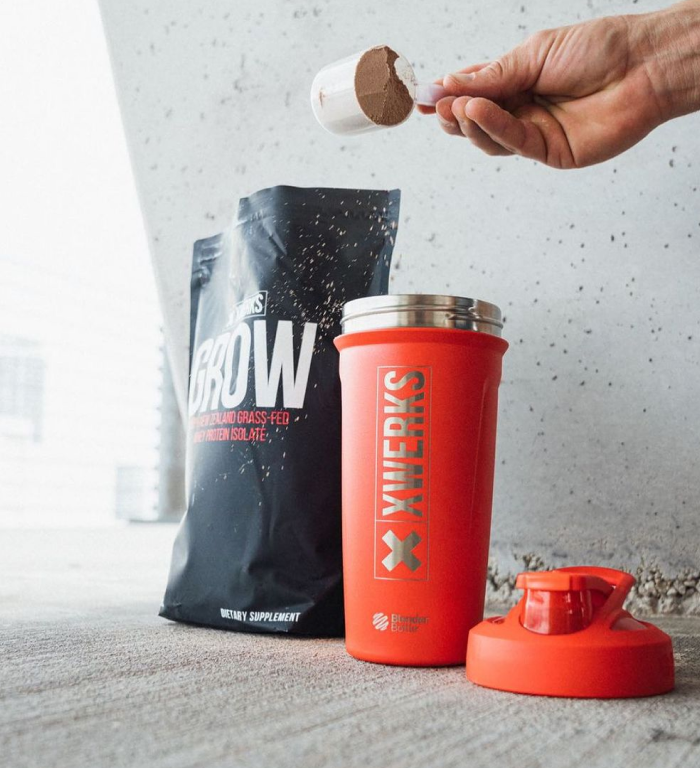
XWERKS option: XWERKS Grow — 25g NZ grass-fed whey isolate per scoop, 2.5-3g leucine per serving.
Other quality options: Optimum Nutrition Gold Standard, Dymatize ISO100, Legion Whey+, NOW Foods Whey Isolate, Klean Athlete Whey Protein Isolate. For competitive athletes, look for NSF Certified for Sport or Informed Sport certification.
Plant-based alternative: If you can't or won't use whey, target pea + rice blends (better amino profile than either alone) or soy protein isolate. Plan on slightly higher total protein (1.8-2.2g/kg) to compensate for lower leucine density.
Calculate your target: XWERKS Protein Calculator →
Creatine Monohydrate
LARGE EFFECT 5g daily, monohydrate form, any time of dayThe most-researched sports supplement in history. Over 500 peer-reviewed studies document benefits for muscle mass, strength, power output, high-intensity repeated efforts, and increasingly cognitive function. The ISSN position stand (Kreider 2017) confirms safety and efficacy. Chilibeck 2017 meta-analysis specifically showed creatine + resistance training produces ~1.3-1.5 kg more lean mass gain than training alone over study periods.
Mechanism: Increases phosphocreatine stores in muscle, supporting ATP regeneration during explosive efforts. Allows higher training quality (more reps at a given weight, more sets completed), which drives greater hypertrophy over time. Also cell-volumizing effects and possible direct signaling for muscle protein synthesis.
Loading vs daily dose: Loading (20g/day for 5-7 days) saturates muscle stores faster. Daily 5g works just as well over 3-4 weeks. Skip loading unless you want rapid saturation.
Form matters — monohydrate is the one that works: Creatine monohydrate has the research base. Creatine HCl, buffered creatine ("Kre-Alkalyn"), creatine ethyl ester, creatine nitrate, and creatine magnesium chelate are all marketing-driven alternatives without research advantage. They're more expensive and no better (sometimes worse).
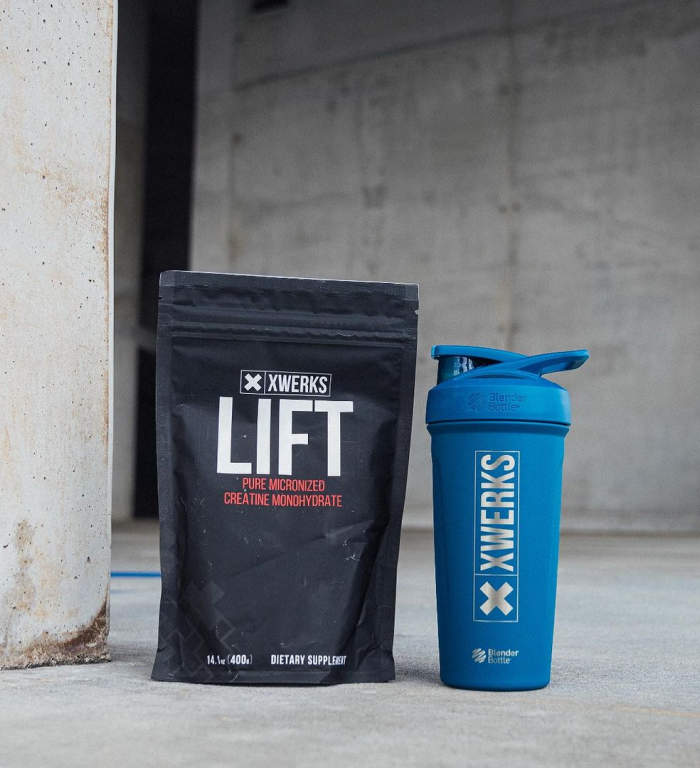
XWERKS option: XWERKS Lift — 5g micronized creatine monohydrate per scoop. Mixes instantly, no flavor.
Other quality options: Any Creapure-certified monohydrate (German-made, widely used in research), Optimum Nutrition Creatine, BulkSupplements Creatine, NOW Foods Creatine Monohydrate. Third-party testing matters for competitive athletes.
Beta-Alanine
MODERATE EFFECT 3-6g daily, loaded chronically over 4-6 weeksHobson 2012 meta-analysis documented clear performance benefits for 1-4 minute efforts — directly applicable to hypertrophy-style resistance training (8-15 rep sets, high-volume protocols, drop sets, giant sets). Effect size moderate but consistent across studies. Beta-alanine is one of the few supplements that reliably improves training performance at doses achievable through supplementation.
Mechanism: Increases muscle carnosine, which buffers hydrogen ion accumulation during high-intensity work. Translation: delays the "burn" that ends hard sets. Over weeks and months, being able to push 1-2 more reps per set adds up to meaningful hypertrophy difference.
Critical note on dosing: Beta-alanine works through chronic loading, not acute dosing. Taking a single pre-workout dose won't produce benefits. Consistent daily intake over 4-6 weeks is required for full muscle carnosine saturation.
The tingling is normal: Beta-alanine causes paresthesia (tingling sensation) in many users, typically peaking 15-30 min post-ingestion. Harmless and fades with consistent use. Split dosing across the day reduces it.
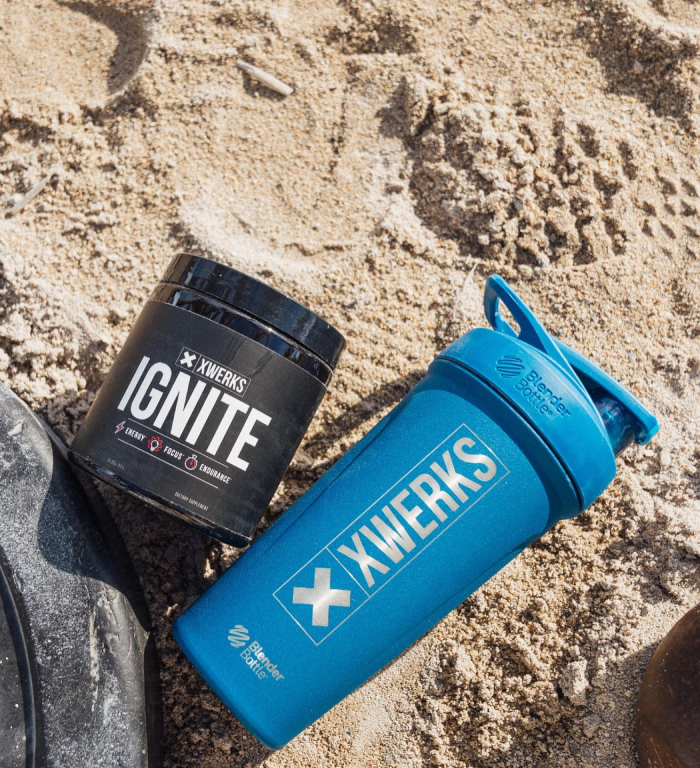
XWERKS option: XWERKS Ignite includes 1.5g per serving. For full daily dose (3-6g), add standalone beta-alanine powder.
Other quality options: CarnoSyn-branded beta-alanine (patented, used in most research), BulkSupplements Beta-Alanine, NOW Foods Sports Beta-Alanine.
Supporting-cast supplements (indirect muscle growth benefits)
These don't directly build muscle, but they support the conditions required for muscle growth — training quality, recovery, or fixing deficiencies that limit training capacity.
Caffeine (via pre-workout or standalone)
INDIRECT MODERATE 3-6mg per kg body weight, 30-60 min pre-trainingCaffeine doesn't directly grow muscle, but it reliably improves training quality — increased training volume over time is what drives hypertrophy. Guest 2021 ISSN position stand documents consistent performance benefits across strength, power, and endurance work. Practical translation: slightly more reps at a given weight, slightly more sets completed, slightly better focus on technique.
XWERKS option: XWERKS Ignite — 150mg caffeine plus complementary ingredients (citrulline, beta-alanine, tyrosine, rhodiola).
Other options: Plain caffeine tablets (100-200mg, cheap and predictable), coffee, caffeinated gels for endurance work.
Citrulline Malate / L-Citrulline
INDIRECT SMALL-MODERATE 6-8g citrulline malate or 3-5g L-citrulline, 30-60 min pre-trainingPerez-Guisado 2010 documented improved muscular endurance (more reps to failure) with 8g citrulline malate in trained lifters. Effect size modest but real. Supports blood flow and nitric oxide production, which may support training volume over time.
Most efficient as part of a pre-workout: Combined with caffeine, beta-alanine, and tyrosine in a full pre-workout formula covers multiple mechanisms simultaneously. XWERKS Ignite provides 3g citrulline per serving; athletes using standalone citrulline for higher doses can stack with Ignite or use alternatives like Nutricost, BulkSupplements L-Citrulline.
Vitamin D3
INDIRECT MODERATE (if deficient) 2,000-4,000 IU daily; test and adjustVitamin D deficiency is endemic in athletes — 56% of athletes have insufficient or deficient levels (Farrokhyar 2015). Deficiency impairs muscle function, immune function, and may affect testosterone levels. Correcting deficiency can meaningfully improve training capacity. If you're not deficient, supplementation produces minimal muscle-specific benefits — but the baseline deficiency rate makes testing and supplementing worthwhile for most athletes.
Testing: Optimal blood 25(OH)D levels for athletes: 40-60 ng/mL. Annual testing is prudent. Direct-to-consumer tests available ($30-50) if primary care won't order.
Quality options: Nordic Naturals, NOW Foods, Thorne, Pure Encapsulations. D3 (cholecalciferol) is more effective than D2. Take with a meal containing fat.
Omega-3 (EPA + DHA)
INDIRECT SMALL 2-3g combined EPA+DHA dailyMeta-analyses support benefits for recovery, inflammation management, and some evidence for attenuating anabolic resistance in older adults. The direct effect on muscle growth in young adults is smaller than often claimed, but the recovery and inflammation benefits support training quality over time.
Most impactful when: Fish intake is low (less than 2-3 servings fatty fish weekly), during high-volume training, for older athletes, and for inflammation-sensitive training (heavy lifting, high-impact work).
Quality options: Nordic Naturals, Carlson Labs, Thorne, Wiley's Finest, Kirkland Signature (Costco). Look for 500mg+ EPA + DHA per soft gel to avoid taking 6-8 capsules daily.
Magnesium
INDIRECT SMALL 200-400mg daily; glycinate or threonate formsMagnesium is involved in 300+ enzymatic processes including muscle contraction, protein synthesis, and energy production. Dietary intake is often below optimal, and athletes lose magnesium through sweat. Supporting adequate levels supports sleep quality — which supports recovery — which supports muscle growth.
Form matters: Glycinate (well-absorbed, calming, best for sleep), threonate (cognitive benefits), citrate (decent, can cause loose stools). Skip magnesium oxide (poorly absorbed).
Quality options: Pure Encapsulations, Thorne, Natural Vitality (Calm), Life Extension. Take in the evening for sleep benefit.
What's NOT on this list (and why)
This is where most "best supplements for muscle growth" articles go wrong — they include everything to justify linking to products. Here's what doesn't have the research to support inclusion:
• Glutamine: Marketed for decades as a muscle builder; research doesn't support the claims. Some evidence for gut health and immune function in endurance athletes. Skip for muscle growth.
• HMB (β-hydroxy β-methylbutyrate): Modest evidence for muscle preservation during deficit or in untrained populations. In trained individuals, effects are smaller than claims suggest. Not necessary for most.
• "Muscle builder" proprietary blends: If the label says "Muscle Building Matrix" with a list of ingredients but no per-ingredient dosing, you're paying for marketing, not performance. Almost always underdosed.
• Greens powders: Fine for micronutrient insurance if diet is weak on vegetables, but overpriced multivitamins with added fiber. Don't build muscle.
• Mass gainers with 1,000+ calorie shakes: Just calories. If you need more calories to grow, real food works better. Mass gainers are expensive ways to buy sugar and cheap whey concentrate.
• SARMs (Ostarine, LGD-4033, etc.): Not FDA-approved for human use, not legal supplements. Real side effect risk, contamination issues, banned by virtually all athletic organizations. Don't buy these.
Effect sizes in real numbers
To make the rankings concrete, here's roughly what to expect from each supplement over 6-12 months of training, assuming training and diet are dialed in:
Realistic expectations (adding to an otherwise well-executed program)
• Hitting protein target (1.6-2.2g/kg) vs falling short at 1.0g/kg: 2-5 kg more lean mass over 6-12 months (this is the biggest single supplement decision)
• Adding creatine monohydrate (5g daily): 1-2 kg additional lean mass compared to training alone, plus strength gains
• Adding beta-alanine (loaded to 3-6g daily): Smaller direct effect; may contribute 0.5 kg via improved training volume
• Pre-workout with caffeine: Mostly training quality / adherence benefits; hard to quantify directly
• Correcting vitamin D deficiency: Variable but potentially large if severely deficient
• Everything else on this list: Small indirect contributions; valuable as supporting cast, not drivers
The recommended muscle growth stack
Minimum effective stack (covers 80% of results)
• Whey protein isolate: 1-2 scoops daily to hit 1.6-2.2g/kg total (XWERKS Grow)
• Creatine monohydrate: 5g daily (XWERKS Lift)
• Vitamin D3: 2,000-4,000 IU daily (any quality brand)
Optimized stack (serious lifters)
• Everything above, plus:
• Pre-workout with beta-alanine: XWERKS Ignite (150mg caffeine + 3g citrulline + 1.5g beta-alanine + 2g tyrosine)
• Additional beta-alanine: Standalone powder to reach 3-6g daily during loading phase
• Omega-3s: 2-3g EPA+DHA daily
• Magnesium: 200-400mg evening (sleep quality)
• Intra-workout carbs for long sessions: XWERKS Motion (Cluster Dextrin) for sessions 60+ minutes
For lifters over 40
Same stack as above, with two modifications:
• Higher protein target: 2.0-2.2g/kg (anabolic resistance requires more protein to achieve same MPS response)
• Larger per-meal doses: 30-40g per meal vs 20-30g for younger lifters
• Creatine becomes even more valuable — muscle preservation and cognitive support
Common questions about muscle growth supplements
"What's the fastest supplement for muscle growth?"
Creatine produces noticeable effects within 2-4 weeks (muscle fullness, strength improvements, some lean mass gain from intracellular water + training quality). Protein doesn't produce "fast" effects — it supports consistent growth over months. There's no supplement that produces dramatic muscle growth in days or weeks; anyone claiming otherwise is selling something.
"Do I need to take everything on this list?"
No. Whey protein + creatine cover most of the effect size. Everything else is optimization. Don't add supplements until the basics (training, diet, sleep, whey, creatine) are consistent for 6+ months.
"Are these supplements safe?"
The supplements on this list have excellent safety profiles at recommended doses. Creatine, whey protein, beta-alanine, caffeine (moderate), citrulline, vitamin D3, omega-3s, and magnesium have been extensively studied for safety. Athletes with kidney disease should consult a physician before supplementing creatine or high protein. Anyone with heart conditions should be cautious with caffeine doses. For competitive athletes, use NSF Certified for Sport or Informed Sport products to avoid contamination with banned substances.
The Bottom Line
The short list of supplements that actually build muscle: whey protein (#1, large effect), creatine monohydrate (#2, large effect), beta-alanine (#3, moderate effect). Supporting cast: caffeine, citrulline, vitamin D3, omega-3s, magnesium.
What's NOT on the list: glutamine, HMB, "muscle builder" proprietary blends, greens powders, mass gainers, SARMs. Most of these are marketing-driven.
The minimum effective stack: whey (XWERKS Grow) + creatine (XWERKS Lift) + vitamin D3. Covers 80% of supplement-driven results when training and diet are dialed in. Everything else is optimization.
The Two That Matter Most
XWERKS Grow (whey isolate, 25g/scoop) + XWERKS Lift (creatine monohydrate, 5g/scoop). The only two supplements with LARGE effect sizes for muscle growth. Everything else is optimization.
SHOP XWERKS →Further Reading
Supplements for Athletes: The Evidence-Based Guide
Protein Powder for Bodybuilders Over 40
Balance Your Daily Protein Intake
References
1. Morton RW, et al. A systematic review, meta-analysis and meta-regression of the effect of protein supplementation on resistance training-induced gains in muscle mass and strength. Br J Sports Med. 2018;52(6):376-384.
2. Kreider RB, et al. International Society of Sports Nutrition position stand: safety and efficacy of creatine supplementation in exercise, sport, and medicine. J Int Soc Sports Nutr. 2017;14:18.
3. Chilibeck PD, et al. Effect of creatine supplementation during resistance training on lean tissue mass and muscular strength in older adults: a meta-analysis. Open Access J Sports Med. 2017;8:213-226.
4. Hobson RM, et al. Effects of β-alanine supplementation on exercise performance: a meta-analysis. Amino Acids. 2012;43(1):25-37.
5. Guest NS, et al. International society of sports nutrition position stand: caffeine and exercise performance. J Int Soc Sports Nutr. 2021;18(1):1.
6. Farrokhyar F, et al. Prevalence of vitamin D inadequacy in athletes: a systematic-review and meta-analysis. Sports Med. 2015;45(3):365-378.
7. Jackman SR, et al. Branched-chain amino acid ingestion stimulates muscle myofibrillar protein synthesis following resistance exercise in humans. Front Physiol. 2017;8:390.
8. Schoenfeld BJ, Aragon AA. How much protein can the body use in a single meal for muscle-building? J Int Soc Sports Nutr. 2018;15:10.